
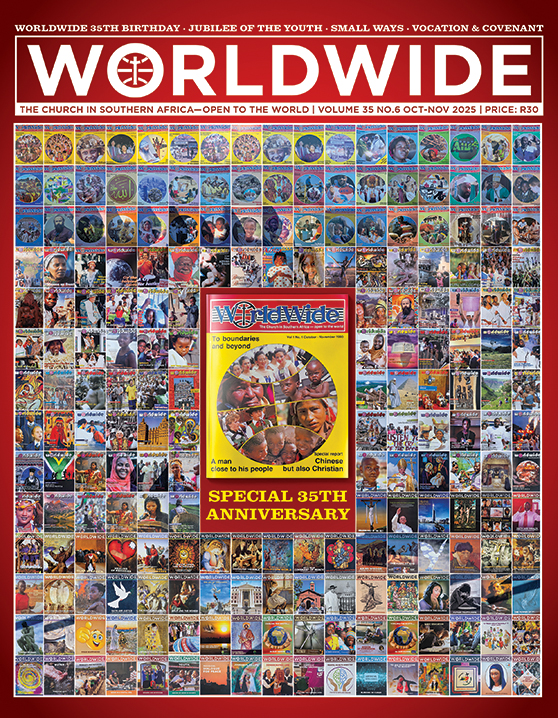
This collage features the front covers of Worldwide issues over its 35 years of existence. At the centre is the cover of the first edition, dated October/November 1990. Worldwide saw the light during a missionary month and continues its mission of proclaiming the Gospel; this is the reason for its being.
Credit: Worldwide archives.
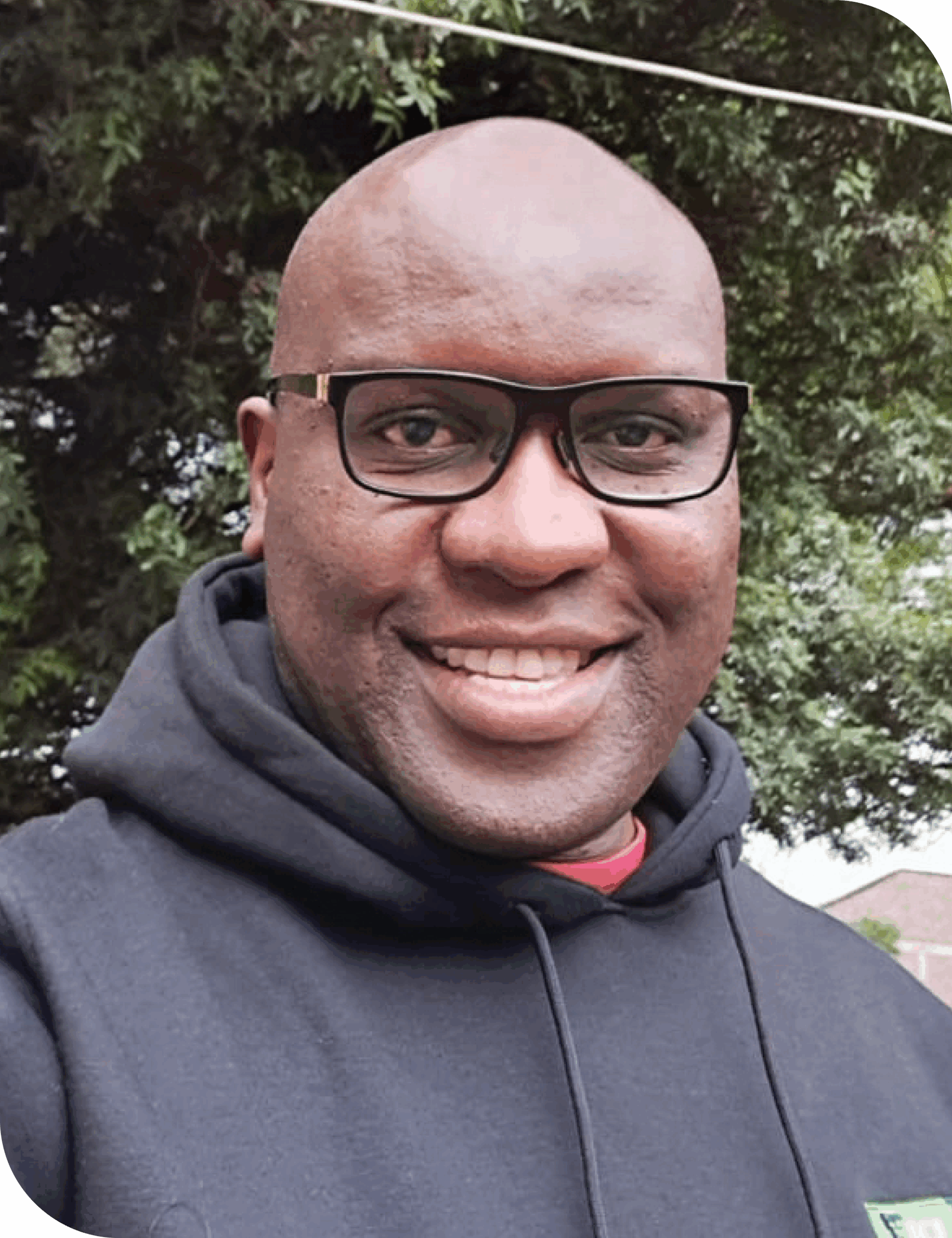
Fr Andrew Bwalya is a Comboni Missionary hailing from the Chingola District in Zambia. He shares his experiences at Worldwide, as he gives witness to the major events that occurred in South Africa during his period serving at the Media Centre.
SPECIAL 35TH ANNIVERSARY • 2008-2013
WORLDWIDE, 35 YEARS OF SPREADING THE GOSPEL
BY Fr Andrew Bwalya, MCCJ
WORLDWIDE’S 35TH BIRTHDAY is a milestone worth celebrating. Above all, it is an occasion for thanksgiving for us, Comboni missionaries, as its owners. Gratitude goes to our readers and collaborators for their invaluable support throughout these years. This is also a moment to reflect on the past and on the mission of our missionary magazine going forward.
I had the privilege to work at Worldwide from 2008 to 2013, initially as a contributor, editorial board member, and later as the Editor. South Africa was my first assignment as a newly ordained Comboni missionary priest. So many events happened in South Africa during that period, both in society and at the Church level. Furthermore, it was an exciting and challenging experience for me to be in South Africa during that time.
In hindsight, I witnessed the events of 2008 to 2013 in South Africa with a sense of awe. The current Worldwide editor asked me to write something about my experiences in this edition, which commemorates the 35th anniversary of Worldwide. I gladly share what stood out for me.
Political events
In September 2008, the African National Congress (ANC) recalled President Thabo Mbeki after an intense leadership struggle with Jacob Zuma. This eventually led to the creation of the Congress of the People (COPE), a breakaway party formed by former ANC leaders loyal to Mbeki. Kgalema Motlanthe was appointed interim President until the 2009 elections. The ANC won those elections, and Jacob Zuma was elected President.
May 2008 saw the ugly Xenophobic attacks against foreign nationals. Dozens of migrants, mostly from Zimbabwe, Mozambique, and Malawi, were killed. Ultimately, these attacks exposed social tensions linked to unemployment, inequality, and poor service delivery. Rightly so, the Catholic Church condemned these attacks, calling for respect of human dignity and hospitality toward foreigners. Concretely, some parishes, Caritas, and the Jesuit Refugee Service (JRS) opened shelters and provided food, clothing, and trauma counselling. I saw in these efforts the parable of the Good Samaritan in action!
The election of Jacob Zuma as President of South Africa was the highlight of 2009. Ahead of the elections, the Southern African Catholic Bishops’ Conference (SACBC) exercised its guidance, issuing a pastoral letter urging Catholics to vote responsibly, highlighting justice, accountability, and the common good. In it, Bishops warned against corruption and the abuse of power.
A sense of euphoria accompanied the election of Jacob Zuma in 2009. However, this soon evaporated. The global financial downturn at the time hit South Africa and led the country to its first recession in seventeen years. Consequently, unemployment rose sharply. Shortly, the focus moved to corruption and leadership concerns regarding Zuma’s presidency. The rest is now history.
2010 World Cup
In 2010, one event stood out in South Africa: the FIFA World Cup. It was the first time that an African country showcased this global football event. As hosts, South Africa did well and proved many doubters wrong. The organisers managed to provide first-class hospitality services, security, and state-of-the-art stadia. The Ke Nako (‘it is time’ in the Sesotho language) vibe captivated the nation. The Rainbow Nation rose to the occasion. I was fortunate to watch the quarter-final game between the eventual Champions, Spain, and Paraguay.
In 2010, one event stood out in South Africa: the FIFA World Cup. It was the first time that an African country showcased this global football event.
The Catholic Church celebrated the FIFA World Cup, too. It became an occasion to proclaim the Gospel and the Social Teaching of the Church. Homilies echoed the need to testify to our African Ubuntu so that the guests who were flocking to the country could experience it firsthand. One issue that the Church picked up boldly during the FIFA World Cup was the fight against human trafficking, a crime that such events attract. The Catholic Church organised anti-human trafficking campaigns across the country to raise awareness of this modern-day slavery.
The 2011-2013 period
The Local Government Elections in May 2011 were rather groundbreaking. The ANC retained its overall dominance but lost ground in major urban areas. On the other hand, the Democratic Alliance (DA) under Helen Zille strengthened its hold in the Western Cape. Another significant event in 2011 was the suspension of Julius Malema, then ANC Youth League leader. This became a prelude to his later breakaway and founding of the Economic Freedom Fighters in 2013.
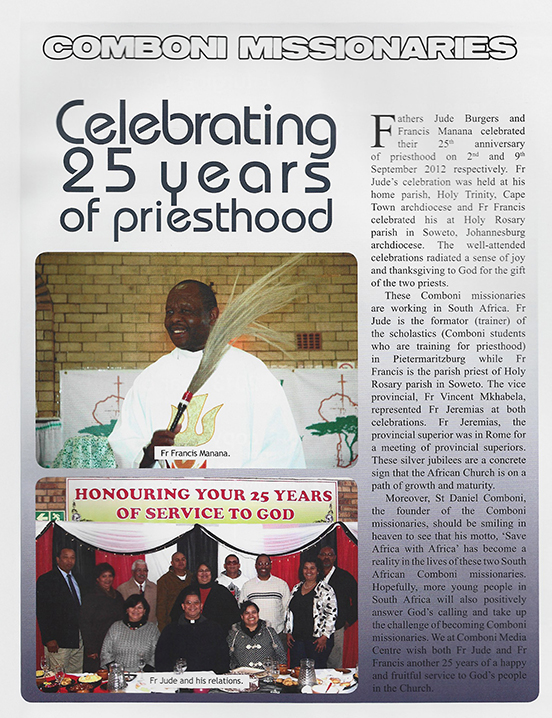
The Marikana Massacre on 16 August 2012 goes into history as one of the worst moments in South Africa after the end of Apartheid. The police shot and killed thirty-four striking miners, sparking country-wide outrage. It exposed what many commentators termed deep inequalities, state violence, and close ties between the ANC, business, and mining interests. As expected, the Catholic Church strongly condemned the killings. Bishops and Catholic Justice and Peace leaders expressed solidarity with the miners’ families, pointing to Rerum Novarum and Catholic teaching on workers’ rights.
Back to politics, the ANC during its Mangaung Conference in December 2012 re-elected Jacob Zuma as its president, defeating Kgalema Motlanthe. Cyril Ramaphosa, the current President, was elected as Deputy President. The seeds for his national leadership were sown.
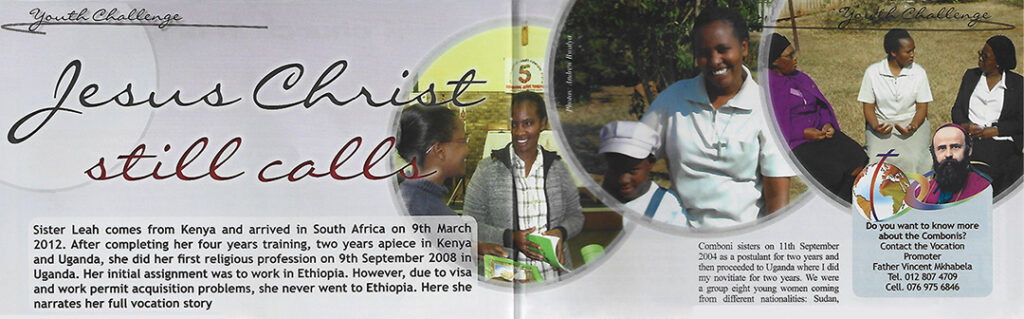
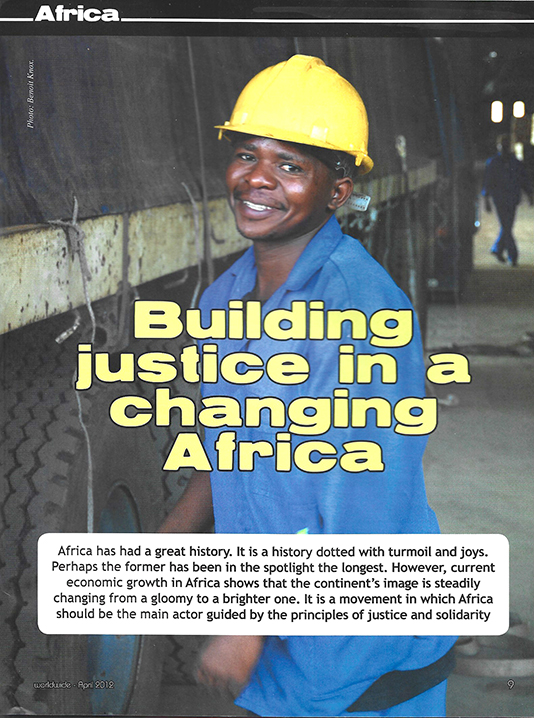
who worked in South Africa. June/July 2012 edition. Credit: Worldwide.
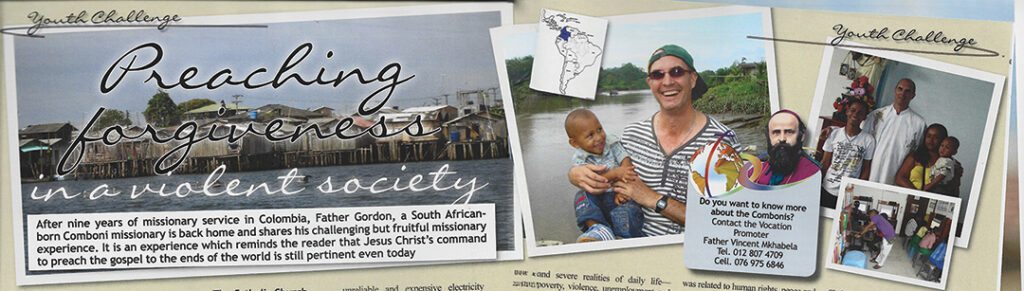
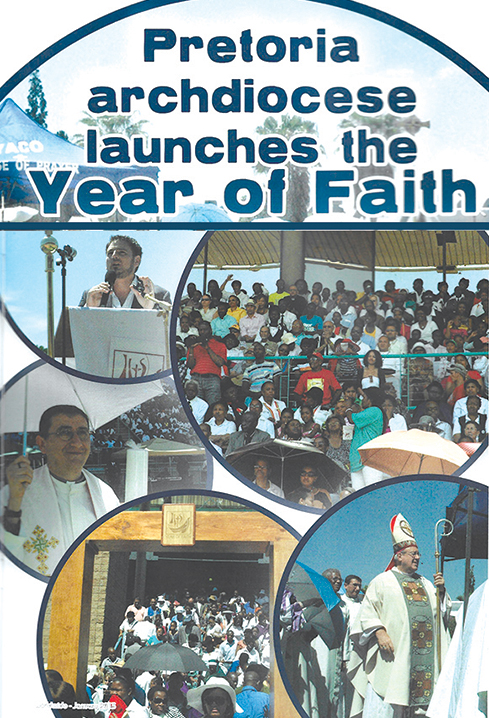
Meanwhile, in the Church, the period from October 2012 to November 2013 was celebrated as the Year of Faith. Dioceses launched catechesis, renewal programs, and pilgrimages, fostering deeper Catholic identity and evangelisation. It was something similar to what we are experiencing in this 2025 Year of Hope.
The launch of the Economic Freedom Fighters (EFF) by Julius Malema in July 2013 was a highlight of that year. At the time, many doubted Malema’s influence. His advocacy for land expropriation and nationalisation was not only criticised but also dismissed as a non-starter. Nevertheless, Malema managed to reshape opposition politics. He wielded considerable influence both locally and internationally, especially among young African people. Many of them saw him, with his left-wing alternatives, as a liberator, similar to how they now regard the young military man and President of Burkina Faso, Ibrahim Traore.
Through editorial comment and articles, we expressed our solidarity with the South African society and the Church.
The death of Nelson Mandela on 5 December 2013 was most definitely the saddest event in South Africa that year. His death galvanised the nation. It symbolized the end of an era; the ANC sought to link itself to his legacy, even as criticism of its governance grew. The DA also associated itself with Mandela’s legacy, but the ANC protested against it. On her part, the Church held memorial masses across the country. At the same time, the Catholic leadership joined national and global tributes.
At the level of the universal Church, March 2013 saw the election of Pope Francis. This news brought joy across the Church. Later, it became overwhelmingly clear that the Papacy of Francis, anchored on simplicity and solidarity with the poor, became an inspiration for both society and the Church.
Where was Worldwide in all these events? We were present and covered these happenings with dedication and professionalism. Through editorial comment and articles, we expressed our solidarity with the South African society and the Church. As a missionary magazine, we not only disseminated information but also formed the conscience of our readership. I believe that once our readers interact with Worldwide, they see society through the lens of the Gospel values and the Social Teachings of the Church. This is the mission of Worldwide. This is what these 35 years of its existence have achieved. Happy 35th Birthday Worldwide!
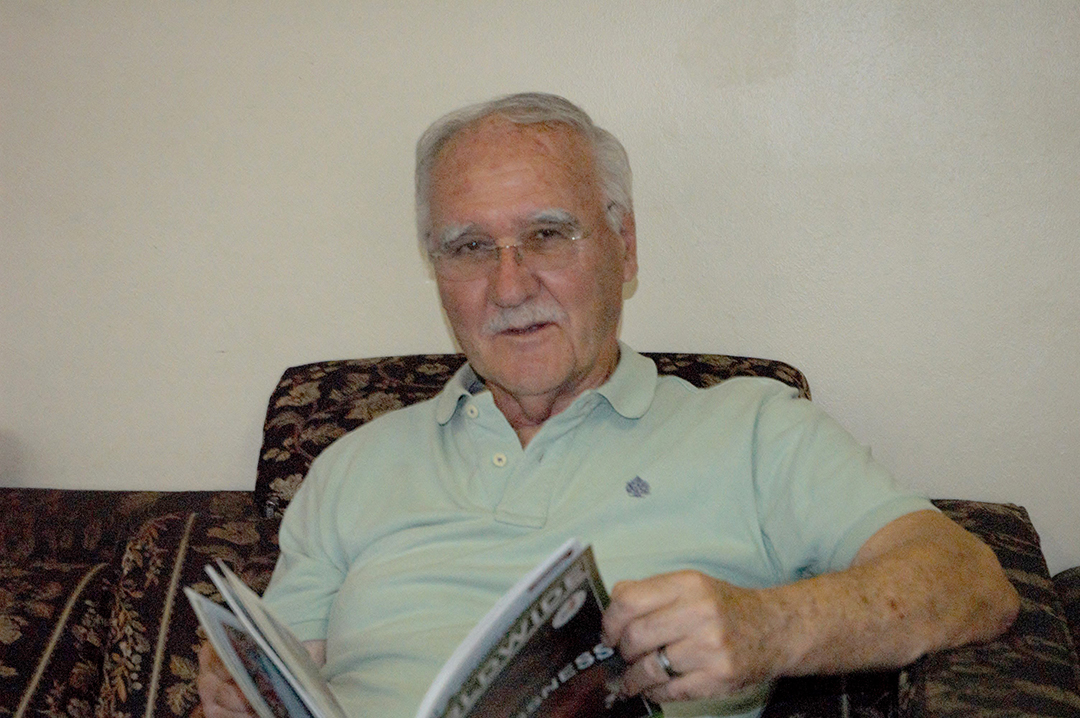
REMEMBERING THE BEGINNING OF WORLDWIDE
Fr. Francisco de Medeiros ‘Chico’ MCCJ witnessed the early days of Worldwide. Passionate about its promotion, he also helped with the administration and publication of this Comboni project. He shares his memories with us.
A NATION IN TRANSITION
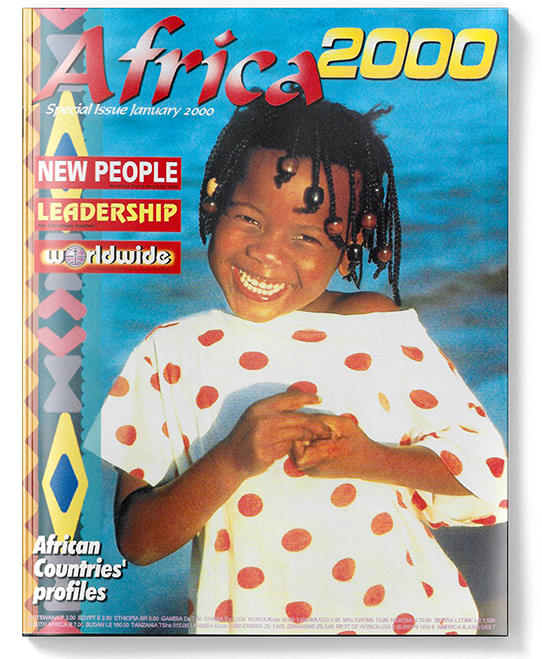
I RECALL my time at Worldwide well: although it was a relatively brief period (1998-2002), it was a very special time in the history of South Africa. It was the turn of the millennium, and while this topic does not raise much interest today, at that time it was seen as an epic event.
JUSTICE, PEACE, AND CARE FOR CREATION AT THE HEART OF WORLDWIDE
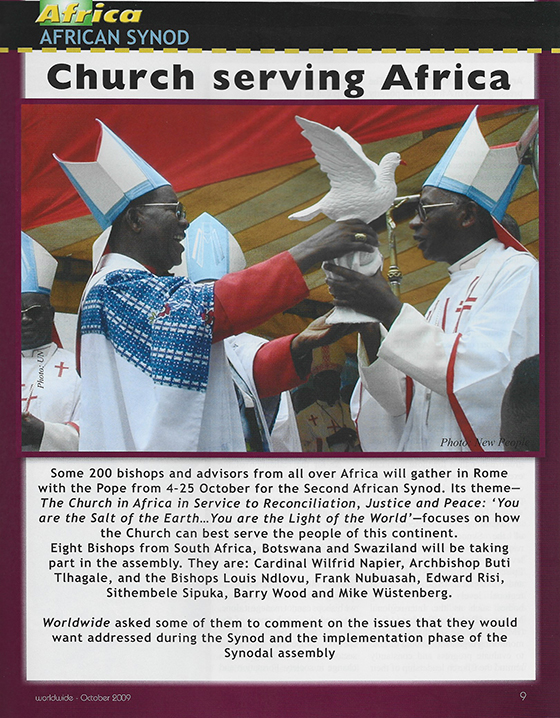
THROUGHOUT THE YEARS, Worldwide magazine has made a humble yet significant contribution to the lives of its readers, offering them the opportunity to widen their horizons.
THE MISSION OF COMMUNICATION: MY SEVEN YEARS WITH WORLDWIDE
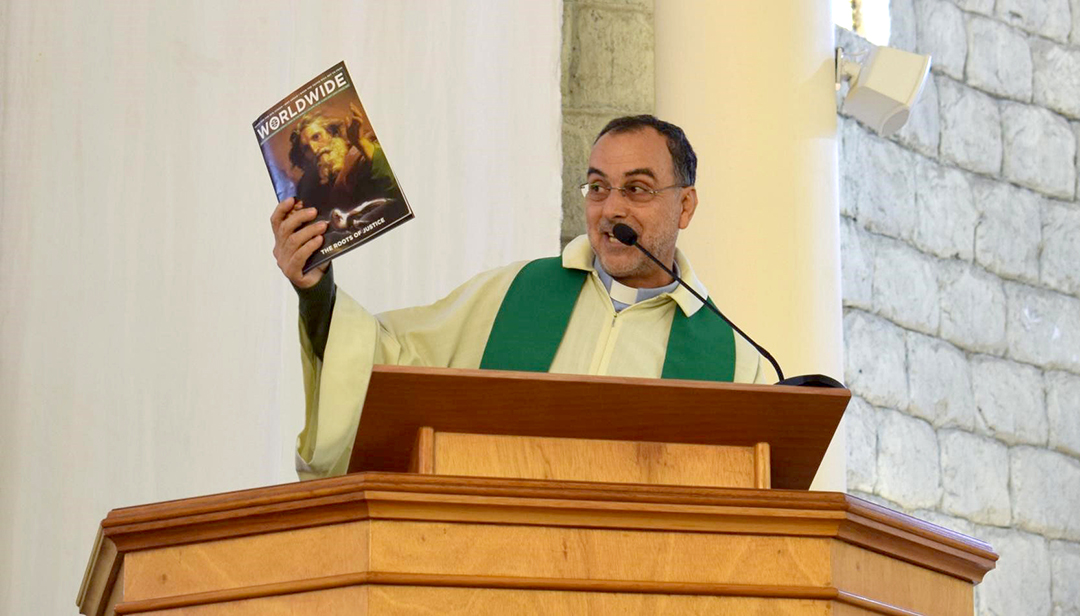
I WORKED in South Africa for the first time between 1991 and 1996, mostly in Glen Cowie, Limpopo Province. In 1996, my superiors were considering asking me to replace the first editor of the magazine, the Tyrolian missionary, Fr Anton Pramstrahler († Brixen, 10.5.2016), but that plan never materialized.
MISSION PROMOTION ACTIVITIES
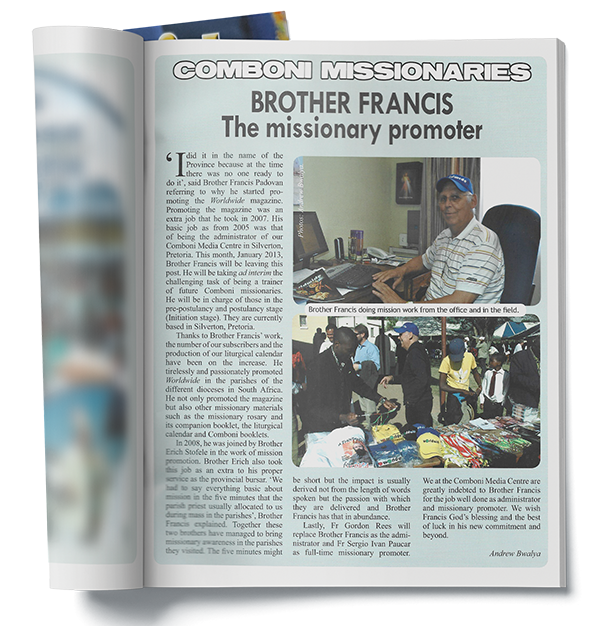
TO A LARGE extent Worldwide owes its maintenance and development to the Mission Promotion initiatives carried out in different parishes in South Africa.