
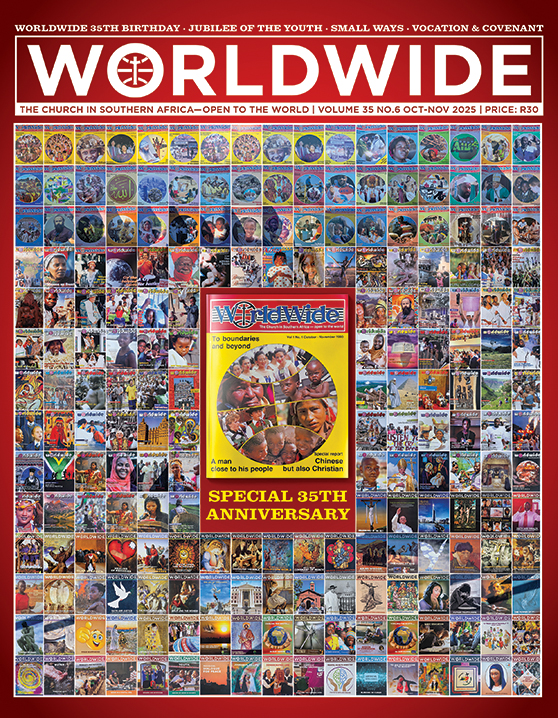
This collage features the front covers of Worldwide issues over its 35 years of existence. At the centre is the cover of the first edition, dated October/November 1990. Worldwide saw the light during a missionary month and continues its mission of proclaiming the Gospel; this is the reason for its being.
Credit: Worldwide archives.
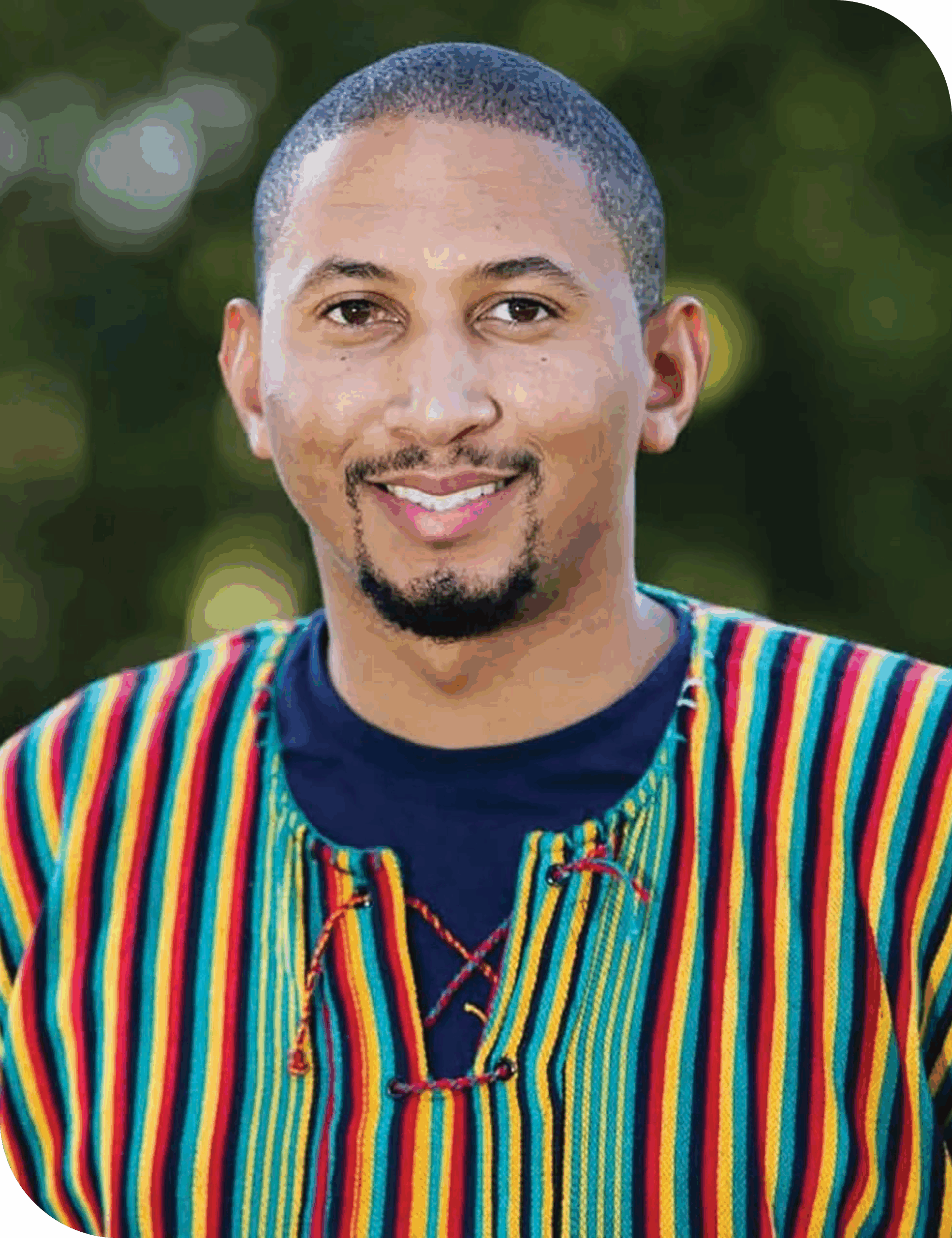
Among the diversity of Worldwide’s voices, Fabian Oliver’s is always a challenging one. His writings are not neutral; they do not leave us indifferent, but provoke us to engage with issues such as justice and liberation. As he states, writing “allows us to dream of what the world could be,” and Worldwide has become for him “a platform for prophetic witness.” Thank you, Fabian, for inciting us with your consistently well-resourced theological contributions.
REFLECTION • ON THE EDGE
WRITING AS PROPHETIC WITNESS: CELEBRATING THE SACRED CALL TO SPEAK FROM THE MARGINS
BY Fabian Ashwin Oliver | Youth Minister, Johannesburg
I HAVE had the privilege of writing for this prestigious magazine for the last five years. In this reflection, I wish to sketch out the significance of the Comboni Worldwide Magazine, highlighting the sacred importance of writing and storytelling. I approach this by reflecting on three interwoven themes: writing as an insider–outsider, writing as resistance and solidarity, and the irreplaceable power of storytelling in an age of technological advancement.
Writing as an Insider–Outsider
I was raised in the Church as an altar server, youth leader, catechism teacher, and more. Most of my philosophical and theological questions about God, life, humanity, and the Christian community were nurtured within the walls of the Church. In this way, I remain an insider to the broader Catholic Christian communion, questioning matters from within the Church.
At the same time, through theological formation and exposure to the lived realities of suffering from the enduring legacies of apartheid, poverty, inequality, and exclusion, I have come to stand as one and in solidarity with many who are marginalized — not only by society but often by institutional religion itself. Those whose identities, expressions, or bodies do not fit normative frameworks, whether due to gender, sexuality, class, or race, are often compelled to worship at the edge of the building.
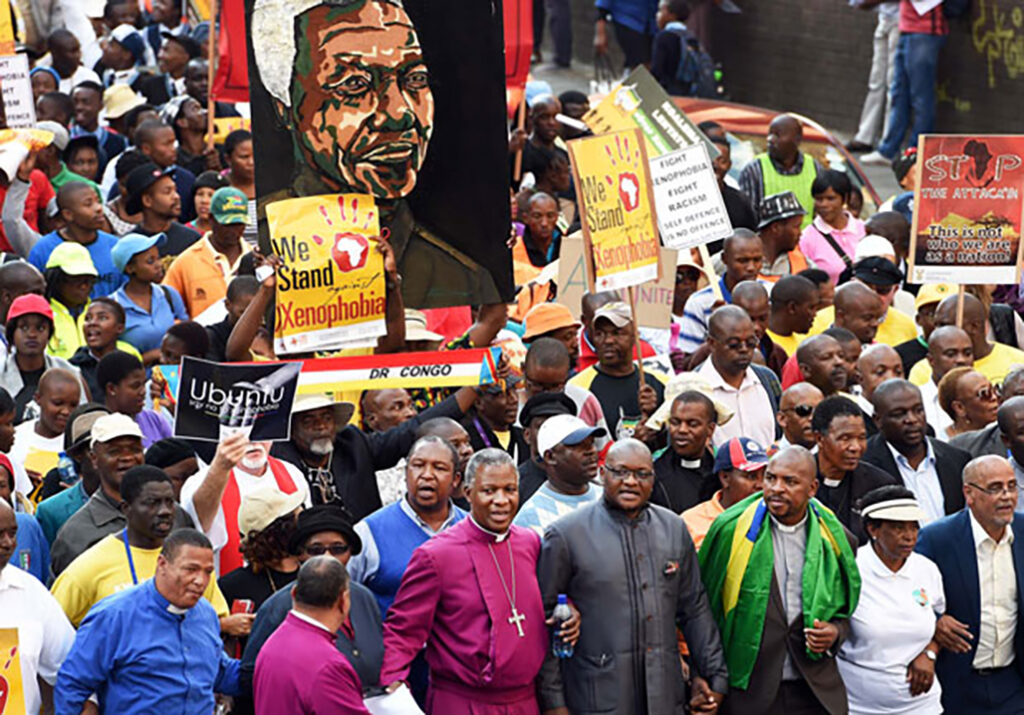
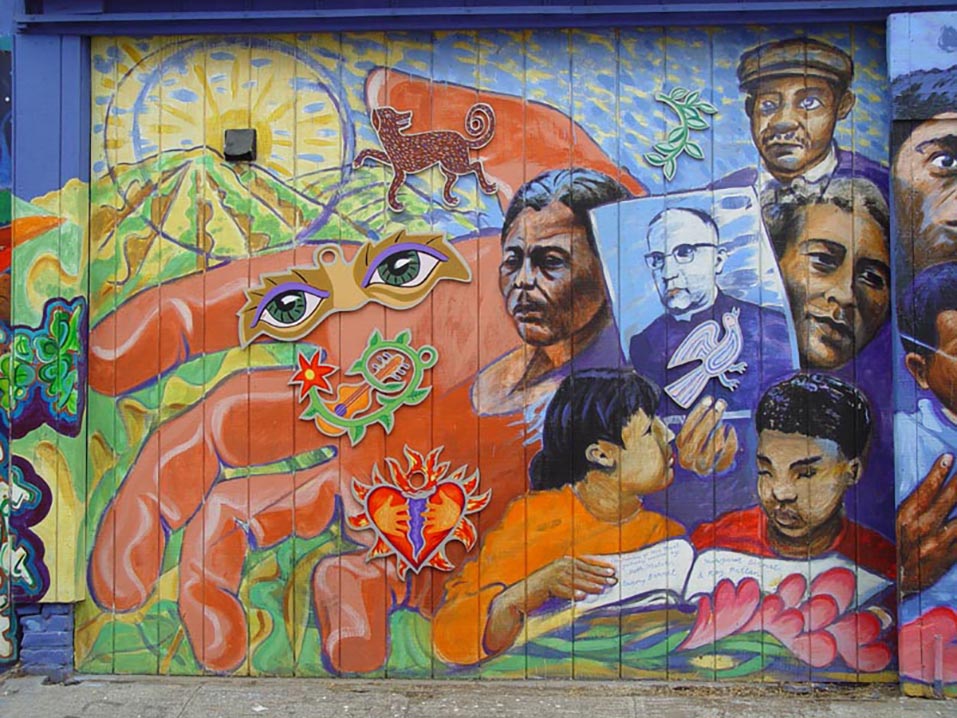
This place, “on the edge”, is not necessarily one of despair, but of prophetic love; a deep and abiding affection for what the Church is and an even deeper hope for what it can become. To be an insider–outsider is to live in this holy tension: to resist injustice and exclusion while remaining tethered to the vision of God’s inclusive and liberatory love.
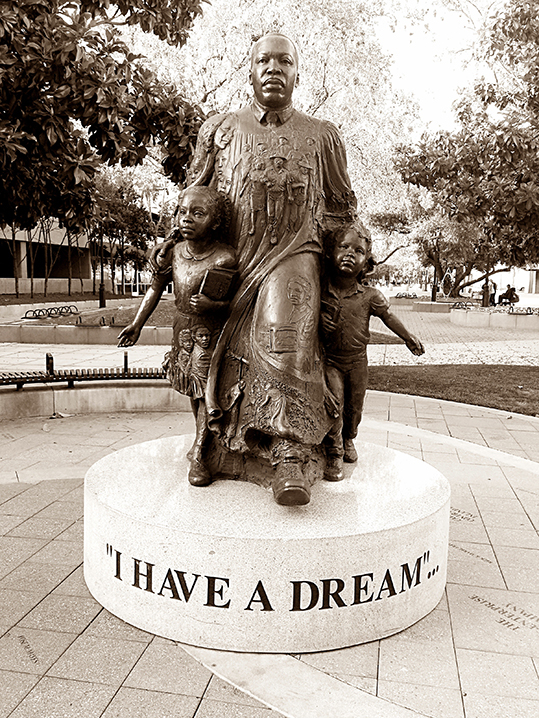
In this vein, writing for a theological platform like Worldwide means creating space for alternative voices, challenging perspectives, and catholic (meaning universal) expressions rooted in the Global South and beyond. Worldwide Magazine should continue to be a space that invokes the margins into God’s embrace. As James Cone, the father of Black Liberation Theology, put it so powerfully:
I write for those who are penniless and jobless, landless, and those who have no political or social power. I speak and I write for gays, for lesbians, bisexuals, and those who are transgender, the queer people of this world. I write for the undocumented farmworkers toiling in misery in our nation’s agricultural fields. I write and speak for Muslims who live under the terror of war and empire… I speak and write for all people who care about humanity” (Hedges 2012).
Writing as Resistance
There is a profound power in writing that allows us to reimagine the world. Through poetry, art, visual storytelling, and theological reflection, writing nurtures the prophetic imagination—it invites us to dream of what the world could be. In my contributions to Worldwide, I have found space to imagine and co-create glimpses of God’s Kingdom: drawing from the past, grounding in the present, and reaching for the future.
In a world increasingly drawn to quick fixes and artificial intelligence, the act and art of writing become even more sacred.
True creative writing offers resistance to a world that insists, “This is just the way things are.” It ruptures that narrative with a vision of what could be a world beyond violence, war, inequality, and ecological ruin.
At this crossroad, we must acknowledge that Worldwide, as a missionary magazine, is a European-rooted project. Its history is tied to the colonial missionary movement, which was complicit in Africa’s oppression. Yet, it has also become a platform for prophetic witness. Through the power of imagination and praxis, its stories and reflections from vast communities can model what Kenyan writer Keguro Macharia calls a “Liveable, Shareable World” (Macharia 2016). Writing is, therefore, not neutral, or better yet, not complicit, but geared towards a certain kind of education, epistemology, and culture of living together. The call for a Liveable, Shareable World through the vision of Worldwide Magazine pre-empts conversations on liberation, justice, peace, suffering, and joyful celebrations.
In his latest book, The Tears of Things (2025), Fr Richard Rohr reminds us that the world is in urgent need of prophets. The Church, he argues, often avoids prophetic ministry because it prioritizes comfort, tradition, and the status quo over what he calls “holy disorder”—the sacred disruption of unjust systems. Prophetic writing, then, must become or remain a theological imperative for such a magazine. Walter Brueggemann maintained that the prophet’s task is to cultivate a “consciousness” that challenges dominant cultural narratives. This consciousness must be both “critical and energizing” — able to confront systems of suffering and death and grounded in the joy and newness of God’s faithful love (Brueggemann, 1978:16, 47).
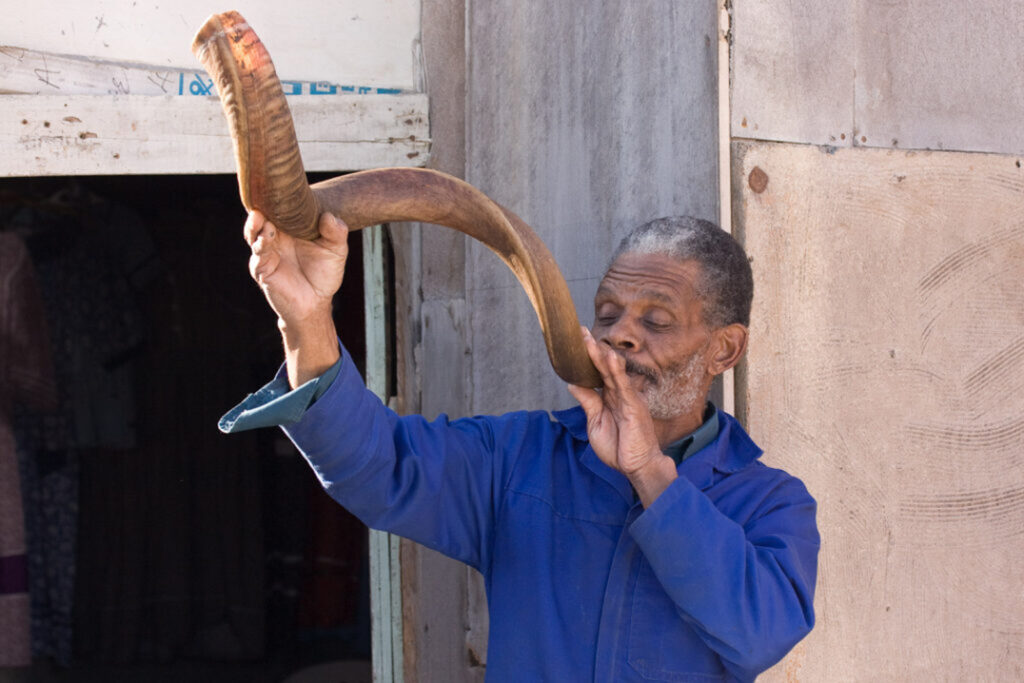
‘All We Have Are Our Words’
In a world increasingly drawn to quick fixes and artificial intelligence, the act and art of writing become even more sacred. AI can generate information, summarize histories, and mimic human language, but it cannot feel. It cannot embody the weight of human brokenness or the wonder of divine encounter. It cannot tell our stories.
Human writing is messy, raw, and rooted in lived experience. It carries emotion, struggle, context, contradiction, faith, and fragility. AI may assist us, but it can never replace the sacred act of storytelling—of gathering, writing, reading, and witnessing each other’s truth. This is the beauty of writing and reading platforms such as this. Thus, local communities must continue to support and further enhance these voices and stories.
As Fr Emmanuel Katongole affirms, stories not only shape how we see the world. They shape how we respond to it. If, as Katongole writes, the persistent sacrificing of Africa continues despite Christianity’s growth and modernization, then Christian ethics must shift from simply preserving systems to the “business of stories”—stories that diagnose the wound, and stories that envision hope beyond the wound (Katongole, 2011:5-10).
In the sacred Scriptures, divine revelation is transmitted, remembered, and made present across generations through the medium of words. In this way, words are not merely functional or symbolic; they are vessels of divine possibility. Within the biblical witness, words carry the weight of covenant, lament, promise, and praise; they hold the capacity to disturb, to reimagine, and to renew. These are not neutral utterances but charged spaces where divine life is gestured toward, where chaos births creation, and hope persists even beyond the grave of despair. As such, words participate in the sacred drama of revelation, inviting us into a communion not with abstract truth, but with the living God whose presence unsettles and transforms. To speak and to write is to risk proclaiming life where death is assumed final, and to echo the divine call toward a world remade in justice and love.
Worldwide Magazine is committed to bottom-up storytelling, centring lived experience over idealistic theology or bureaucratic messaging. It resists both liberal and conservative reductions of humanity, and instead offers space for real people, real struggles, and real transformation.
A Celebration and a Call
As we mark the 35th anniversary of Worldwide, we celebrate a publication that has offered sanctuary and space for prophetic witness. It is a joy and privilege to honour this milestone.
As we mark the 35th anniversary of Worldwide, we celebrate a publication that has offered sanctuary and space for prophetic witness.
But more than a celebration, this is a call. A call to remain rooted in the African paradigm, not gatekeeping one tradition but extending the table. A call to raise voices from the margins to the global Church. A call to bear witness not just to what is, but to what could be.
Our words, in this way, become more than ink on paper. They are sacramental as they carry the spirit of justice. They hold memory. They are our witness to God’s dream for the world.
As the queer Black feminist poet Audre Lorde wrote:
When we are loved, we are afraid love will vanish.
When we are alone, we are afraid love will never return.
And when we speak, we are afraid our words will not be heard or welcomed.
But when we are silent, we are still afraid.
So, it is better to speak (Lorde 1997:255).
May Worldwide continue to speak and to make space for others to speak. May it remain faithful to God’s liberating love. And may it always stand on the edge, where the Spirit breathes, where the prophets cry out, and where the Church is being born anew.
References
- Brueggemann, W. 1978. Prophetic Imagination. Philadelphia: Fortress Press.
- Hedges, C. 2012. ‘James Cone’s gospel of the penniless, jobless, marginalized and despised’, Truthdig. (Accessed: 1 September 2025).
- Katongole, E. 2011. 2011. The Sacrifice of Africa: A Political Theology for Africa. Michigan: Eerdmans Publishing Co.
- Lorde, A. 1997. ‘A Litany for Survival’. In The Black Unicorn: Poems. New York: W. W. Norton & Company.
- Macharia, K. Toward Freedom.’ The New Inquiry. (Accessed 30 August 2025).
- Rohr, R. 2025. The Tears of Things: Prophetic Wisdom for an Age of Outrage. New York: Convergent Books.
POPE LEO XIV AND THE BEST KEPT SECRET
The beginning of Pope Leo XIV’s pontificate signals an emphasis on Catholic Social Teaching, as a response to the need of preserving every person’s human dignity. Stateless individuals belong to a vulnerable group whose members the Church accompanies in their pursuit of their right to belong.