
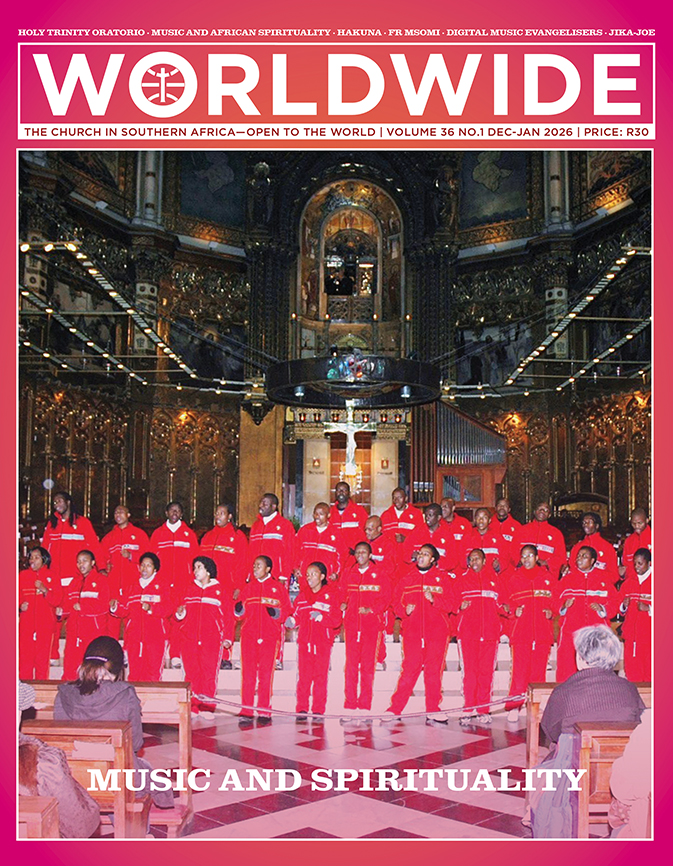
MUSIC AND SPIRITUALITY
The choir Izwi le Themba (voices of hope in isiZulu) from Saint Daniel Comboni Parish at Mahube Valley, Mameldi, Pretoria, singing at Montserrat Abbey in Barcelona, during their concert tour to Spain in 2008. The group’s name conveys a deep meaning rooted in one of the reasons for singing: to bring hope to the world.
Credit: Fr James Calvera MCCJ.
RADAR • G20 SOCIAL SUMMIT
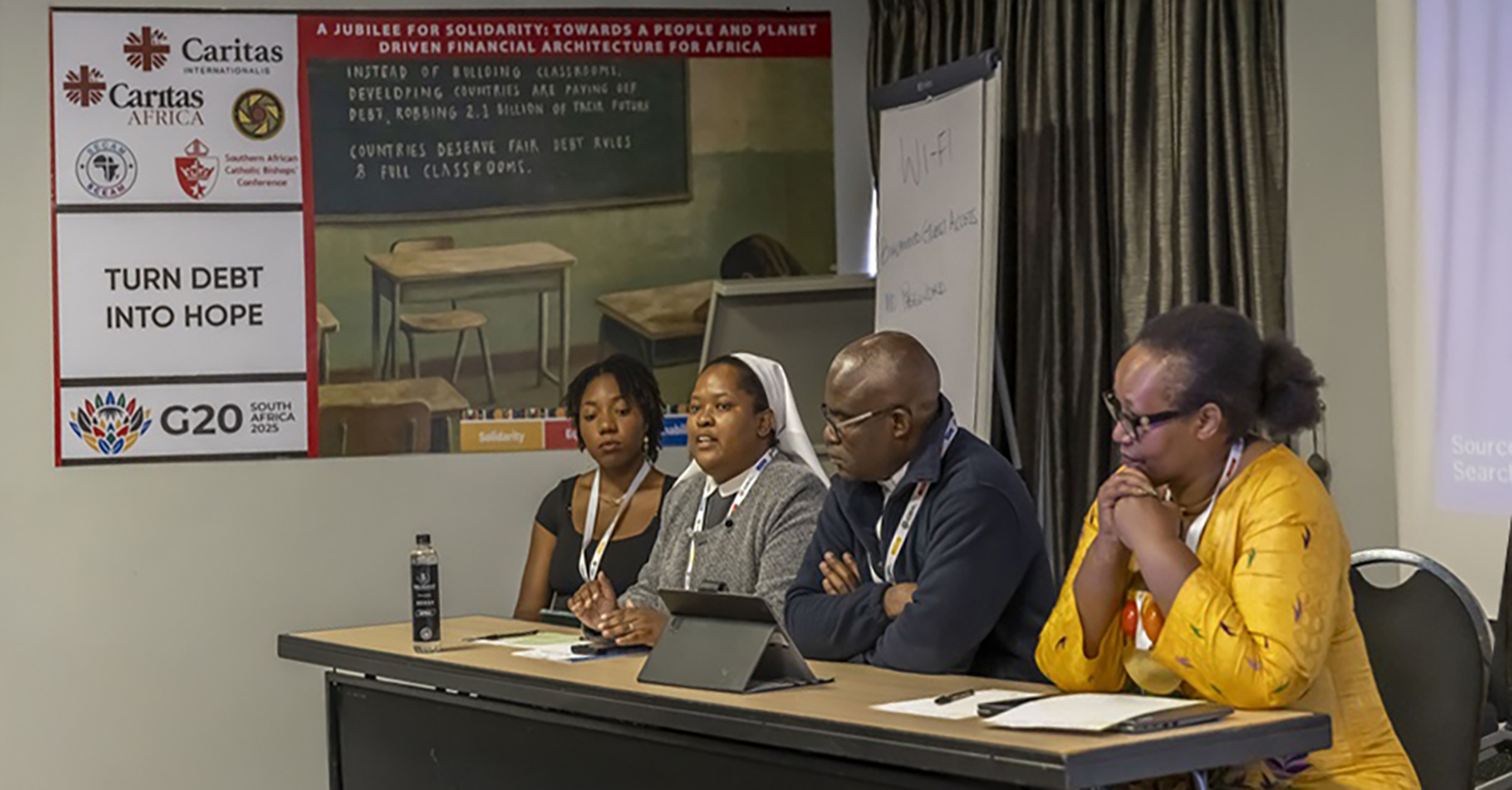
Faith Leaders Urge G20 to “Turn Debt into Hope”
Leaders of faith communities from across the world issued an appeal to G20 leaders, calling on them to confront the global debt crisis as a moral and humanitarian emergency on the eve of the G20 Summit celebrated in Johannesburg on 22-23 November 2025— the first G20 summit to be held on African soil.
BY Sheila Pires | SACBC Communications Officer, Johannesburg
THEIR MESSAGE was amplified during a G20 Social Summit Side Event hosted by Catholic leaders under the theme – “A Jubilee for Solidarity: Towards a People and Planet Driven Financial Architecture for Africa.”
The Wednesday, November 19, 2025, side event organized by Caritas Internationalis, Caritas Africa, Caritas South Africa, and the Southern African Catholic Bishops’ Conference (SACBC) Justice and Peace Commission brought together church leaders, theologians, economists, academics, UN agencies, civil society organizations, youth, and women representatives. The discussions focused on Africa’s growing debt burden and its far-reaching consequences for education, healthcare, climate resilience, and social development.
A Moral Appeal to Global Leaders
In their joint letter to G20 members, faith leaders warn that over 50 countries are spending more on debt servicing than on essential public services, such as education, healthcare, and infrastructure.
They describe this as not only an economic crisis, but also a profound moral failure that forces nations to “default on their development” to service unjust and unpayable debts.
Framed within the spirit of the 2025 Jubilee Year, proclaimed by the late Pope Francis, the letter calls on world leaders to seize this historic moment to restore justice, dignity, and hope through concrete action.
The letter urges the G20 to:
- Support meaningful debt cancellation and fair restructuring mechanisms,
- Ensure private creditors participate in debt relief processes,
- Reform global financial institutions to prioritise human and environmental well-being,
- Support the establishment of a UN-led Debt Convention, and
- Promote a transparent global public debt registry.
Faith leaders stress that debt justice is not charity, but a matter of moral responsibility and global solidarity.
Voices from the G20 Social Summit
In interviews with the SACBC Communications Office following the side event at Birchwood Hotel, Nyarai Mutongwizo, Fr Bonaventure Mashata M.Afr, and Jamie Drummond shared their reflections on the urgent call to “Turn Debt into Hope”.
Mutongwizo, Regional Campaign Leader for Caritas Africa’s Turn Debt into Hope campaign, highlighted the direct impact of debt on education.
She noted that in Ethiopia alone, over 200,000 children could return to school if debt servicing were reduced by just 10 percent, as governments would be able to redirect resources towards education and social services.
Fr Bonaventure Mashata M.Afr, from the Department of Interreligious Dialogue, Ecumenism and Dialogue with the Secular World at the SACBC, described the appeal as a call for life and dignity.
He urged G20 leaders to bring hope to communities burdened by debt by investing in education, agriculture, and social services, stressing that debt affects every sphere of life.
Meanwhile, Jamie Drummond, founder of Sharing Strategies and co-founder of the ONE Campaign, challenged global leaders to listen to both African economic experts and to grassroots faith communities.
He stressed that citizens must be empowered to follow how borrowed money is used, arguing that transparency and accountability are essential to breaking cycles of debt and inequality.
From Advocacy to Action
Alongside the letter, a global petition for debt justice was shared with participants, calling for:
- The immediate cancellation of unjust and unpayable debts without harmful economic conditions,
- Structural reform of the global financial system to prioritise people and the planet, and
- The creation of a permanent, transparent, and binding UN-led debt resolution framework.
The event concluded with a Holy Mass at the Lumko Retreat and Conference Centre in Benoni, grounding the advocacy in prayer and reflecting the Church’s commitment to social justice rooted in faith.
As G20 leaders gather in Johannesburg, faith communities across the world continue to remind them that the global debt crisis is not only an economic matter — it is a call to moral courage, justice, and solidarity in a world longing for hope.
Source: sacbc.org.za
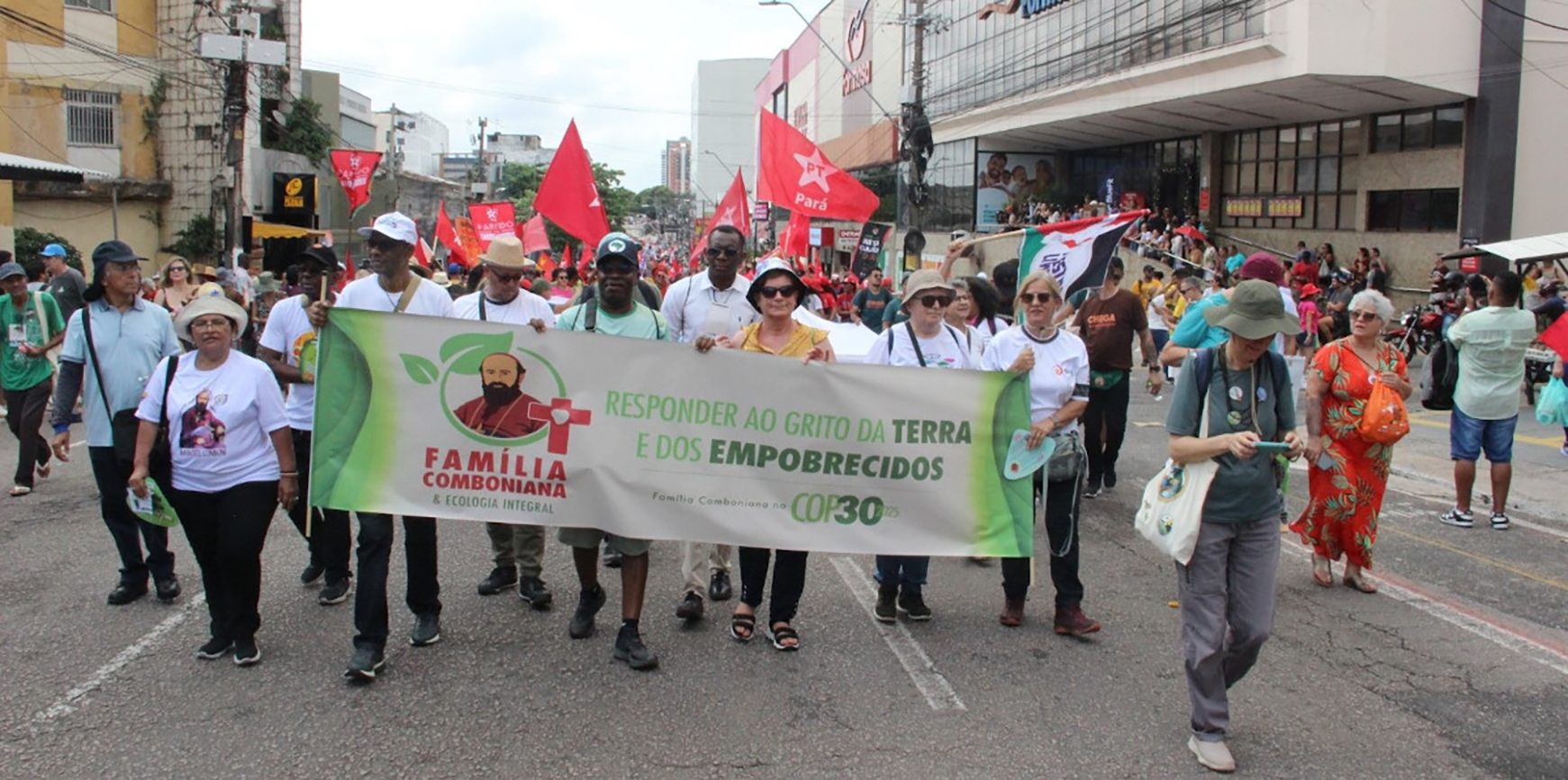
THE COMBONI FAMILY FORUM ON INTEGRAL ECOLOGY “Responding to the Cry of the Earth and the Poor”
Summoned by the cry of the poor and of the earth, thirty-nine representatives of the Comboni Family gathered in Belém, Brazil, on the occasion of COP30 to participate in the Forum on Integral Ecology. Below is their final Statement.
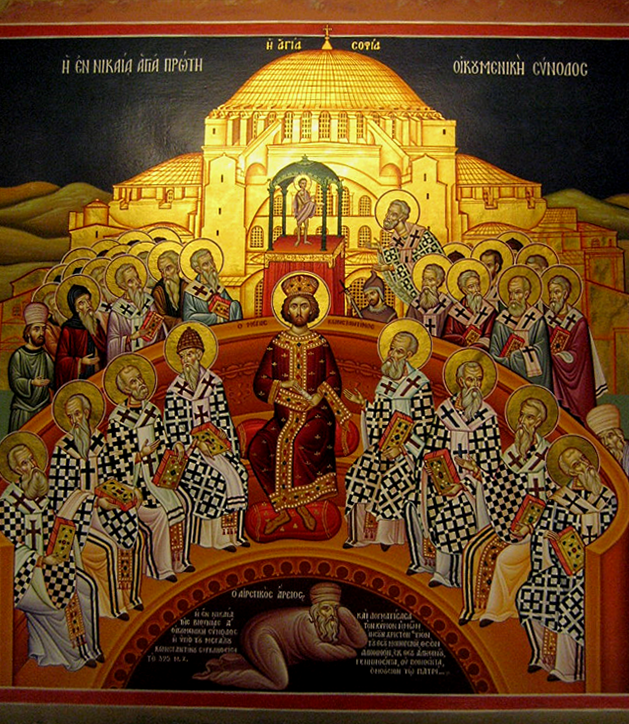
Pope: Nicaea invites Christians to unity in the face of violence and conflict
Pope Leo XIV prays with leaders of various Christian Churches in Nicaea, modern-day Iznik, Türkiye, and invites all Christians to follow the path of fraternal encounter, dialogue, and cooperation.
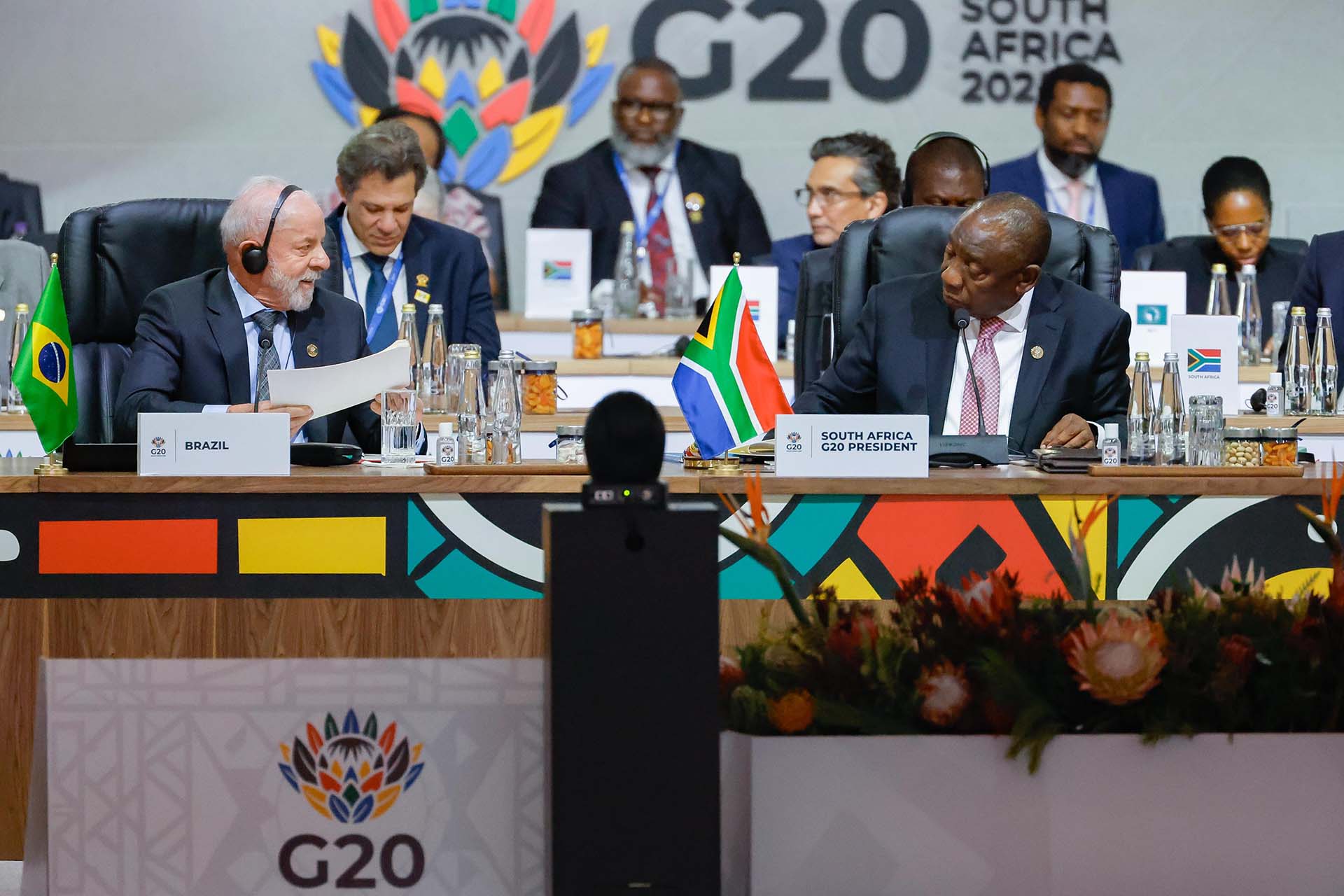
G20 declaration highlights food security as USA and other aid cuts bite
The declaration’s commitment to World Trade Organization (WTO) rules has been welcomed, but signatories, including France, the UK, and Germany, have been slashing their aid commitments and, in the process, undermining the global struggle against food insecurity and hunger.
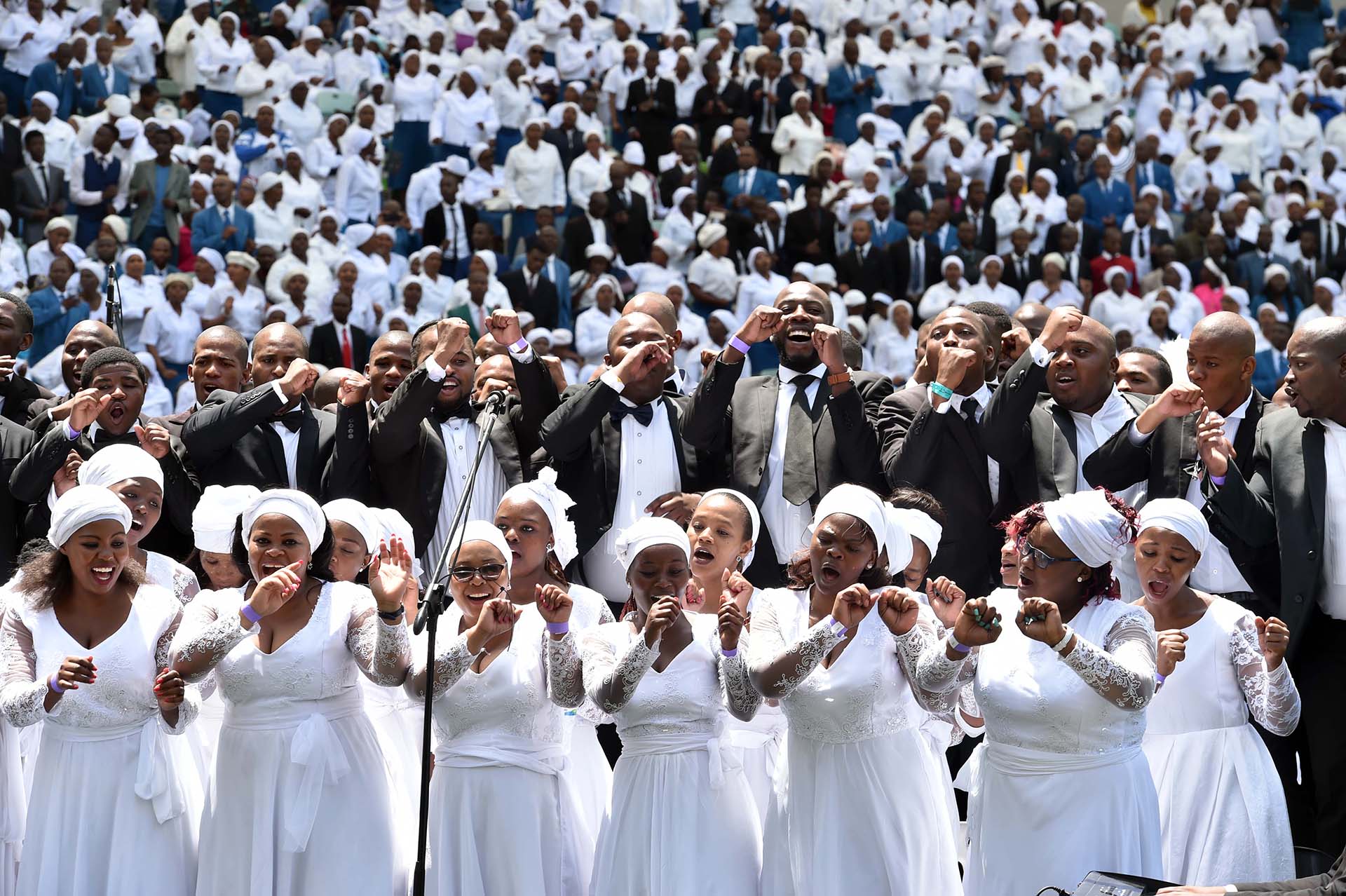
South Africans are flourishing more than you might expect – here’s why
South Africa is often portrayed in the media as a country struggling with inequality, corruption, crime, infrastructure collapse, and public health challenges. But this isn’t the whole story.