
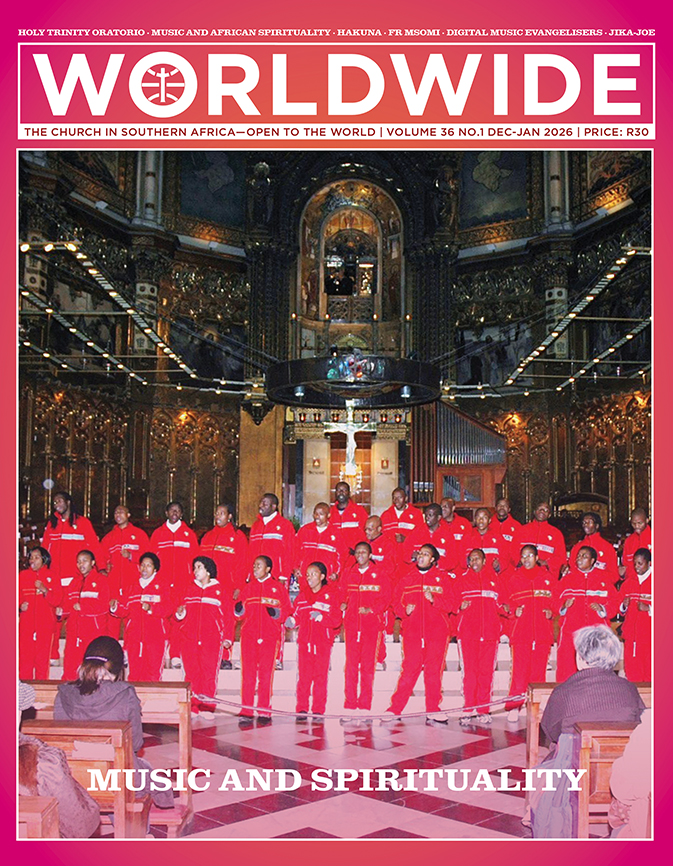
MUSIC AND SPIRITUALITY
The choir Izwi le Themba (voices of hope in isiZulu) from Saint Daniel Comboni Parish at Mahube Valley, Mameldi, Pretoria, singing at Montserrat Abbey in Barcelona, during their concert tour to Spain in 2008. The group’s name conveys a deep meaning rooted in one of the reasons for singing: to bring hope to the world.
Credit: Fr James Calvera MCCJ.
INSIGHTS
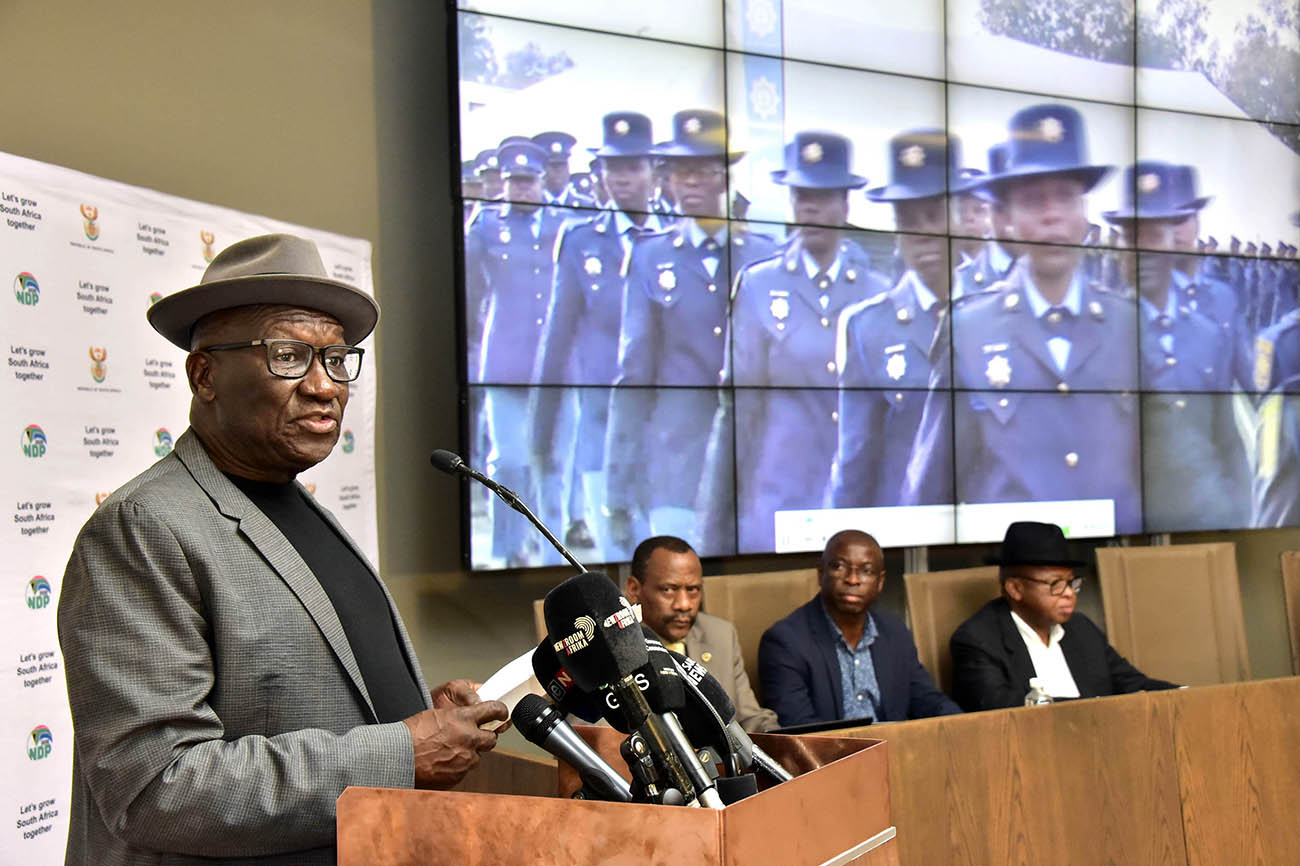
Who Guards the Guardians?
The author raises concerns about criminal behaviour and political interests affecting security forces worldwide, including those in the USA. He then focuses specifically on the current situation in South Africa.
BY Mike Pothier | Programme Manager, SACBC Parliamentary Liaison Office, Cape Town
FOR CENTURIES, societies have worried about what happens when those who are supposed to uphold and enforce the law instead become criminals themselves. The problem was famously expressed by the Roman poet Juvenal, when he asked, ‘Quis custodiet ipsos custodes?’ —who will watch the watchmen?
Turning our attention to the other side of the Atlantic, we see this conundrum taking on massive proportions under President Donald Trump. He makes no secret of his intention to use the justice system to attack his political opponents—not because they have committed crimes, but simply because they are his opponents. Even some of his former allies, having fallen out of favour with him, are now on trial. Various branches of the US military have been deployed to ‘maintain order’ in cities that do not support Trump’s policies, and the Immigration and Customs Enforcement agency (ICE) has been given a free hand to round up and deport anyone suspected of being an illegal migrant, or anyone who simply looks like they might be one. At sea, the US Navy is blowing up boats that are, without any evidence, merely suspected of carrying drugs, with total disregard for the applicable international laws.
Law enforcement
Here at home, our problems with the guardians of the law are slightly different — but just as alarming. Although we have seen some examples of law enforcement officials overstepping the mark, leading to the death or injury of suspects and innocent bystanders, the bigger issue lies with their doing too little to uphold the law.
A prime illustration of this occurs whenever Operation Dudula attempts to interfere with people trying to access healthcare at government hospitals and clinics. This deeply xenophobic group decides which individuals are foreigners and, based on that, denies them entry into the facility. They are now threatening to do the same at schools next year. And the South African Police Service? If they show up at all during such a serious violation of the Constitution, they simply stand by passively. An internet search reveals that only a small number of Dudula members have been arrested, compared to the hundreds involved in these actions.
And then there is the spectacle of the commissions of inquiry into SAPS leadership—the Madlanga Commission, appointed by President Ramaphosa to examine the disturbing claims of high-level corruption in SAPS and the police ministry, and the parliamentary ad hoc committee looking into the same allegations.
At the time of writing, it was far from clear where — or even whether — the truth would ever be found among all the lies, obfuscations, and diversions. But one thing can be said with certainty— an alarmingly large number of senior leaders in our main law enforcement agency are more concerned with factionalism, personal rivalries, and cozying up to rich criminals than they are with fighting crime and keeping us safe.
Criminality and Politics
Back in the days of State Capture, the late Minister Pravin Gordhan told people to ‘join the dots’ if they wanted to know which politicians were benefiting from corrupt relationships with businesspeople. We surely need to join the dots in this matter too — when the suspended police minister, Senzo Mchunu, and his predecessor, Bheki Cele, associated with notorious underworld figures and shady ‘fixers’ who know far more than they should about internal police matters, we have a serious problem. And when the country’s most senior police officers are hurling accusations of corruption and dereliction of duty at each other, it is little wonder that we do not seem to make any headway whatsoever in the fight against crime.
So, who guards the guardians? Who will sort out this mess and bring back some integrity and order to the world of law enforcement? We can be grateful that we still have independent judges to conduct commissions of inquiry, and also that Parliament is taking its accountability and oversight duties more seriously now that the ANC no longer has an outright majority. But until a more professional leadership selection process is instituted at SAPS, and until the police ministry ceases to be a site of factional ANC battles, the likelihood of the guardians returning to do their actual job — keeping us safe —seems remote.
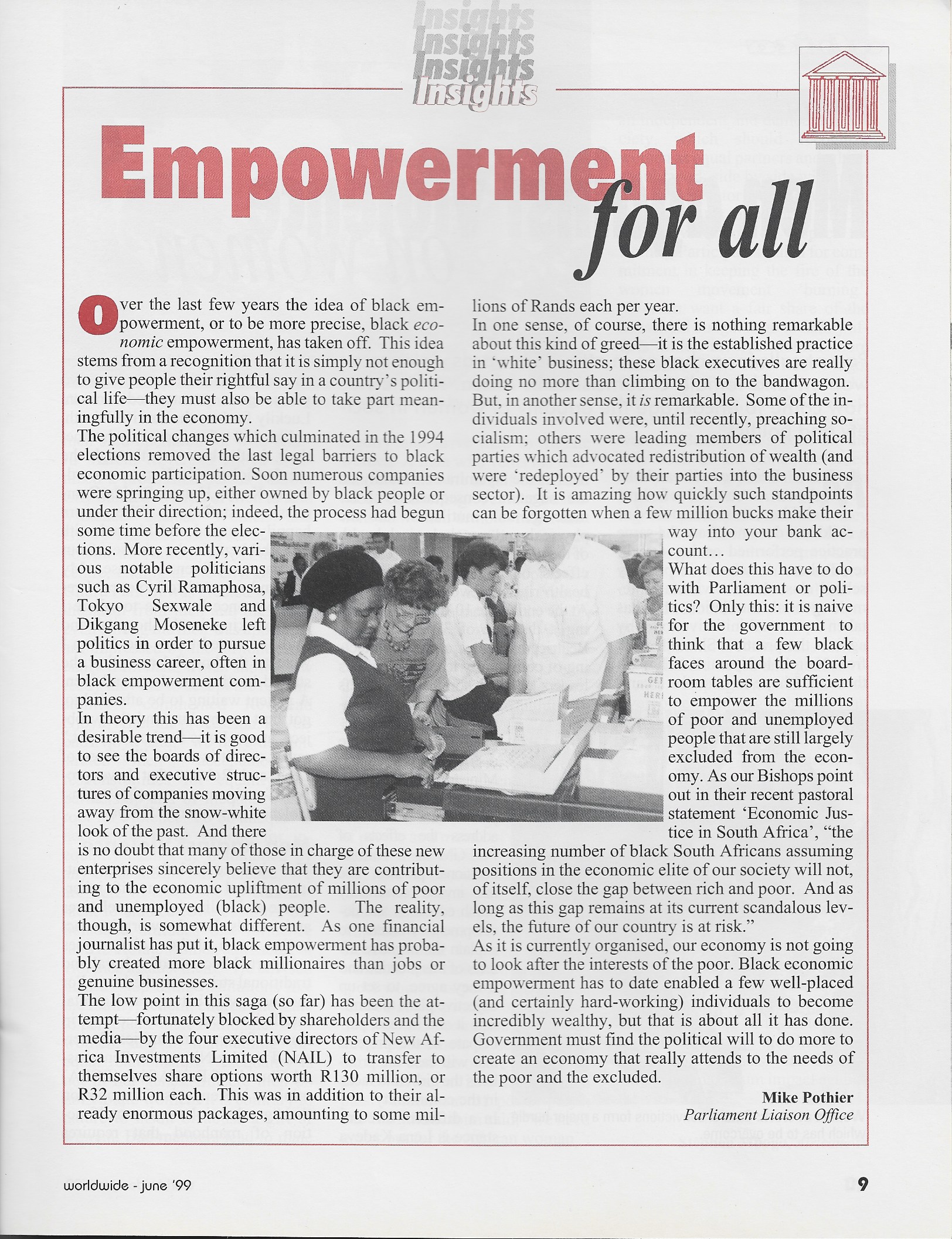
LOOKING BACK…
AS FAR AS I can tell, my first column for Worldwide was for the December 1998/January 1999 issue. It was a report about the South African launch of the Jubilee 2000 campaign, which called for the cancellation of developing-world debt.