
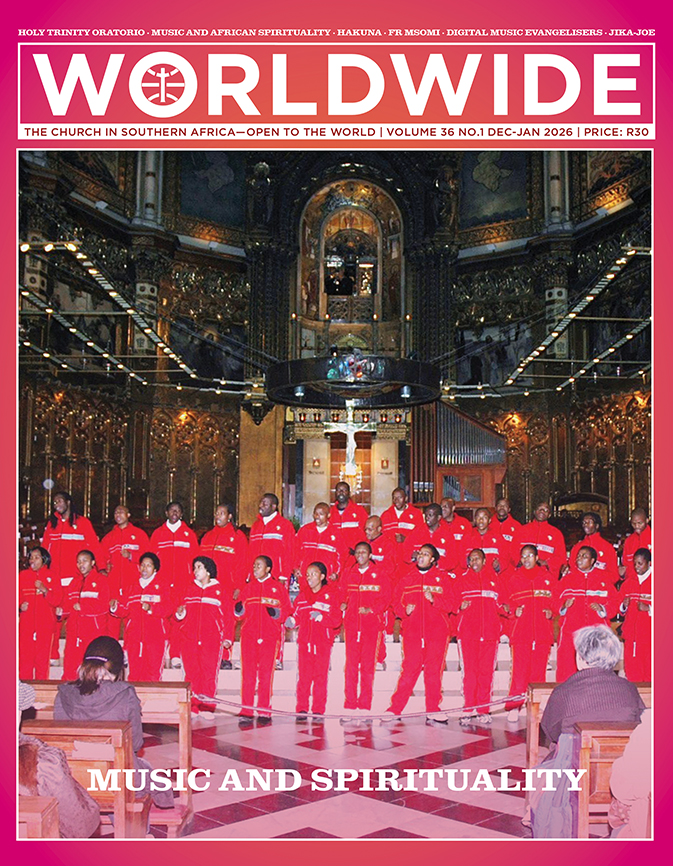
MUSIC AND SPIRITUALITY
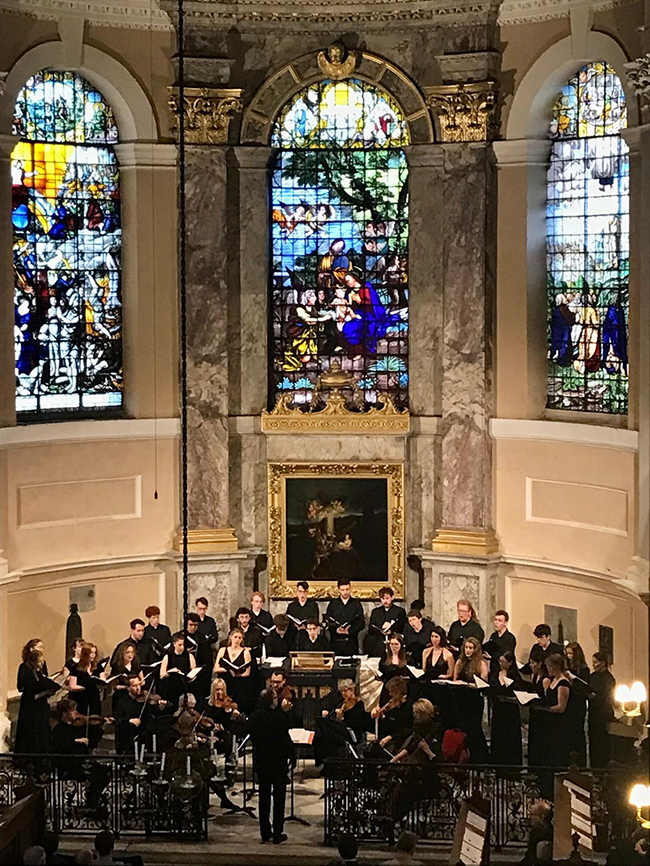
The choir Izwi le Themba (voices of hope in isiZulu) from Saint Daniel Comboni Parish at Mahube Valley, Mameldi, Pretoria, singing at Montserrat Abbey in Barcelona, during their concert tour to Spain in 2008. The group’s name conveys a deep meaning rooted in one of the reasons for singing: to bring hope to the world.
Credit: Fr James Calvera MCCJ.
World Report • MUSIC AND WHOLENESS
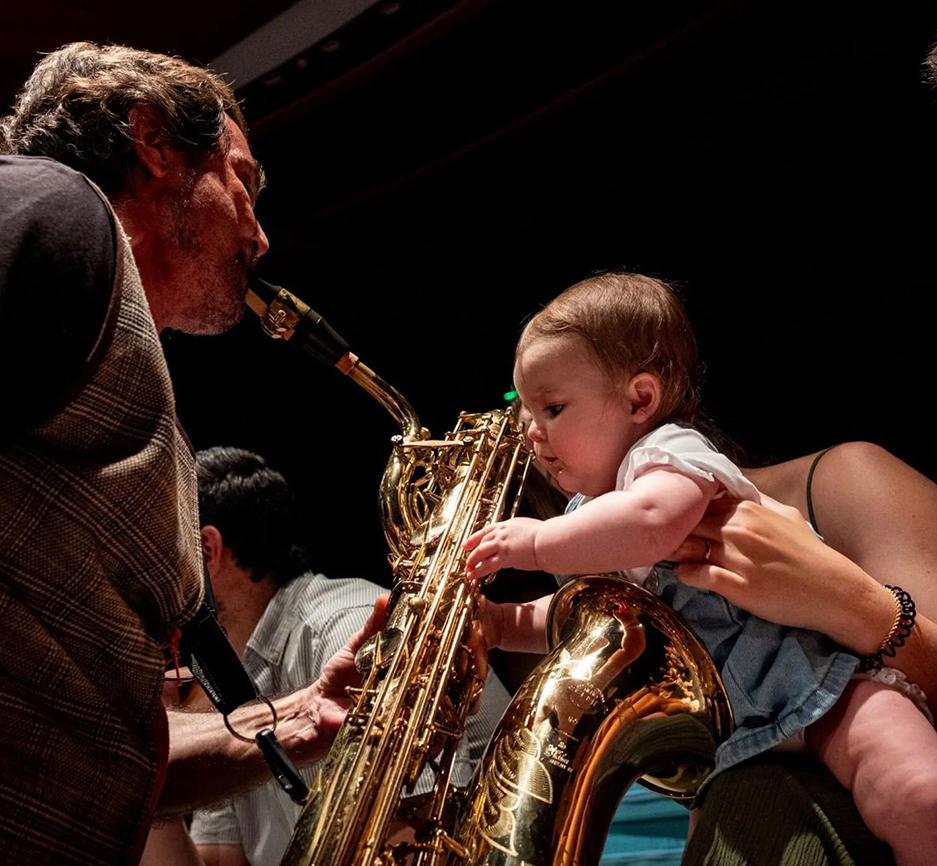
The Benefits of Music
Studies about the relationship between music and well-being have a long history, encompassing a diversity of writing including aesthetics, psychology, education, music therapy, and neuroscience.
BY Dr Maria Joao Rodrigues de Araujo ComIH, MBE | Research Fellow, Faculty of Music, University of Oxford
Music and Well-Being
Advocates for the benefits of sound music in the well-being of a person have argued that it has a major impact on a range of broadly cognitive, emotional, and social skills and aptitudes. The most prominent of these claims has been the so-called Mozart effect (Rauscher, Shaw & Ky, 1993), of which the evidence is contested by some, while other, less controversial claims have been widely accepted. By virtue of the powerful combination of perceptual, cognitive, emotional, social, and motor skills that it engages across a spectrum of individual and social contexts, music has the capacity to have a powerful impact on people’s lives (Clarke, Dibben & Pitts, 2010).
Many people cite music as one of the most important influences in their lives — as something that they could not do without (DeNora, 2000). Music has important identity-constructing and maintaining functions (MacDonald, Hargreaves & Miell, 2002), particularly for young people; and in both explicitly therapeutic contexts as well as more everyday circumstances, music performs important mnemonic functions that have a significant impact on well-being, particularly of members of an ageing population.
While passive listening can play an important part in cognitive engagement, research demonstrates that active engagement in music is more effective in changing the quality of life for the better (Pascual-Leone, 2003). I led a partnership with MIT (Massachusetts Institute of Technology) Media Labs on projects aimed at allowing people without musical training to engage more fully in music. Two research projects using MIT ’s ‘Hyperscore’ composition software demonstrated in both a school and a hospital context the benefits of active musical engagement on participants’ quality of life, bringing with it social and physical benefits and improving community life (Machover, 2004).
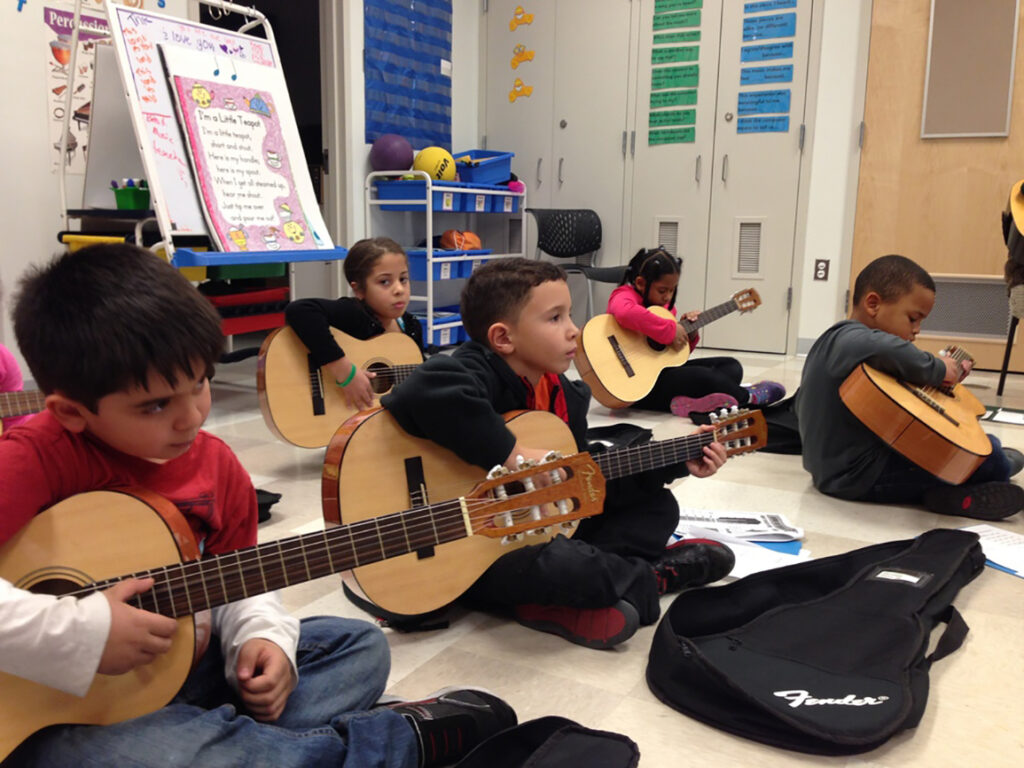
Singing in particular has marked positive effects on well-being and self-realisation, as demonstrated by both large-scale surveys (Clift et al., 2008) and qualitative research (Bailey & Davidson, 2005). One of the reasons why singing feels so profoundly restorative is neurological.
When we sing, the controlled breathing and gentle vibration of the vocal cords stimulate the vagus nerve, one of the main pathways connecting the brain to the body. The vagus nerve plays a crucial role in regulating heart rate, digestion, and the body’s stress response. Activating it through sustained exhalation and resonance, as happens during singing, triggers the parasympathetic nervous system, promoting calm, lowering blood pressure, and reducing anxiety. In other words, singing literally helps the body rest and restore.
Sacred Music
Throughout the centuries, music and liturgy have been closely related. Pope Benedict XVI wrote, “Mere words do not suffice when man praises God. Discourse with God goes beyond the boundaries of human speech. Hence, by its very nature, the liturgy has everywhere called upon the help of music, of singing, and of the voices of creation in the sounds of instruments. The praise of God, after all, does not involve only man. To worship God means to join in that of which all creatures speak”.
Singing in particular has marked positive effects on well-being and self-realisation.
In the article ‘Liturgy and Church Music’, Pope Benedict XVI, then Cardinal Ratzinger (1986), emphasized that liturgical music is not merely a product of performance but a participatory act of worship, noting that the ability to celebrate transcends the technical production of music. He argued that music should not be treated as a mere community task of “making”, but as a vehicle for experiencing and expressing the sacred. In other words, it is important not to lose the essence and purpose of sacred music: to worship and celebrate the Almighty God, entering into communion with Him.
When music becomes an act of worship, its neurological and spiritual benefits are amplified. Research shows that the human brain is naturally inclined to seek God, and this drive finds expression in worship (Pretorius, 2020). Worship influences the autonomic nervous system and activates multiple areas of the brain, including the hippocampus, amygdala, and cerebellum. During worship, especially in communal settings, the release of oxytocin—sometimes called the “bonding hormone”—enhances feelings of trust, belonging, and joy, reducing stress and anxiety. The union of music and worship not only deepens our encounter with God but also reshapes the mind and heart toward greater wholeness.

Glossolalia and liturgy
In some Christian traditions, music worship includes glossolalia (singing in tongues), which produces a distinct pattern of brain activity that reveals both spiritual depth and neurological complexity. Using SPECT (Single Photon Emission Computed Tomography) imaging, Newberg et al. (2006) observed that when individuals sing in tongues, blood flow increases in the parietal lobe—associated with spatial and sensory awareness—while activity decreases in the prefrontal cortex, the area responsible for self-control and executive function.
Complementary research by Francis and Robbins (2003), involving a thousand Christians in the UK, found that 80% of those who practised glossolalia were emotionally more stable and less neurotic. Like music worship, glossolalia activates the amygdala, which governs emotional responses, triggering physiological changes that can promote peace, joy, and emotional release.
In summary, sacred music magnifies the benefits of music, harmonizing the brain, body, and spirit in profound and measurable ways. By engaging the brain’s reward circuits, autonomic nervous system, and emotional centers, it fosters cognitive vitality, emotional stability, social cohesion, and transcendent communion with the divine. Neural pathways are reshaped; stress yields to serenity; isolation dissolves into belonging, as oxytocin surges and the vagus nerve hums in restorative harmony.
Beyond mere sound, sacred music becomes a participatory act of divine praise, drawing believers into communion with God and inviting all to join creation’s eternal song.
Research shows that the human brain is naturally inclined to seek God, and this drive finds expression in worship.
As Pope Benedict XVI concluded (1986): “True liturgy, the liturgy of the communion of saints, gives human beings once again their completeness…True liturgy sings with the angels…True liturgy redeems the earth”.
Bibliography
- Bailey & Davidson. (2005). ‘Effects of group singing and performance for marginalized and middle-class singers’ Psychology of Music, 33, 269-303.
- Clarke, Dibben & Pitts. (2010). Music and Mind in Everyday Life. Oxford: Oxford University Press.
- Clift, Hancox, Morrison, Hess, Stewart & Kreutz. (2008) Choral singing, wellbeing and health: summary of findings from a cross-national survey. Canterbury: Canterbury Christ Church University.
- DeNora, T. (2000). Music in Everyday Life. CUP.
- Francis, L. & Robbins, M., 2003, ‘Personality and glossolalia: A study among male evangelical clergy’, Pastoral Psychology 51(5), 391–396.
- MacDonald, Hargreaves & Miell. (Eds.). (2002). Musical Identities. Oxford: Oxford University Press.
- Machover, T. (2004). ‘Shaping minds musically’. BT Technology Journal, 22, 171-179.
- Newberg, A.B., Wintering, N.A., Morgan, D. & Waldman, M.R., 2006, ‘The measurement of cerebral regional blood flow during glossolalia: A preliminary SPECT study’, Psychiatric Research: Neuroimaging 148(1), 67–71.
- Pascual-Leone. (2003). ‘The Brain that makes music is changed by it’, in Peretz & Zatorre. (Eds.). The Cognitive Neuroscience of Music. Oxford University Press.
- Pretorius, M., 2020, ‘Examining the function of neurobiology in Christian spiritual experiences and practice’, HTS Teologiese Studies/Theological Studies 76(1), a6182.
- Ratzinger, Cardinal J. (1986). ‘Liturgy and Church Music’. Sacred Music, 112, 13-22.
- Rauscher, F.H., Shaw, G.L., and Ky, K.N. (1993). Music and spatial task performance. Nature, 365: 611
WORLDWIDE: A MISSIONARY INSTRUMENT FOR THE KINGDOM
I REMEMBER when Worldwide Magazine was first published in 1990. It sparked joy and marked a new beginning of reflection on the missionary Church in South Africa and the world. It has remained a steady witness ever since.