
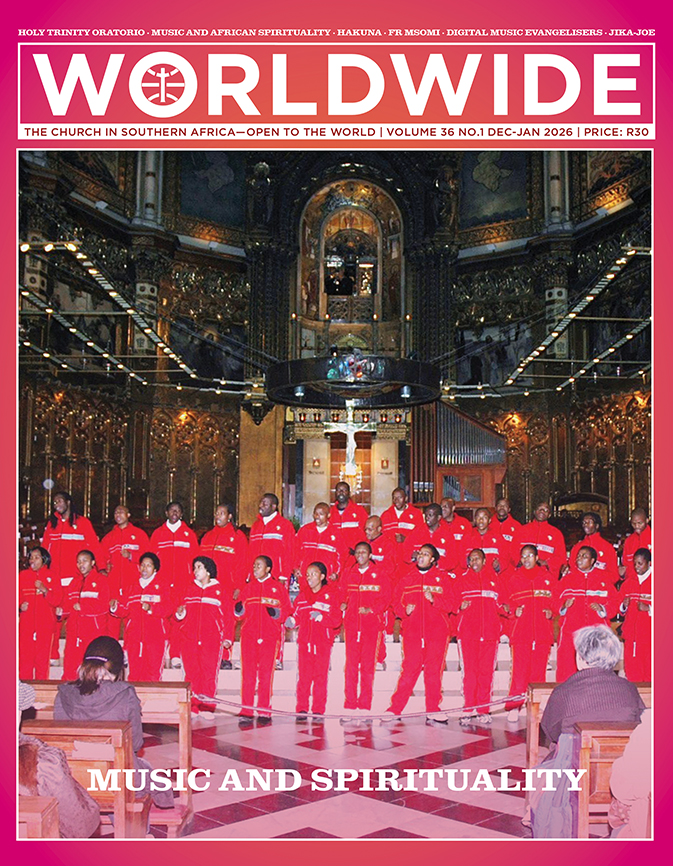
MUSIC AND SPIRITUALITY
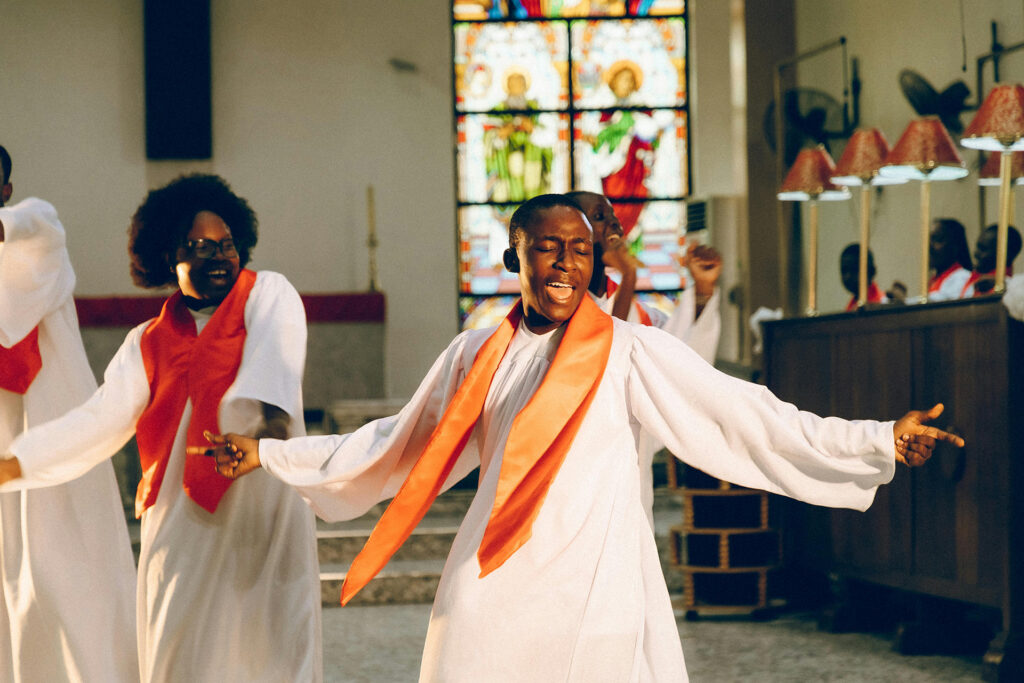
The choir Izwi le Themba (voices of hope in isiZulu) from Saint Daniel Comboni Parish at Mahube Valley, Mameldi, Pretoria, singing at Montserrat Abbey in Barcelona, during their concert tour to Spain in 2008. The group’s name conveys a deep meaning rooted in one of the reasons for singing: to bring hope to the world.
Credit: Fr James Calvera MCCJ.
FRONTIERS • DIGITAL MISSION

Singing the gospel in a digital world: The impact of evangelisation through music by digital missionaries
In an era marked by endless scrolling, fleeting trends, and ever-evolving digital platforms, the timeless message of the Gospel has found an unexpected, yet deeply powerful vessel: music.
BY Kati Dijane | Catholic Journalist, Johannesburg
ACROSS THE WORLD, Catholic musicians are stepping into the digital space as modern-day missionaries, evangelising not from pulpits, but through playlists, videos, live streams, and shared posts. From TikTok and Instagram to YouTube and Spotify, sacred soundscapes are being woven into everyday life, guiding, comforting, and connecting souls to God through rhythm and song.
Today, evangelisation is happening increasingly online.
At the heart of this movement in South Africa are voices such as Lebone and Lesedi Khunou, a twin duo who call themselves The Light Twins, and Thuso Wa Sibini, a choralist and Radio Veritas presenter. Their journeys from the township of Alexandra in Johannesburg offer a glimpse into how Catholic music has evolved from something once perceived as rigid and overlooked into a vibrant, appealing form of worship with the power to transform hearts across denominations and generations.
Music as mission: A new kind of evangelisation
Evangelisation, the task of proclaiming the Good News of Christ to all nations, has always been central to the Catholic Church’s identity. Traditionally, this happened through preaching, sacraments, and personal testimony. Today, however, evangelisation is happening increasingly nonline: through shared songs, inspirational videos, live worship sessions, and digital testimonies.
Music acts as a universal language capable of transcending barriers of culture, language, and theology. As Thuso Wa Sibini explains, music can touch people in ways that words often cannot. “It’s a pastoral tool,” she says. “A project of the heart with a clear purpose.”
Her approach to music is deeply intentional. By merging Catholic spirituality with contemporary sounds, particularly dance and house music under the genre she calls Gospel House, Thuso has found a way to speak to younger generations who may feel disconnected from the Church. Her very first single, Magnificat, was drawn from the biblical moment of Mary’s praise, blending ancient scriptural power with modern rhythm.
“It allowed me to teach people something about the Catholic faith through music without losing theological depth”, she explains.
Her music lives not only in parishes but also in clubs, cars, headphones, and social media feeds, proving that faith can exist and thrive in spaces previously untouched by traditional religious practice.
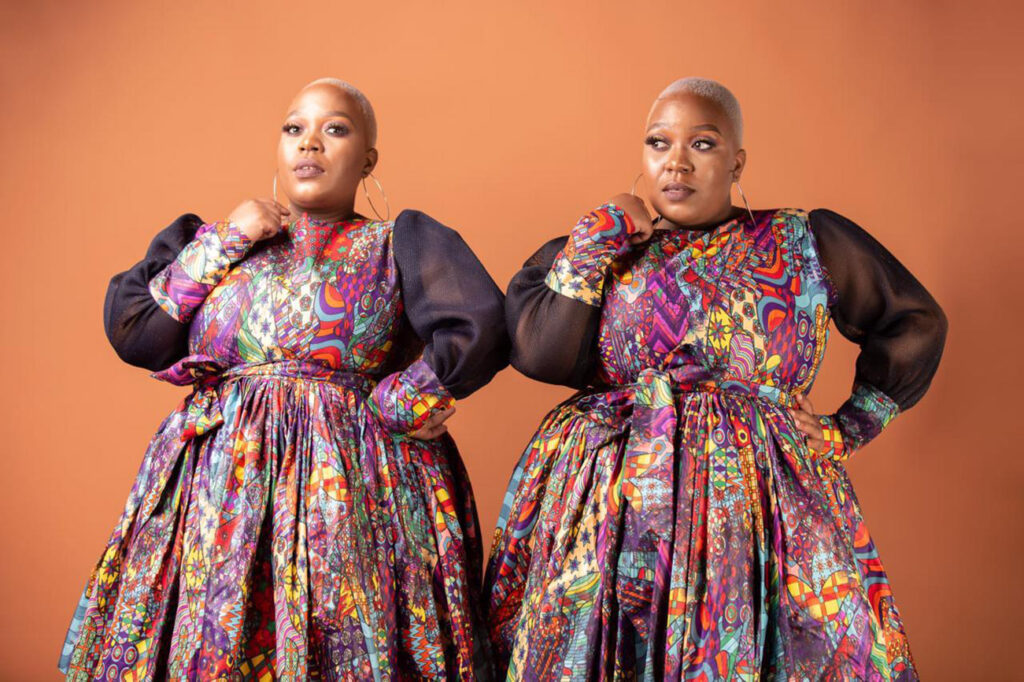
The Light Twins: Modernising sacred sound
For Lebone Khunou and her sister, Lesedi, their journey under the name “The Light Twins” began in 2016. It was a bold move to take traditional Catholic hymns and modernise them. They were not discarding tradition but reimagining it for a digital generation.
Lebone admits: “At first, it wasn’t easy, because our style was not so traditional. We were taking our traditional music and modernising it.”
Initially, the music was met with mixed reactions: resistance from those who preferred the familiar, and support from those who welcomed innovation. As they continued to share their videos and later released their first album in 2017, the reception changed.
“People grew to love us and appreciate what we were doing with Catholic music,” she says.
What makes The Light Twins particularly fascinating is that their sound appeals not only to Catholics but also to non-Catholics, even Protestants. Songs like ‘Ikelelloeng’ (“Behold”, in seSotho), rooted deeply in Catholic tradition and theology, have found new audiences outside of the Church.
“A tune will grab someone before they even hear the words,” Lebone reflects. “And once they hear the words, they connect because it’s biblical. It’s a story everyone understands.”
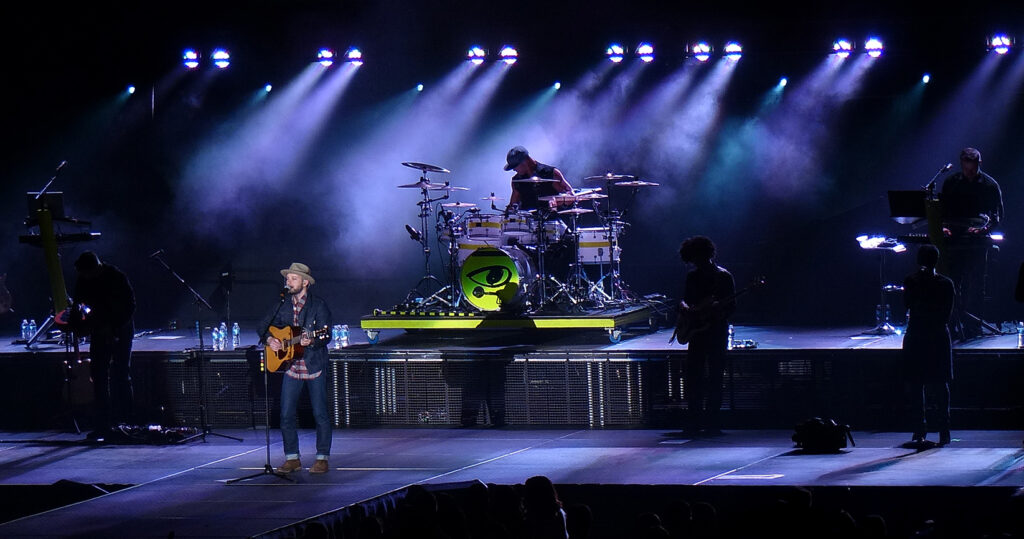
Breaking old perceptions about Catholic music
There was a time when Catholic music was viewed as outdated, dull, or lacking musical excellence. It was often marginalised or misunderstood when compared to contemporary gospel or praise and worship music in other denominations.
“People looked down on Catholic music,” Lebone admits honestly. “They didn’t believe we were true musicians or true worshippers.”
But that narrative is changing.
Artists like Kgethang Konese, who continue to amplify Catholic music on wider platforms, have played a significant role in shifting perceptions. Their work has opened people’s ears to the richness, depth, and beauty of Catholic hymns, revealing them as not just ritualistic chants but powerful theological expressions.
What makes The Light Twins particularly fascinating is that their sound appeals not only to Catholics but also to non-Catholics.
These musicians have become unofficial ambassadors of Catholic sacred music, bringing it into mainstream consciousness and proving that it can stand confidently alongside any genre.
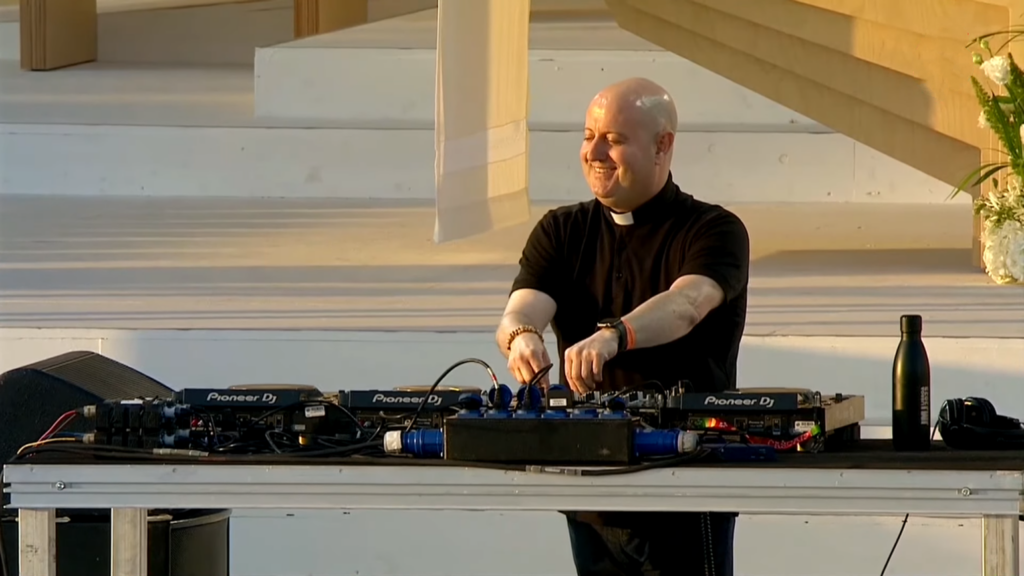
Digital platforms as modern-day pulpits
What truly sets this new wave of evangelisation apart is the use of digital platforms. Social media is no longer just a space for entertainment; it is a mission field.
Globally, Catholic musicians such as Matt Maher, from Canada, Sarah Kroger, from Nashville, Fr Rob Galea, from Australia, and even Father Guilherme Peixoto, famously known as Padre Guilherme, use Instagram, TikTok, Facebook, and YouTube to share their music, Scripture reflections, and moments of prayer with millions of fans. Their followers experience worship in a way that aligns with modern life: during commutes, at home, between meetings, or while studying.
South Africa is witnessing the same phenomenon. Through platforms like Radio Veritas, YouTube, and TikTok, artists like Thuso and The Light Twins are able to evangelise far beyond parish boundaries. Their voices carry into homes, cars, campuses, and workplaces.
Thuso’s Sunday radio show on Radio Veritas has become another powerful tool for this mission. By featuring parish choirs, community groups, and non-Catholic musicians, she turns her show into an inclusive, evangelising space.
“It has brought non-Catholic choral lovers into our media space,” she says. “It shows that music is a legitimate channel of evangelisation.”
Her thoughtful curation pairs music with Scripture, reflection, and Catholic teaching, making each broadcast both spiritually enriching and musically engaging.
Evangelising the youth: Making God ‘cool’ again
One of the key areas where digital music evangelisation is making a significant impact is among the youth. Many young people feel disconnected from traditional forms of worship, yet they are constantly engaging with music online.
“I wanted to make God cool,” Thuso admits, without hesitation. In doing so, she is not diluting the message but simply translating it into a language young people understand: sound, rhythm, movement, and culture.
Similarly, The Light Twins have stayed true to who they are. “The ladies of 2017 and the ladies of 2025 are still the same,” Lebone states proudly. This consistency, coupled with authenticity, has allowed their ministry to grow organically.
Catholic hymns are no longer confined to the celebration of Mass.
By modernising hymns and projecting joyful, stylish confidence in their videos and performances, they embody a faith that is not restricted to silence and solemnity, but one that is alive, celebratory, and deeply human.
Music beyond church walls
Another profound impact of digital evangelisation through music is the way it crosses denominational and cultural boundaries. Catholic hymns are no longer confined to the celebration of Mass. They are being sung at weddings, community events, concerts, and even at gatherings of other denominations.
This phenomenon underlines a beautiful truth: at its core, sacred music is about Christ, and Christ belongs to everyone.
Thuso’s performances at Christian events and The Light Twins’ outreach beyond parish settings reflect a Church that is reaching out, rather than waiting to be found. They embody Pope Francis’ message in his 2013 apostolic exhortation, Evangelii Gaudium: “I prefer a Church that is bruised, hurting and dirty because it has been out on the streets rather than a Church that is sick from being closed in on itself.” (EG 49).
Why don’t they quit their day jobs?
Interestingly, neither Thuso nor The Light Twins see their ministry as an escape from the corporate world. Instead, they prefer maintaining the balance—a reminder that evangelisation does not require detachment from ordinary life.
“We understand the economy,” Lebone says pragmatically. “One day you are up, the next you’re not. We’d rather juggle both.”
This reality underscores that digital missionaries are not always full-time artists with large contracts and recognition. Many are ordinary people with extraordinary callings, using the talents God has given them in practical, grounded ways.
A ministry of availability, not perfection
Perhaps the most powerful message that emerges from their journeys is that evangelisation through music is not about perfection. “It’s about being available,” Thuso says. “Letting God use my voice, my sound, and my story.”
Music is an important form of worship, and several artists are using social media as a means to evangelise and proclaim the Good News. Their melodies become prayers, and their lyrics become invitations to return to God. From parish halls to TikTok feeds, the Gospel continues to echo through music. In the hands of committed, faithful artists like Thuso Wasibini and The Light Twins, that echo is reverberating on our social media feeds and beyond.
References
Pope Francis. 2013. Evangelii Gaudium. Apostolic Exhortation.
THE JUBILEE OF THE YOUTH IN ROME REJUVENATED MY DIGITAL MISSIONARY WORK
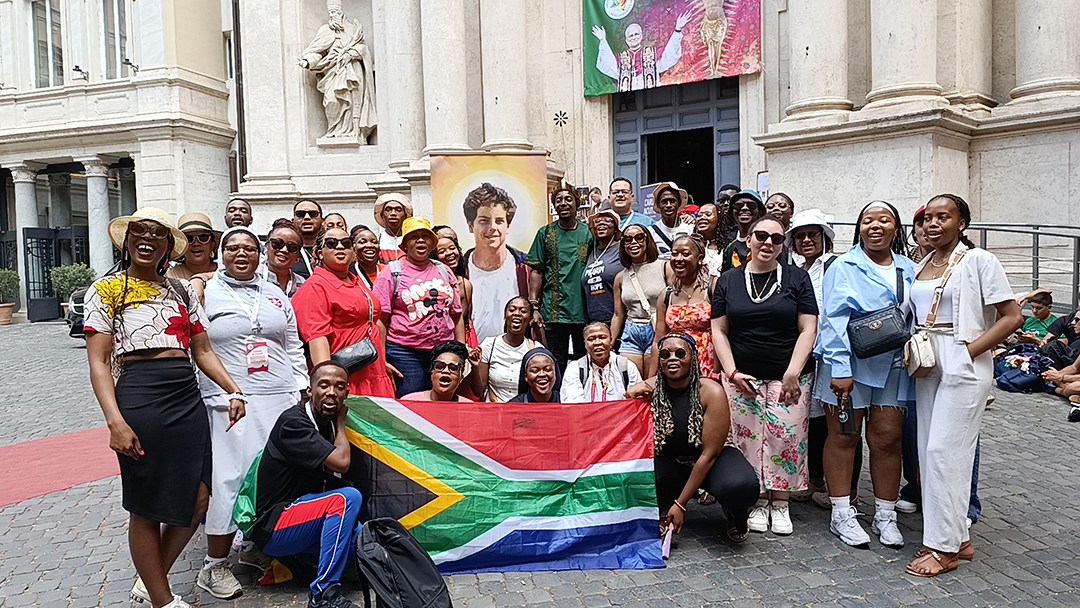
AUGUST 26, 2025, marked exactly one month since I stepped off a 14-hour flight from Johannesburg and set foot in Rome for the Jubilee of the Youth. I was part of a group of 37 pilgrims representing the Archdioceses of Pretoria, Johannesburg, and Bloemfontein, and the Diocese of Kimberley.