
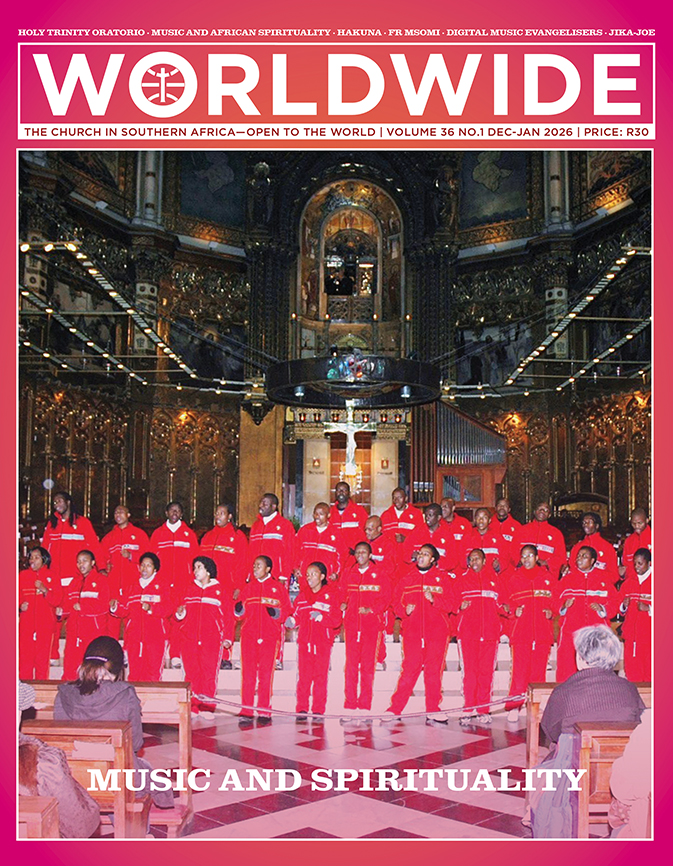
MUSIC AND SPIRITUALITY
The choir Izwi le Themba (voices of hope in isiZulu) from Saint Daniel Comboni Parish at Mahube Valley, Mameldi, Pretoria, singing at Montserrat Abbey in Barcelona, during their concert tour to Spain in 2008. The group’s name conveys a deep meaning rooted in one of the reasons for singing: to bring hope to the world.
Credit: Fr James Calvera MCCJ.
YOUTH IN MISSION • JIKA–JOE
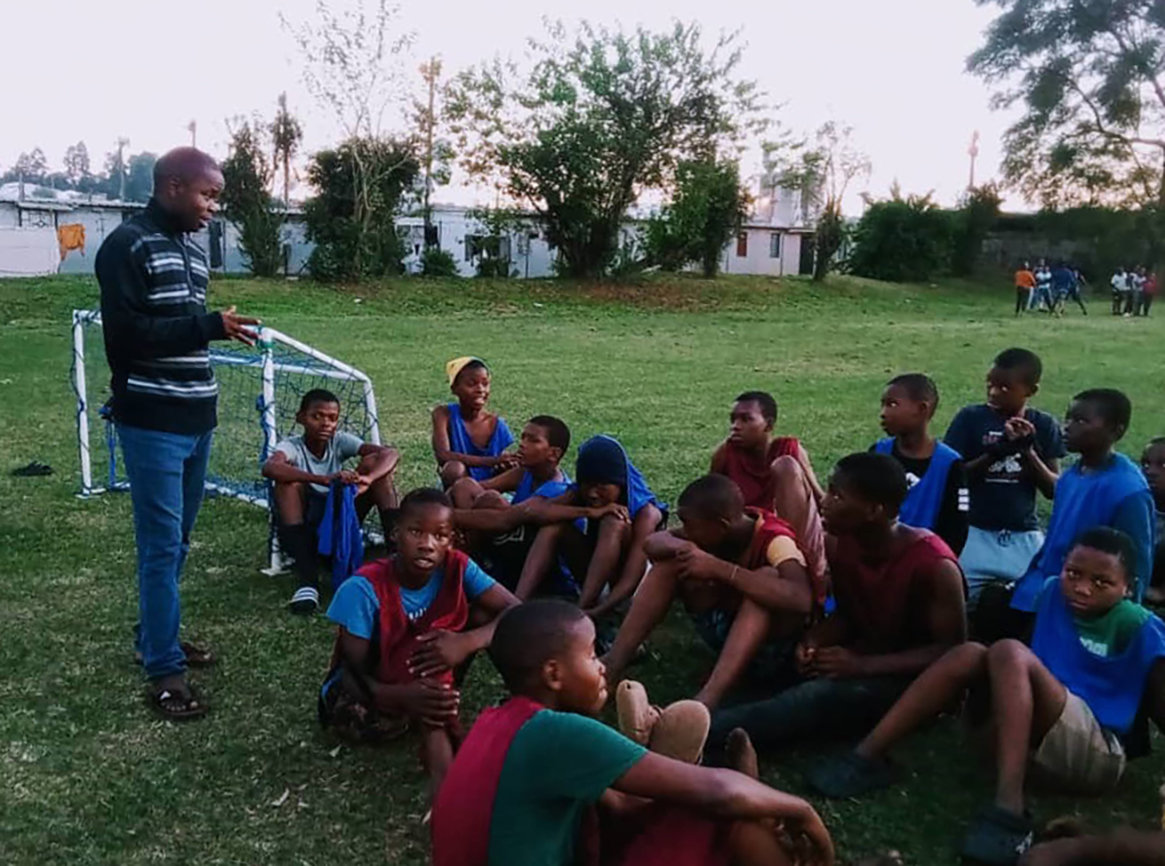
Channels of Hope
The Comboni Scholasticate community at St John of Arc in Pietermaritzburg seeks to offer a response of ‘faith in action’ to the reality of their neighbours, dwellers of the informal settlement of Jika-Joe. The author of this testimony, a Malawian scholastic and student at the Theological Institute of St Joseph, Cedara, gives witness to God’s action among the most vulnerable members of this small township.
TEXTS AND PHOTOS BY GERALD PAUL HIERONIMO MCCJ | PIETERMARITZBURG, KZN
UPON ARRIVING AT St Daniel Comboni Scholasticate in Pietermaritzburg, South Africa, I was excited to begin my theological studies and immerse myself in the vibrant culture of this rainbow nation. My journey started in the cities of Pretoria and Johannesburg, where I experienced urban life, expecting Pietermaritzburg to offer a similar vibe. However, my perspective shifted completely when I entered the informal settlement of Jika-Joe. Living close to this community has been an eye-opening and transformative experience for me. Hope, and being present for the poorest and most abandoned, became not just spoken words but a reality lived daily with joy and perseverance.
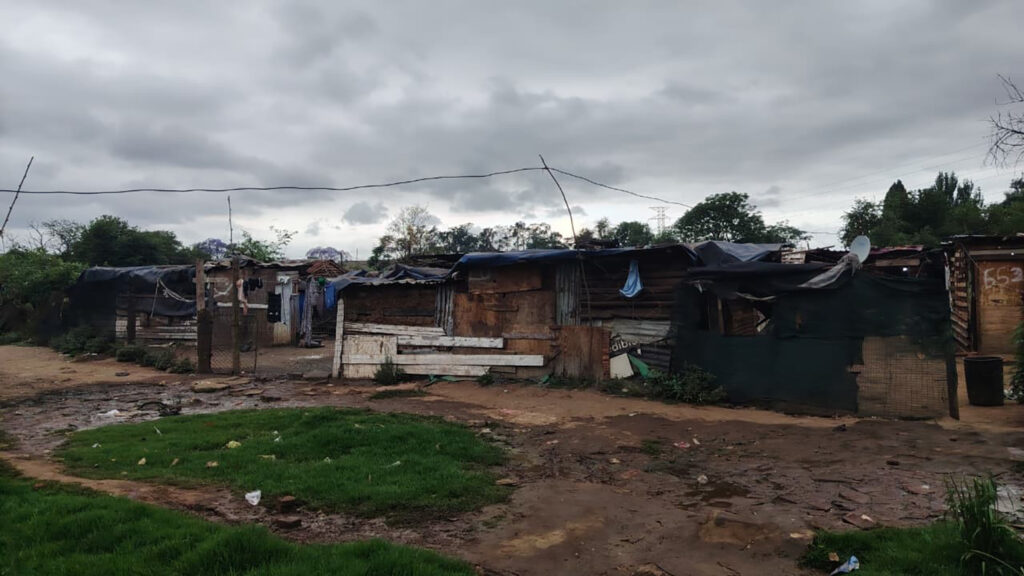
Life in Jika-Joe
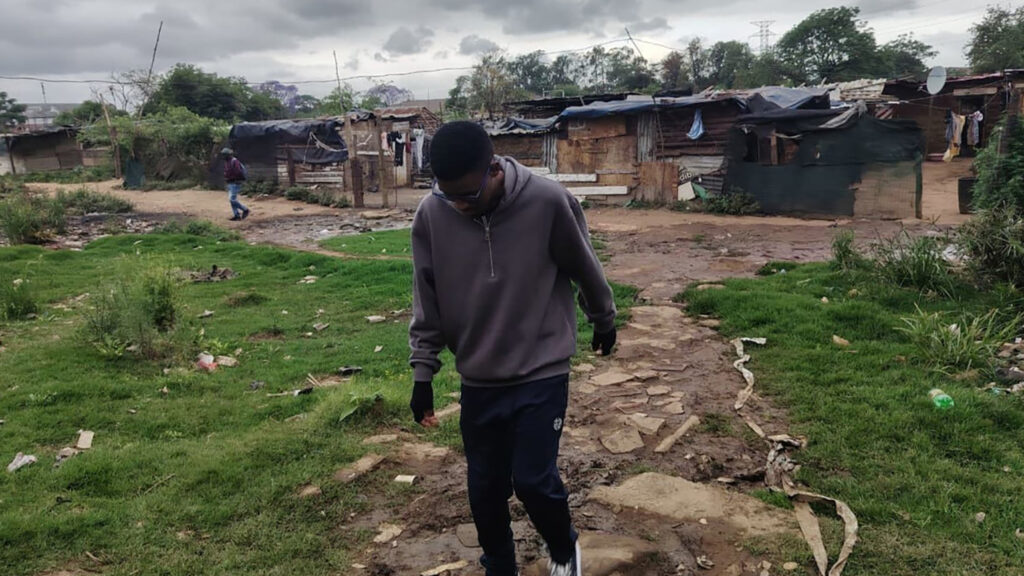
As you walk through this neighbourhood, you cannot help but notice how residents face various unforgiving realities. Life in overcrowded homes, under harsh conditions, while conducting minimal businesses under the sweltering sun, filled with the cacophony of urban chaos, and with limited role models, makes survival a daily challenge. Living with and listening to these people’s untold stories reveals the overlooked struggles they face. They grapple with poverty, peer pressure, abuse, and a lack of clear direction for their future, all of which expose them to significant hardships. Life often crushes their dreams, energies, and aspirations for a better life, resulting in a profound sense of unhappiness. Only those who are strong, and solely by God’s grace, manage to survive, but mostly they still fail to fulfil their deep-seated hopes and needs. Others resort to vicious activities and dubious coping mechanisms to enable them to survive in this harsh environment.
Forced into prostitution
The life of “Nqobile” (not her real name), a young lady from Jika-Joe, is an example of this struggle for survival. She comes from a single-parent background, from the family referred to as “Mama Zenzile’s.” “Nqobile” is friendly and hardworking, yet she has faced significant challenges in her life. Because of poverty, she was forced into prostitution to provide for the basic needs of her family. She did not want to follow this path but saw no other way to support her family. She felt that if she could not help them, she would betray them, leading to their irreversible misery. Unfortunately, her mother is engaged in the same profession to support her family. Thus, with feelings of shame and self-blame, “Nqobile”, despite wrestling with her conscience, ultimately participated in these activities that offered a glimmer of hope for her loved ones.
After having left the industry, “Nqobile” is now on a journey of recovery, working tirelessly to overcome her past.
The tough and often harsh environment of her profession led her to deep regret. She had to learn to ignore the dictates of her conscience to be accepted by her friends in this industry. While this offered temporary relief, it also concealed her true self, leaving her feeling like a mere shadow of her former self. Moreover, she encountered people who saw her solely as an object of pleasure, stripping away her dignity and exposing her to various risks. Each encounter chipped away at her spirit, leaving scars that would take time to heal.
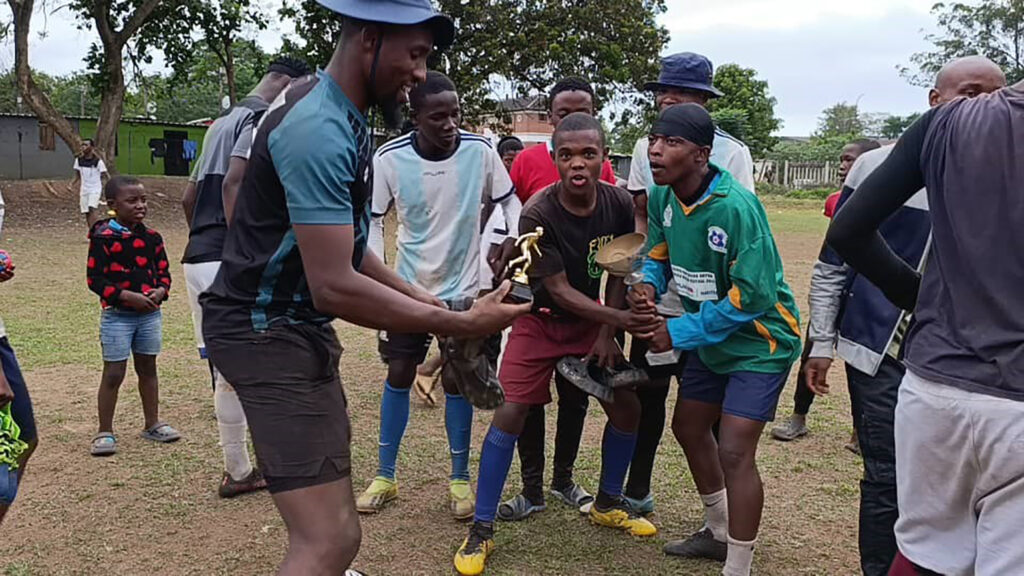
Despite this tumultuous past, she has shown remarkable resilience. With support from her community and what she refers to as “God’s help,” she gathered the courage to tell her mother that she was uncomfortable and felt constrained in her job. Although this decision disappointed her mother, who recognised how supportive “Nqobile” had been for her family, she was eventually allowed to quit. Her mother encouraged her to find another job that would still support the family. So, after having left the industry, she is now on a journey of recovery, working tirelessly to overcome her past. This healing process is not just about physical recovery; it’s about rediscovering her identity and embracing her inherent worth as a beloved daughter of God. With each step forward, she is reclaiming her dignity and learning to love herself again. Her experiences have irrevocably changed her, but they have also strengthened her resolve to help others who may find themselves in similar situations, advocating a message of hope and healing.
“Nqobile” continues to face the vulnerabilities related to poverty, as she struggles to find the support she needs to achieve her innermost aspirations. Our community continues to offer her psycho-spiritual support and a listening presence whenever the need arises, to which she responds positively. She enjoys being visited and sharing her life experiences. However, we are unable to address all her daily needs. The material assistance we currently offer remains insufficient. We hold onto hope, believing that a better future awaits her.
Struggling with documentation
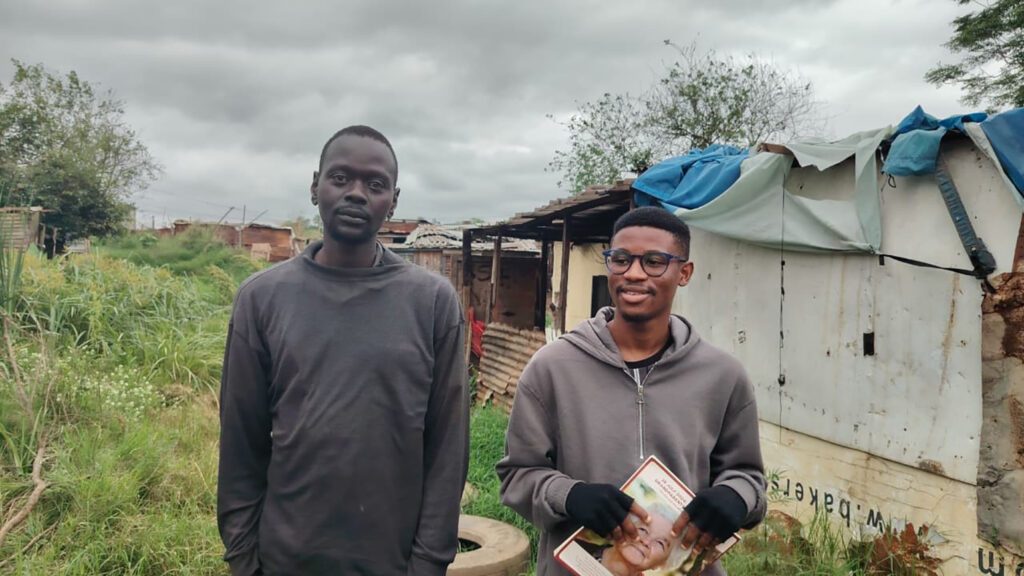
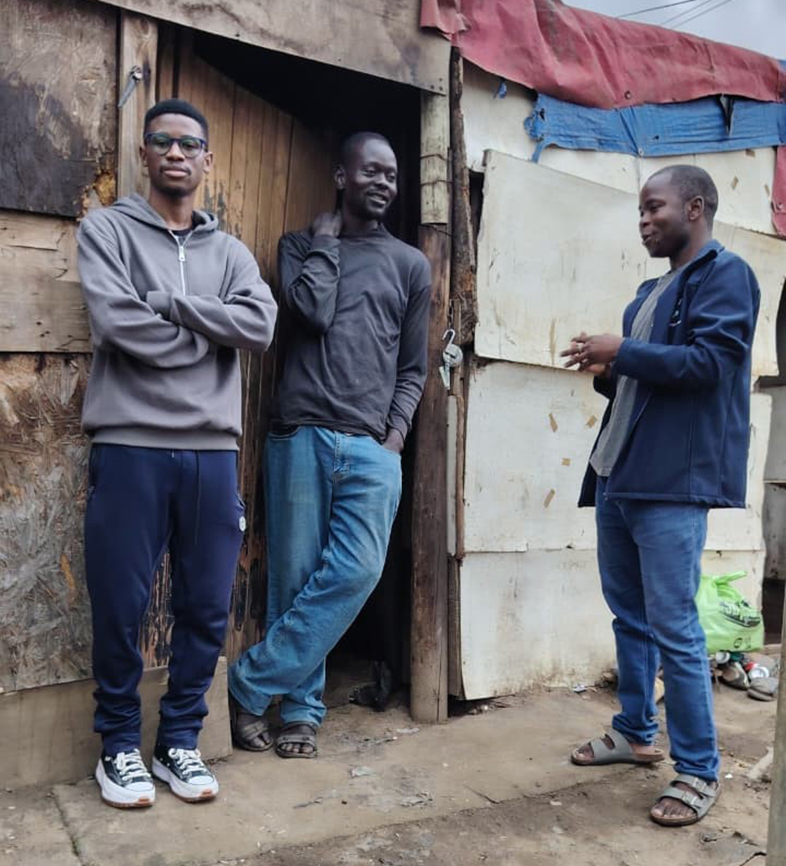
Another dismal outlook is that of the non-South Africans who live in Jika-Joe. While some manage to get by through piecework and small businesses, many face daily challenges that lead them to question whether they would have been better off in their home countries. A significant issue most of them must confront daily is the lack of proper documentation required to apply for a job. Many are ignorant about the process of obtaining this documentation; some have overstayed their visas, while others possess no valid documents at all. One example is the case of Evans Odour Omolo from Kenya, who came to South Africa in 2009 in search of better opportunities. His situation is quite challenging; he requires assistance to return to his home country as soon as possible.
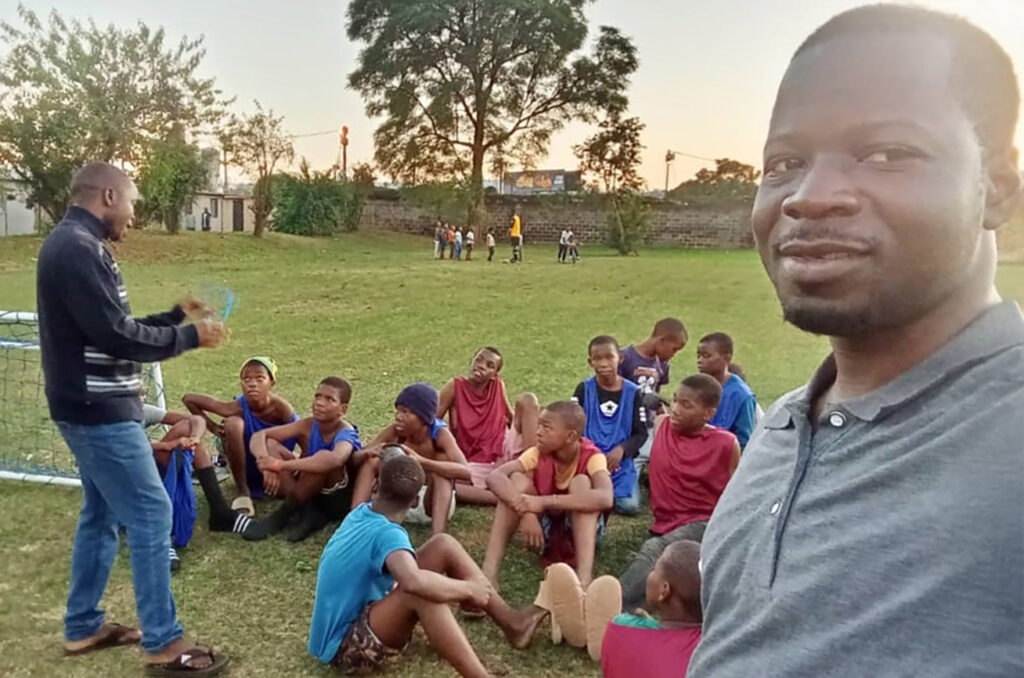
We have a group dedicated to identifying the needs of the less fortunate among us and providing the necessary and possible support.
Evans comes from a family of three, including himself and two sisters. His parents passed away many years ago, and he managed to survive through God’s grace. He arrived in South Africa with a valid visa, hoping to find a job that would allow him to support his family. Yet, upon arrival, his expectations were not met. He struggled to find employment that matched his aspirations and was compelled to accept harsh work to make ends meet and pay the rent. Life became even more challenging during the COVID-19 pandemic. Due to having either a small or sometimes no income at all, he struggled to support himself. He had to leave his accommodation and move to a less privileged area, where he now resides near a river in Blikkiesdorp.
We need to work together to find ways to bring hope to our world.
His house was burned down more than twice, and consequently, his passport was destroyed. This has made travel impossible for him and has made him vulnerable to arrests from immigration officers and to harassment by groups like Operation Dudula. He feels trapped, relying solely on whatever life provides for him in this difficult environment. He has lost hope that anybody will understand him. Life becomes unbearable during the rainy season as the area gets flooded. In winter, he suffers from the cold. He endures hardships throughout the year. He has been trying to reach out to his family, asking for support and assistance to return home or to find a job, but all these attempts have been futile. He also contacted his home country’s embassy, but progress has been slow, leaving him feeling despondent and forlorn.
A missionary response
When looking at these situations, we need to recognise that hope for a better world depends on our collective responsibility to address these very real issues with compassion, teamwork, and innovation. We, as the Comboni community, often navigate these challenging situations together. With deep faith and humility, we strive to uplift the lives of those around us through prayer and various initiatives. We engage with people by listening to them with the love of Christ and offering them support. This includes providing the limited material resources we have, assisting with, i.e., schoolwork, and printing and photocopying services.
We have a group dedicated to identifying the needs of the less fortunate among us and providing the necessary and possible support. They also engage in outreach within the community by visiting families, and specifically the sick. The parish makes its premises available as a space for dialogue among community members, civil authorities, and concerned groups to discuss ways to transform and empower the community. Socially, we organise singing and sporting activities to instil hope and remind the communities that Christ loves them and that a brighter future is possible. We are committed to living alongside these less fortunate people, despite the various challenges we face. We are there for them and we are with them, the poorest and the most abandoned!
Jesus gave us love as a command rather than a mere suggestion.
This shows that hope is not a passive feeling but an active force that drives us forward. As Pope Francis stated, “Let us get up, therefore, and set out as pilgrims of hope, because, just as Mary did with Saint Elizabeth, we too can bring news of joy, create new life, and be artisans of brotherhood and peace.” Indeed, “Hope does not disappoint” (Rom 5:5). May the Jubilee of the Pilgrims of Hope, which we are celebrating in 2025, serve as an opportunity for all of us to be renewed in hope.
We need to work together to find ways to bring hope to our world. As individuals, groups, sodalities, parishes, and families, we are called to be witnesses and carriers of hope to others. Our presence must be transformative, life-giving, and a testament to Christ’s love; our attitudes must reflect the true presence of Christ within us. We are the guardians of hope. Quoting theologian Jürgen Moltmann, we need to be “infecting others with hope.” Jesus’ words must resonate within us: “I give you a new commandment, that you love one another. Just as I have loved you, you also should love one another” (Jn 13:34). Jesus gave us love as a command rather than a mere suggestion. Love is the evidence of knowing God, who is the source, essence, and the end of all hope.
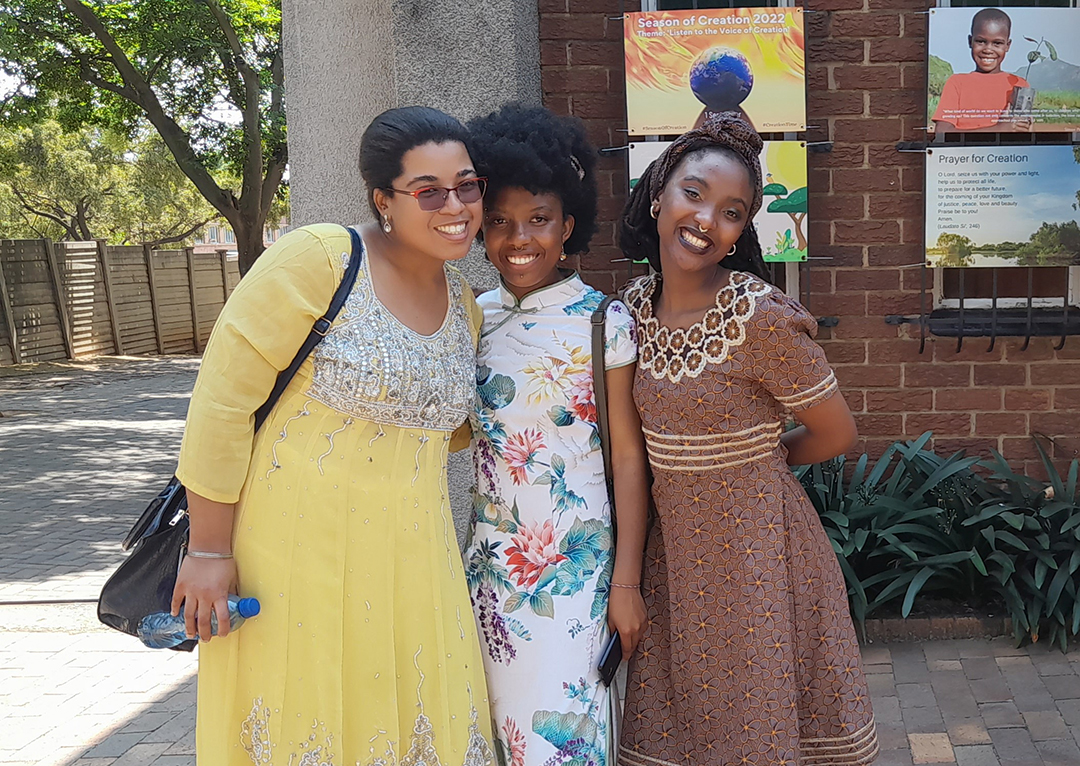
DOING ‘LITTLE’ THINGS WHICH MAKE A BIG IMPACT
ALTHOUGH I HAD regularly seen and purchased the Liturgical Calendar published by the Comboni Missionaries, I had never really known about Worldwide Magazine until I started attending mass at St Augustine Parish, Silverton, Pretoria. There, I had my first experience of the Comboni Missionaries and their work.