
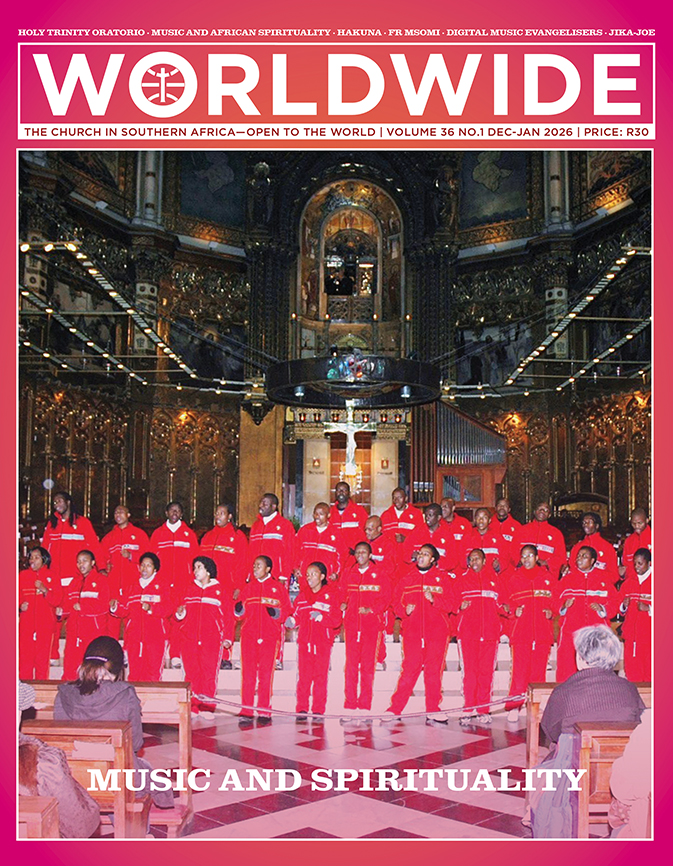
MUSIC AND SPIRITUALITY
The choir Izwi le Themba (voices of hope in isiZulu) from Saint Daniel Comboni Parish at Mahube Valley, Mameldi, Pretoria, singing at Montserrat Abbey in Barcelona, during their concert tour to Spain in 2008. The group’s name conveys a deep meaning rooted in one of the reasons for singing: to bring hope to the world.
Credit: Fr James Calvera MCCJ.
THE LAST WORD
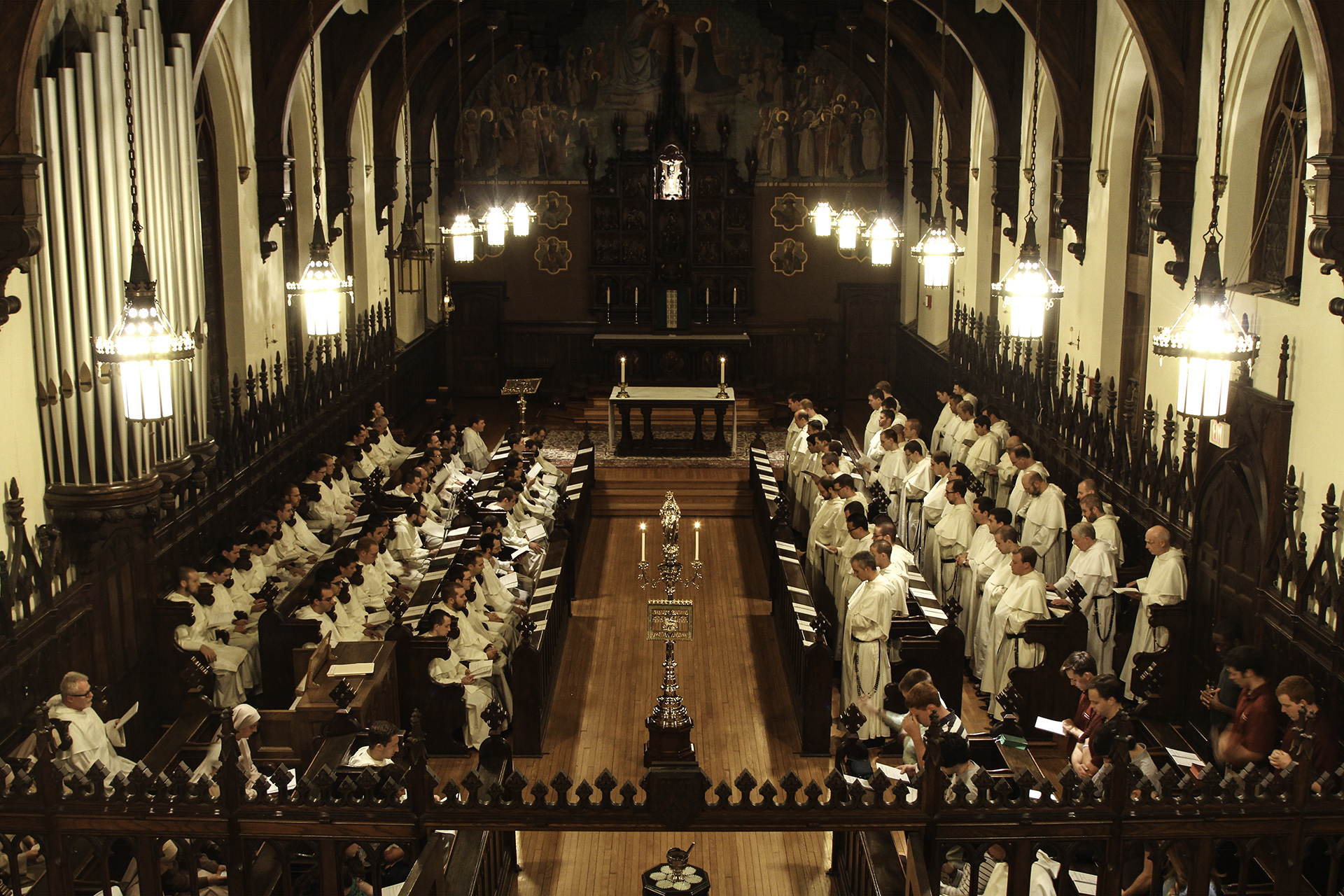
Christian singing: Why and how?
“Speak to one another with psalms and hymns and spiritual songs, singing and making music with your heart to the Lord, constantly giving thanks for everything, in the name of our Lord Jesus Christ, to our God and Father.” (Ephesians 5:19–20)
BY Lionel Windsor | Lecturer in New Testament at Moore College, Sydney, Australia
Spirit-fulfilled singing
Christian singing results from what Paul calls “being filled by the Spirit” (Eph. 5:18); it is about becoming who we were created to be, for God’s glory and purpose. We, believers, play a crucial role in God’s plan as Christ’s “body,” his Church.
Although the final fulfilment of God’s plan will not materialise until the last day when Christ returns, even now, through His Holy Spirit, God is bringing us closer to it, enabling us to live for Him and for His purpose (Eph. 3:18-19). While this happens, we need to build one another up and grow together as Christ’s body (Eph. 4:13). This is not ultimately of our own doing; it is God’s work. God’s Spirit leads us to believe in Christ and strengthens us in Christ. One important result of being fulfilled by the Spirit is that we sing!
Our singing, in itself, does not cause God’s Spirit to work in us. Rather, it is the opposite: the Spirit’s work in us through the Gospel causes us to sing! Our singing does not carry God’s presence—instead, Christ’s presence among us, by means of his Spirit, “carries” us. God’s Spirit leads us to sing praises to the God who saved us.
The horizontal dimension
In the first few words of these verses, Paul’s description of singing might sound a little strange. He doesn’t start by saying “sing to God”, but instead he commands: “speak to one another”. In other words, our singing is a form of talking to one another. This means singing has an important horizontal dimension. It involves encouraging one another through the use of words (cf. Colossians 3:16).
By using the word “speak”, Paul is deliberately connecting the idea of Christian singing with what he has already said in Ephesians about Christian speech. Our Christian life together involves “speaking the truth in love” (Eph. 4:15) to one another. We are to build one another up with the truth of the Gospel, rather than getting carried away by false teachings and “empty words”. We are to speak words that point people to Jesus and inspire them in him (Eph. 4:29–30).
Paul describes singing as a form of communication shared among believers. Christian singing is not just a private, individual experience. It’s not solely about personal growth, but about being edified together as the body of Christ. As we sing, we should be opening ourselves to others, encouraging one another, and in turn allowing ourselves to be encouraged. Christian singing is not about people singing individual words to themselves. Rather, it is about everyone singing the same clear, Gospel-centred words together, reinforcing ourselves in God’s truth.
What are we to sing? Paul here mentions “psalms”, “hymns”, and “(spiritual) songs”. All three terms are commonly used in the Old Testament to describe Israel’s response of praise and worship to God. The three different words enable us to understand that these are different aspects of the same activity.

The personal dimension
The word “psalm” emphasizes the musical side of singing. Originally, a “psalm” was a song played with stringed instruments; it is connected to the idea of “making music.” Music has the ability to influence us deeply. It touches our hearts and stirs our souls. Music helps us connect on a deep, emotional level with the values of the Gospel. It is powerful when it engages our whole being—our minds, our will, and our emotions—with the truth of the Gospel. The emotional impact of music is a wonderful gift from God!
Now, because music is so powerful, there are risks involved. For instance, music can be used to manipulate our emotions and override our thoughts and willpower. This occurs when the music itself, rather than the truth of the Gospel, takes over the experience—when repetition, volume, or other musical techniques are used to overpower, making the words themselves largely irrelevant. We must be aware of and resist this danger.
Another danger linked to the deep emotional power of music is that it can divide us. We all come to church with different past experiences and emotional reactions to various kinds of music. It is important to remember that singing is not just about ourselves, but about one another. As God’s people gather, we need to sing a variety of songs so that everyone, each with his or her different personal preferences and experiences, can engage fully. It is a powerful act of love to sing a song that isn’t necessarily your preference or style simply for the sake of a brother or sister who loves that style and will be uplifted by it.
The vertical dimension
The word “hymns” helps us to recognise another very important aspect: the vertical dimension. A hymn is a song of praise to God—praising God for who He is and what He has done. Theology really matters when it comes to singing. Singing Christian music is, in fact, one of the most powerful and effective ways to learn theology. Singing truths about God and His actions helps to embed these truths deep in our hearts. That is why Paul uses the phrase “spiritual songs.” The word “spiritual” does not refer to “spontaneous” songs or a specific musical style. It refers to songs that emanate from the Holy Spirit. These songs express the truth about God and teach us to learn and love that truth. This is a key way in which the Holy Spirit works in our lives (cf. Eph. 1:17–18).
This is why we must ensure that those leading music and selecting songs in our churches undergo a solid theological training. Singing touches us deeply and enters our spirits. Therefore, the words truly matter. We repeat those words over and over and come to love them. Have you ever found yourself singing or humming a tune during the week, not knowing why it came to mind? Or when you are struggling, are the words of a hymn the only words you can remember? Music ministry, therefore, is deeply theological. That means we need to seek out theologically knowledgeable music leaders and continue to support their growth in theological understanding and insight.
Paul says sing “Sing with your heart to the Lord”. Today, we often use the word “heart” to refer to our emotions. But in the Bible, the “heart” refers to our whole being. It encompasses our minds, our will, our consciences, and our affections. When Paul talks about singing with our “heart”, he is saying that our singing should come from our inner being: the person God has made us in Christ. Through the Gospel of the Lord Jesus Christ, believers have had “the eyes of [our] hearts enlightened”—that is, we have come to know God’s great purpose and plans (Eph. 1:18). As the Holy Spirit works in us, causing us to believe in that Gospel word and to grow in hope and love, Christ is present among us: he “dwell[s] in [our] hearts through faith” (Eph. 3:17). As our hearts are increasingly renewed, that experience should overflow in songs of praise to the God who saved us and loves us.
Singing and grace
Finally, we should always remember that Christian singing flows from God’s grace. Straight after he talks about singing, Paul says we should be “constantly giving thanks for everything, in the name of our Lord Jesus Christ, to our God and Father”. Thanksgiving is about responding to God’s grace to us (cf. Eph. 5:4). It’s about being thankful for His gift of salvation, and for all the gifts that He has richly provided us with in this world. Singing is part of our whole life of thanksgiving. This is why we need to ensure that our singing as Christians is not isolated from the rest of our lives. Singing praise to God is meant to lead us into whole lives of thanksgiving. If we sing praises to God and then start grumbling and complaining straight afterwards, we most likely have forgotten the content of our singing and are denying those very truths.
Singing flows from being fulfilled by the Spirit. From its horizontal dimension, we speak in song, building up and encouraging one another; singing engages our whole heart, including our emotions; and through its vertical and theological dimension, we sing about and to God Himself.
Source: www.lionelwindsor.net/
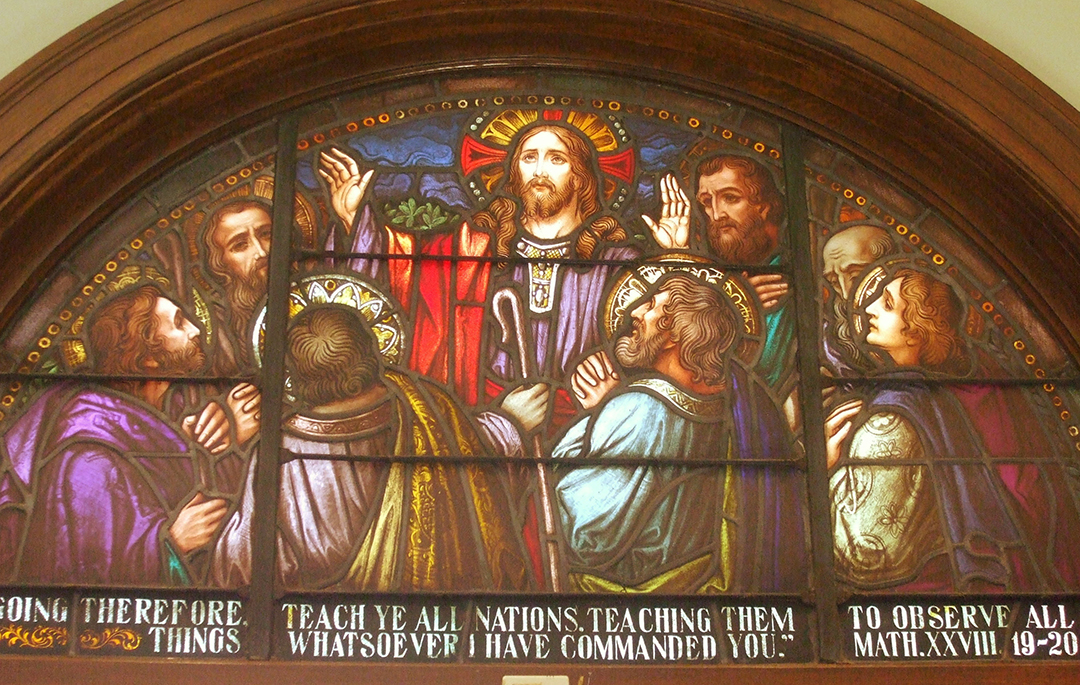
GO AND MAKE DISCIPLES OF ALL NATIONS (MT 28: 16–20)
“GO THEREFORE and make disciples of all nations”, Jesus says to the Eleven. When Jesus’ mission was over, those who had welcomed Him began their journey: to testify the Father’s love to all who did not yet know Him. What the Nazareen offered to Israel, the ‘Nazareens’ are to offer to all peoples. Those who, in Him, have discovered their own identity as children, they fulfil it now, by reaching out, like Him, to others, until the Father’s name in heaven is sanctified throughout the earth.