
Religious Life, AN African Perspective
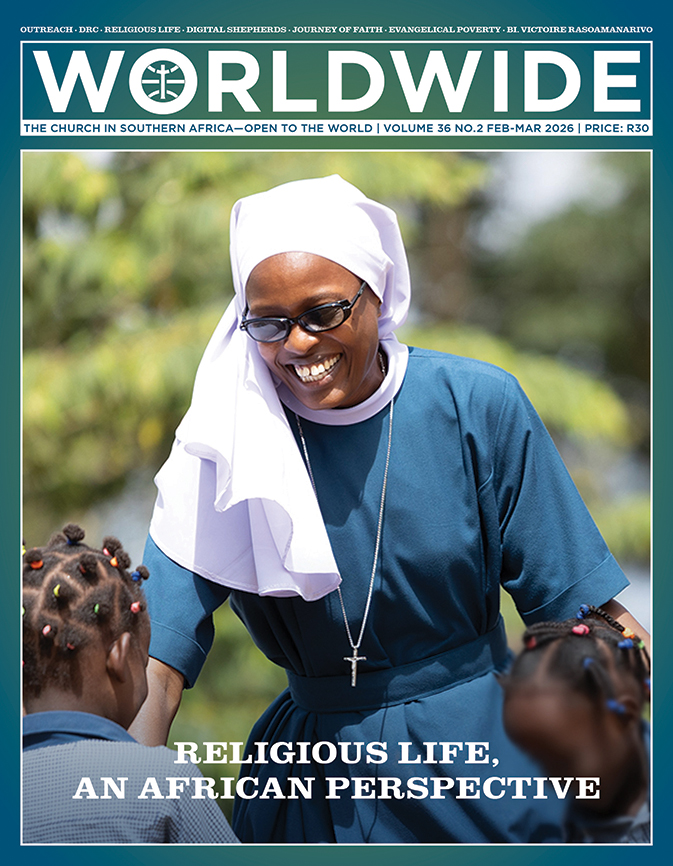
The Immaculate Heart Sisters of Africa (IHSA) is a Catholic religious congregation focused on education, evangelization, and empowering vulnerable women and girls, particularly against harmful practices like Female Genital Mutilation (FGM) and child marriages. The cover photo shows a member of the IHSA congregation playing joyfully with children in the Gerald Goldin Memorial Day Care and Nursery School, which they opened in 2022 in Kisarawe, Tanzania.
Special Report • RELIGIOUS LIFE
RELIGIOUS LIFE IN AFRICA: MISSIONARIES OF GOD’S MESSAGE OF LIBERATION
Religious communities can demonstrate that cultural and racial differences must be viewed from a positive perspective and be promoters of justice, peace and integrity of creation.
BY Fr Jones Kawisha MAfr | St Joseph’s Theological Institute, CEDARA PMB
AFRICA IS blessed with a multitude of vocations. The call to religious life is widespread, and the response is generous, bringing together people from diverse ethnic, cultural, and national backgrounds. This response is a clear indication of common values and commitment to Christian witness that cements the unity of people from diverse backgrounds and enables them to live as one family. At the same time, interculturality in religious communities serves as a missionary witness to many Africans today. However, it is important to note that in some countries, the number of vocations has declined over the past two decades.
Empowerment of people
Religious life provides a sense of purpose and meaning to one’s Christian life, through participation in God’s mission, through pastoral ministry. Looking at the African continent today, we witness the rapid increase in corruption, exploitation of the less privileged, mismanagement of resources, and poor governance. Clearly, the continent needs men and women who can be the voice of the voiceless. Religious life finds its meaning in this context. Some Congregations strive to promote peace, justice, and the integrity of creation through their diverse charisms. In this sense, according to one religious, ‘religious life is more meaningful because it adds value to the lives of people’. Thus, religious life in Africa cannot be limited to the proclamation or establishment of new Christian communities, but rather to participation in different paradigms of mission that respond to the continent’s aspirations and needs. I would add that in some instances, empowering people through education (which aligns with Christian spiritual and moral values) may be more fundamental than preaching. It must be accepted that poverty in Africa is a consequence of shared misconduct and it can be addressed and overcome only through the empowerment of its people and a collective commitment to social justice and equality. The African way of living religious life must be more than just preaching the word of God to people; it must also embody and exemplify Christian values and put them into action.
Intercultural living
Africa is home to a diverse array of races, tribes, and cultures. However, tribalism, nepotism, and racism remain challenges as they have been the root cause of division in society and in the Church. Religious communities should demonstrate that cultural and racial differences must be viewed from a positive perspective. These differences enrich society. Intercultural living entails an openness to differences, which leads to maturity in mission and humanity. In this sense, today, African religious men and women must undergo substantial training in interculturality in their formation curricula. People are inspired by the way individuals from different cultures, races, and tribes can live together in peace, without a complex of cultural superiority or inferiority, and without wanting to possess, control, or limit others. Intercultural living is a deep act of Christian faith because we believe that God reveals Godself to different people within their cultures. God’s revelation precedes us; thus, each culture must be respected and recognized as a holy place. Through cultures, we can experience the many faces of the one and same God. That is why the Catholic Church rejects nothing holy and true in other cultures as they reflect the ray of truth (NA 2). Lack of openness to other cultures is a lack of openness to God’s Spirit.
Gallares (2021:189) emphasizes that contemporary theology faces ongoing challenges in adapting to multicultural and global environments, as does Christian spirituality. African religious communities face the same challenge of adapting to multicultural and global environments. It invites us to not only know and comprehend God in our ever-changing and complex environments, but also to find a connection to Him (:189) in our encounters with Him across different cultures. Our intercultural communities in Africa are privileged places for having a connection with God and an authentic missionary witness to the people.
Intercultural living entails an openness to differences, which leads to maturity in mission and humanity.
Complexity of religious life in Africa
African Religious men and women come from diverse families. Some come from well-to-do families, while others come from less privileged families. People see religious communities with beautiful cars and houses; thus, they consider religious communities as living a good life. However, this scenario presents the dichotomy between the vow of poverty/simple lifestyle, on the one hand, and the demands and expectations of families, on the other. This can put pressure on religious individuals. Often, they are expected to contribute to the financial support of their parents, siblings, nieces and nephews, and other relatives, because family is fundamental in African cultures. This may lead to the abuse of sacraments and the misuse of sacramentals to raise funds to meet never-ending financial demands. This challenge needs to be addressed through educating people on the meaning and implications of a religious choice with respect of the vow of poverty/a simple lifestyle.
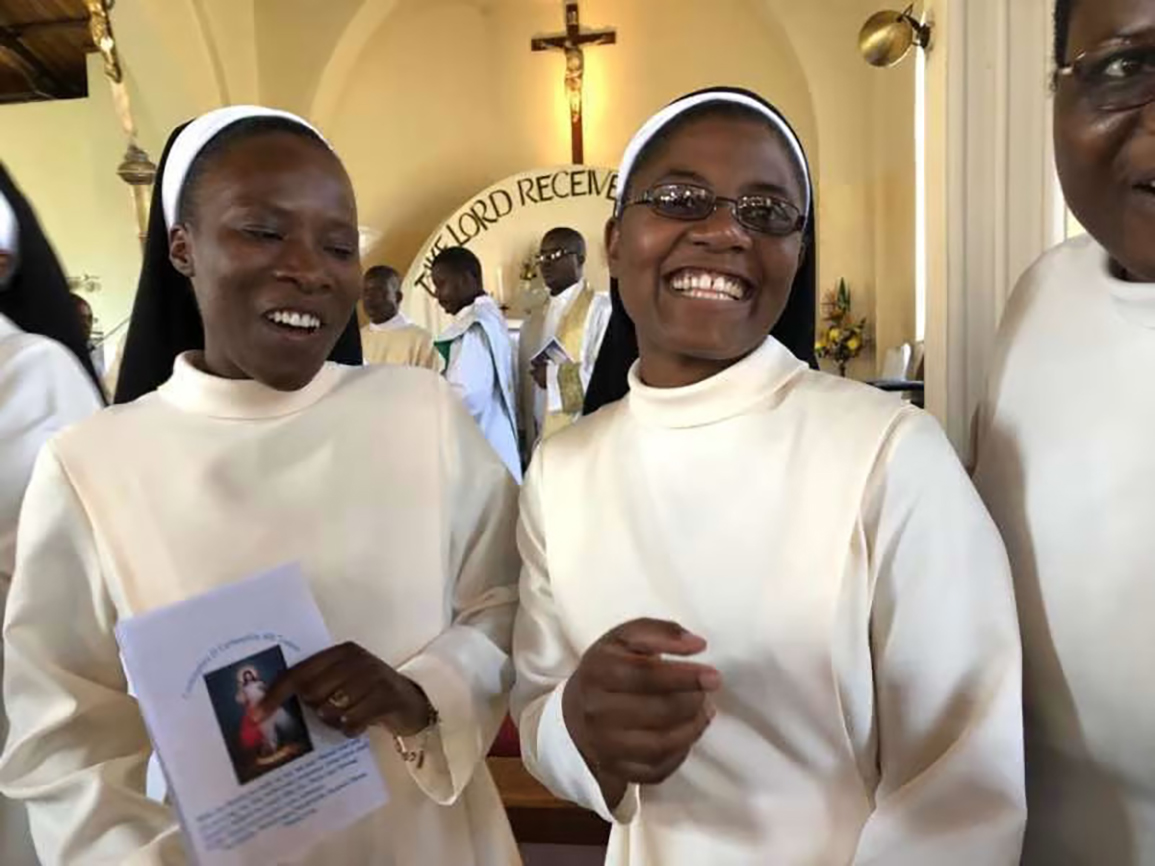
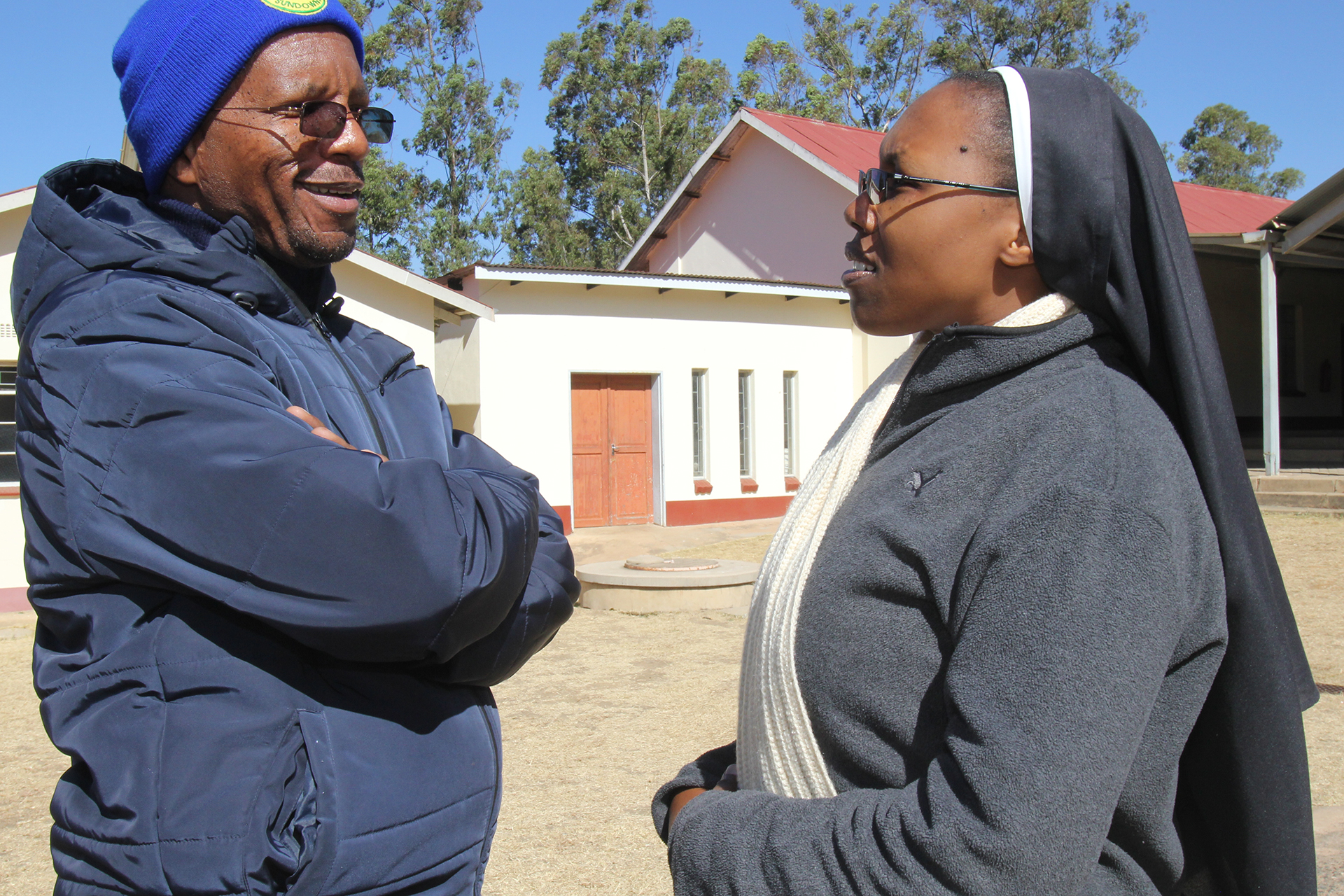
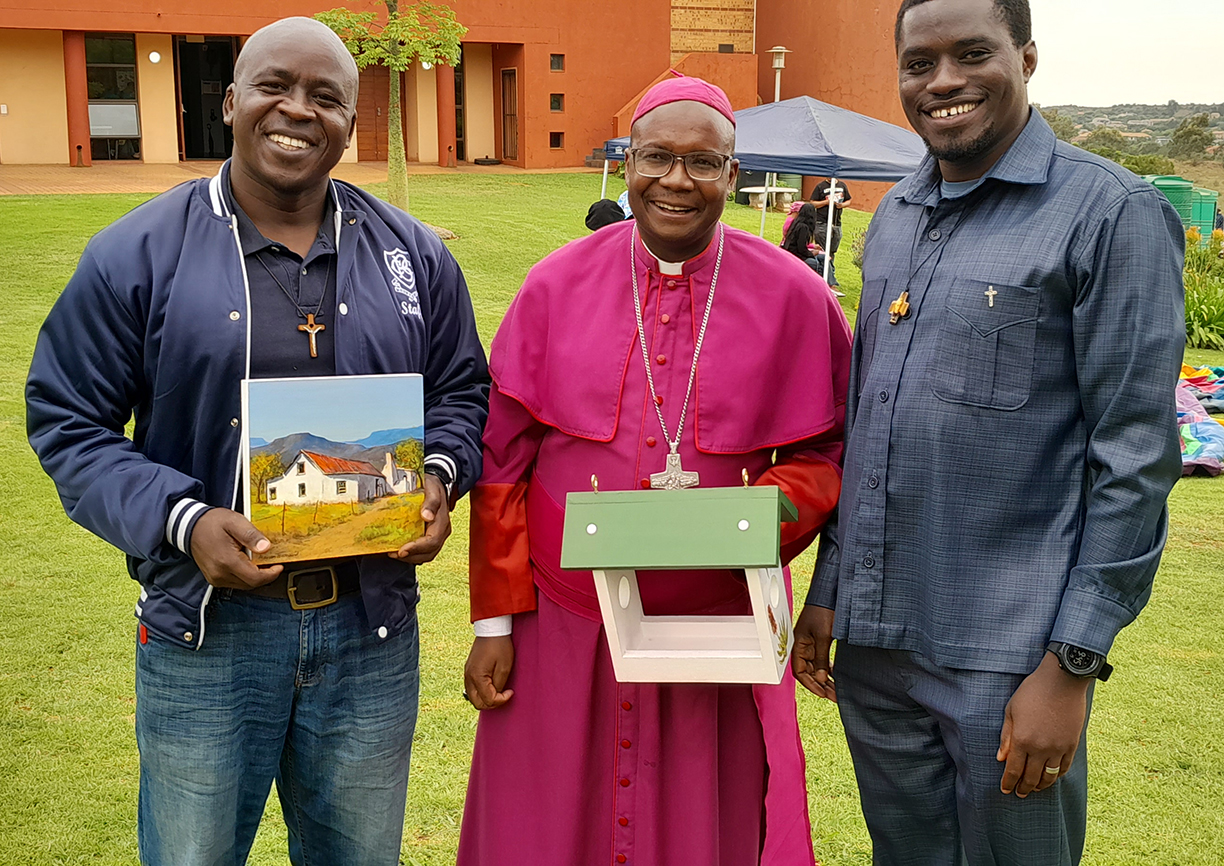
The second complexity of religious life in Africa is the manner in which it is practiced. Mbiti (1969:1) says, ‘we are notoriously religious’. The question that challenges religious communities is: What value does religion, or being notoriously religious, play in the lives of Africans? What theology do we transmit to people? Does it liberate them or put them in a certain religious slumber or form of captivity?
Our intercultural communities in Africa are privileged places for having a connection with God.
Need of Introspection
When religion is not well understood, when faith and reason are detached, or when faith is not well embedded in an alien culture, people can become so religious that they escape their responsibilities. In this sense, a young priest proposes an introspection of religions in Africa. There is need to examine what we say to people, what we do, and what we think. As already underlined, Africa is a religious continent (with active Christians with deep spiritual convictions), and yet is much affected by corruption and a culture of killings. Is there a problem with what we have understood or the way we practice religion? We proclaim the values of the Kingdom of God and do not live according to them. Many Africans spend hours in prayer, and in colourful liturgical celebrations, waiting for miracles and financial breakthroughs. Africa does not need bogus priests, pastors, and religious leaders who take advantage of the religious aspect of Africans’ lives, instead it requires efforts from those who can make their African Christian faith reasonable.
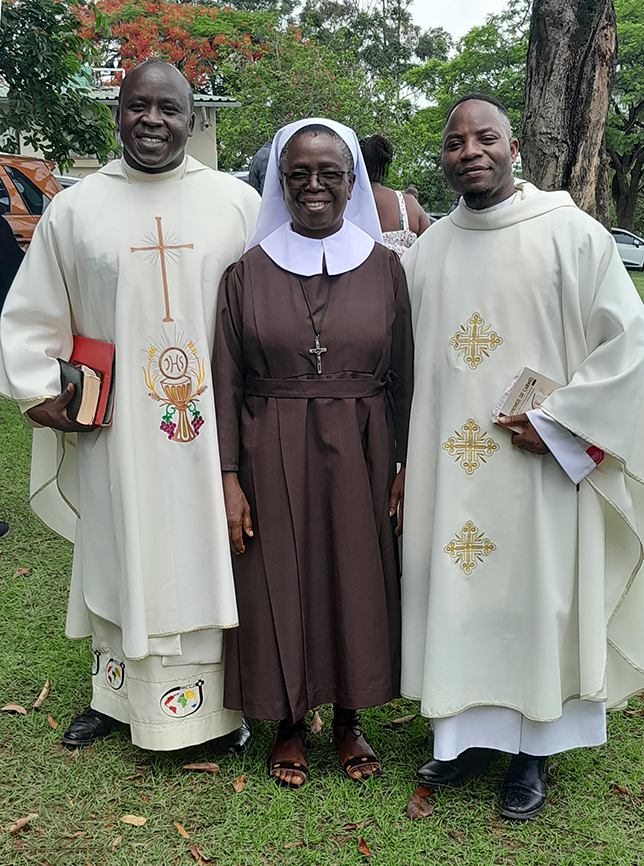

Different religious congregations continue to contribute to the growth of Christianity in Africa. The gift of faith on African soil has been the work of the Holy Spirit, the agent of Mission, through various congregations. However, the same Holy Spirit inspires men and women of today to be missionaries of God’s message of liberation and unity amid the complexity of religious life in Africa.
Africa does not need bogus priests, pastors, and religious leaders.
References
- Gallares, J 2021. Forming Intercultural Missionaries, in Stanislaus, L T & Tauchner, C (eds). Becoming Intercultural: Perspectives on Mission, 187-205. New Delhi: ISPCK.
- Mbiti, J 1969. African Religions and Philosophy. London: Heinemann.
- Vatican II 1965. Nostra Aetate. Vatican: Libreria Editrice Vaticana.

TOWARDS BEING DIGITAL SHEPHERDS: AI, FAITH, AND AFRICAN RELIGIOUS LIFE
From bustling city parishes to remote rural missions, AI is no longer a futuristic fantasy but a present reality, raising profound questions about faith, morality, and the very essence of what it means to be human and to be a Religious in Africa.