
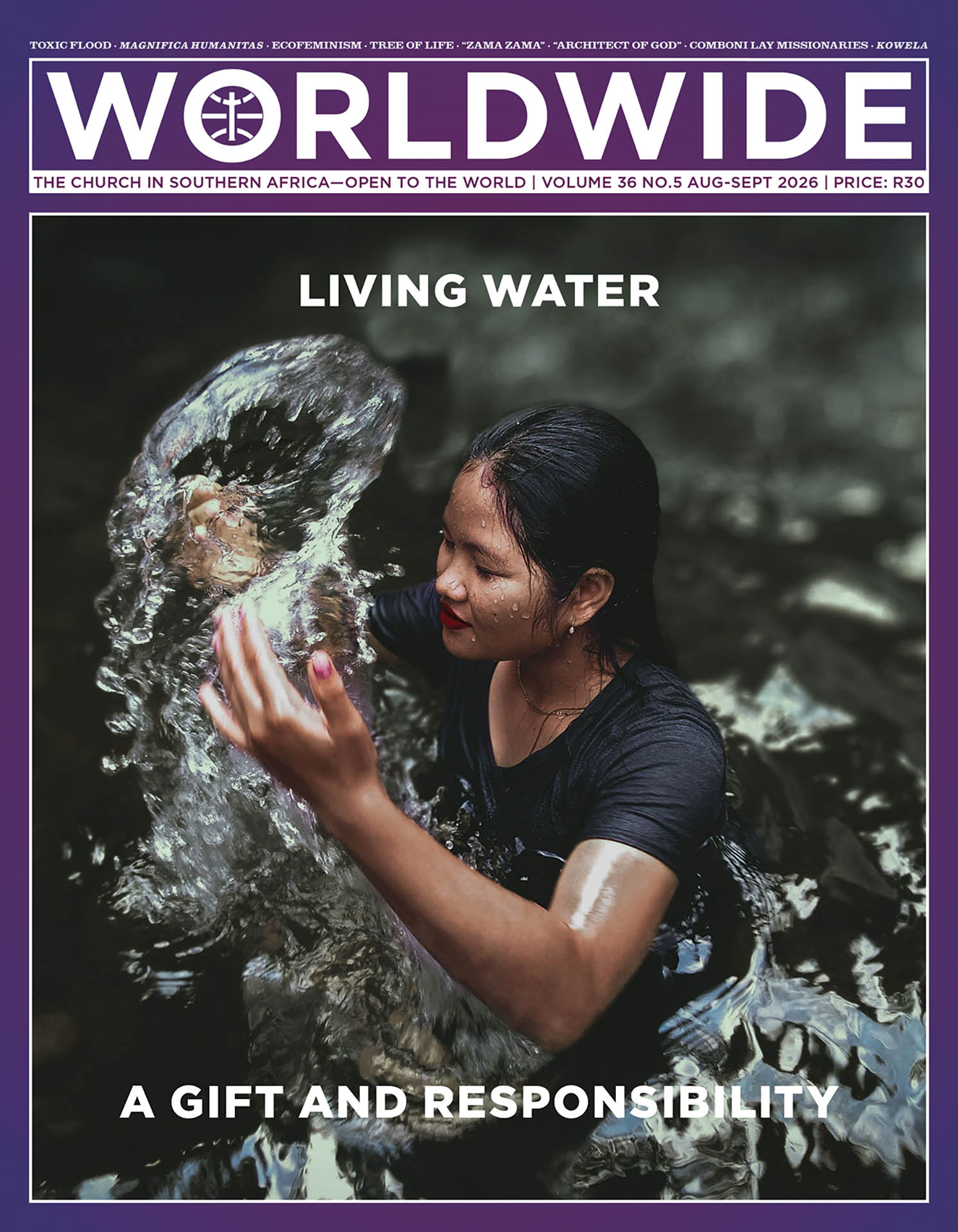
LIVING WATER
Every act of care for creation becomes part of a global stream of hope.
The cover page is inspired by the 2026 Season of Creation theme. In this season, our hope is that “Christians would be immersed in the living water flowing from the throne of God, stepping in deeper and deeper, inspired by the Spirit of God, working together for the renewal of Creation”
(Cf seasonofcreation.org).
Profile • Venerable Antoni Gaudí
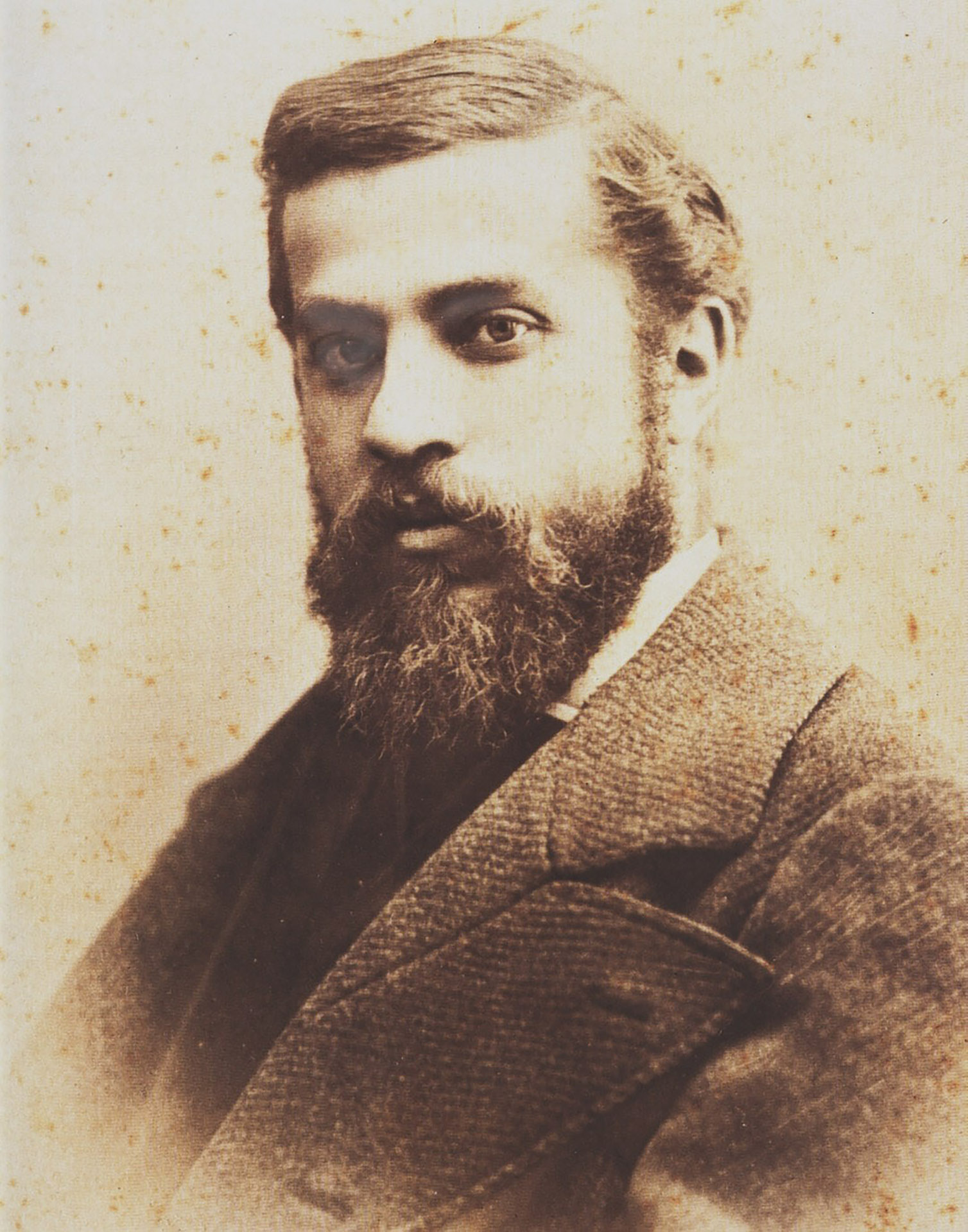
The “Architect of God”
A man of deep faith and an extraordinary craftsman, Antoni Gaudí dedicated his whole life to the creation of the Basilica of the Sagrada Família: a seminal work of art that reflects the Catholic doctrine in every space, every symbol. In 2025, the Church declared him “Venerable”.
BY Marian Pallister | Chair of Pax Christi Scotland
A MADMAN or a genius? The question asked by the director of Barcelona’s School of Architecture, Elies Rogent, when Antoni Gaudí graduated in 1878. Their student had submitted some very alternative projects as part of his architectural coursework. Now he was to be unleashed on the world in the last quarter of the 19th century. Was that world ready for Gaudí? As Rogent said: “I don’t know if we’ve given the title to a madman or a genius; time will tell.”
The 21st century seems not only to have accepted the architect as a genius, but also as a potential saint. In 2025, Antoni Gaudí, the man behind the Basilica of the Sagrada Família in Barcelona, was declared “Venerable”, the second of the four major stages on the path to sainthood.
At the beginning of his professional life, there was merely a suggestion that Gaudí’s architectural drawings might be a little out of the ordinary. But the young graduate opened premises in Call Street in Barcelona, where he began a career that made him famous around the world, and his (dare we say it?) quirky designs are now part of UNESCO’s World Heritage. With the image of the Sagrada Família in mind, other projects by this talented architect are easily identified as his – but it is that elaborate, extravagant and amazingly crafted basilica that places him in the rank of “genius”.
Early Influences
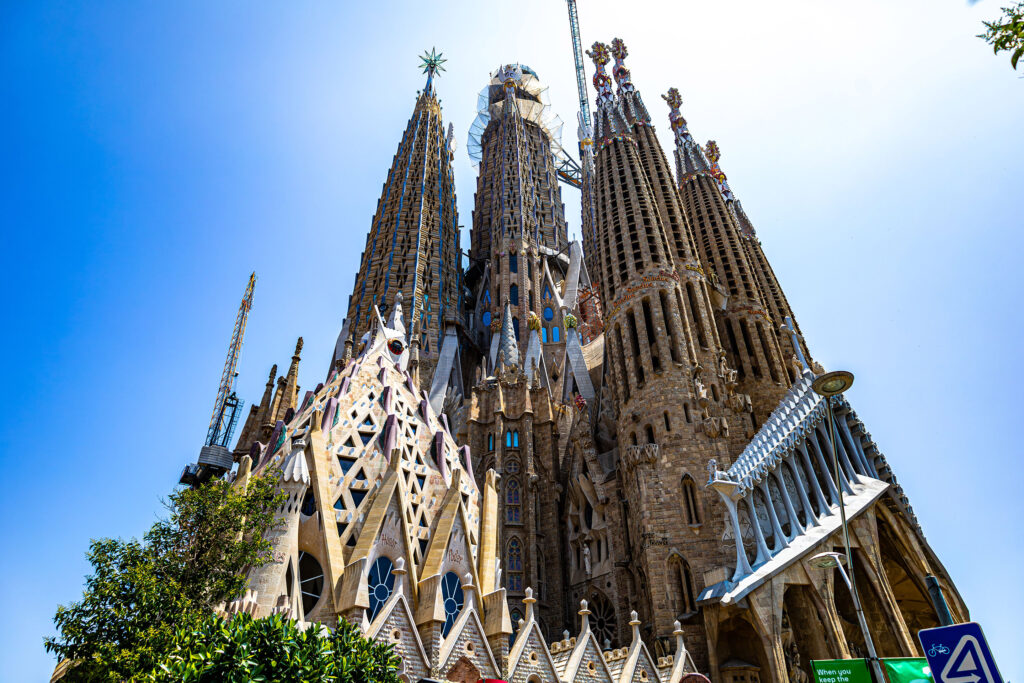
That building, still unfinished, perhaps gives us insight into Rogent’s fear that this might be a “madman” (not a word we use in a more sensitive 21st century) let loose on the world of architecture. Certainly, the basilica is like no other.
What were the influences on Gaudí that led to the architectural plans he presented to the world? Born on June 25, 1852, in Catalonia, he spent his childhood with his father, Francesc Gaudí i Serra, and grandfather in the family workshop. These men were coppersmiths, and somehow their influence gave him skills in transforming space and volume into three-dimensional creations.
A sickly child, the youngest of five, he spent much of his time outdoors at the family’s summer home in the village of Riodoms. He would always say that encountering God the Creator in this environment inspired him. His very personal and individual view of nature may have given him his unusual mind-set. When he moved to Barcelona to study architecture, he took with him the patterns he found in nature and applied them to his designs.
He presented ever-more elaborate hourglass shapes (hyperboloids, to be specific), spirals (helicoids) and cones in his designs and somehow got away with them. Gaudí would say: “Originality consists in returning to the origin”. For him, the “origin” was nature, God’s creation, the environment his unusual perception visualised around the family summer home.
A Man Devoted to the Church
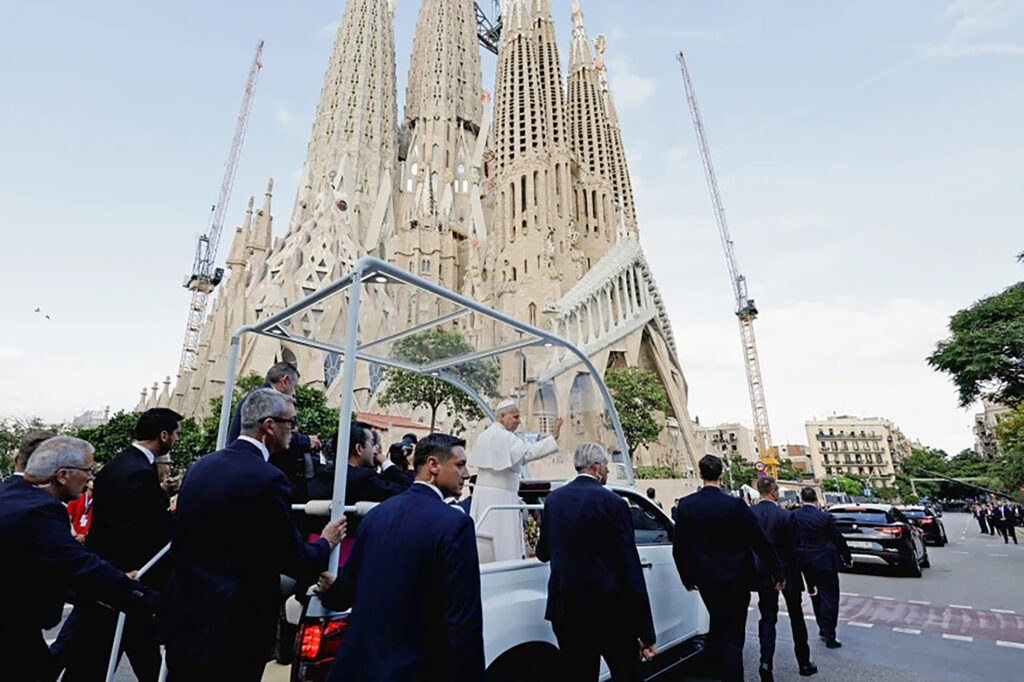
The basilica with which he would become so closely identified was not initially his own project. It was initiated in 1882 by Francisco de Paul del Villar. When Villar resigned the following year, it was Gaudí – just five years after his graduation – who took over the contract. He had been working with other architects on other projects, but this would become his life’s work, and he set about changing all that Villar had done in the year he had been chief architect. Gaudí began work on the church in November 1883 and was appointed architectural director in March 1884. There would be Gothic, Art Nouveau and Modernism in the mix. The building would become the world’s tallest religious building.
He took with him the patterns he found in nature and applied them to his designs.
He became a man devoted to the Church, to his faith, to a commitment to God, but like so many others who have in time become saints, Gaudí did sow a small handful of wild oats. Indeed, when we learn about his early years as a young professional, we could almost be reading about a latter-day St Francis: an extravagant start to his adult life and then the change of heart; the change of lifestyle.
Initially, the young Gaudí was a theatregoer, a man who liked concerts and parties. He ate and drank fine food and wine and dressed in the latest fashions, showing a tendency towards being a bon viveur – someone who liked the good life. But even then, there was another side to him. He became interested in utopian socialism (an early form of socialism that was later mocked as being unrealistic). This period of his life did not last long, either because of ill health (he had amongst other ailments suffered from rheumatism from childhood) or simply because he had become intensely focused on his work on Sagrada Família. Whatever the motivation, he was soon withdrawing into himself. He became a vegetarian and fasted regularly and with increasing intensity. The parties and smart clothes became history. His work and his faith took over his life.
The World’s Tallest Religious Building
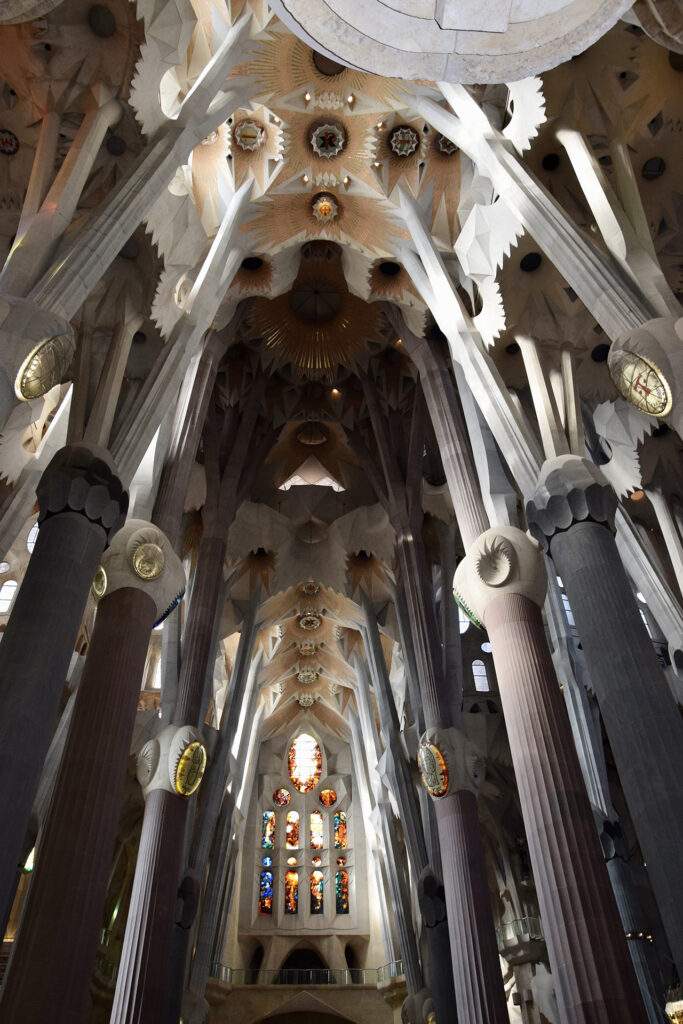
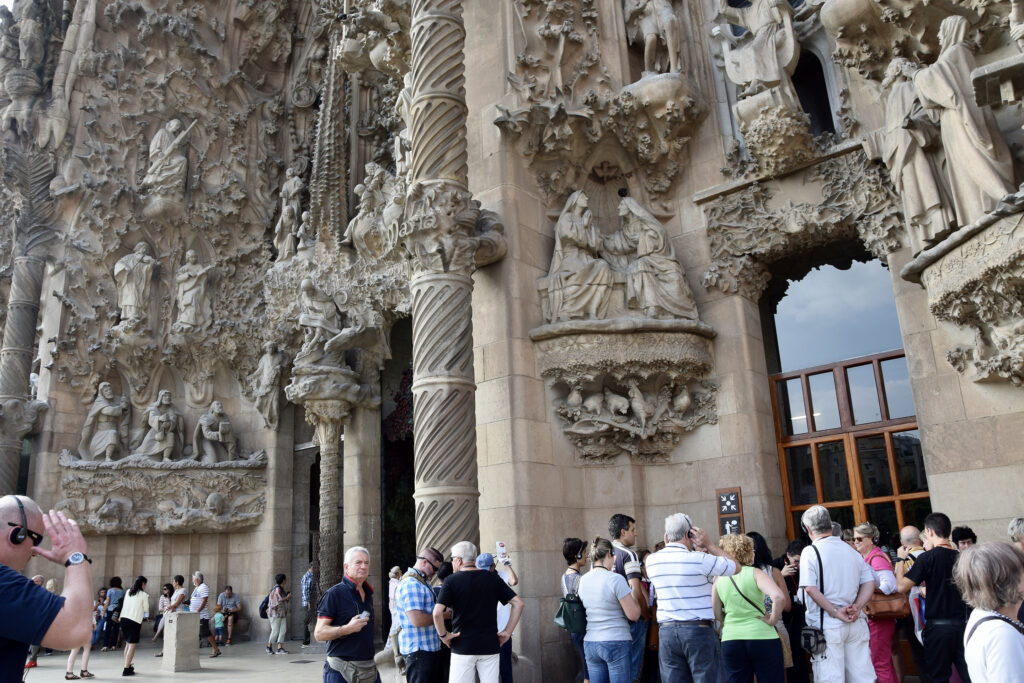
Still unfinished a century after the architect’s death, Sagrada Família became the world’s tallest church in October 2025, and in February 2026 it attained its final height of 172.5 metres. Beneath that pinnacle are soaring pillars in an eccentric mix of styles, all reaching for heaven. The facades of the building are named ‘Nativity’, ‘Passion’, and ‘Glory’. Equally magical are the windows – Gaudí worked closely with stained glass artist Joan Vila-Grau to arrive at colour palettes responding to the sun’s journey around the building. It would make perfect sense for the director of a science fiction movie to choose the Sagrada Família as the set for his most fanciful scenes.
The facades of the building are named ‘Nativity’, ‘Passion’, and ‘Glory’.
But it wasn’t science fiction that drove Gaudí. He was a devout Catholic whose faith clearly inspired the spirituality that created this building. As he grew older, that spirituality flooded every fibre and transformed his architectural brilliance.
Would his mother, Antònia Cornet i Bertran, have recognised this preposterously talented son? Sadly, she died in 1876 – two years before he even graduated. His father would surely have understood some of the ideas his youngest child put into practice in later life. Gaudí certainly often paid tribute to the coppersmith, explaining that witnessing his father creating artistic three-dimensional containers from flat sheets of copper allowed him in his architectural work to mentally design complex curves and the asymmetrical spaces for which the Sagrada Família has become famous. Note the word “mentally” – he rarely made drawings of these amazing shapes, and because of the skills he had acquired as a child in the family workshops, he was able to personally work on those metal sculptures we see in his buildings.
Yet there was something else he had learned in the family setting which was perhaps even more influential in his life than those practical skills.
It was a family of deep faith, which led the architect to see himself as a link between God and man, interpreting Creation through shape and form. The Sagrada Família has been described as “the Bible in stone”, and Gaudí as the “architect of God”.
He Embraced Poverty and Chastity
Gaudí was however in no way boastful about being that link between God and man. He evidently regarded himself as “the doorman” to the Sagrada Família, the person who would make sure Catholic doctrine was reflected in every space, every symbol.
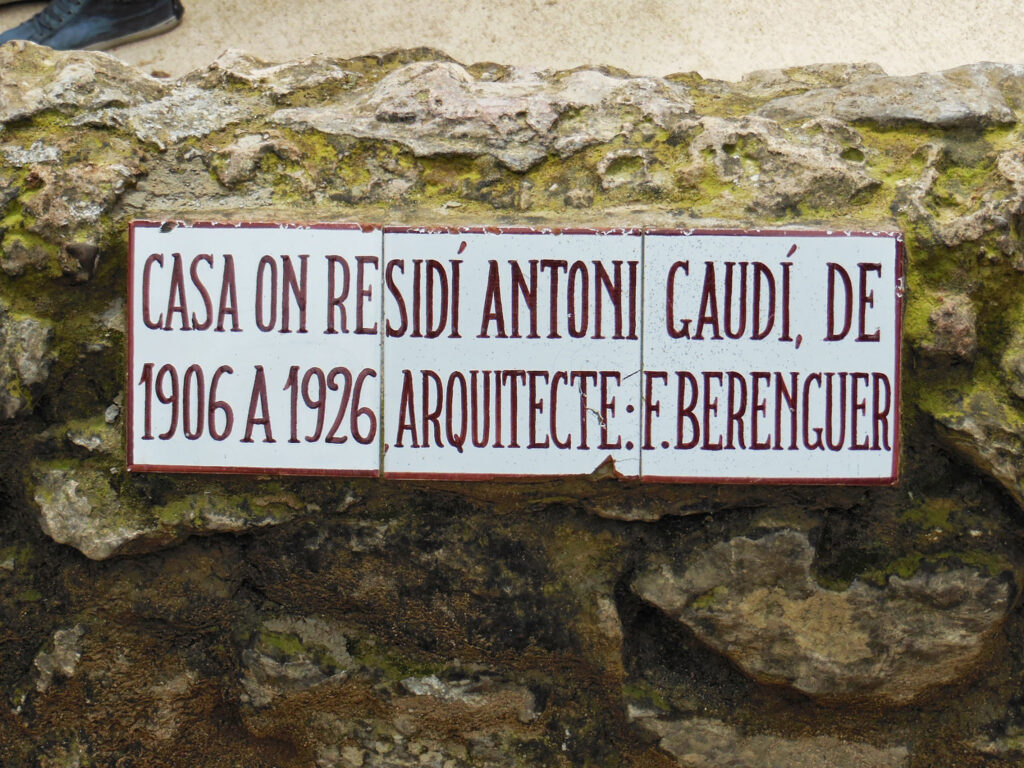
In his early career, he was awarded contracts for secular buildings and projects, but increasingly he chose to dedicate himself only to the sacred, and in time, only to the Sagrada Família. His personal life now had become stark. He attended Mass every day and frequently fasted – once for 40 days, until religious friends stepped in and ended as they feared he was endangering his life. He embraced poverty and chastity, and in time took up residence on the basilica’s building site.
His dedication to the creation of the church led the cause for his canonisation starting in 2003. Following Pope Francis’s declaration of Gaudí’s heroic virtues, the Catholic Church is currently examining potential miracles for his eventual beatification. He was officially declared “Venerable” in 2025.
Inspired by God’s Creation
Critics have not always seen the architect as saintly material. His work, particularly on the Sagrada Família, has been analysed by many “experts”, resulting in him being labelled as everything from a mason to a templar, an alchemist to a drug addict. And of course, that early question mark over his abilities remains – was he a madman or a genius?
His work moved beyond any architectural categorisation. It was and is unique, unless we do indeed look to Nature and to God’s creation, to which Gaudí never stopped turning for inspiration.
There was never any official financing of this project. Progress in the beginning was slow because Gaudí had to rely on private donations. At the time of his death in 1926, less than a quarter of the project was complete. And then the Spanish Civil War halted all building work. Indeed, the Iberian Anarchist Federation set fire to the crypt in 1936, destroying much of the heritage of his drawings. What was saved was used by Francesc de Paula Quintana, who took on the project as site manager in 1939. More irregular work was done in the 1950s but it was not until the advent of computer technology that work was able to progress.
Credit: Bocachete / Wikimedia Commons
A UNESCO World Heritage Site
In 2005, the Nativity façade and the crypt were officially declared a UNESCO World Heritage Site, and on November 7, 2019, Pope Benedict XIV consecrated the church, proclaiming it a basilica. By 2014, there were hopes that the basilica would be completed by this year, the centenary of Gaudí’s death, but the Covid pandemic again delayed building.
Gaudí’s death had in fact been tragic. His increasingly austere lifestyle led to life-threatening illnesses. It seems that as he grew older and took less care of himself he became unrecognisable. On June 7, 1926, he as usual walked to the Sant Felip Neri church for prayer and confession, but on the way was struck by a tram and lost consciousness. People thought he was a beggar, and at the Santa Creu Hospital he received only the most basic of care. Only when the chaplain of the Sagrada Família recognised him the next day did proper treatment begin, but on June 10, 1926, he died.
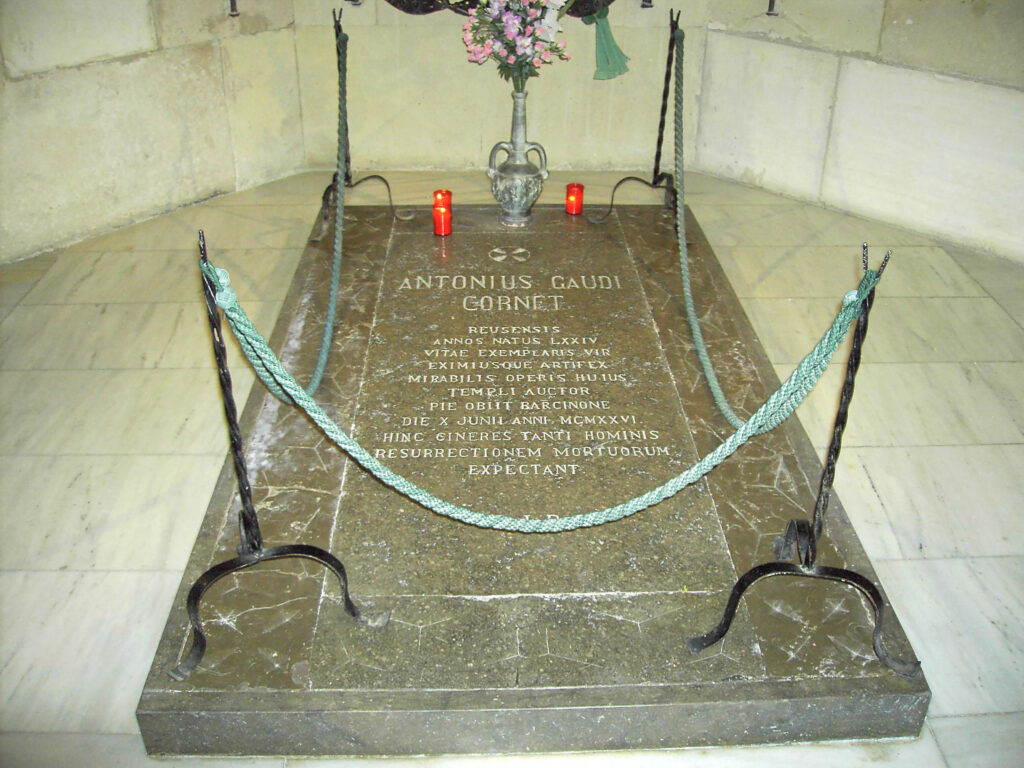
Gaudí is buried in his basilica’s crypt. His gravestone reads:
“Antoni Gaudí Cornet. From Reus. At the age of 74, a man of exemplary life, and an extraordinary craftsman, the author of this marvellous work, the church, died piously in Barcelona on the tenth day of June 1926; henceforward the ashes of so great a man await the resurrection of the dead. May he rest in peace.”
Most certainly a genius, not a “madman”.
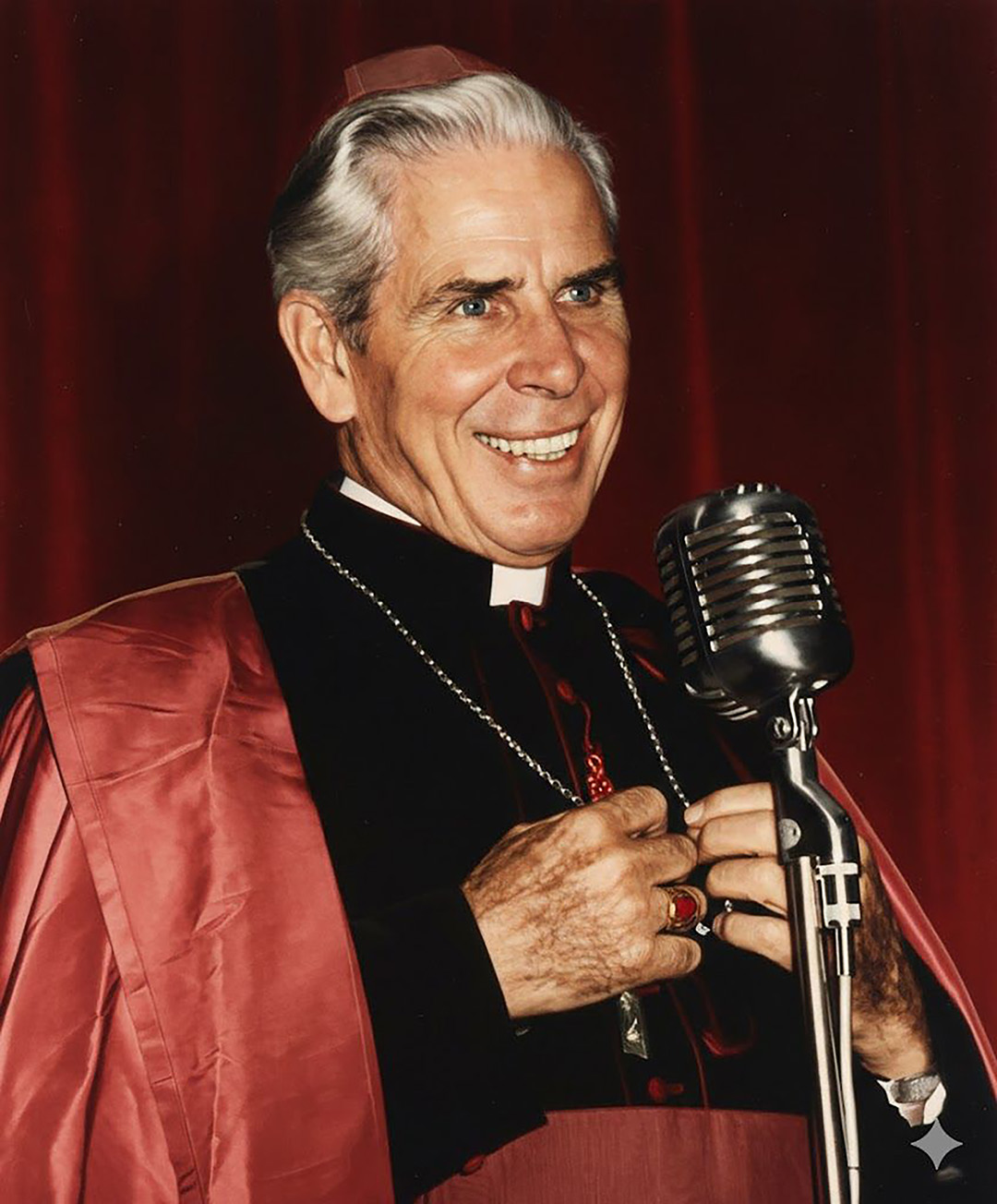
Archbishop Fulton J Sheen
The Venerable Servant of God Archbishop Fulton J Sheen will be beatified on September 24 this year. He will possibly be one of the most unusual people ever to be beatified.