

YOUTH AND JUBILEE
The front cover portrays faces of various youth leaders from the parish of Regina Mundi in Soweto. This parish played a significant role during the 1976 uprisings, protecting those who took refuge in its shelter. Nearly 50 years later, these young men and women represent the hope for a better South Africa, where youth can exercise a meaningful role in society and in the Church, where their talents can be recognized and their voices heard. May their dreams for a bright future and a fruitful discipleship of Jesus be fulfilled.
REFLECTION • DREAM
DARING TO DREAM: JUBILEE, YOUTH, AND THE PROPHETIC CALL TO ANOTHER WORLD
This reflection claims Jubilee not as a historical relic, but as a radical call for restoration, justice, and shared flourishing. It invites us to imagine a world reordered—built on love, equity, and care for all. At this time, to dream is to resist. To dream is to begin to create the world anew.
BY FABIAN ASHWIN OLIVER | YOUTH MINISTER, JOHANNESBURG
SEVERAL YEARS have passed since the cries of liberation echoed from pulpits and protest lines. In this season, we must ask: What does Jubilee mean for a new generation navigating inherited pain and deferred dreams? What kind of theology can name the aspirations of young people living in a dystopian present where, as the saying goes, ‘the more things change, the more they stay the same?’
Where is the future for the youth?
Canadian poet and novelist Dionne Brand writes: “History is already seated in the chair in the empty room when one arrives” (Brand 2001:25). This powerful image alludes to the theory that when young people step into seemingly “new” spaces—be they classrooms, workplaces, or institutions within the democratic dispensation, they do not enter neutral ground. Instead of stepping into the limitless possibility of the future, often what lie behind the door are histories of exclusion, inequality, and broken promises.
What awaits them beyond the door of opportunity? Is it the authentic freedom their ancestors dreamed of, struggled for, and died to secure? Is it a landscape of innovation, success, and opportunity that transcends race, gender, sexuality, and class? For many, the answer is no. With youth unemployment at world leading levels, the dreams and aspirations of countless young people remain trapped, delayed, deferred, or taken, just as they were in generations past.
Universities are overflowing with students reaching for a better tomorrow, yet behind the numbers are quieter stories: students sleeping in lecture halls, surviving days without food, clinging to the dream that now feels more like a myth. Churches are filled with devoted young congregants, their hearts full of faith but their stomachs empty—and worse, their optimism worn thin with despair. In schools, some learners engage through tablets and interactive technology, while others walk miles to sit under trees, face death in collapsing pit latrines, or miss classes entirely due to the unaffordability of sanitary pads.
So, we must ask: What are our hopes and aspirations for the youth when the so-called future is still shackled to the past? And perhaps most urgently, where is God in this predicament?
The Violence of “Opportunity”
When I began my journey of university education, like many students, I sought out bursaries and funding opportunities. You quickly learn that applying for financial aid isn’t a one-track process—you need a plan A, a plan B, and often a plan C. I eventually applied for government funding, and while I remained genuinely grateful that such support systems exist, my experience left me with complex feelings that have never quite faded.
Jubilee is a call to build a world we can truly call home.
The application process for funding was, in many ways, brutal. To qualify, I had to prove that I was poor. My mother was required to submit multiple affidavits affirming her unemployment and explaining her financial situation. She had to formally declare why we fell below a certain income threshold. We had to explain my father’s absence—both physically and financially. I also had to provide written motivation justifying not only why I deserved the opportunity to study but why I could be trusted to finish my degree and, in the future, repay a portion of the support I had received. So, on the one hand, I was grateful for the chance to study and build a future. On the other, it felt deeply unjust to quantify my poverty and hardship as a measure of my ability to study. At that moment, as I was entering a new door of opportunity, there were my histories of hardship, structural injustice, and perceptions of ‘lesser than’ waiting for me on the chair. These are the systems from our complicated history that we must continue to question and reshape.

The God of Jubilee
In this calendar year marked as Jubilee, I am moved to believe that Jubilee is not meant to be a once-in-a-lifetime divine exception, but rather a radical break from the present order. It is a bold, ongoing summons to God’s eternal call for justice, restoration, holistic rest, and the transformation of society. Jubilee is not simply an event; it is a spiritual and political posture rooted in the belief that another world is possible. It is a vision for a world that gives life to all, sustained not by exploitation or scarcity, but by the discipline and discipleship of love and justice. Jubilee is a call to build a world we can truly call home.
I argue that Jubilee is inseparable from Jesus’ vision of the Kingdom of God. It is not a world built on the violence, greed, or domination of empire, but one born from the aspirations, dreams, and laments of those whom Jesus called “the least of these.” The Jubilee command in Leviticus 25, building on the Sabbath year in Exodus 23:10–11, offers a sweeping theological framework: rest for the land, release for the enslaved, restoration for the poor, and a reordering of power in favour of those on the edge of society.
In these texts, Scripture demands structural pause, a deliberate interruption of the cycles of profit and possession. It is a call for systemic reorientation, where the needs of the marginalized take precedence over the systems of accumulation and profit. Jubilee subverts the status quo by insisting that the land, like justice, does not belong to just a few, it belongs to God, and God is for all the people.

As a young person, I long to live in a world where women’s bodies are no longer violated with impunity, a world where the rampaging violence of misogynistic patriarchy is not normalized or ignored. I want my peers to truly live in world filled with beauty and possibility, unchained from the violence that breaks families, crushes dreams, offers pleasure as coping mechanism and distraction from rightful rebellion and pursuit of true aspirations.
In this Jubilee season, young people are a powerful reminder that our aspirations for a better world are not only possible, but are imperative. As Indian writer Arundhati Roy so powerfully put it: “Another world is not only possible, she is on her way. On a quiet day, I can hear her breathing” (Roy 2014).
Daring to Dream
Young people must dare to dream of a world shareable and liveable for all creatures. The late Pope Francis challenged young people to dare to dream; to have the courage to shift from the numbness of despair, and to push towards truly living their dreams and hopes (O’Connell 2021).
In this Jubilee season, young people are a powerful reminder that our aspirations for a better world are not only possible, but are imperative.
Dreaming here is not fantasy, it is subversive. In a world addicted to immediacy, where the future mimics the past, prophetic dreaming becomes a defiant leap toward what should be. It is the Spirit’s breath moving through us, stirring visions of classrooms without gatekeepers, streets without fear, and nations where no one is disposable. This kind of dreaming is not naïve but daring. The prophets dreamed; Mary dreamed; Jesus dreamed with open arms and broken bread. Young people must confront their dreams with the courage to act and create a Jubilee society.
We do not dream alone. We dream alongside the children of bomb-scarred Gaza, the youth of war-torn Sudan, migrant children living in harsh and inhumane conditions, and those surviving on the margins of our own cities. The Church must become a vessel for these dreams—a space where the hopes of young people are not only heard, but nurtured. God’s love calls us to the courageous task of transforming the world, not in theory, but in action. As we walk alongside the youth in their struggle and hope, we must remember the words of Nigerian novelist Ben Okri: “We can redream this world and make the dream come true” (Okri 1991: 500).
TRACING VARIOUS CONCEPTIONS OF MARY IN AFRICAN SPIRITUALITIES
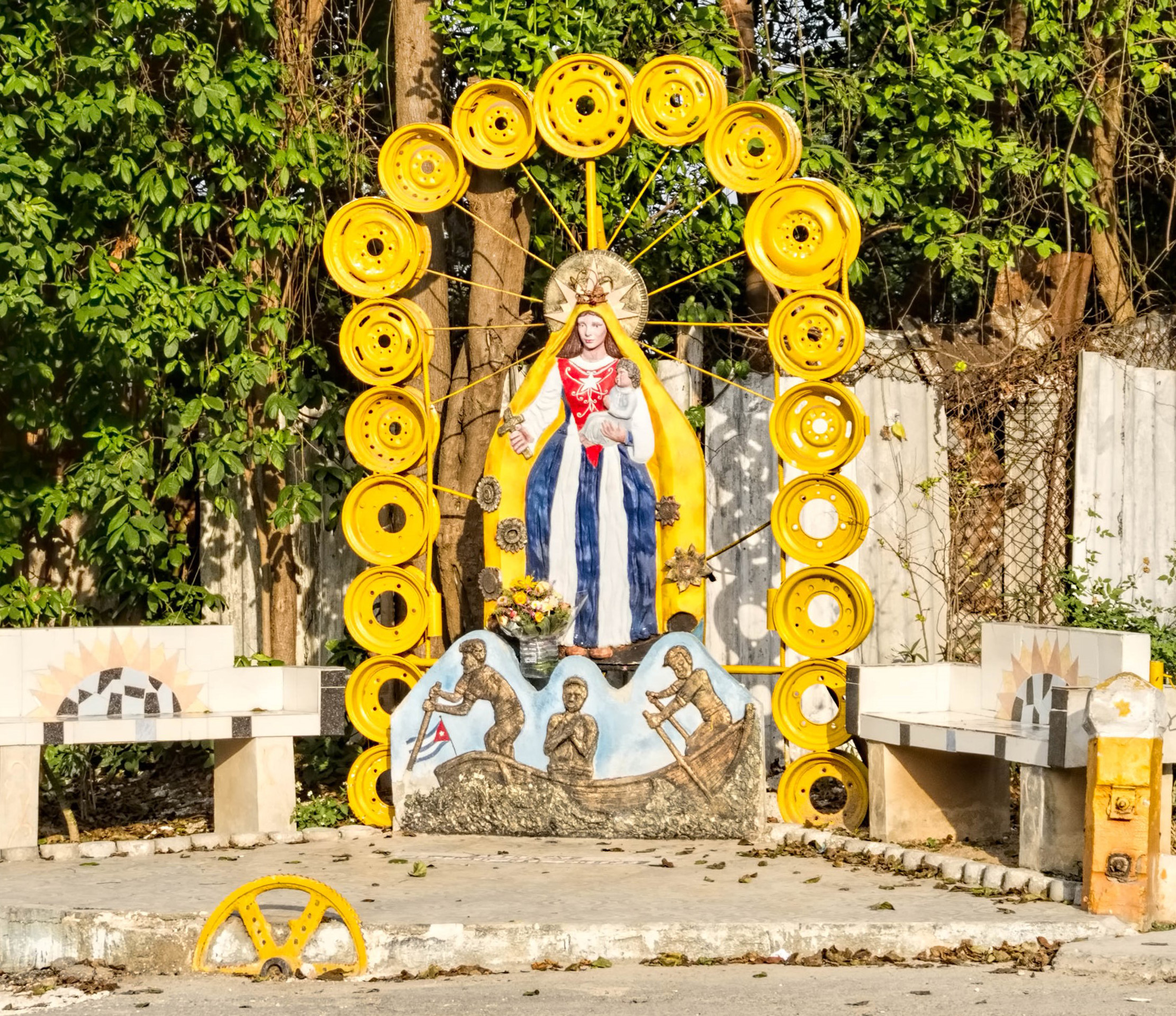
This reflection aims to offer a framework for examining the theological patterns and gaps, along with tracing the colonial imprint of Mary, her place in Africa, and the reimagining of her role in our contemporary African society.