

YOUTH AND JUBILEE
The front cover portrays faces of various youth leaders from the parish of Regina Mundi in Soweto. This parish played a significant role during the 1976 uprisings, protecting those who took refuge in its shelter. Nearly 50 years later, these young men and women represent the hope for a better South Africa, where youth can exercise a meaningful role in society and in the Church, where their talents can be recognized and their voices heard. May their dreams for a bright future and a fruitful discipleship of Jesus be fulfilled.
THE LAST WORD
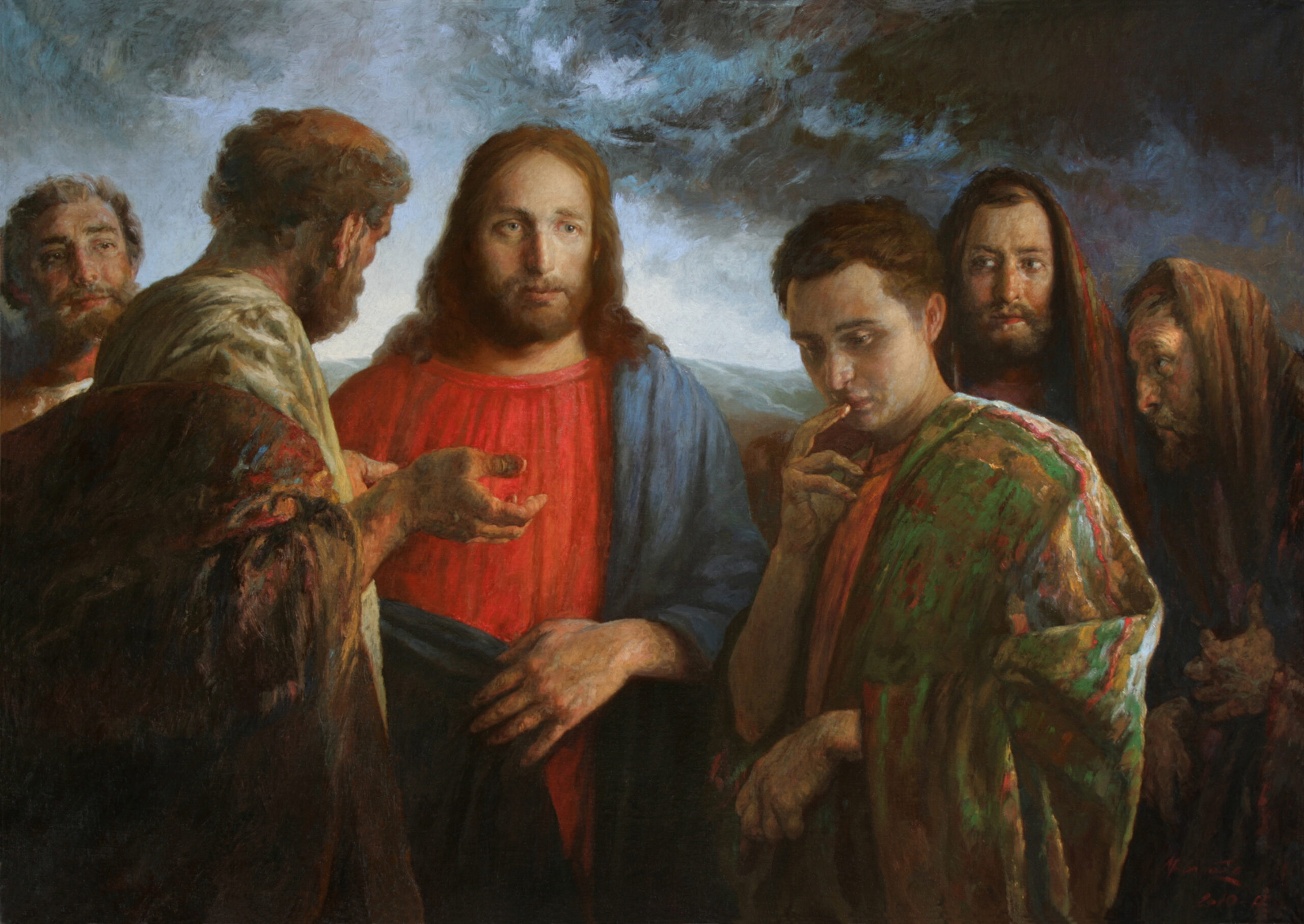
THE TROUBLE WITH THE RICH YOUNG MAN (MARK 10:17-22)
BY REGIS MARTIN
THE STORY of the Rich Young Man whom Jesus sends away sad, is arguably the most arresting example of the limits of mere moralism. The relevant details may be found in each of the three synoptic writers — Matthew, Mark and Luke — showing striking similitude.
In Mark 10:17, when Jesus is about to leave Judea, where he has been blessing and teaching the crowds, “a man ran up and knelt before him, and asked him, ‘Good Teacher, what must I do to inherit eternal life?’” Jesus appears to brush aside by asking a question of his own: “Why do you call me good? No one is good but God alone” (v.18). Jesus goes on to remind him of several of the commandments necessary for the moral life: “Do not kill, do not commit adultery, do not steal, do not bear false witness, do not defraud, Honor your father and mother” (v.19).
This is followed immediately by the astounding admission that the young man has already been observing these things. At which point the Evangelist reveals how Jesus, in looking upon him, “loved him, and said to him, ‘You lack one thing; go, sell what you have, and give to the poor, and you will have treasure in heaven; and come, follow me’” (Mk 10:20-21).
What comes next, of course, is nothing less than the Great Refusal, resulting in the young man departing sadly, owing many possessions of which he could not bring himself to part.
But has this young man not done enough to satisfy the demands laid down by the law? What more must he do to warrant that approval from God that enables him not to go away sad, but to be filled with joy and contentment for all the good he has accomplished? He has shown the keenest possible interest in getting to heaven. What else would account for such an exemplary ethical performance?
In calling Jesus Good Teacher, he has rightly apprehended the perfect source for knowing what needs to be done. So, why should he be sad at all?
Because, in his search for salvation, for that perfect realization of the good he longs to possess, abiding by the commandments will never be enough; only if it were to become an aspect of a greater dimension, which is one of relationship, of actually surrendering one’s life over to Another. And so, it is not really about the Law, after all, as though one’s life were tied to a set of principles. It is all about the Law Giver, who, in the context of the story, bears a unique and unrepeatable name, that is, Jesus the Christ, who has come among us in search of all the lost. That happens to include the Rich Young Man, who as yet does not realise that he is lost.
What the episode is telling us, is that until the Rich Young Man finds himself drawn to the Good Teacher himself, indeed, falling headlong in love with Jesus Christ, his life makes no moral sense at all. Not only will he not be able to sustain those lofty ideals he has so admirably organized his life around; he will find himself more and more mired in a kind of moralism that equates doing good with being good. He will have lost the true grandeur of the moral life, which is the ongoing challenge of making a gift of oneself, even as we receive that far greater gift, which is the Person of Jesus Christ.
For my life to become truly authentic, therefore, it must be seen in terms of vocation, of an answer to a call issued unmistakably to me; an answer in which I give back to One who first gave himself for me. Unless I see my life charged with that awareness, that in every instance my life belongs to God, I really cannot go on. Who else qualifies to be the mainstay of my life if not the One who made himself small for my sake? “With him,” as Father Julian Carron reminds us, “the Mystery entered history, becoming humanity’s companion, offering himself as an answer to the human need for happiness: whoever follows him will receive a hundredfold and will inherit eternal life.”
It so happens that the last line was the postscript to the conversation begun by the Rich Young Man. Too bad he didn’t stay to hear it. It might have spared him a great deal of sorrow.
Source: National Catholic Register
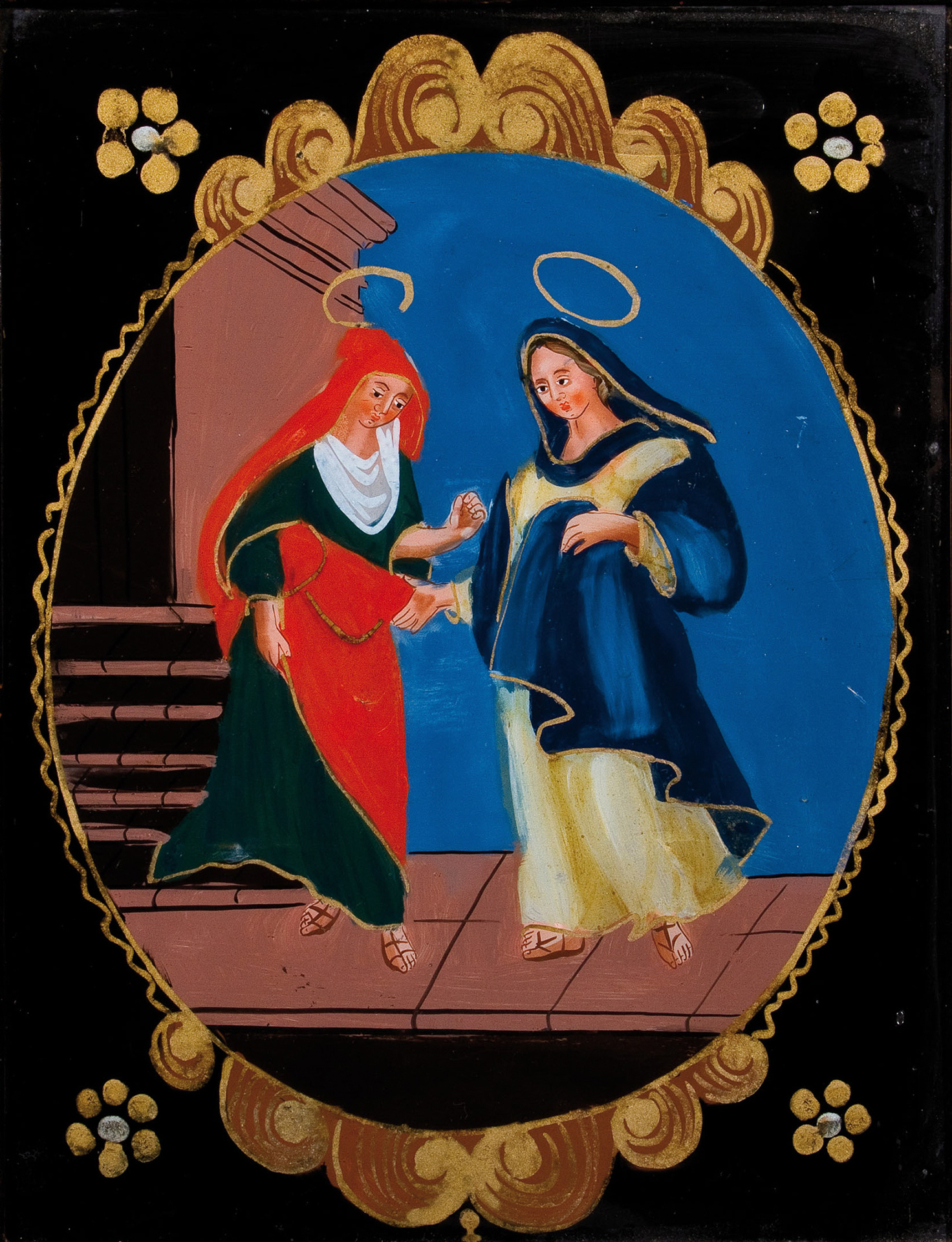
MY SOUL GLORIFIES THE LORD (LK 1:46-56)
Explore the profound meaning of Mary’s Magnificat—a powerful hymn of praise, humility, and God’s transformative salvation for all humanity.