
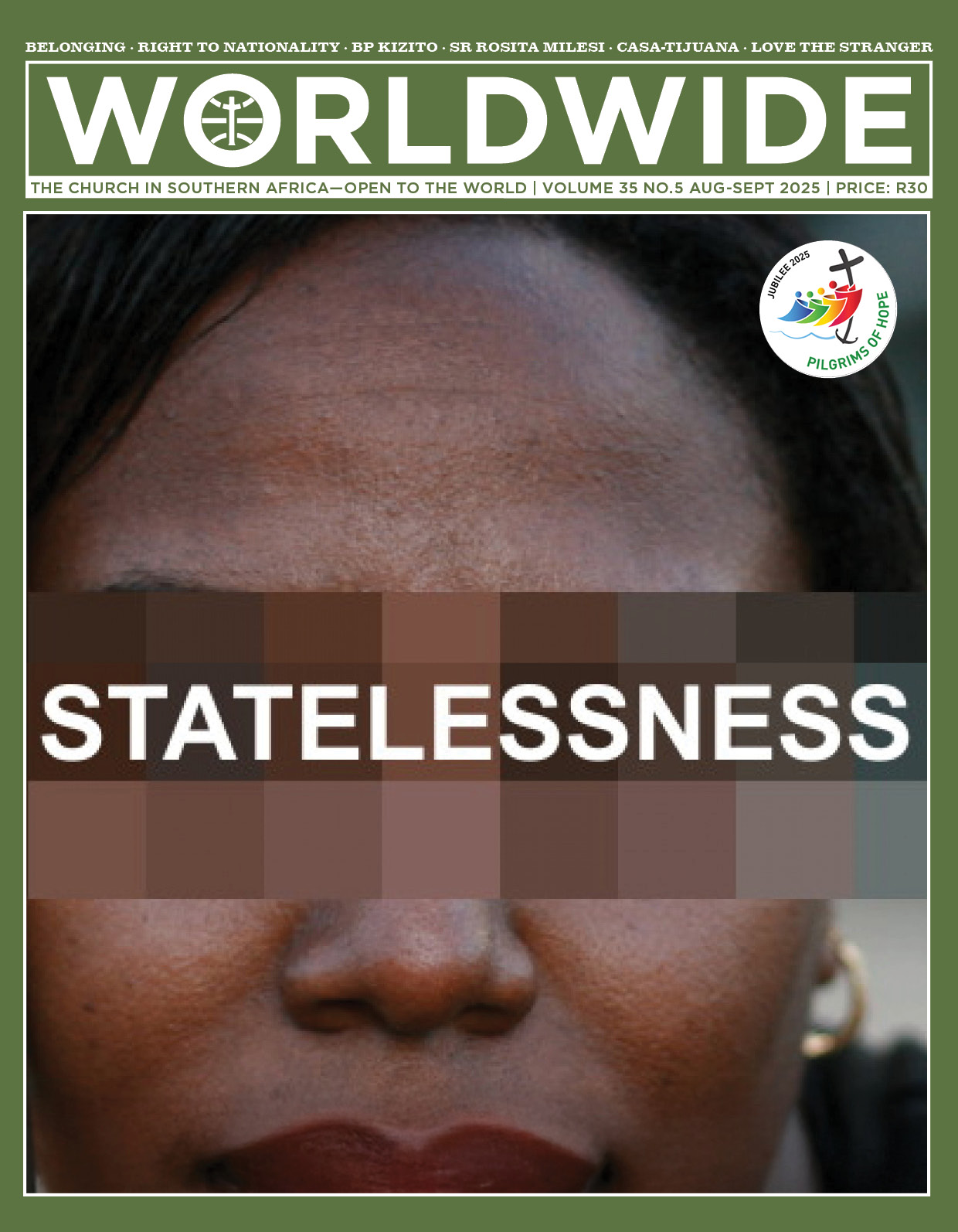
STATELESSNESS
Stateless people from all over the world live in situations of limbo, lacking a nationality, which prevents them access to the basic rights of any citizen of a country. The causes of statelessness are varied, including bureaucratic obstacles, but they all result in the deprivation of the dignity deserved by any human being. This underlines the importance of lobbying to end statelessness in the world.
YOUTH VOICES • INCLUSION
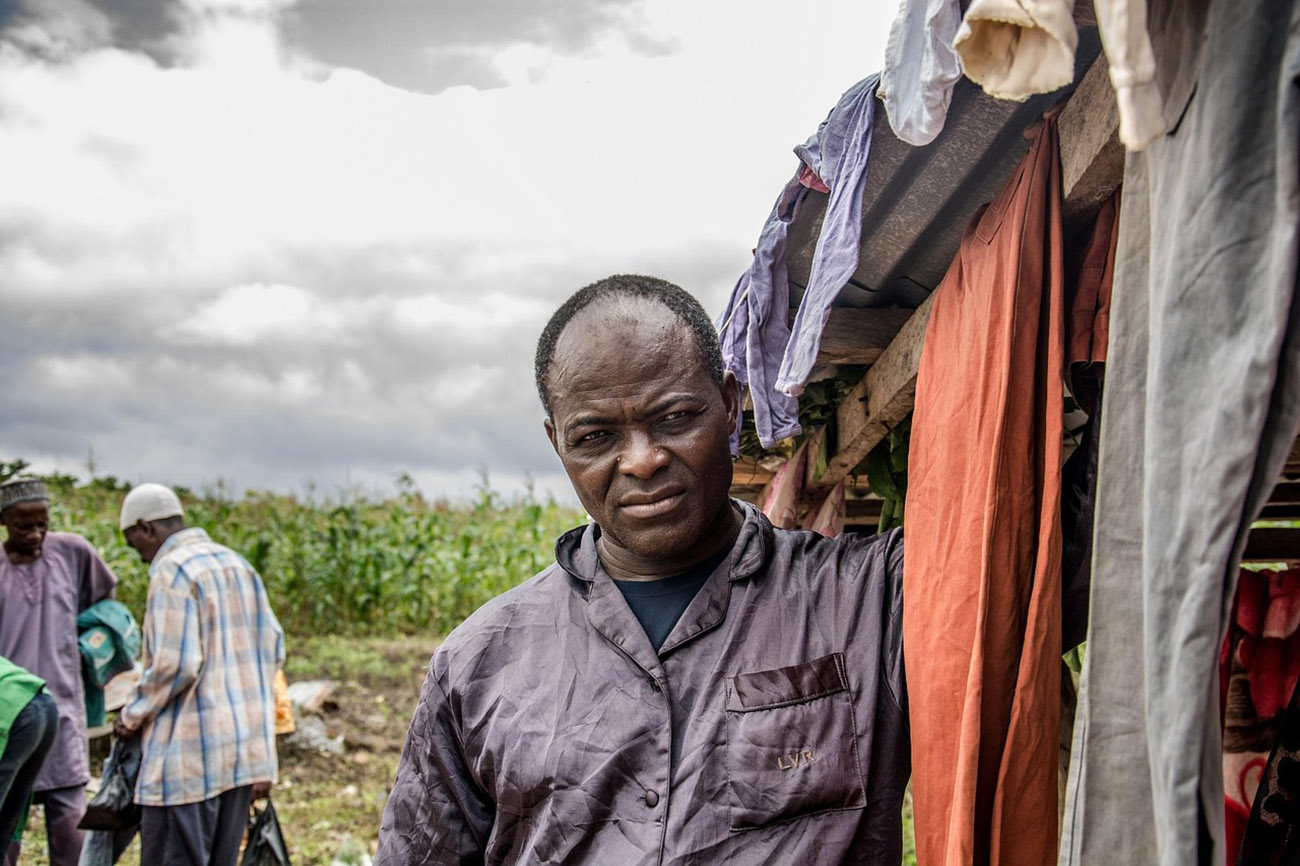
I belong here
From the human need and search for belonging, the author takes us into the realm of our true condition to which we are all called, our citizenship of heaven in full communion with God.
BY Jill Williams | Candidate Landscape Architect, Pretoria
Communion and Belonging
Where do I belong? This is a question we struggle with on a regular, if not a daily basis— in the workplace, in our friendship circles, at the grocery store—everywhere. No matter how many branded clothes you own, how many qualifications you have, or how many titles you are given or have earned; nothing can secure your sense of belonging if this is not something you fully embrace as your own, chosen freely by yourself.
Friendship and fraternal love can be an invitation to become part of a more intense communion with one person or with a group of people. However, being without this communion—particularly the healthy kind —can leave one feeling like an outcast. Those who are within this liminal space—somewhere between “Yes” and “No,” “Insider” and “Outsider”—are forgotten, unheard and alone.
Statelessness
In society, we often forget where we belong, until we need to travel long distances by air, bus or rail, must open a bank account, write a Matric exam or obtain the National Senior Certificate, want to vote… the list goes on! This is especially the case for individuals who have never been or are no longer legally recognised as citizens of a country, and who have no nationality as is the case of stateless persons.
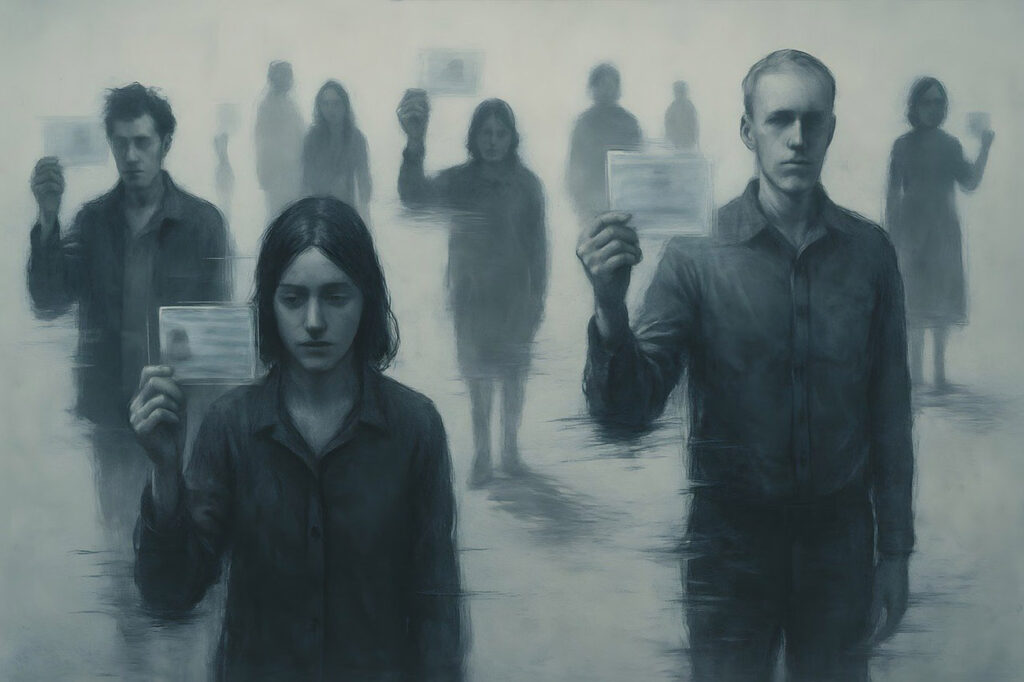
Human trafficking syndicates trap and abuse men, women and children of all ages and backgrounds, depriving them of all forms of identification, forcibly rendering them “stateless.” One can, however also be born and raised in a country and still be stateless; that is the case when the parents of a child need to follow certain procedures to ensure that they are recognised and registered as belonging to that state, according to Respicio (2024), yet sometimes this process fails. There are also those who for various reasons choose not to, do not have the opportunity to, or are unable to legally register themselves as citizens of a certain country.
All the above experience life in a limited sense, with little or no freedom of movement. In Thailand, for instance, where statelessness is a major issue, one is not allowed to move from one part of the country to the other without identification documents. This can mean the difference between being able to unlock new opportunities and staying confined to one’s circumstances.
No one’s land
This is an uncomfortable place. A place with little or no rights. You might feel that you don’t belong on this earth and hence you may even become suicidal because of the stress and unfair treatment you receive due to your status. You are regarded by most as being lukewarm—spat out of the mouth of the Lord for neither being too hot nor too cold (Revelation 3:15-16). Socio-politically, this sentiment is very similar to the deep sense of pain and even loneliness experienced by people of mixed heritage. Even those who are legally registered as citizens of a country can be made to feel like outcasts in their own community and their own households because they might physically resemble individuals of a certain race (and be treated that way), though they are descended from multiple races. Our natural tendency to classify and categorise everything and everyone around us, leads to people being ‘forcedly inserted’ into a certain box and treated as such. This is how the natural world works. We all want to belong somewhere and want to be known in a certain way.
We all want to belong somewhere and want to be known in a certain way.
Embattled Experience
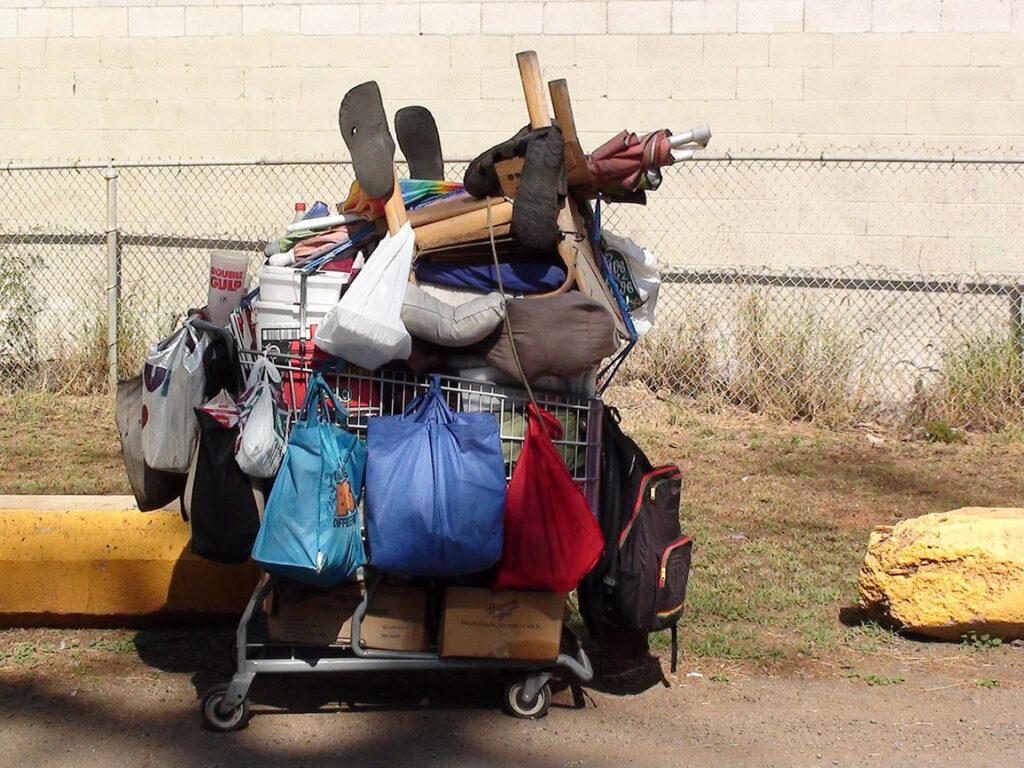
Being forced into a certain situation, such as statelessness, is another way of telling someone where they belong. Jesus himself experienced the discomfort and even pain of forced expectations and ‘boxing’ which he received from the crowds surrounding him who hoped that he would become their king; by the Pharisees who detested him because of his popularity; and by his disciples, the very people he walked with, because they thought he would make them famous and feed them. Scripture says “Dear friends, I urge you, as foreigners and exiles, to abstain from sinful desires, which wage war against your soul.” (1 Peter 2:11 NIV). Even within our minds a war is raging —between the spirit and the flesh—because each side wants to claim more territory, wants to claim ownership over us. The spirit—our true self, is connected very intimately with God’s Spirit, —and the flesh, our shell, is the sin-prone part of our being.
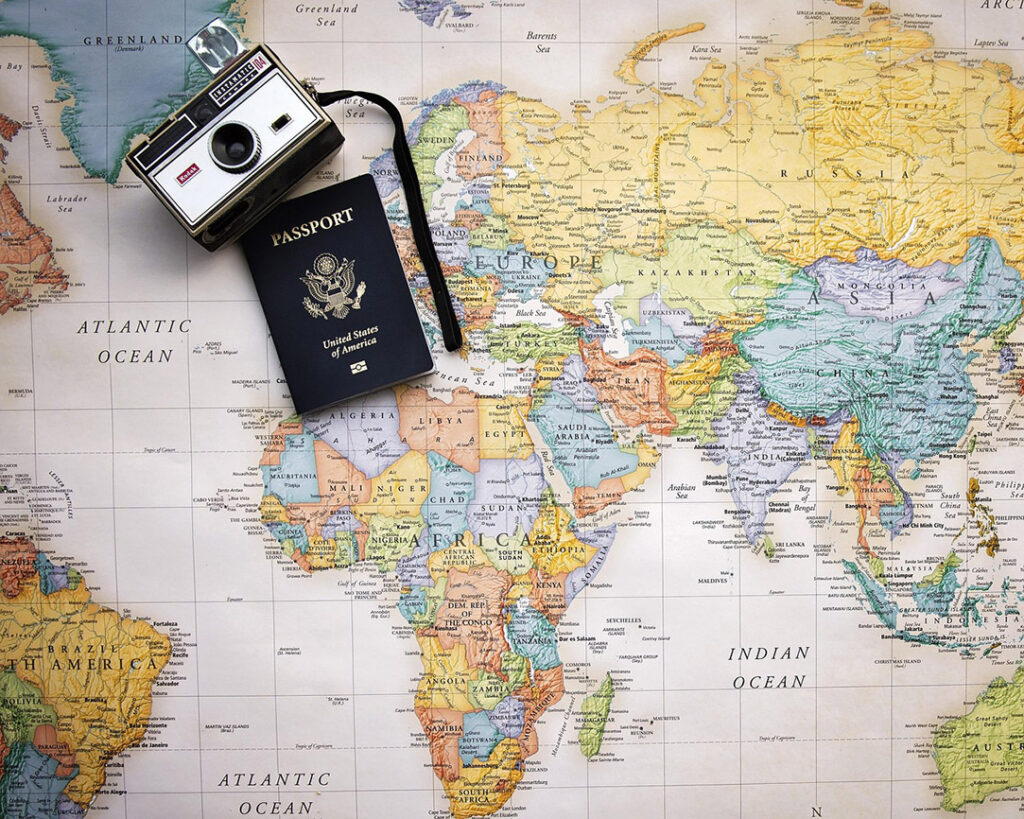
None of us, no matter how well we are legally documented, are natives of this physical world. None of us can honestly claim our heritage. When we look back at the course of history, from the beginning of time, nothing that is now, was before. Nothing is guaranteed. Nothing is permanent—not even the lines we draw on a map which divide us. We need not despair over this; we should rather embrace it as our reality. “I have told you these things, so that in me you may have peace. In this world you will have trouble. But take heart! I have overcome the world” (John 16:33).

Sometimes, we just need a change of perspective, a bit of hope, to help us realise where we belong. Jesus told the crowds, his disciples and the religious, the parable about the good Samaritan (Luke 10:25-37). The Samaritan who was considered an outsider and outcast showed kindness to a Jew who had been badly beaten; to someone who, according to societal standards at the time, had more rights and privileges than he had. Those who were part of this Jew’s “box”, saw his distress, but decided that where they were going to, doing or who they were was far more important than bending down to talk to or help him. The Samaritan however realised that this man was in need, a person created by the same God who created him, and had to be helped. The Kingdom of Heaven works like this. It reaches out to the marginalised, to the distressed and those in need. If you think consciously, you will realise that this also applies to you.
None of us, no matter how well we are legally documented, are natives of this physical world.
Citizens of heaven
Jesus’ life, death and resurrection granted all humanity (from the beginning to the end of time) the gift of salvation; an eternally stamped and approved document promising citizenship of heaven. There are no queues, waiting periods or admin fees. You simply need to believe and accept that Jesus is Lord of Lords and King of Kings. Unlike earthly kingdoms, everyone is invited and granted permission to be part of this kingdom. Only you can accept this for yourself — you cannot be forced into the Kingdom of Heaven. All opposition to this kingdom will attempt to contest this, but will not succeed. It is a place you have always belonged to and always will. Of the fathers of the faith, Paul says: “All these people were still living by faith when they died. They did not receive the things promised; they only saw them and welcomed them from a distance, admitting that they were foreigners and strangers on earth. People who say such things show that they are looking for a country of their own. Instead, they were longing for a better country—a heavenly one. Therefore, God is not ashamed to be called their God, for he has prepared a city for them.” (Hebrews 11:13-14, 16). God has prepared a home for us, a place where we all truly belong; He is our home.
References
Respicio. (2024, October 6). Political Law and Public International Law: Nationality and Statelessness.

LEARNING TO HOPE
“Proclaim liberty throughout all the land to all its inhabitants. It shall be a jubilee for you”- Leviticus 25:10
The Year of Jubilee comes as an opportunity for all of us to experience a sense of renewal, forgiveness and to realign our lives with God, who invites us to freedom and to live joyful, courageous and meaningful lives. For that process to be facilitated, as the author states, we need to revisit some of our past experiences and reorientate some of our practises.