
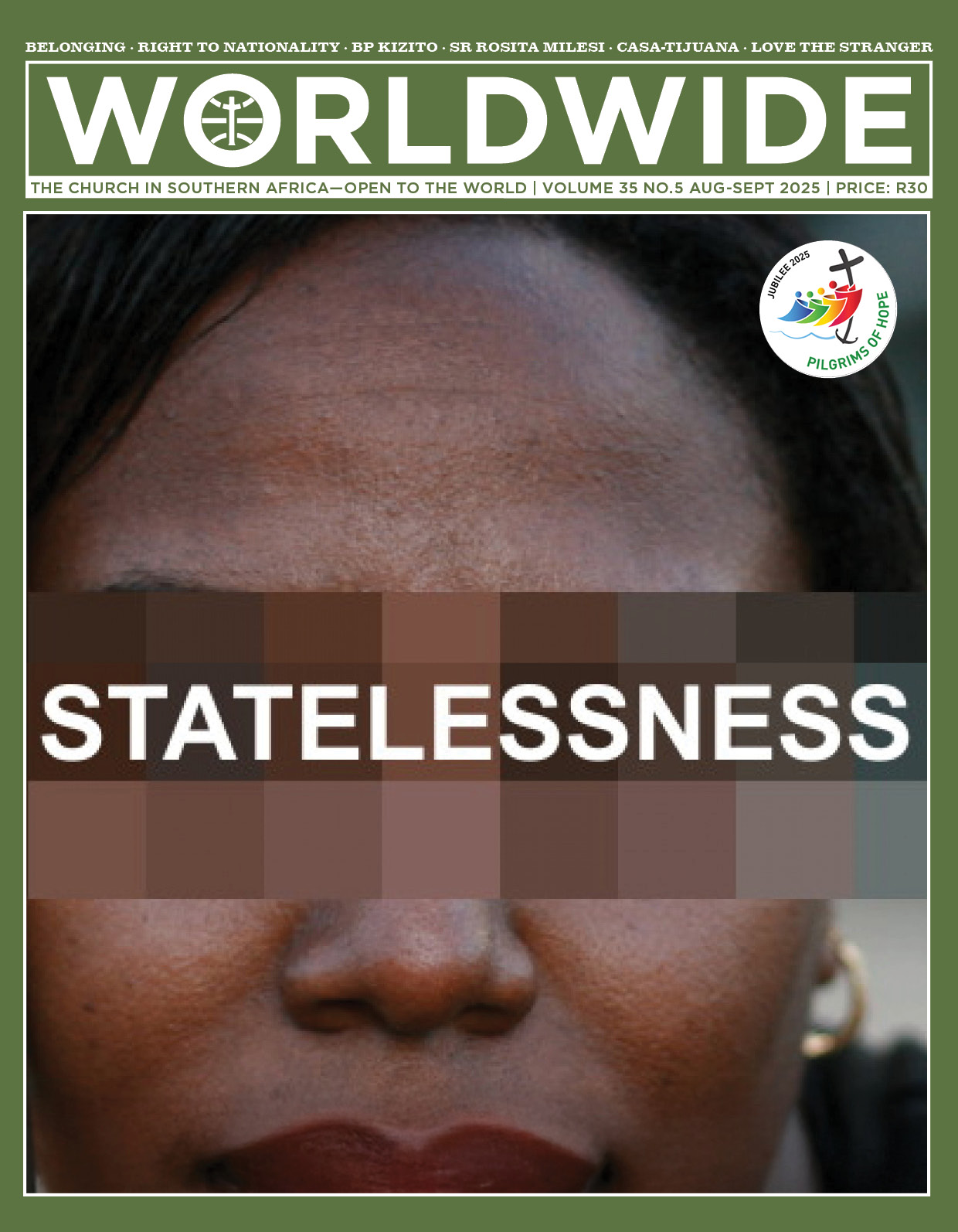
STATELESSNESS
Stateless people from all over the world live in situations of limbo, lacking a nationality, which prevents them access to the basic rights of any citizen of a country. The causes of statelessness are varied, including bureaucratic obstacles, but they all result in the deprivation of the dignity deserved by any human being. This underlines the importance of lobbying to end statelessness in the world.
THE LAST WORD • LOVE THE STRANGER
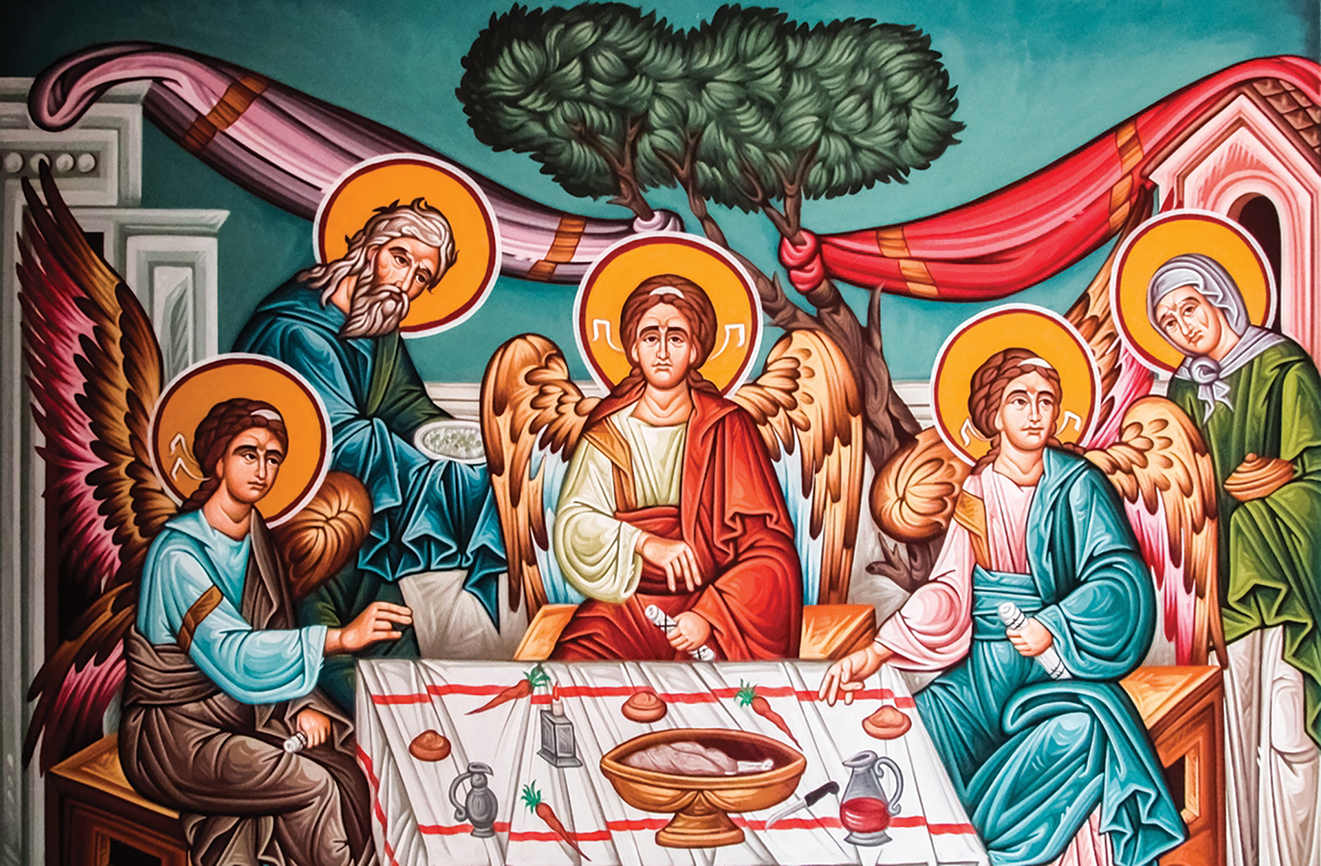
The Scripture legacy on statelessness
BY Ani Ghazaryan Drissi | World Council of Churches, Geneva
IN THE BIBLE we find words such as “foreign,” “passing stranger,” “enemy,” “alien”: they describe a native, but one whose existence is somewhat disassociated with that of the locals. The people of Israel were themselves foreigners in Egypt: “You shall not wrong or oppress a resident alien, for you were aliens in the land of Egypt” (Ex. 22:21). Thus, the Israelites, previously stateless, received from the Lord, a territory occupied by others. With their heritage it is necessary to note that they received the same divine order not to forget their previous condition and especially not to exploit and oppress the emigrant: “You shall not oppress a resident alien; you know the heart of an alien, for you were aliens in the land of Egypt” (Ex. 23:9).
Remembering that they were once foreigners in Egypt, the people of Israel were instructed not to be content in simply offering “residents” hospitality, but to love them as themselves: “You shall not oppress the foreigners who reside in your land. Treat them as you would a fellow-citizen; you shall love them as yourself, for you were foreigners in the land of Egypt: I am the Lord your God” (Lev. 19:33-34).
Assimilation
God blesses outsiders, extending his protection to the needy and the poor: He is a God “who executes justice for the orphan and the widow, and who loves the strangers, providing them with food and clothing” (Deut. 10:18). He gave them legal status similar to the people of Israel (Deut. 1:16; Lev. 20:2), authorizing especially the circumcised to participate in the Passover (Ex. 12:48f), to observe the Sabbath (Ex. 20:10), to fast on the Day of Atonement (Lev. 16:29), and to not blaspheme the name of Yahweh (Lev. 24:16). Their assimilation is such that in the Israel of the end time, Ezekiel gives them the country to share with citizens by birth: “You shall allot it as an inheritance for yourselves and for the aliens who reside among you and have begotten children among you. They shall be to you as citizens of Israel; with you they shall be allotted an inheritance among the tribes of Israel in whatever tribe aliens reside, says the Lord God” (Ezek. 47:22-23).
The people of Israel were instructed not to be content in simply offering “residents” hospitality, but to love them as themselves.
God thus remains the true owner of the promised land (Gen. 12:1.7), and the Israelites are aliens residing there: “The land shall not be sold in perpetuity, for the land is mine; with me you are but aliens and tenants” (Lev. 25:23). This idea contains a spiritual dimension that is found in the Psalms. The Israelite knows he has no rights before God, hence he merely wants to be God’s host (Ps. 15); the Israelite recognizes a foreign home, knows that he is a bystander, like all his ancestors were (Ps. 39:13; 1 Chron. 29:15). Also, he knows that his life on earth is brief; so, he asks God to help him: “I live as an alien in the land; do not hide your commandments from me” (Ps. 119:19).
Citizens of the heavenly homeland
In the New Testament, the intelligence of the human condition intensifies. Christians have no permanent dwelling (2 Cor. 5:1f); they are strangers on earth, not only because it belongs to God alone, but because they themselves are citizens of the heavenly homeland: among them there is neither host nor stranger, but all are fellow citizens of the saints: “So then you are no longer strangers and aliens, but you are citizens with the saints and also members of the household of God” (Eph. 2:19). Until Christians reach this state, their lives are ones of journeying (1 Pet. 2:11), in imitation of that of the patriarchs (Heb. 11:13), who once tore themselves away from their land to journey to a better country (Heb. 11:16). The evangelist John accentuates the contrast between the world in which we must live, and real life to which we have already been introduced. Born from above (John 3:7), the Christian cannot be a stranger or pilgrim on this earth, because agreement is impossible between the Christian and the world: the world is, in fact, in the power of the evil one (1 John 5:19). But if it is not from this world, the Christian knows, as Christ did, where he comes from and where he goes: he follows Christ who pitched his tent among us (John 1:14) and returned to the Father (16:28), who prepares a place for his family (14:2f): “Whoever serves me must follow me, and where I am, there will my servant be also. Whoever serves me, the Father will honour” (John 12:26).
Source: Ani Ghazaryan Drissi. 2017. The Church is like the homeland: A biblical reflection In Semegnish Asfaw (ed.). I belong. Biblical reflections on statelessness. World Council of Churches. Geneva: Switzerland.
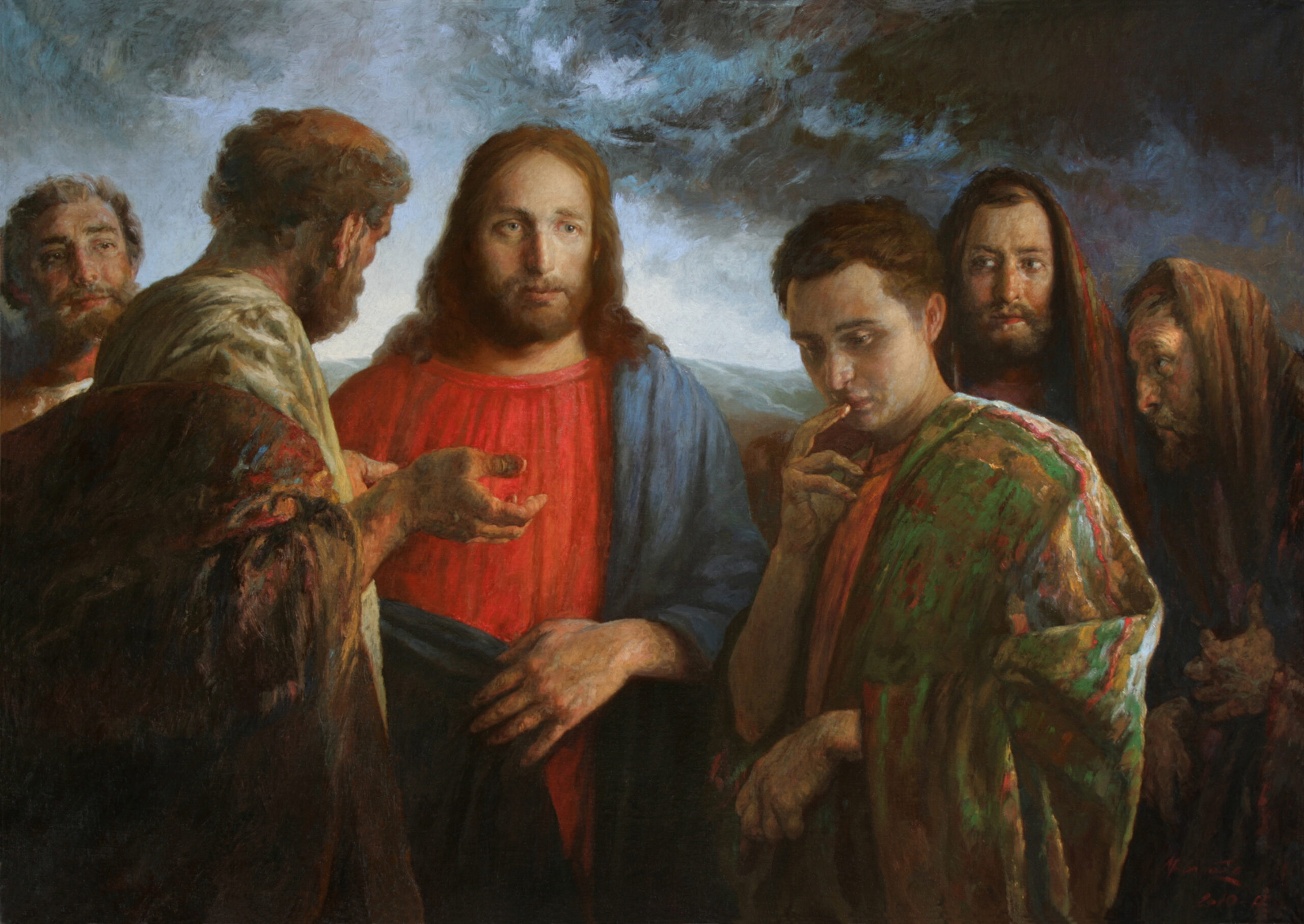
THE TROUBLE WITH THE RICH YOUNG MAN (MARK 10:17-22)
The story of the Rich Young Man whom Jesus sends away sad, is arguably the most arresting example of the limits of mere moralism. The relevant details may be found in each of the three synoptic writers — Matthew, Mark and Luke — showing striking similitude.