
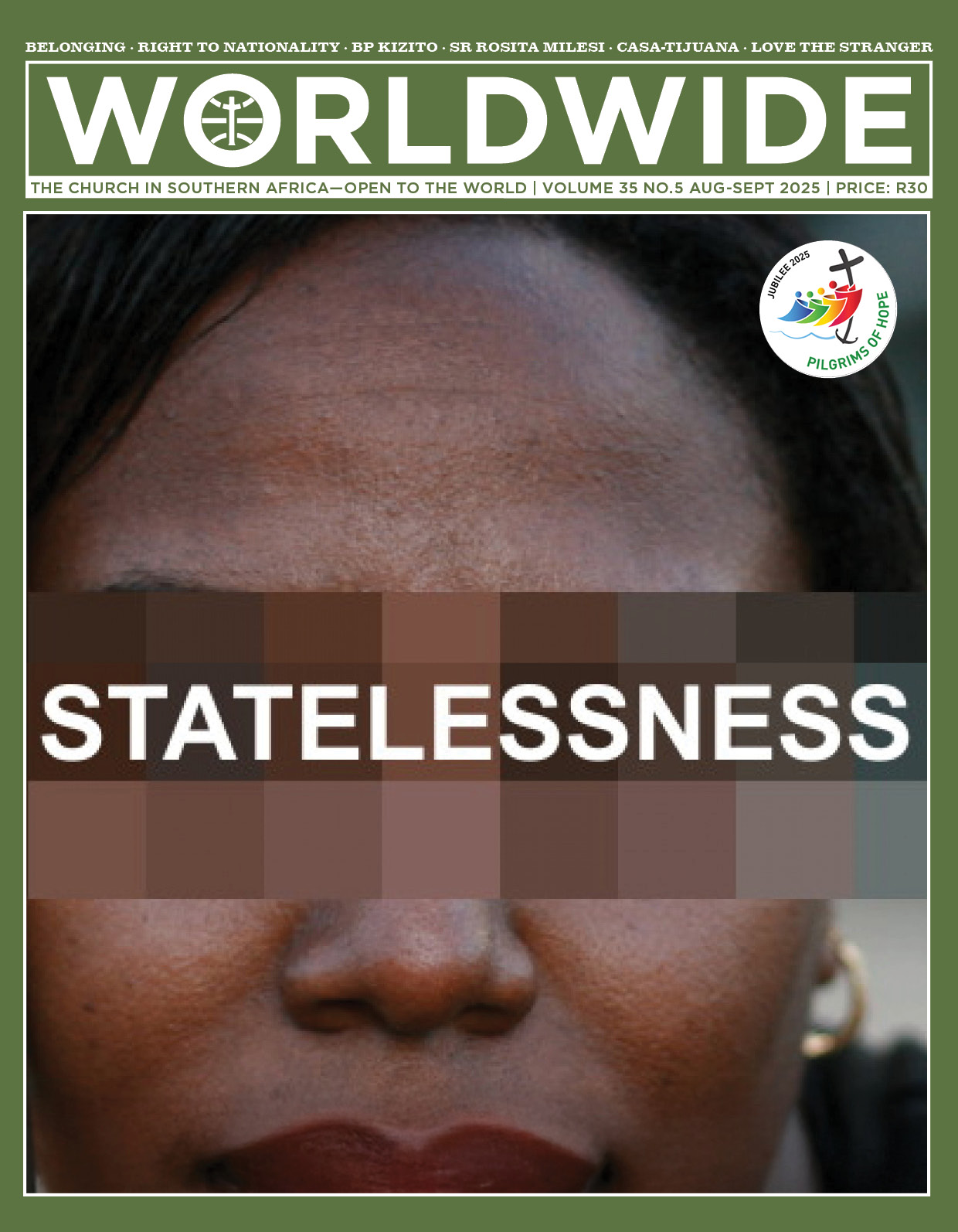
STATELESSNESS
Stateless people from all over the world live in situations of limbo, lacking a nationality, which prevents them access to the basic rights of any citizen of a country. The causes of statelessness are varied, including bureaucratic obstacles, but they all result in the deprivation of the dignity deserved by any human being. This underlines the importance of lobbying to end statelessness in the world.
PROFILE • SR ROSITA MILESI
A lawyer for the poor
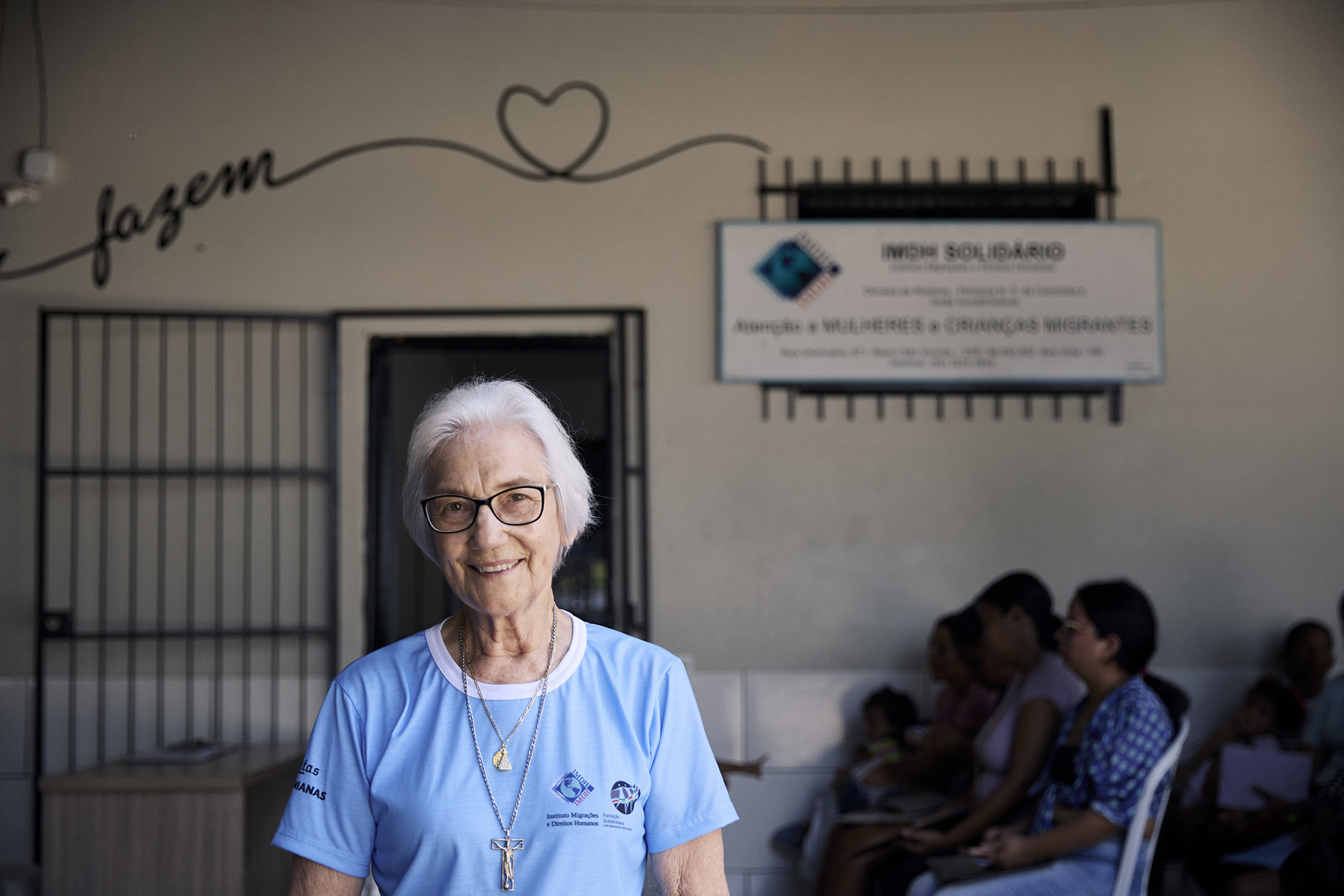
Sr Rosita Milesi MSCS, a Brazilian Scalabrinian, has dedicated her entire life to the defence of the rights of migrants, refugees and stateless persons. As an internationally acclaimed lawyer, noted for her policy-making interventions and direct assistance to those in need, she has contributed to significant improvements in the lives of hundreds of thousands of people.
BY
MARIAN PALLISTER
| CHAIR OF PAX CHRISTI SCOTLAND
PHOTOS BY | SR ROSITA MILESI -IMDH
GLOBAL migration continues to increase at an alarming rate partly because of conflict, partly because of the effects of the climate crisis, and partly because of persecution. The number of those forcibly displaced rose to 122.6 million last year and we can all make the educated guess that this figure will have risen again in 2025.
Migration is something that most of God’s creatures have done since the beginning of time. Undoubtedly, our own ancestors drifted around our common home for millennia, if not for millions of years. We have a very long track record of moving, in order to seek a safer or more productive home than the one where we originated from.
But in 2025, migrants are even less welcome than ever before.
Harshening of migration conditions globally
President Donald Trump (whose mother emigrated to the US from the Scottish island of Lewis, whose paternal grandparents were from Germany, and whose wife is Slovenian) has introduced particularly harsh measures to rid his country of migrants. Having accused all migrants of being criminals (indeed, rapists and murderers) at the beginning of July 2025, he visited what seems to be his ideal detention centre. Situated in the Florida Everglades and nicknamed “Alligator Alcatraz”, it symbolises the cruel border controls introduced by President Trump. He even suggested that the alligators could act as guards of the unfortunate detainees.
Europe has been the more recent destination for migrants hailing from Asia, the Middle East and Africa. The horrific journeys made to reach European and UK shores are well documented, but evoke little sympathy from many governments and from some populations convinced by right-wing propaganda that their countries, customs, even languages, will be flooded by waves of foreigners, despite substantial evidence to the contrary.
Border controls and volunteer rescue boats vie with each other to reach migrants and refugees crossing the Mediterranean and the English Channel—the first, to arrest and deter, the second to rescue and bring safely ashore and be subsequently processed by the authorities. Across Northern Africa and throughout Europe, smugglers are making a fine living from relocating some of those 120- million plus unfortunate people from one continent to the other.
The situation in South America is equally challenging. We may regard the continent as the source of migrants north to the United States, but in fact these southern countries are the preferred destination of Asian and African migrants, as well as of migrants from various countries in South America itself.
And indeed, as in Europe, the UK and the US, too many of those who have been forced to leave “home” then become stateless—no documentation, no proof of their status. “Non people”.
Beacons of hope
However, not all is bleak. In most countries, there are individuals and organisations who aim to help those migrants, who instead of finding the better home which they had hoped and prayed for, are cast adrift, seemingly without a future.
The UN calls her a “formidable refugee champion.”
Sr Rosita Milesi, a religious working in Brazil, is one of those individuals who reach out to refugees and help them create new lives.
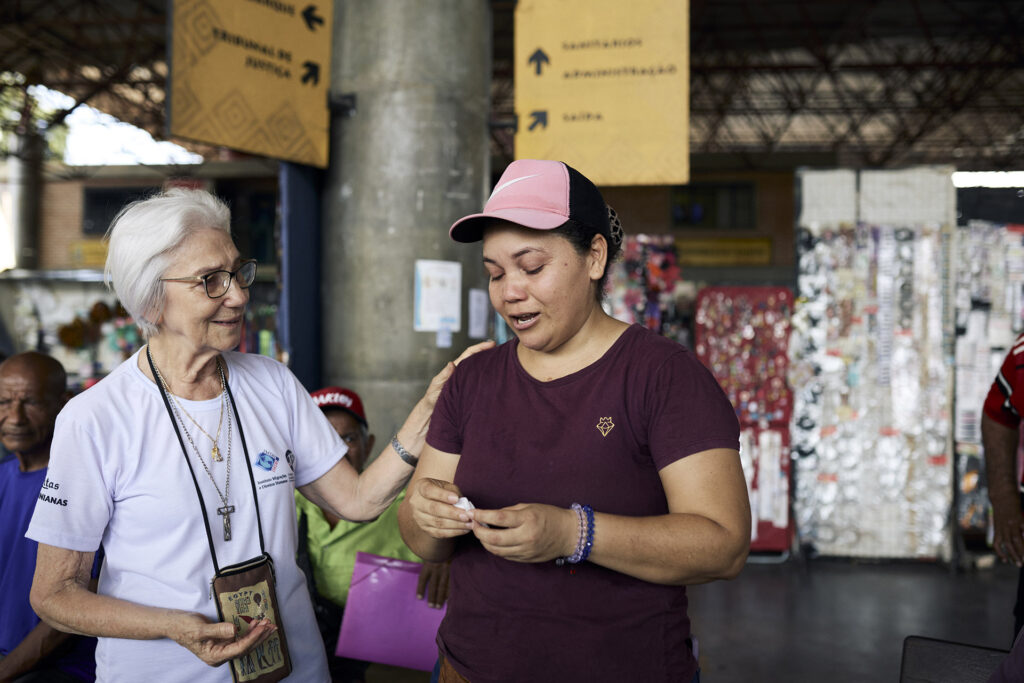
Brazil hosts migrants and refugees from surrounding South American countries, particularly from troubled Venezuela, but also from Sub-Saharan Africa. Yet unlike so many countries worldwide, Brazil is protective of foreigners. It is relatively simple to obtain a visa and the legal status required to remain there. But that is mostly just the start of a new life. Whether one is an economic migrant or a refugee escaping difficult circumstances, the next challenge is to integrate, to learn the language—and possibly to face prejudices from those who arrived there first.
In addition, the migrants need to access health and education services, they need to find jobs that will support them and possibly also enable their families and relatives to join them. They may have been pharmacists or farmers in their country of origin. Now they might have to work at whatever puts food on their table and pays their rent.
Formidable champion of refugees
Sr Rosita, a member of the Scalabrinians, the Congregation of the Missionary Sisters of St Charles Borromeo, is a lawyer by profession and has been dedicating her life to alleviate these myriad problems for many years. The Scalabrinian Centre for Migration Studies, which was created by her Congregation in 1988, was her brain child. In 1999, she also founded the Migrations and Human Rights Institute, and seeing the migration situation grow in 2017, she began working with Venezuelan migrants in the State of Roraima in northern Brazil. It was there that the humanitarian crisis of Venezuelans crossing the border to escape the regime in their country continued — and continues — to grow, fuelled by political repression and on-going economic emergencies.
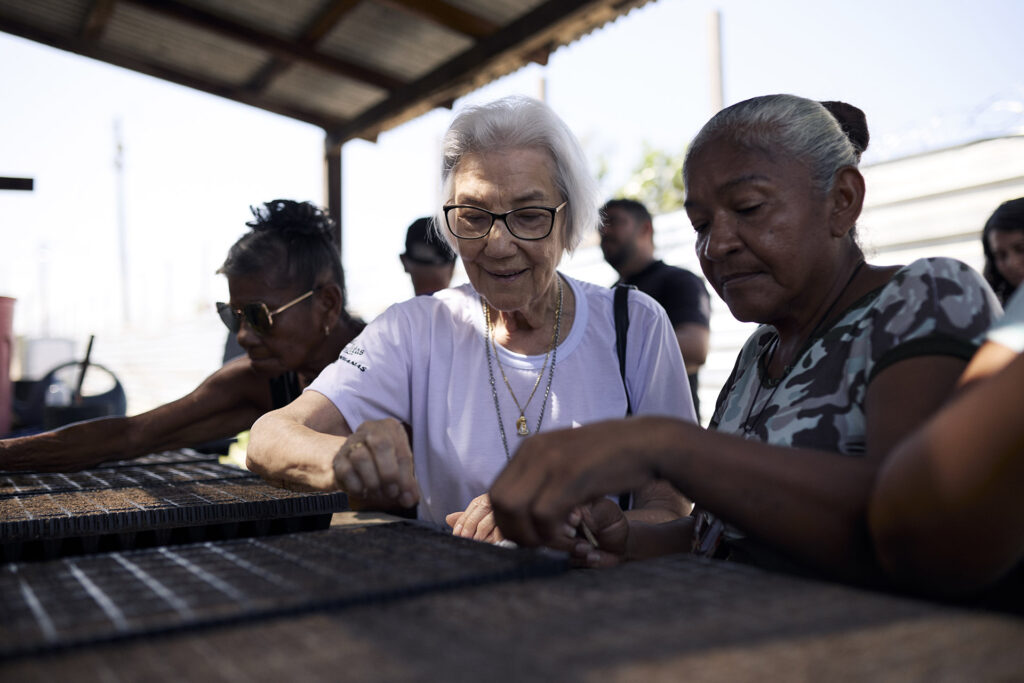
Sr Rosita’s concerns for the stateless cause her to wear many hats. She coordinates the annual publication of the Caderno de Debates “Refugee, Migrations and Citizenship”, which was first published in 2006. She is an observer member of the National Committee for Refugees (CONARE, acronym in Portuguese), which is linked to the Ministry of Justice of Brazil, and she is a member of the Pastoral Sector of Human Mobility of the National Conference of Brazilian Bishops.
“I decided to dedicate myself to migrants and refugees. I’m inspired by the growing need to help, to welcome, and to integrate refugees.” (Sr Rosita)
As a lawyer, she has shaped public policy. Her work on Brazil’s 1997 Refugee Law helped to bring refugee rights into line with the 1984 Cartagena Refugee Declaration, ensuring that it protects, includes and empowers people forced to flee, and aligns with international standards.
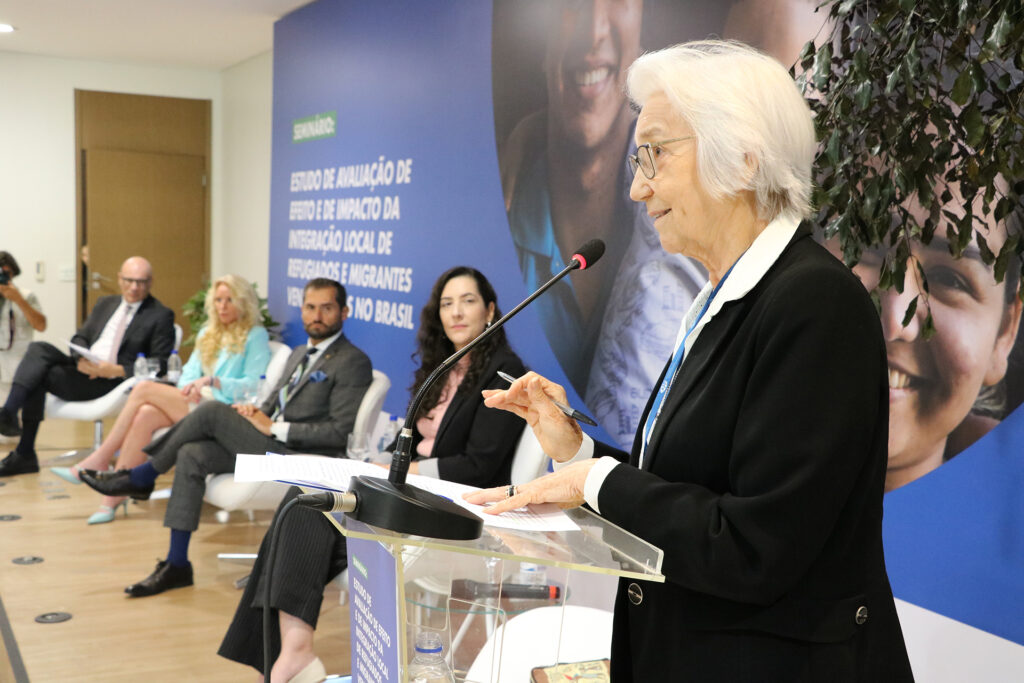
Along the way, she has written or co-authored many publications about refugees and migrants, and has won many awards for her work, including the UN Refugee Agency’s 2024 Nansen Refugee Award, for 40 years of activism. The UN calls her a “formidable refugee champion.”
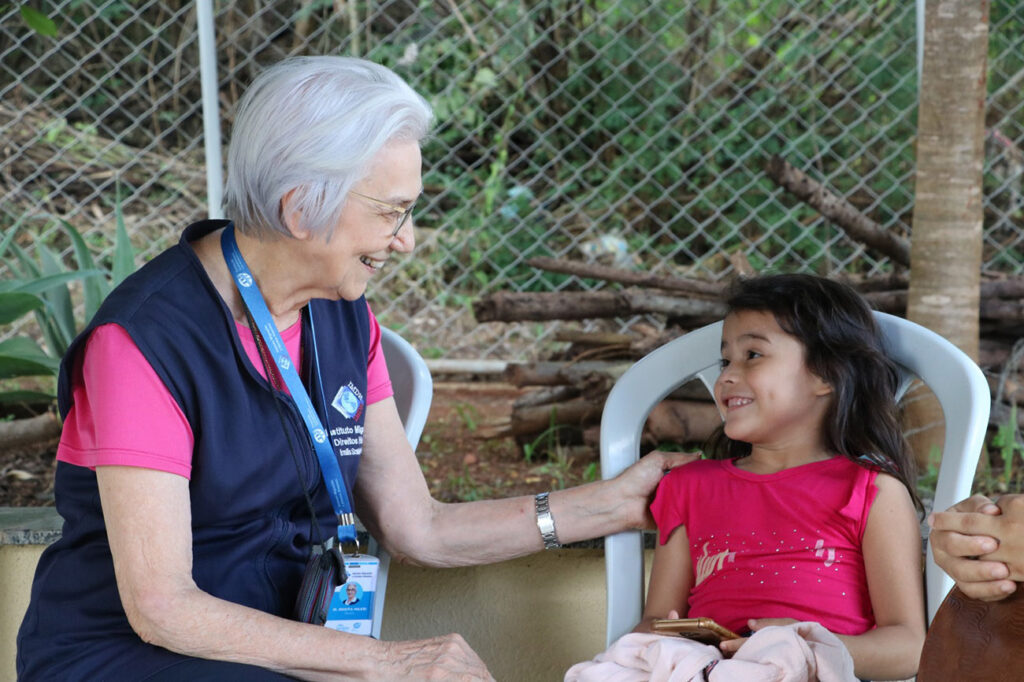
It is however not just about high-flying positions and awards. Sr Rosita has personally assisted thousands of people, helping them to get legal documentation, shelter, food, health care, language training and access to the labour market in Brazil.
When, at the age of 79, she won the UN award in 2024, she said, “I decided to dedicate myself to migrants and refugees. I’m inspired by the growing need to help, to welcome, and to integrate refugees.”
She added, “I’m not afraid to act, even if we don’t achieve everything we want to. If I take something on, I will turn the world upside down to make it happen.” That is why she is recognised as one of Brazil’s most influential refugee advocates.
Change in life plans
Nevertheless, when she was setting out in life, none of this was in her grand plan. She intended to be a maths teacher. It was the subject she felt most at ease with—but then there was another voice inviting her to change her plans. It was the voice of the Holy Spirit. At the age of 19, she became a Catholic nun.
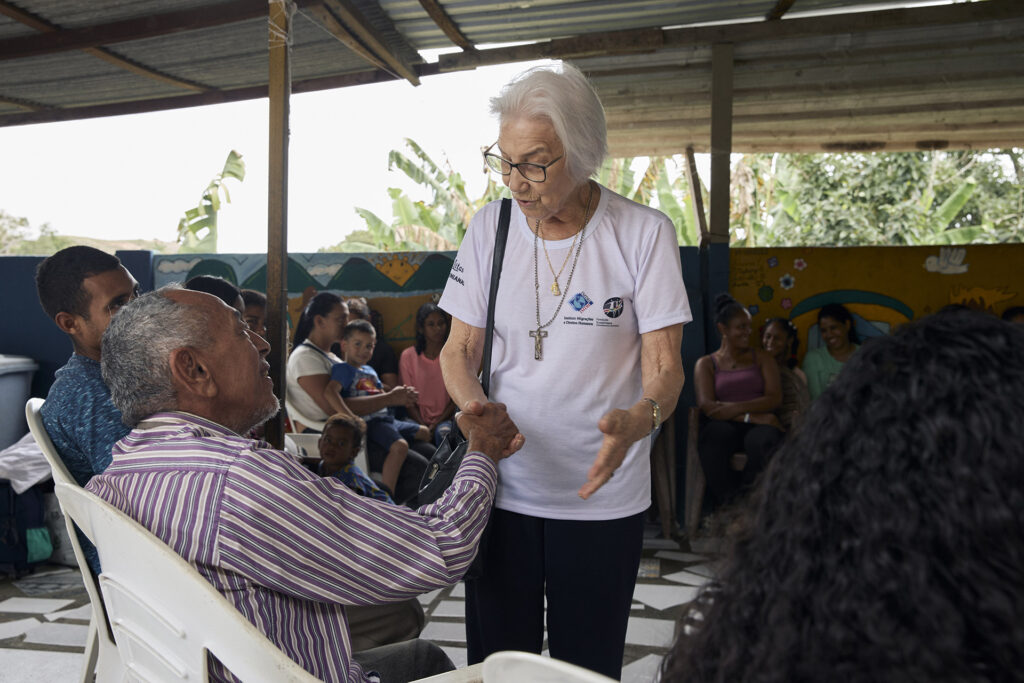
She was a farmer’s daughter, living in the south of Brazil in the state of Rio Grande do Sul. Her parents were of Italian lineage, and had 11 children. Her family was one of faith which took the call to hear the cry of the earth and the cry of the poor very seriously. Those who came to the farm in need of work, of food, of shelter, shared fully in what the Milesi family could offer.
When she was nine years old, Rosita became a boarder at the Scalabrinian Missionaries’ convent school. This was a congregation which had been founded at the end of the 19th century to help Italian migrants arriving in the Americas. That founding mission would in time determine Sister Rosita’s life and work.
Services in the Institution
Working with and for migrants and refugees didn’t cross her path immediately. After making her vows in 1964, there were 20 years of teaching, working as a hospital administrator and supporting the poor in some of the Scalabrinian Missionaries’ establishments. She persuaded her Congregation to allow her to study law and to get her Master’s degree, telling her superiors, “I’m going to be a lawyer for the poor.” The focus of the Scalabrinians at that time was indeed the poor, but as time went on, the growing influx of migrants and refugees meant that in the 1980s the Order decided to return to their original foundational charism and to help them.
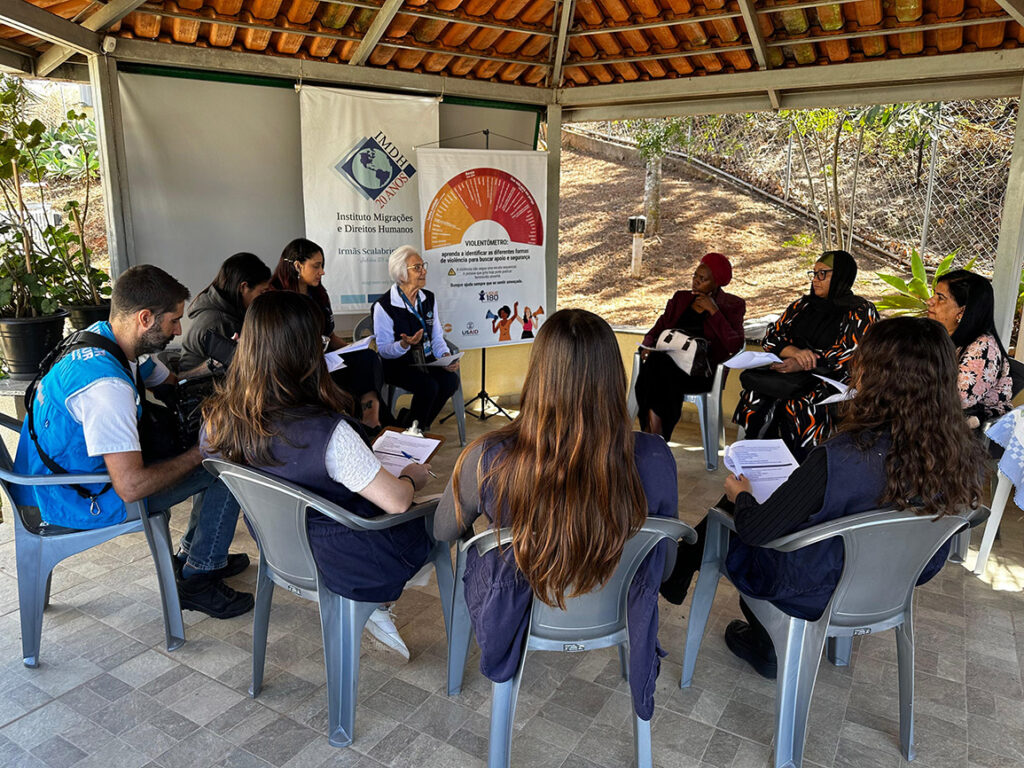
Because of her legal training they turned to Sister Rosita first to establish the Migration Studies Centre in Brasilia, the country’s capital city.
She has admitted, “I knew little about the issues, but I had to prepare myself. So, I started studying the topic of displaced people and to dedicate my knowledge to migrants and refugees.”
Legislation maker
By 1996, she was the go-to lawyer acknowledged as the one to draft Brazil’s new Refugee Law. In 1997, she had the support needed to broaden the law to ensure many more people seeking international protection would be included in the accepted legislation. In 2017, Sr Rosita would once more achieve notable results with the adoption of Brazil’s Migration Law.
“If there’s a human or humanitarian need, I’m not afraid to act, even if we don’t achieve everything we want.” (Sr Rosita)
She said of this legislation, “Any law lasts many years. Good or bad, it’s hard to undo. So, we couldn’t let a limited law pass if there was a possibility to expand it…I even wrote to the Vatican in Rome, asking them to send a letter to the Brazilian government saying how important it was to expand the refugee concept. And they sent the letter, thank God.”
Today, people in need of international protection in Brazil come from 168 countries, including Venezuela, Haiti, Afghanistan, Syria, Iraq, Burkina Faso, Mali and Ukraine. Sr Rosita and her teams around the country work unstintingly to improve the lives of around 800 000 people.
Sadly, those on the move now include people from her own home state in the south of the country, which has been devastated by floods. Climate change, conflict and persecution—the causes of migration remain the same.
Welcome, protect and integrate
Sr Rosita is a realist. She knows that provision for migrants and refugees can never be enough. But she insists, “If there’s a human or humanitarian need, I’m not afraid to act, even if we don’t achieve everything we want.”
The improvements she wants to see worldwide include swapping harsh judicial border controls for social work assistance; countries becoming more willing to welcome and integrate refugees into their communities; and clearcut integration programmes allowing refugees to enrich their new communities.
She has said, “I wish for their gifts and talents to be recognised so they can feel fulfilled and rebuild their own lives in the countries they arrive to.”
As Sr Rosita understands so well—there but for the grace of God go all of us.

MAN OF THE EIGHT BEATITUDES
Pier Giorgio Frassati will be canonised on the 3rd of August this year. This young man, who died at the age of 24, grew up in a wealthy family in Turin, Italy, at the beginning of the last century. A joyful character and lover of nature, he gave up his privileged position to dedicate his life to the poor. He inspired thousands of youths, being like one of them, living a humble life, but blessed with an extraordinary personality