
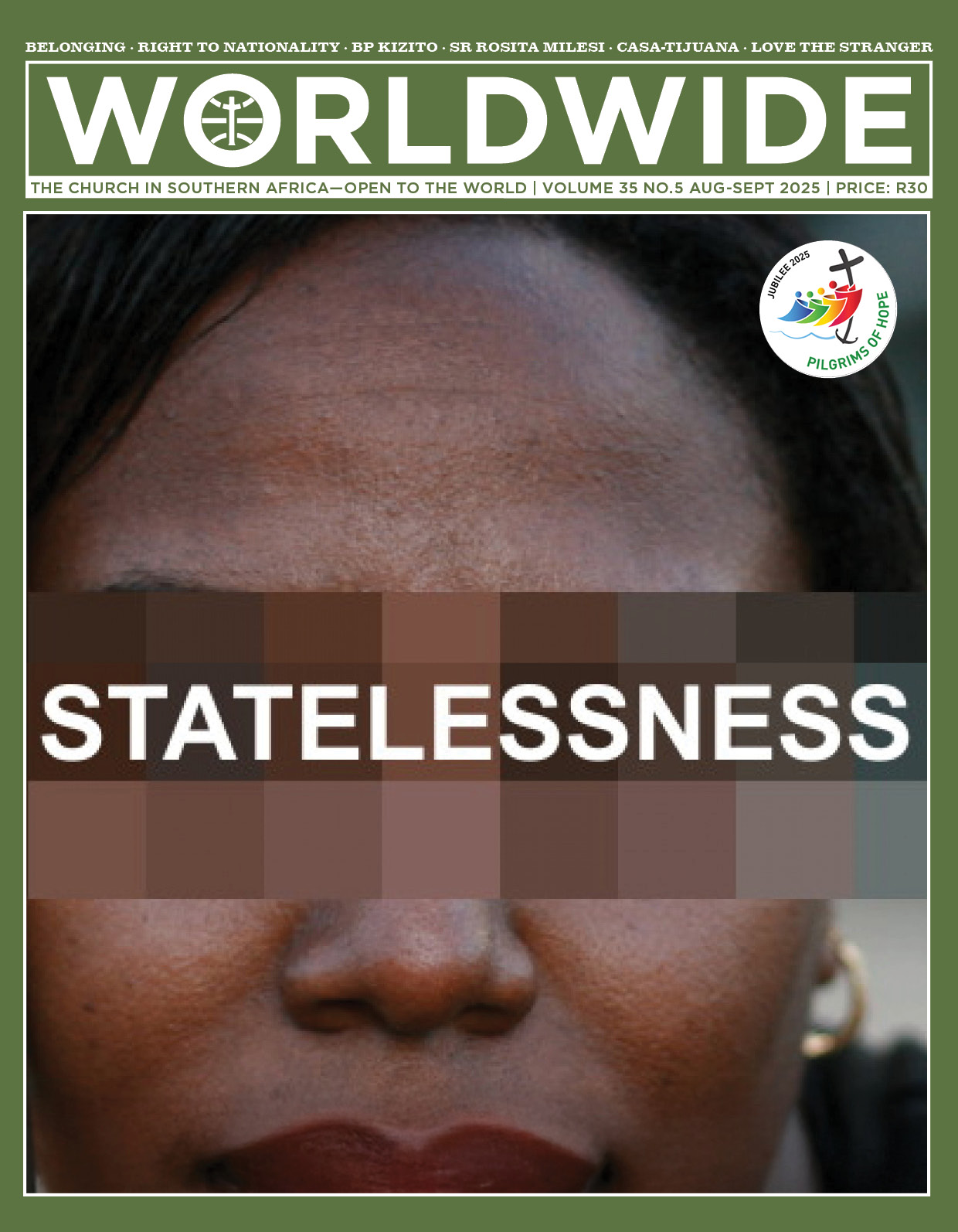
STATELESSNESS
Stateless people from all over the world live in situations of limbo, lacking a nationality, which prevents them access to the basic rights of any citizen of a country. The causes of statelessness are varied, including bureaucratic obstacles, but they all result in the deprivation of the dignity deserved by any human being. This underlines the importance of lobbying to end statelessness in the world.
EDITORIAL
The right to have rights
BY Rafael Armada | EDITOR
GLOBALLY, millions live as stateless individuals. They do not belong to any country. They are denied nationality and consequently have no access to basic services that every country provides for its citizens, such as healthcare, education, and security, to name a few. Stateless persons become vulnerable, susceptible to every kind of abuse, human trafficking, etc.
Different factors can render a person stateless: migration, refugee status, or sometimes, loopholes in a country’s bureaucratic system. Stateless people can be found in most corners of the world. The result of their condition is, however, always similar. They become invisible to the nation where they reside. They do not participate in its political life and find it extremely difficult to secure dignified employment.
This situation contradicts the core of the Social Catholic Doctrine, which Pope Leo XIV has brought to the forefront in his pontificate. Its principles refer, among others, to values such as the dignity of every person, the common good, and solidarity. Stateless persons should be able to exercise their right to belong and to participate in the life of their communities.
We have created conflicts in many parts of the world as a result of our unbridled greed, which is also causing perilous damage to the planet, and this is noticeable with the frequent and devastating forces of nature at work. These circumstances impel human beings to flee their homes or to look for safer places where they can build a brighter future for their families. Therefore, the right to a nationality, or the ‘right to have rights’, must always be protected.
The Catholic Church in Southern Africa, especially through its SACBC Office of Migrants, Refugees and Human Trafficking, is committed to creating awareness and addressing cases of statelessness, particularly focusing on vulnerable communities. A leading figure in this endeavour is Bishop Joseph Mary Kizito, of Aliwal North, who passionately devotes his energies and ministry to the cause of refugees and stateless persons, particularly women and children. He tirelessly pursues the right to education for every child.
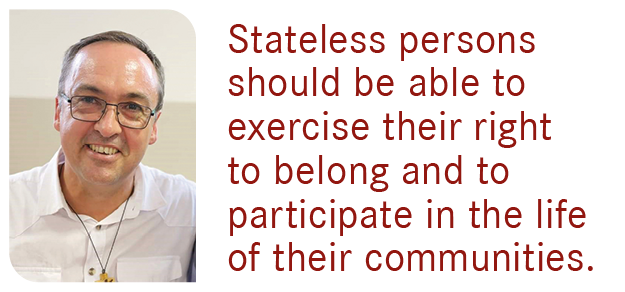
Stateless persons should be able to exercise their right to belong and to participate in the life of their communities.
In this context, the Gauteng High Court delivered a verdict last March in favour of a Rwandese family that had lawfully resided in South Africa for many years and whose child, born in the country, was considered stateless (cf. cliffedekkerhofmeyr.com). She lacked nationality due to the legislative amendments that came into effect in 2013, which denied automatic citizenship for children of permanent residents. The Court reversed that status and requested the Home Affairs Department to grant her nationality and an ID number. The Court’s decision has become an important and encouraging piece of jurisprudence, which complies with the spirit and the letter of the South African Constitution, Section 28(1)(a), which guarantees every child the right to a name and a nationality.
In this year of Jubilee, Scripture reminds us that the earth is not ours but belongs to God. All his children should have a home and enjoy a dignified life. We, as Christians, as citizens of heaven, and temporary dwellers on this earth, must make every effort to guarantee everyone his or her right to a nationality and thereby eliminate statelessness. The Word of God requests from us hospitality and love for the stranger as well as a compassionate heart, a heart that tries to understand why so many people have to flee their homes.
| Dates To Remember |
|
August 9 – National Women’s Day in South Africa 9 – International Day of the World’s Indigenous Peoples 12 – International Youth Day 17 – The Assumption of the Virgin Mary 19 – World Humanitarian Day 21 – International Day of Remembrance and Tribute to the Victims of Terrorism 22 – International Day Commemorating the Victims of Acts of Violence Based on Religion or Belief 23 – International Day for the Remembrance of the Slave Trade and Its Abolition 29 – International Day against Nuclear Tests 30 – International Day of the Victims of Enforced Disappearances 31 – International Day for People of African Descent September 1 – World Day of Prayer for the Care of Creation 5 – International Day of Charity 7 – International Day of Police Cooperation 7 – International Day of Clean Air for Blue Skies 8 – International Literacy Day 9 – International Day to Protect Education from Attack 12 – International Day for South-South Cooperation 15 – International Day of Democracy 16 – International Day of Science, Technology and Innovation for the South 17 – World Patient Safety Day 18 – International Equal Pay Day 20 – World Cleanup Day 21 – International Day of Peace 23 – International Day of Sign Languages 24 – South Africa’s Heritage Day 25 – World Maritime Day 26 – International Day for the Total Elimination of Nuclear Weapons 27 – World Tourism Day 28 – International Day for Universal Access to Information 28 – World Day of Migrants and Refugees 29 – World Day of Migrants and Refugees 30 – International Translation Day |