
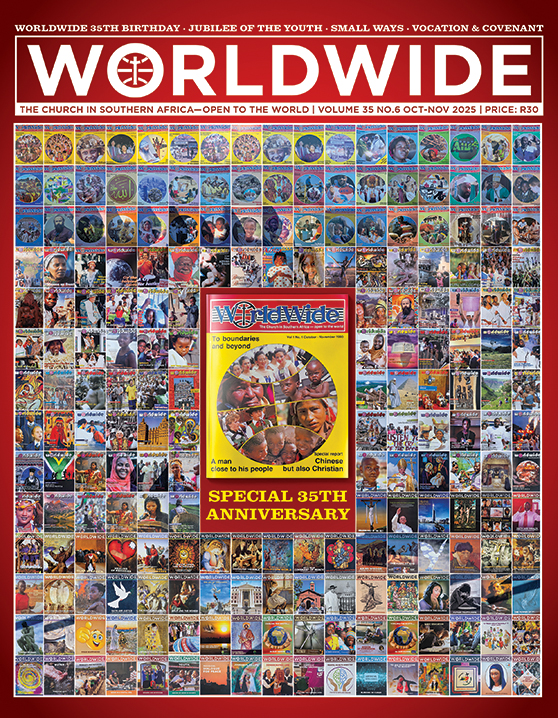
This collage features the front covers of Worldwide issues over its 35 years of existence. At the centre is the cover of the first edition, dated October/November 1990. Worldwide saw the light during a missionary month and continues its mission of proclaiming the Gospel; this is the reason for its being.
Credit: Worldwide archives.
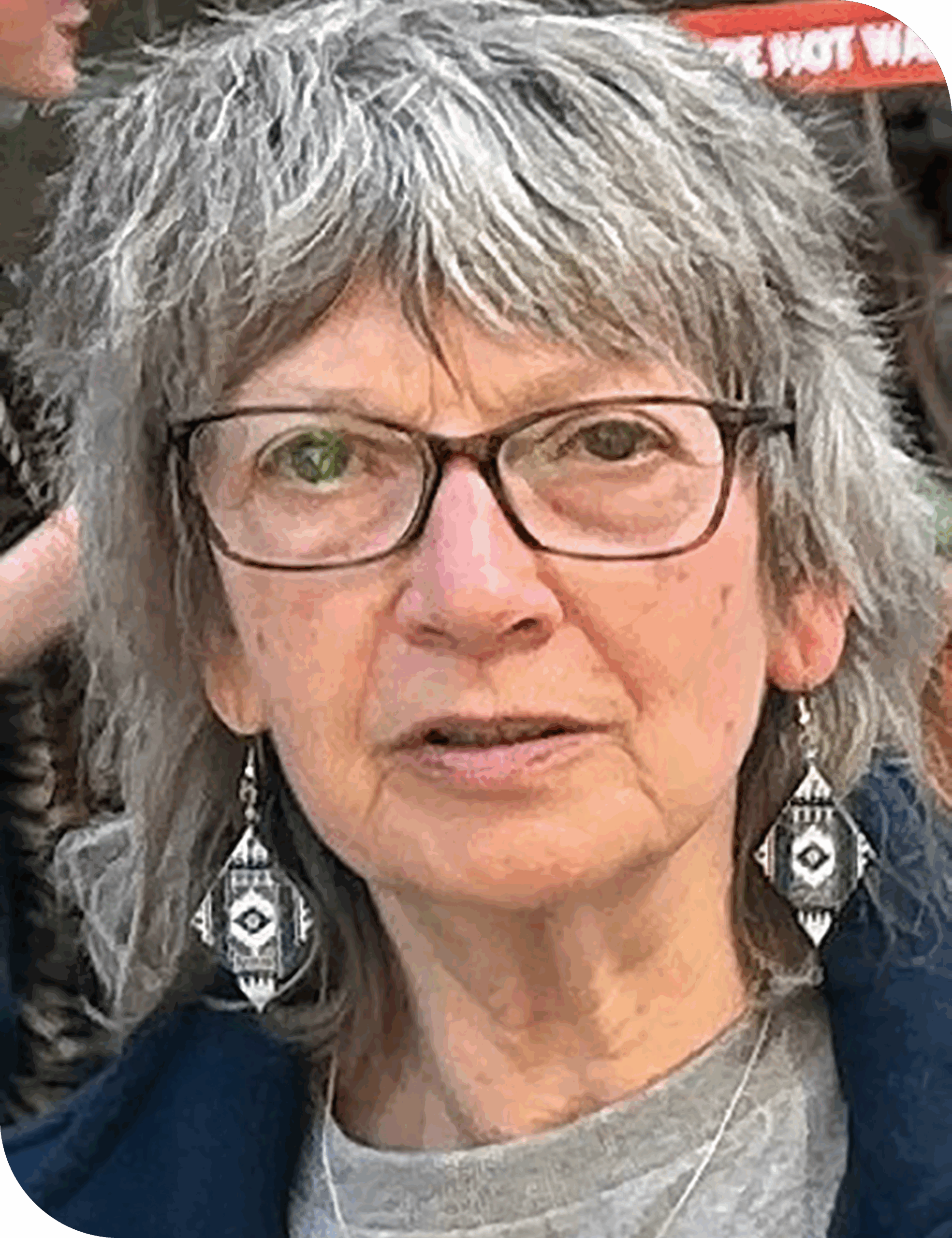
During the last decade, Marian Pallister’s Profiles in Worldwide have shed light on extraordinary men and women, outstanding icons in the history of humankind. This activist for peace, a pro-bono contributor to our publication, and to whom we are deeply grateful,has introduced us to figures who rose above the rest of mortals with their remarkable lives and vision.
PROFILE • REVIEW
BEACONS FOR A NEW HUMANITY
BY MARIAN PALLISTER | CHAIR OF PAX CHRISTI SCOTLAND
ONE OF THE aspects of journalism that I enjoy most is the element of surprise. Every new assignment brings a frisson of excitement: you just don’t know how it will pan out. Writing profiles for Worldwide since 2016 has brought both excitement and surprise.
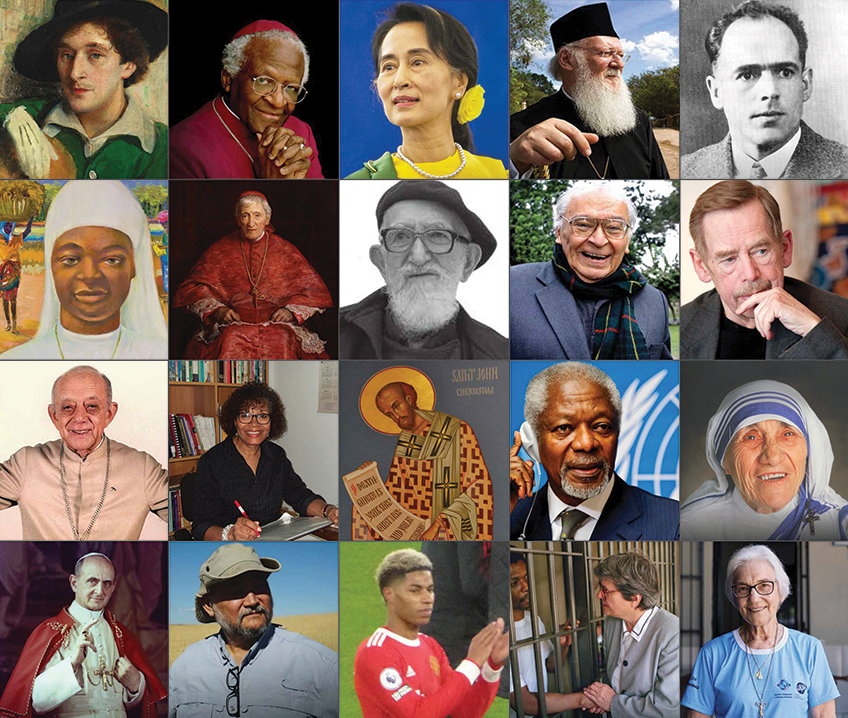
As we celebrate Worldwide’s 35th anniversary, may I look back at some of those surprising people whose lives I have researched? I haven’t always chosen to remind you of the best known, but those who I think have had the power to make us reflect on our own lives.
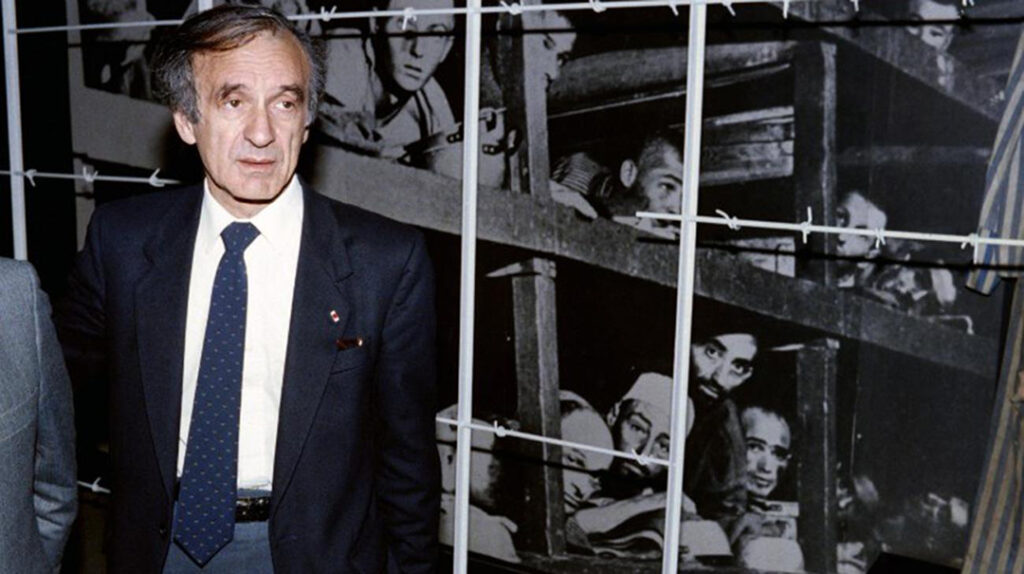
Elie Wiesel: Silence, not an option
I didn’t imagine in 2016, when I was asked to write about Elie Wiesel (who had died in July of that year) and his nightmare experiences in the Nazi death camps, that nine years later, as the chair of the peace organisation Pax Christi Scotland, I would be embroiled in work to end the genocide being perpetrated by Israel on the people of Palestine.
“We must always take sides. Neutrality helps the oppressor, never the victim. Silence encourages the tormentor, never the tormented.” (Elie Wiesel)
I had quoted Wiesel as saying that because of his background, he could never condemn Israel, saying, “I must identify with whatever Israel does — even with her errors.” But he also said something which I included in that 2016 profile, which I think suggests he may have changed his mind in 2025:
“We must always take sides. Neutrality helps the oppressor, never the victim. Silence encourages the tormentor, never the tormented.”
In August of this year, Caritas Internationalis issued a strong statement calling for action on the genocide in Gaza, saying: “To remain silent is to be complicit.”
I thought of Elie Wiesel when I read that. The man who survived a holocaust went on to become a peace activist, speaking powerfully against the injustices that were perpetrated in countries including South Africa, Bosnia, Cambodia, Kosovo, Ireland, Ethiopia, and Rwanda.
My question at the end of that 2016 profile was “Who gets it right all of the time? Read Night, [one of Wiesel’s publications on the holocaust] and understand that a life started that way might excusably be flawed.”
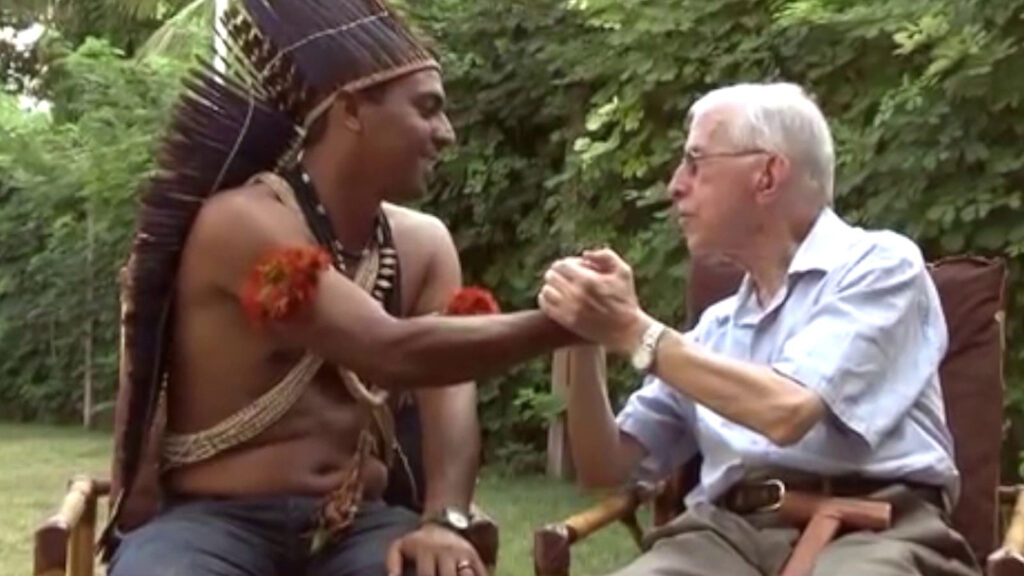
Pedro Casaldáliga: Voice of the voiceless
In 2018, I wrote about Pedro Casaldáliga, Bishop Emeritus of the Prelature of São Félix do Araguaia. He was one of the main exponents of liberation theology, known as the voice of voiceless Brazilians, and when I wrote about him as he approached his 90th year, he was still openly political.
Bishop Casaldáliga died in 2020. He had been a thorn in the flesh of the Church when it still had to come to terms with liberation theology, when it was still waiting for an Argentinian Pope, a Pope who had got his hands dirty in Peru working with the poor.
I wrote, “Casaldáliga might just dare to believe that the policy of integral human development could actually catch fire. The Church has flirted with the idea since the Second Vatican Council, and he—at great personal risk— has striven to implement it at the roots level.” I added: “Politics and religion? Casaldáliga believes that the two are intertwined and that the Church cannot stand back from politics or it fails those for whom Christ told us to care.”
Bishop Casaldáliga became one of my heroes when I learned of his extraordinary determination to be the voice of the voiceless, even at risk of his own life.
Appointed bishop in 1988 by Pope Paul VI, who promoted social issues, he was summoned to Rome to defend his pastoral activities and theological and political views. He had to answer to Pope John Paul II, Joseph Cardinal Ratzinger (later Pope Benedict XVI), and Cardinal Gantin, prefect of the Congregation of Bishops. He was asked to sign a document requiring him to abstain from injecting political meaning into processions, accept restrictions on his written and spoken words relating to liberation theology, and stop saying Mass or preaching in other countries, particularly Nicaragua, without first obtaining the approval of local bishops. He refused to sign.
The Church may not yet have accepted all that Casaldáliga would have wished, but there has been much progress, and he became one of my heroes when I learned of his extraordinary determination to be the voice of the voiceless, even at risk of his own life.
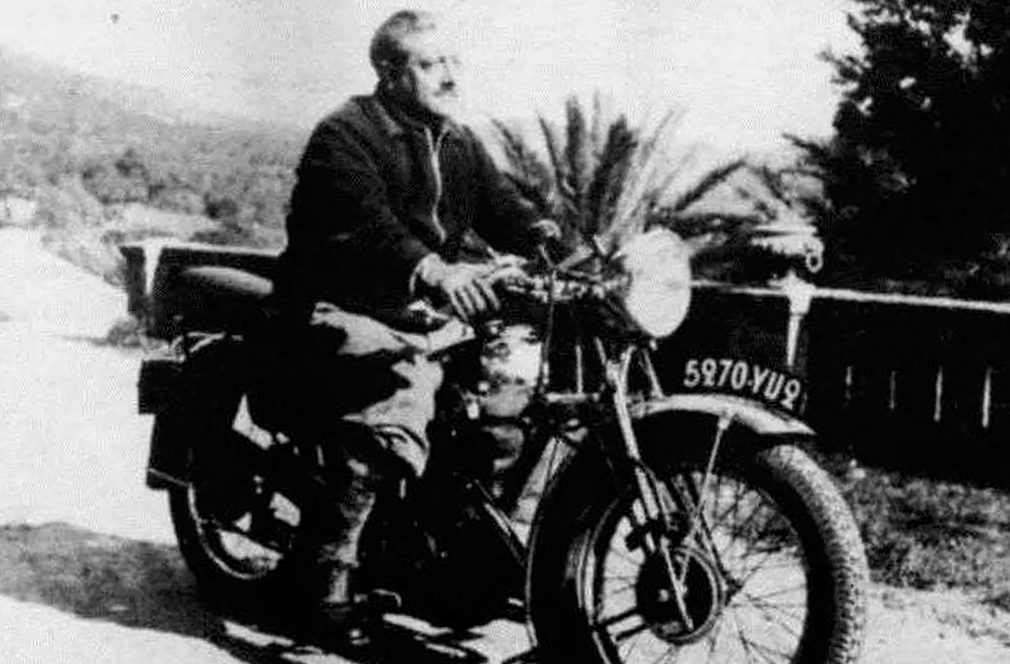
Georges Bernanos: Compassion for the poor
Georges Bernanos, whom I profiled in 2018, was a French novelist whose body of work was surely inspired by his experiences on the battlefields of World War I. Although no theologian, he wrote of evil from a theological viewpoint and inspired me because he adhered to an ‘option for the poor’ that would presage Vatican II. I wrote: “Bernanos’s novels show a generosity and compassion for the poor—and particularly for the poor in spirit—the troubled, the tempted, and the broken.” I added: “Bernanos was not a ‘Catholic author’ but an author whose Catholicism informed all his writing and perhaps carries a message about the human condition in the 21st century.”
In 2019, I was asked to write about Archbishop Desmond Tutu, Cardinal Newman, Kofi Annan, and Franz Jägerstätter, amongst others, but it is Chiara Lubich who remains my personal inspiration in that year.
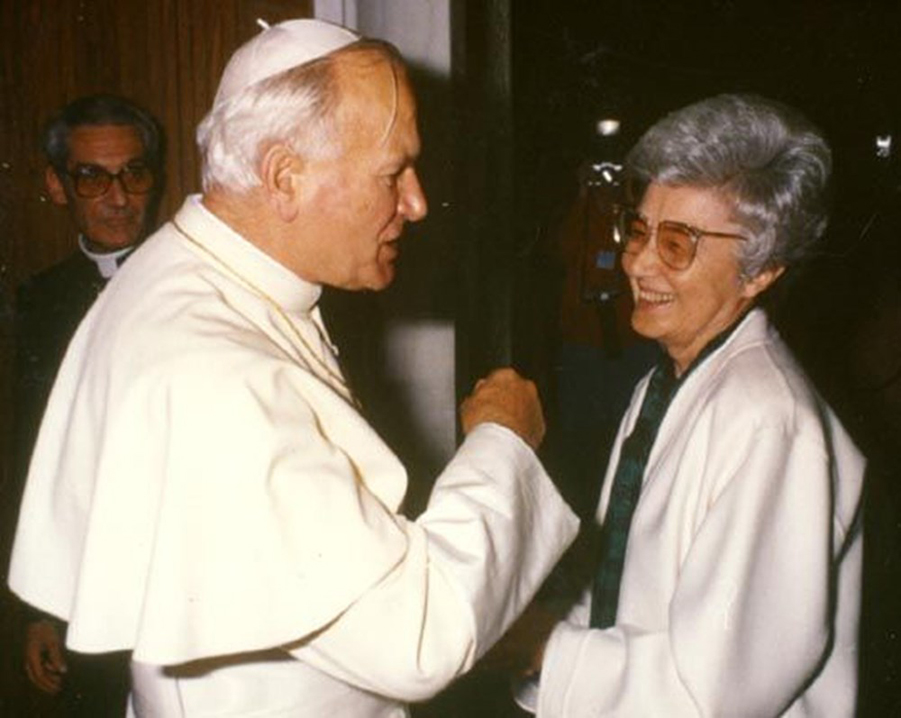
Chiara Lubich: Dreaming of peace and unity
Lubich, as I wrote that year, “…carved a role for herself as an activist and as founder and leader of the Focolare Movement. She laid the foundations for other women to share in shaping small communities that seek to contribute to peace and to achieve the evangelical unity of all people in every social environment. Her goal—the objective of the Focolare Movement—was and is to create a world living in unity.”
Chiara Lubich’s goal—the objective of the Focolare Movement—was and is to create a world living in unity.
From a Pax Christi point of view, Lubich is pure motivation embodied in one woman. And like most of the subjects of my profiles, she had the well-being of the poorest at heart. During World War II, she and her helpers delivered practical and spiritual aid to those who were injured and made destitute by the war.
For those who believe that women’s role in the Church is not significant enough, not 21st-century enough, Lubich showed that in practising what Catholic Social Teaching preaches, the “Option for the Poor”, women can make this a living Church.
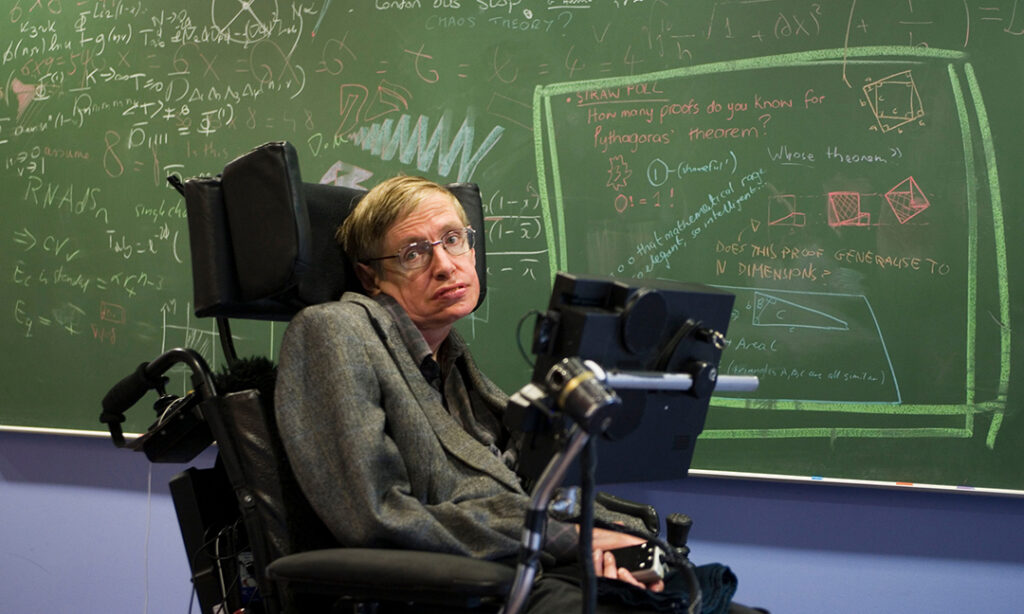
Stephen Hawking and the inveterate gambler
Stephen Hawking, theoretical physicist and for 30 years the Lucasian Professor of Mathematics at the University of Cambridge, is my choice from a battery of inspiring figures I was asked to profile in 2020. He managed not to be defined by his wheelchair and synthetic speech but by his brilliance and ability to communicate even to the non-scientific (which certainly includes me).
Stephen Hawking managed not to be defined by his wheelchair and synthetic speech but by his brilliance and ability to communicate even to the non-scientific.
What intrigued me were two quotes from his lecture “Does God Play Dice?” which I shared in that profile and share again here:
“There is a probably apocryphal story that when Laplace was asked by Napoleon how God fitted into this system, he replied, ‘Sir, I have not needed that hypothesis.’ I don’t think that Laplace was claiming that God didn’t exist. It is just that He doesn’t intervene to break the laws of Science. That must be the position of every scientist. A scientific law is not a scientific law if it only holds when some supernatural being decides to let things run and not intervene.”
And:
“Thus, it seems that even God is bound by the Uncertainty Principle and cannot know both the position and the speed of a particle. So, God does play dice with the universe. All the evidence points to him being an inveterate gambler, who throws the dice on every possible occasion.”
Who can resist a man who calls God a gambler?
Miriam Makeba: The most audible spokesperson
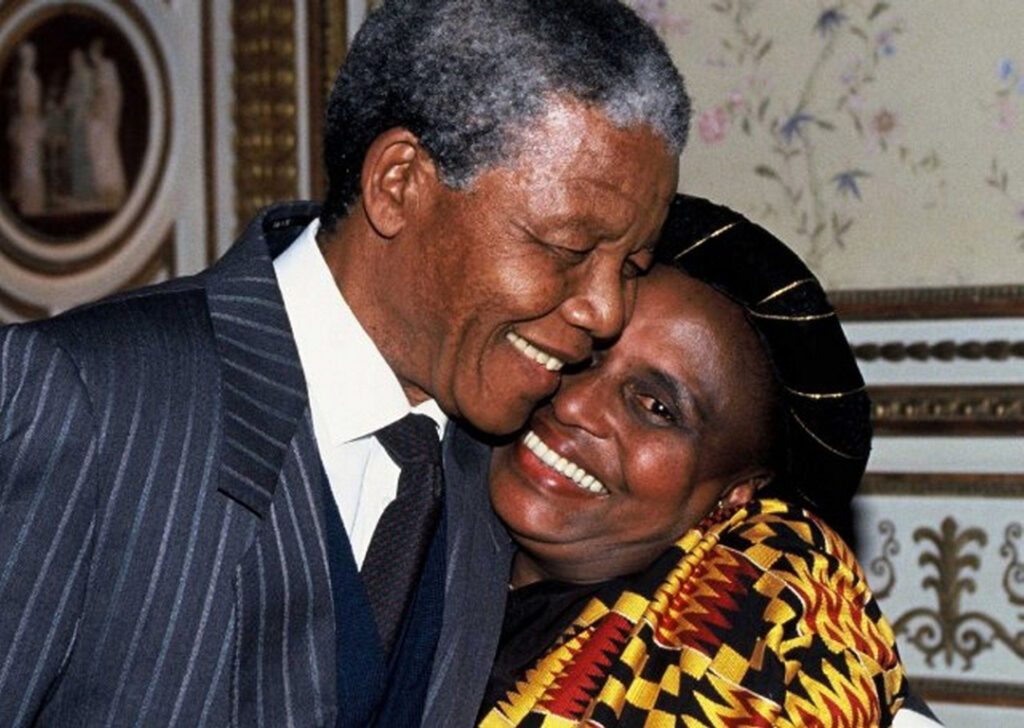
Women’s voices always resonate with me, and in 2021, it was quite literally the voice of Miriam Makeba that inspired one profile I was asked to write. As a teenager, I had been motivated to campaign against the apartheid regime in South Africa partly by Makeba’s music. What I didn’t understand then was that she was living in exile from her home country because she had used her voice against that regime.
She wasn’t only a voice for her own people. She said:
“Africans who live everywhere should fight everywhere. The struggle is no different in South Africa, the streets of Chicago, Trinidad, or Canada. The Black people are the victims of capitalism, racism, and oppression, full stop.”
Makeba’s personal life was complex and difficult, yet she twice addressed the United Nations’ General Assembly, speaking out against apartheid as a Guinean delegate to the UN. In 1986, the Diplomatic Academy for Peace awarded her the Dag Hammerskjold Peace Prize. My profile concluded:
“When Makeba died in November 2008, The UK’s Guardian newspaper called her ‘the anti-apartheid movement’s most audible spokesperson’. Today’s female artists are confident to use their platform to speak out against racism and gender abuse. They follow in the footsteps of that ‘audible spokesperson’, who told the world: “People say I sing politics, but what I sing is not politics; it is the truth. I’m going to go on singing, telling the truth.”
Pope Francis: Feeling the cries
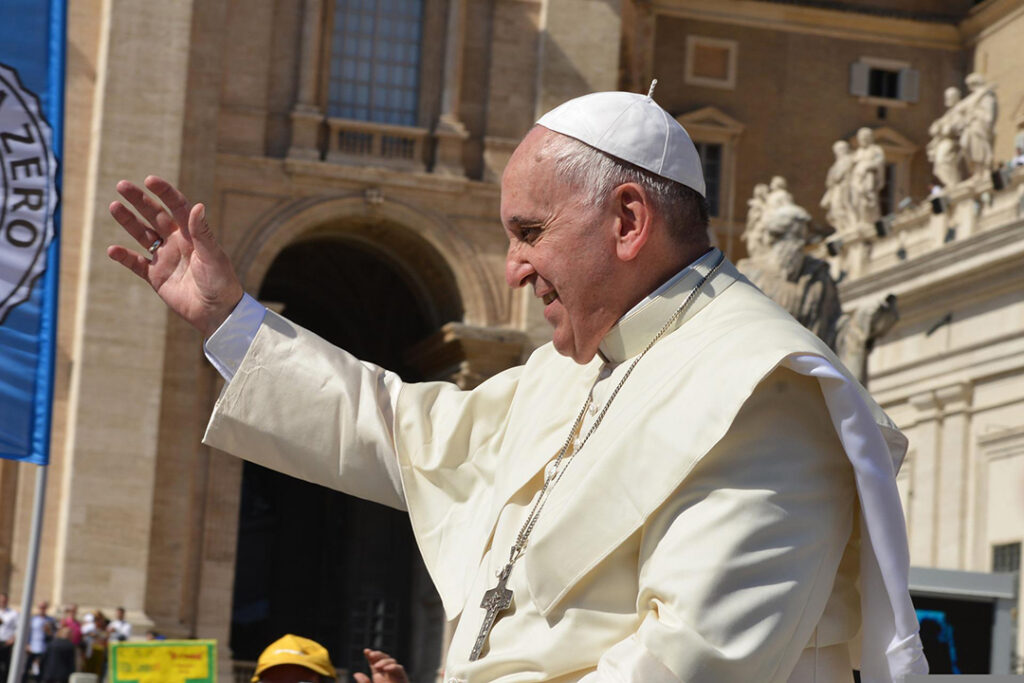
In 2022, I was asked to profile Pope Francis. I continue to mourn this wonderful man, but can only smile when I recall that Jorge Mario Bergoglio was a bouncer in his young days—and a mean tango dancer. As I wrote back then, “An Argentinian who can tango is a man who can reach out to the marginalised, the ‘other’ in society; a man who can not only hear the cry of the poor and the cry of the earth, but a man who feels those cries in his heart of hearts.”
An Argentinian who can tango is a man who can reach out to the marginalised. (On Pope Francis)
César Chávez: A folk saint
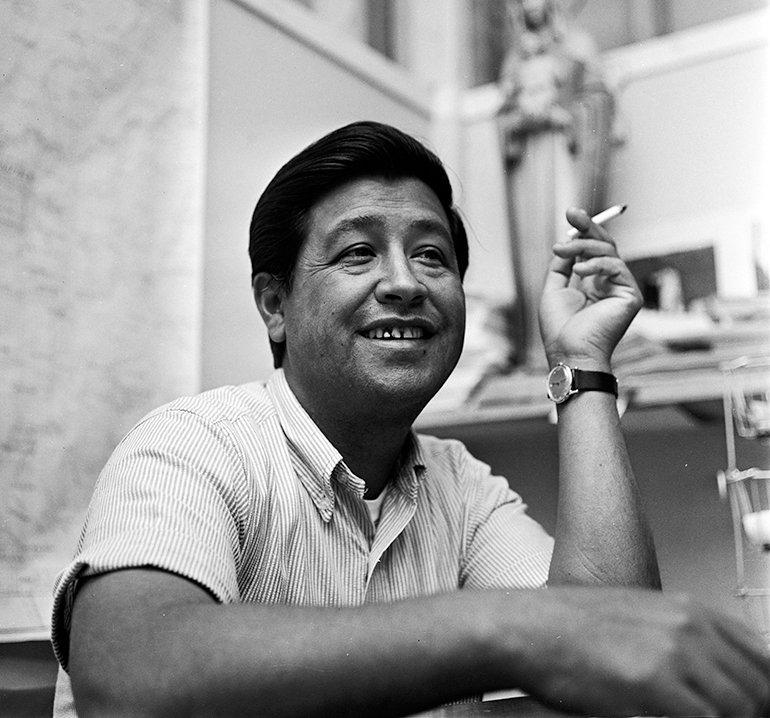
César Chávez was certainly a man who could reach out to the poorest. From a devout Latino family, he was raised on Catholic Social Teaching, suffered the indignities of being a migrant pushed around California throughout economically hard times, but then became a voice of the voiceless. He set up organisations to help fellow Latinos have their own voice. His activism attracted the support of the Church, and he impressed me hugely because that activism was based on nonviolence. When I wrote about him in 2023, he was considered a “folk saint”, and there have been moves for him to make the journey to official saint status. Today, President Trump’s policies on migration render César Chávez still more relevant.
Geoffrey Hinton: Truth for AI
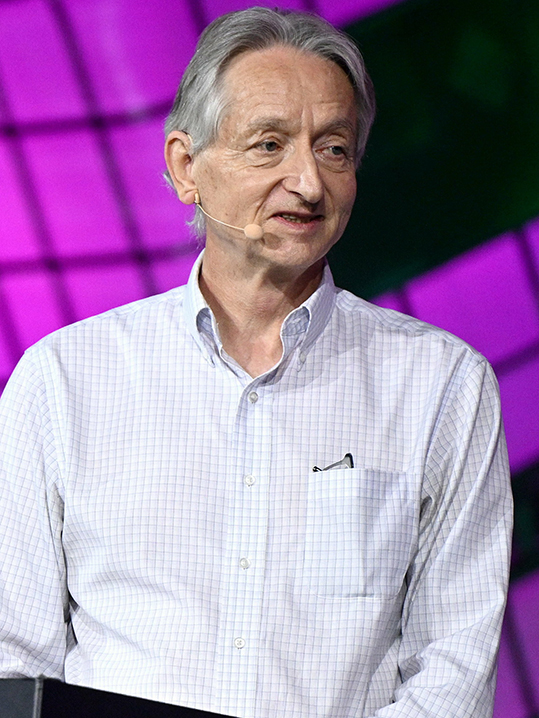
Geoffrey Hinton is another scientist I came to admire when asked to profile him in 2024. Considered the “Godfather of AI”, my article started with the words “When a man whose life’s work has led him to the top of his profession, highly respected by peers and rivals alike, decides to go public and question the ethics of everything he has worked for, it perhaps would be wise to sit up and take stock of the situation.”
Hinton, having made a fortune from developing AI, resigned from his high-profile job with Google, saying that he wanted to “freely speak out about the risks of AI”, adding that a part of him now regretted his life’s work. That’s a moral stance few would take.
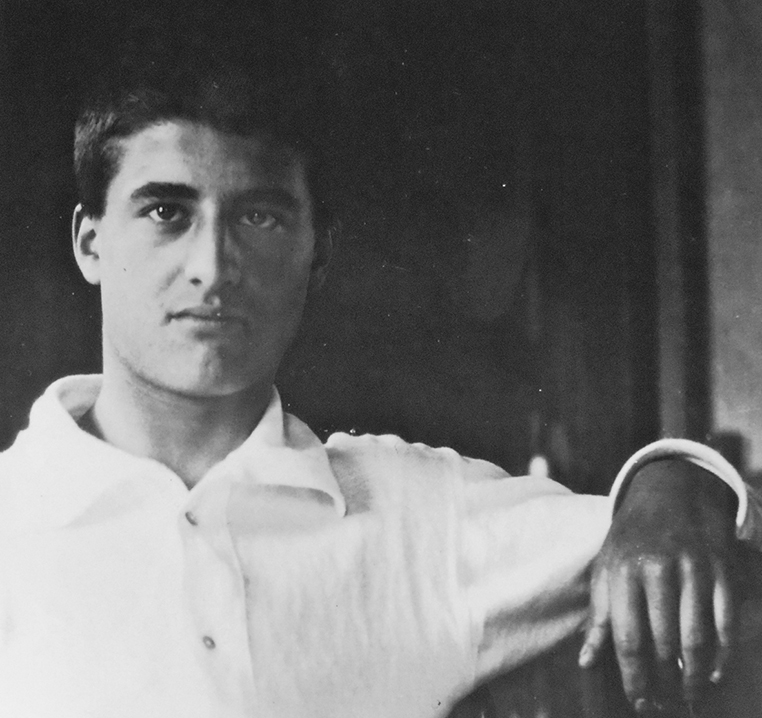
St Pier Giorgio Frassati: A Standby for the Poor
In 2025, Pier Giorgio Frassati became a saint 100 years after his death. Researching his life earlier this year, one sentence stood out to me about this young Italian from a well-to-do family who devoted his time and money to helping the poor.
I wrote that his family escaped the summer heat in a holiday house in the countryside near Turin. Frassati didn’t join them, “devoting himself instead to looking after the marginalised, the poor, the sick. Of the summer exodus from the city, he said, ‘If everybody leaves Turin, who will take care of the poor?’”
“If everybody leaves Turin, who will take care of the poor?” (St Pier Giorgio Frassati)
Those who take care of the poor, those who change lives at the expense of their own, those who are brave enough to do what is morally right—what a privilege to make their lives known Worldwide.
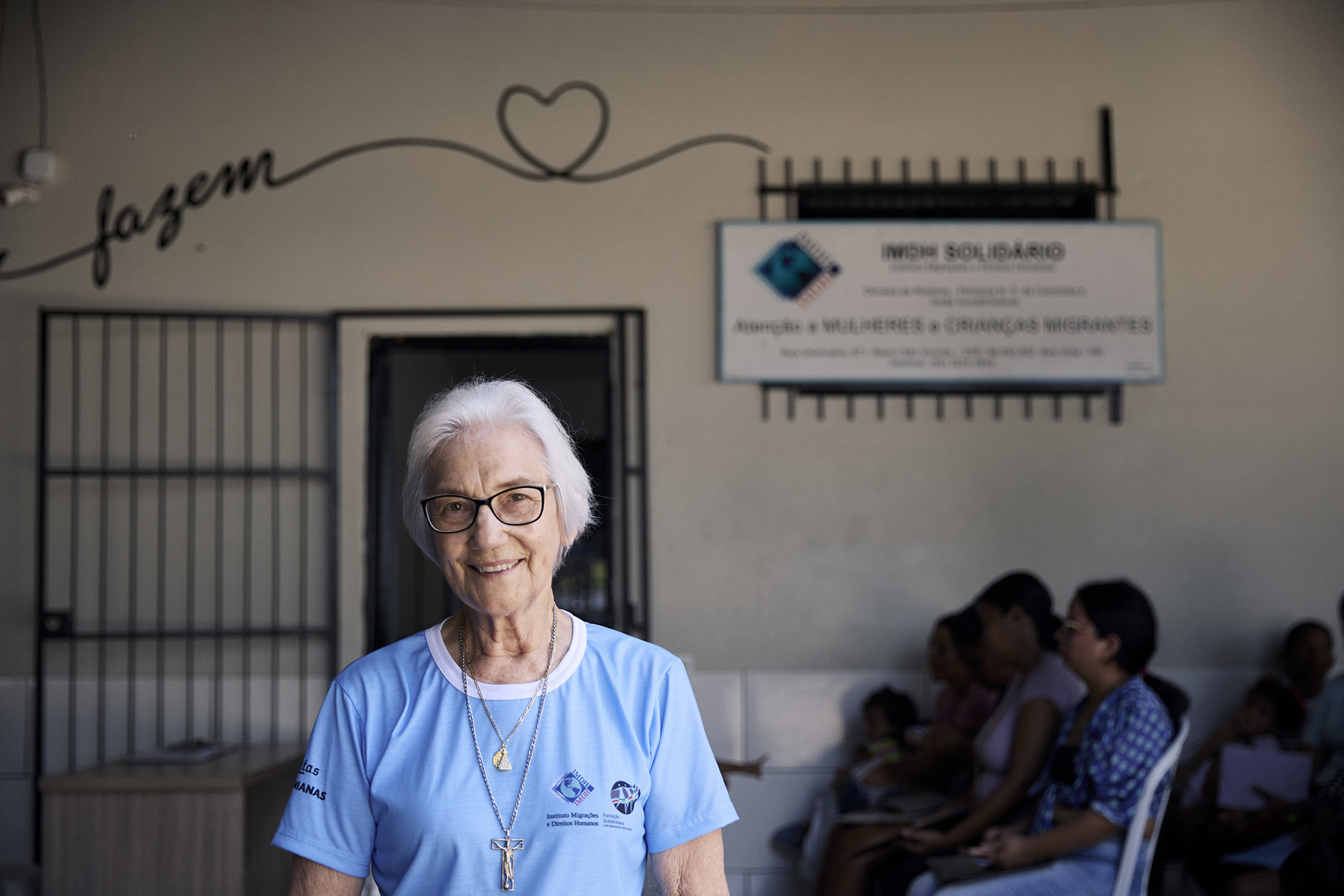
A LAWYER FOR THE POOR
Sr Rosita Milesi MSCS, a Brazilian Scalabrinian, has dedicated her entire life to the defence of the rights of migrants, refugees and stateless persons. As an internationally acclaimed lawyer, noted for her policy-making interventions and direct assistance to those in need, she has contributed to significant improvements in the lives of hundreds of thousands of people.