
MUSIC AND SPIRITUALITY
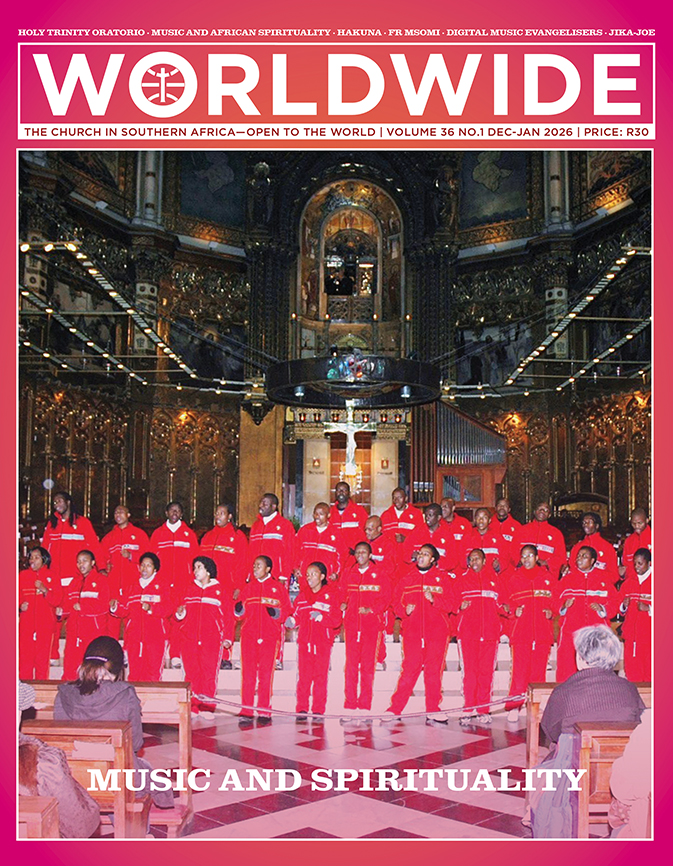
The choir Izwi le Themba (voices of hope in isiZulu) from Saint Daniel Comboni Parish at Mahube Valley, Mameldi, Pretoria, singing at Montserrat Abbey in Barcelona, during their concert tour to Spain in 2008. The group’s name conveys a deep meaning rooted in one of the reasons for singing: to bring hope to the world.
Credit: Fr James Calvera MCCJ.
FOCUS • HOLY TRINITY ORATORIO
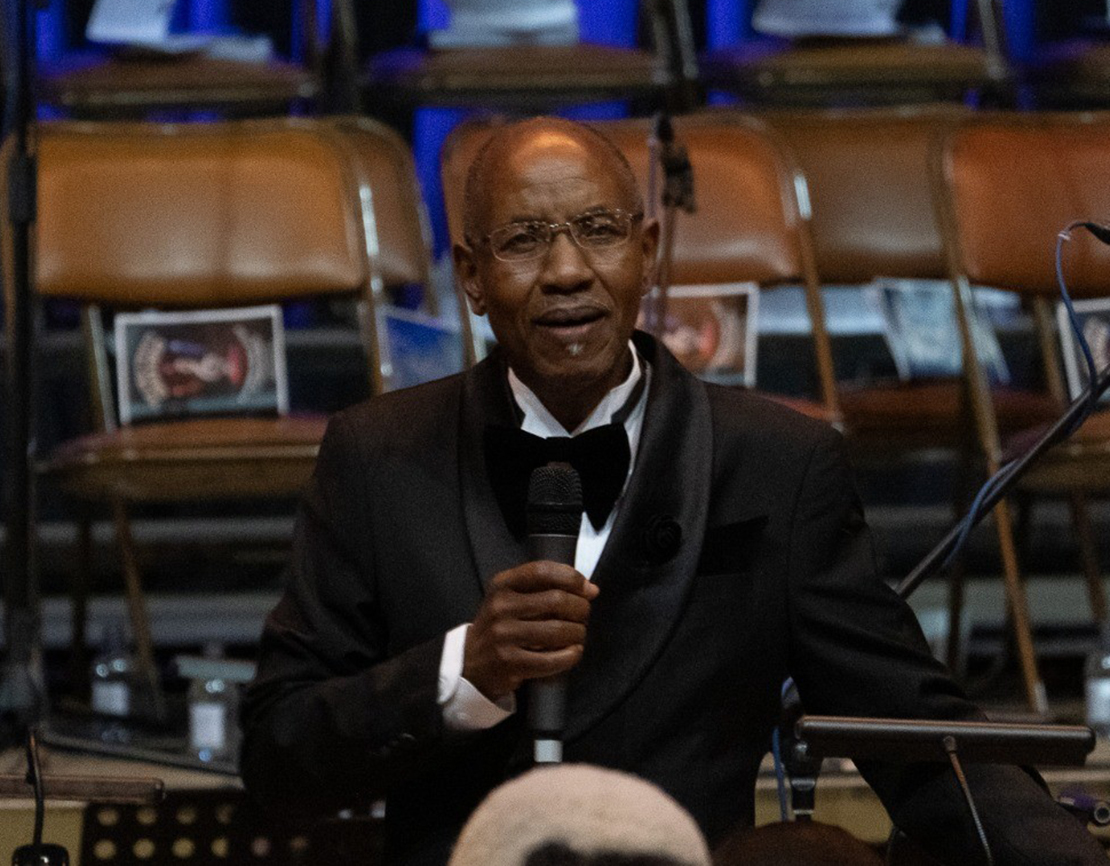
The first South African Oratorio
The origin of the Holy Trinity Oratorio has a somewhat supernatural flavour. Its music has transformed the lives of choir performers and audiences spiritually, drawing them all closer to the mystery of the Holy Trinity, to the mystery of Love.
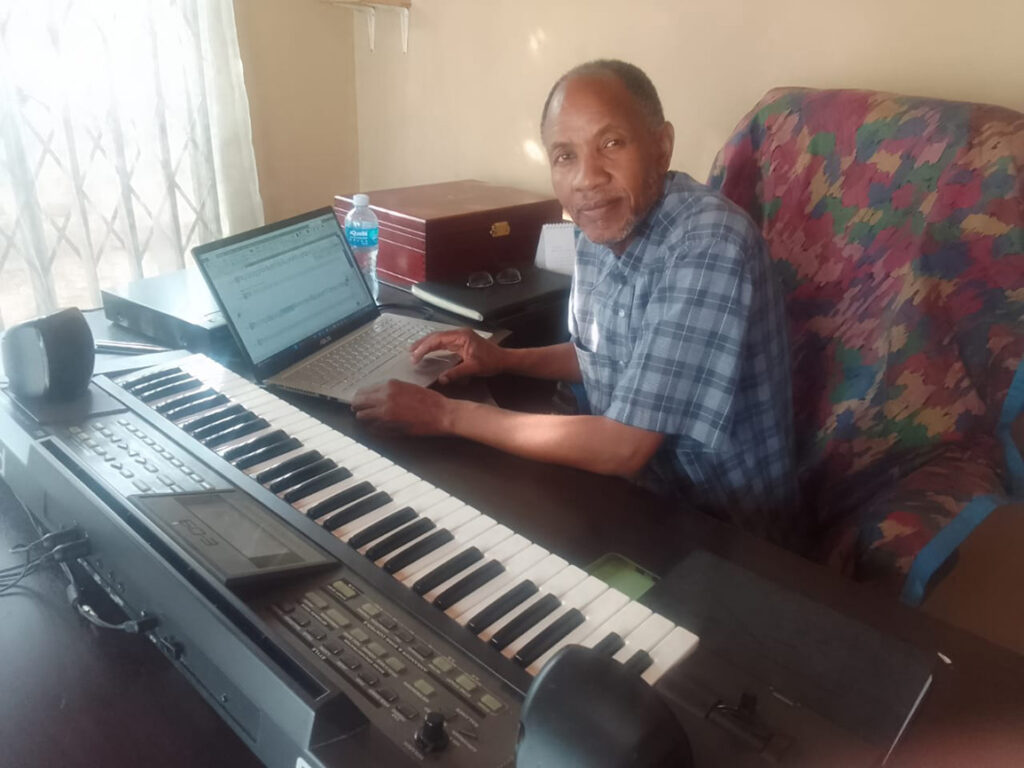
TEXTS, PHOTOS AND VIDEOS BY CHARLES BM LESIA | MUSIC COMPOSER, SPRINGS, GP
MY MUSICAL BACKGROUND is deeply rooted in my family. We used to sit around the table after dinner to sing hymns from the Anglican Hymn Book and Difela Tsa Sione (Hymns of Zion, in the Sotho languages). I joined the Anglican Church choir at age 13 and have been a member ever since. Eventually, I also became both the conductor and organist at St Andrew’s in Kwa Thema, Springs. In 1979, I joined the Kwa Thema Youth Choir, which produced several composers, soloists, adjudicators, and conductors. I wrote my first song in the eighties while still a member of this choir.
The beginnings of the Oratorio
On Sunday, March 7th, 2021, at a break during a choir rehearsal at Rachel Seabelo’s home, one of the chorists, standing at her gate with Tim Manana, Phuthuma Tsuari, a choir bass singer, approached me. He was singing the final part of the hymn God in Three Persons, and he said to us, “You will see what you can do, but I believe that a song about the Holy Trinity needs to be written.” Tim replied, “Don’t talk to me, but to him; he is the composer.”
At that time, I had no intention of writing anything about the Holy Trinity, and the thought of composing an Oratorio had never crossed my mind. (Ed. According to the Oxford language dictionary, an oratorio is a large-scale, usually narrative musical work for orchestra and voices, typically on a sacred theme, performed without costume, scenery, or action). In fact, I had never even written a song for a full orchestra. My biggest accomplishment was composing a song for a string orchestra, so I didn’t dwell much on that suggestion. I definitely did not feel qualified to write an Oratorio, a type of work which had never been written before in South Africa.
However, on the following Monday and Tuesday mornings, I found myself waking up at around 3 a.m., an unusually early hour for me. On Wednesday, at around the same time, still semi-asleep, I saw a grey-covered book descending in front of me, whose title was THE HOLY TRINITY. During the following days, I began to hear in my mind sounds from different musical instruments, some of them traditional ones, like the Lesiba, Storotoro, Didgeridoo, Bansuri, Sitar, Bass Guitar, Lead Guitar, and drums.
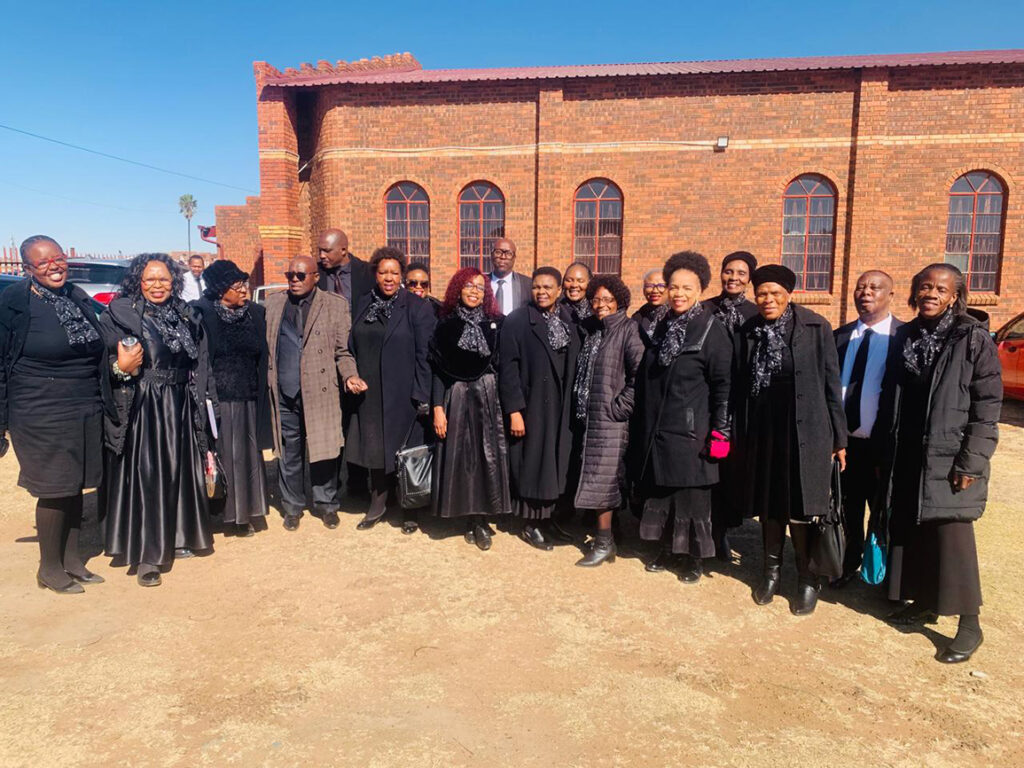
Moy’ongcwele
The first inspiration for a song came on March 17th, again in the early hours of the morning. The song was about the Holy Spirit and was entitled Moy’ongcwele. This song became the foundation, the anchor, and the source in the process of composing the Oratorio. The first time I played it, I immediately felt relieved and rejuvenated. Time seemed to stand still as I communed with the Holy Spirit during the creation of the Oratorio. I suspended all my activities, including church services, funerals, family, and any other engagements. I spoke to my priest, Father Ntshukumo Zansi, to inform him of what I had embarked on. He understood and allowed me to hold back on church engagements, saying, “We cannot stand in the way of God.”
From that moment on, all that I did was sleep, wake up at any time, write music, and go back to sleep after long hours of work. My wife would come into my music room from time to time with food, tea, water, or just to check ‘if I was still alive.’
The writing process was easy and flowed flawlessly between songs.
The words and melody for Moy’ongcwele came at once, and also for Jo Lerato Le Makatsang, a song which expresses the never-ending love of God and our gratitude for the undeserved love of Jesus Christ, in the Sotho languages. The writing process was easy and flowed flawlessly between songs. Firstly, I would receive a word, a sentence, or a phrase. Then I would read various verses related to that word or phrase. One verse would strongly resonate in my heart, as well as the specific language in which the song should be written. Once I had the written words, the music would follow.
The songs never came in the sequence in which they would be listed in the Oratorio. The sequence was supposed to follow the title, whereby the opening songs would be about the Trinity, then God the Father, God the Son, and God the Holy Spirit. So, I set the songs accordingly. However, the song Mudzimu Ndi Lufuno, meaning God is Love in Tshivenda, inexplicably changed its position in the playlist which I had on my phone, and it ended up as song number four instead of number six. I did not make that change. This was evidence to me that this music was not of my own making.
The instruments that I had heard before writing would be featured in certain specific songs, especially in The Overture, which is an instrumental three-part piece normally played at the beginning of an oratorio. However, in The Holy Trinity Oratorio, the Overture is placed second. The first song is In Nomine Patris, Et Fiili, Et Spiritus Sancti (In the Name of the Father, the Son, and the Holy Spirit, in Latin).
Impact of the music on the choristers
Martha Mnguni, an alto singer in the choir, recorded the music for her rehearsals at home. She was playing God in Three Persons, and as the song reached the part, Forever and Ever, she started crying, overcome by deep feelings; “I found myself moving from rehearsing to worshiping.” Martha further explains that a break-in had happened at her brother’s place; a relative called her and alerted her to the incident. On her way to her brother’s home, she wanted to pray but found herself unable to; she instead started singing a part from Uziqu Zintathu (The Trinity). When she arrived, the intruders had left, disturbed by the noise from the neighbours. She said she had not been afraid while she was singing. The fear only came to her later at night.
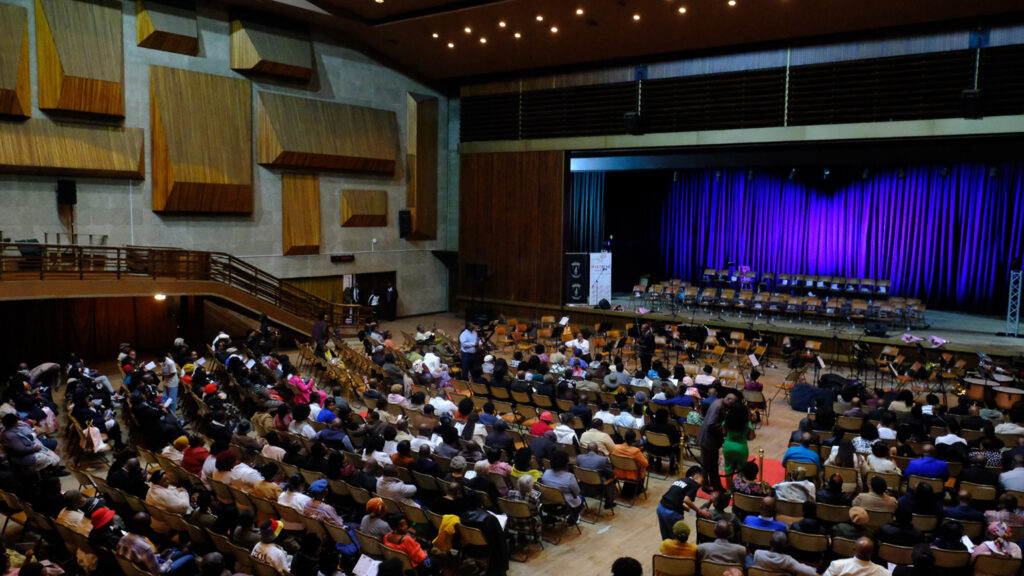
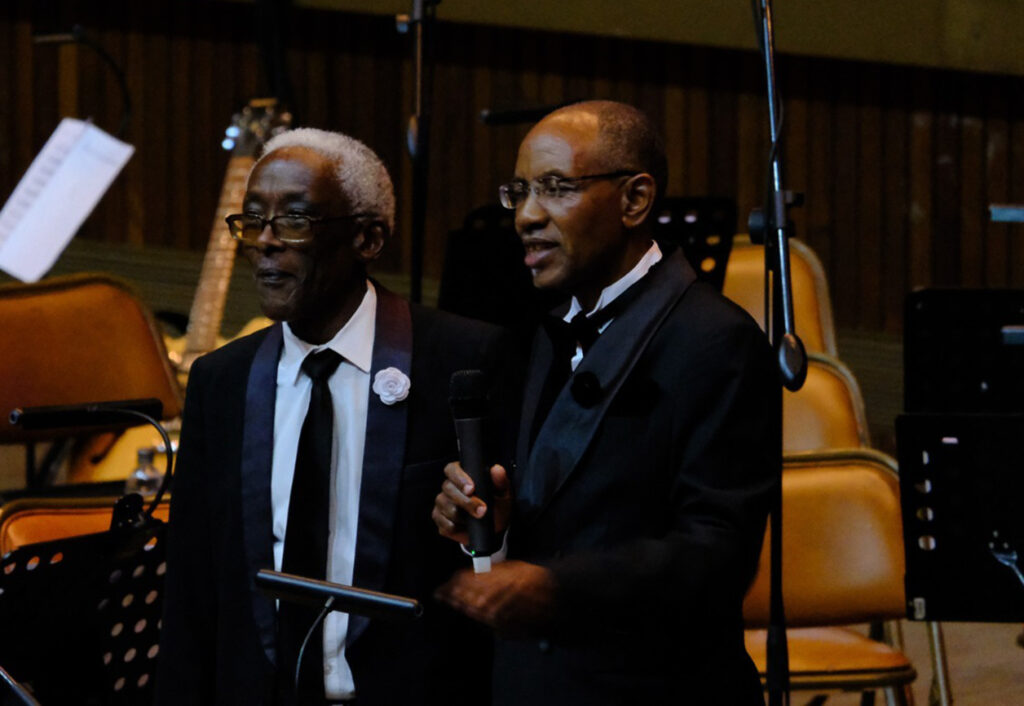
to him that a song about the Holy Trinity be composed.
Jo Lerato Le Makatsang is the song that has mostly impacted the choristers. Theodorah Rammusi still cannot sing it without being driven to tears. Sister Ntima Malepe, during one rehearsal, politely asked me to stop writing music, which moved them to tears. On the first day that Lerato Lesehla came to our choir, we were rehearsing Jo Lerato Le Makatsang. She cried so much that she vowed never to return, saying, “This choir is singing songs that make me cry.” Nevertheless, she is still a member. Ntsikelelo Ngwevela said, “This song, Jo Lerato, is very deep.” Two people made comments referring to death; one said, ‘You have written music as if you are going to die,’ and another said, ‘After having written this, you’d better not die; I want to see you in the coming year.’
Another song that had a profound impact on the singers was Washuhudiao (Witnesses, in the KiSwahili language). Dr Ludumo Magangane mentioned that “none could write a song like this, if not through the action of the Spirit of God.” Timothy Manana claimed that the Oratorio should be declared ‘A Sacred Oratorio.’
Comments by choir members and the audience
Nomsa Nkambule states: “The Holy Trinity Oratorio had a profound impact on me, touching my heart with its beautiful melodies and lyrics. All 22 songs resonated within me as they were woven together. The themes of mercy, love, peace, and unity really spoke to me. Listening to this Oratorio brought me a sense of peace and comfort, reminding me of God’s infinite love and mercy. It made me reflect on my own personal relationship with God and encouraged me to deepen my faith and come closer to Him. As I listened, I felt a sense of surrender and trust in God’s plan, knowing that He is always working everything out for my good.”
The entire work raised self-awareness and healed me. I have become a more empathetic and supportive person—Solly Sangweni.
Busi Mhlaba describes Jo! Lerato le Makatsang, Ntumeleng (‘Allow me’ in Sotho languages), Uziqu zintathu, and This is my beloved Son as the songs that touched her most. “They easily get anyone into the Spirit; they make me imagine myself next to the heavenly home; singing and dancing for Jesus, getting ready to enter lehodimong” (heaven in Tswana).
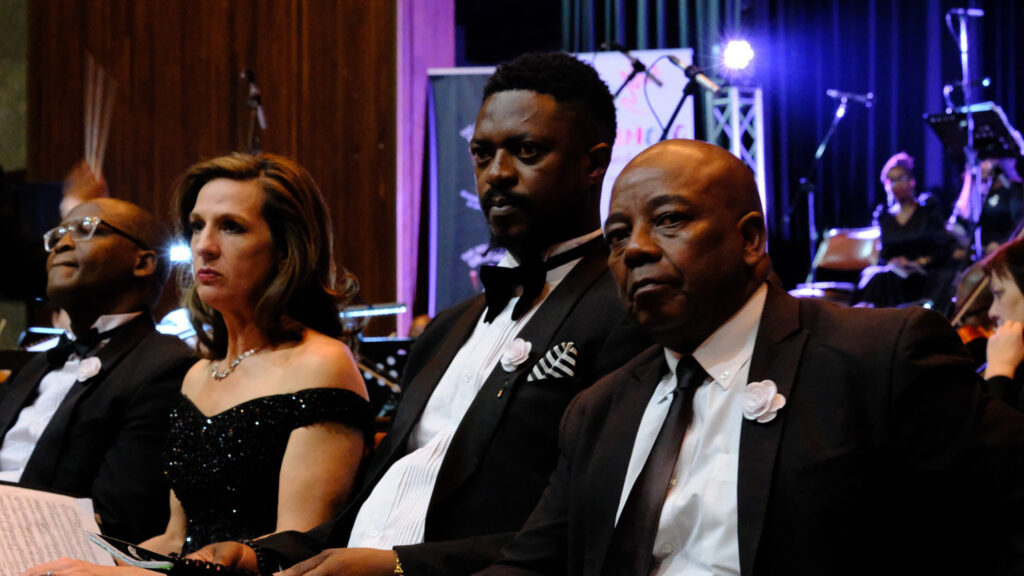
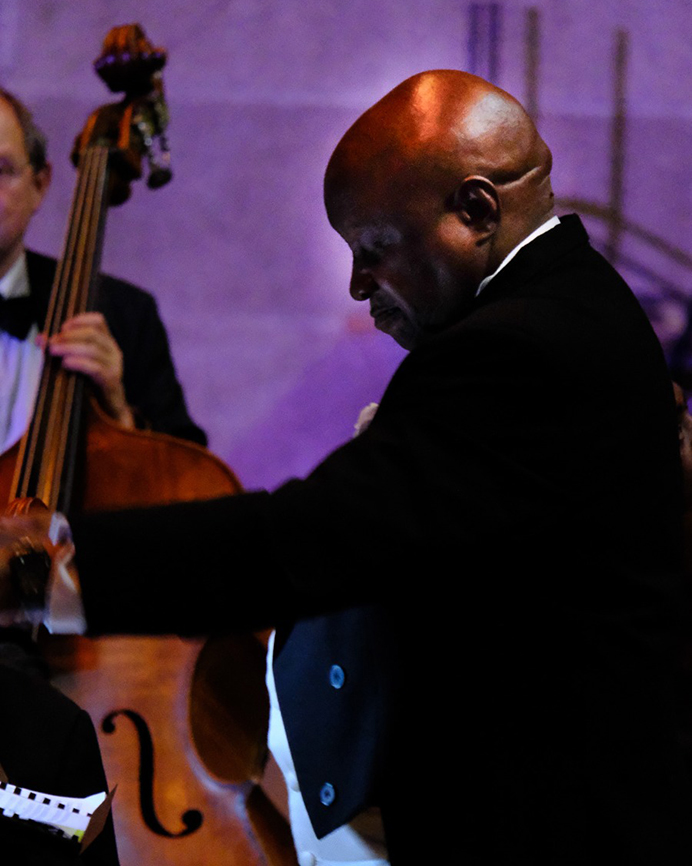
Solly Sangweni states: “Words have the power to change any life in positive ways. They can chart destiny. The entire work raised self-awareness and healed me. I have become a more empathetic and supportive person. Specific songs which touched me more deeply are: In the beginning (John 1:1), Genesis 1, I AM (Ex 3), God who forgives, Moy’Ongcwele, Psalm 51:10, and Jo! Lerato le Makatsang.
Joyce Thafeni singles out the words Wenjenje uSomandla wanikela ngonyana wakhe (‘For God so loved the world, that He gave His only begotten Son’ in isiXhosa) from the song Wenjenje uYehova that touched her most. “It makes me think of my one and only son, whom I lost. In hard times, the One from above gives me hope to flow through the journey. God made it happen; that’s all I can say.”
Members of the audience also report that the music is therapeutic for them, gives them peace, and invites them to be led by God. Ms Khabo, a choir member, acknowledged that this music became a deeply moving experience for her. “I felt a strong sense of spiritual connection during the performance. My family can’t stop talking about it.”
“The music taught me that I need to live lovingly, holy, to have compassion. It reminded me that God is love, experienced even amid any situations that I come across.”—Elizabeth Gama.
Elizabeth Gama expresses it in this way: “The music taught me that I need to live lovingly, holy, to have compassion. It reminded me that God is love, experienced even amid any situations that I come across. I was touched by most of the songs that remind me of God’s everlasting love. Muzdimu Ndi Lufuno (God Is Love) and I AM are songs that underscore a God who remains unchangeable. Thanks to this music, I have become more patient, understanding better how individuals behave and act. During the performance, I felt like a preacher to the audience.”
In fact, the Holy Trinity Oratorio reflects the multicultural diversity of South Africa, if not of the whole African Continent.
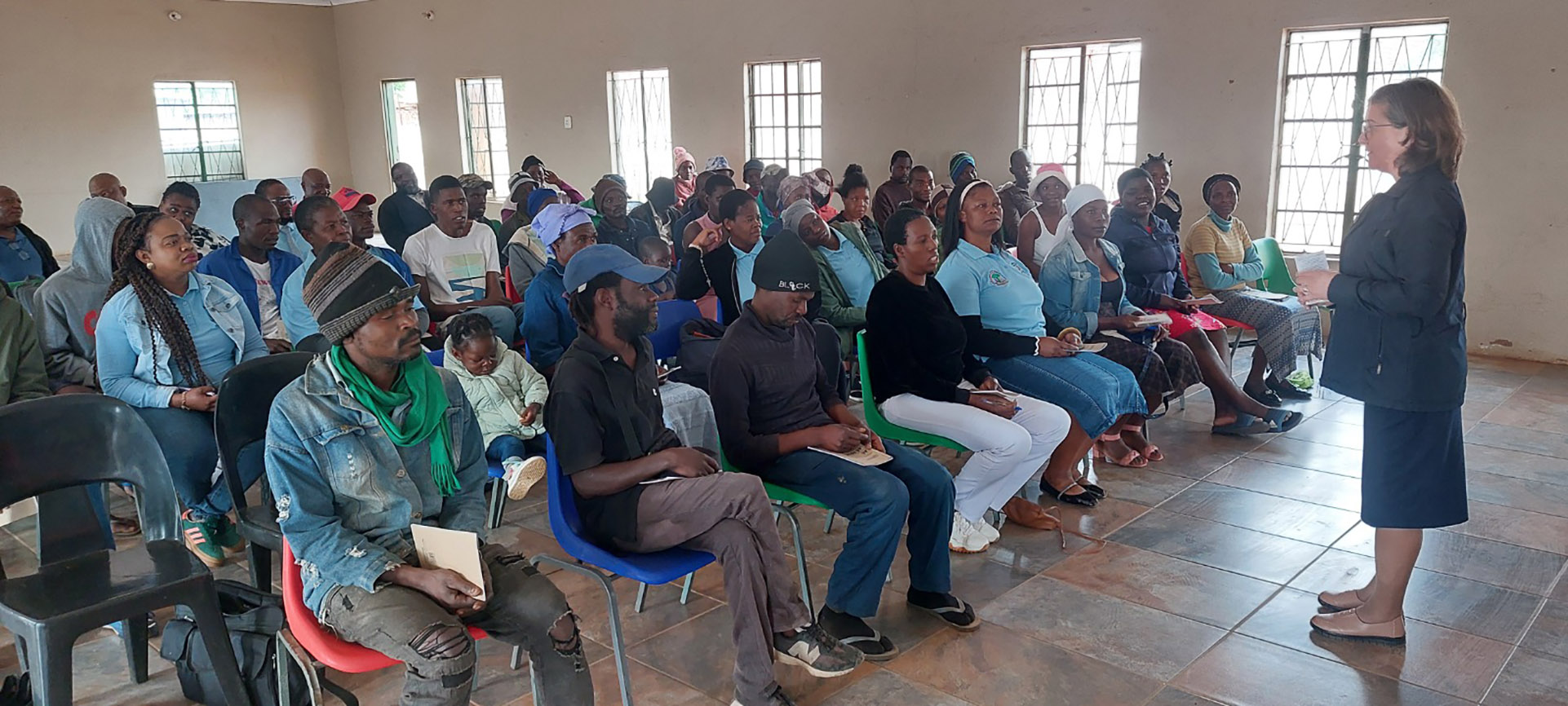
‘Welcoming, protecting, promoting and integrating’ in the light of the Gospel
The Migrants, Refugees and Human Trafficking Office of the South African Catholic Bishops’ Conference (SACBC), in collaboration with other organizations, has committed itself to combat statelessness. Workshops and formation offered to social and religious leaders in different Dioceses, and a registration process for those deprived of any citizenship, have proven to be effective paths to restore the dignity and human rights of these vulnerable groups.