
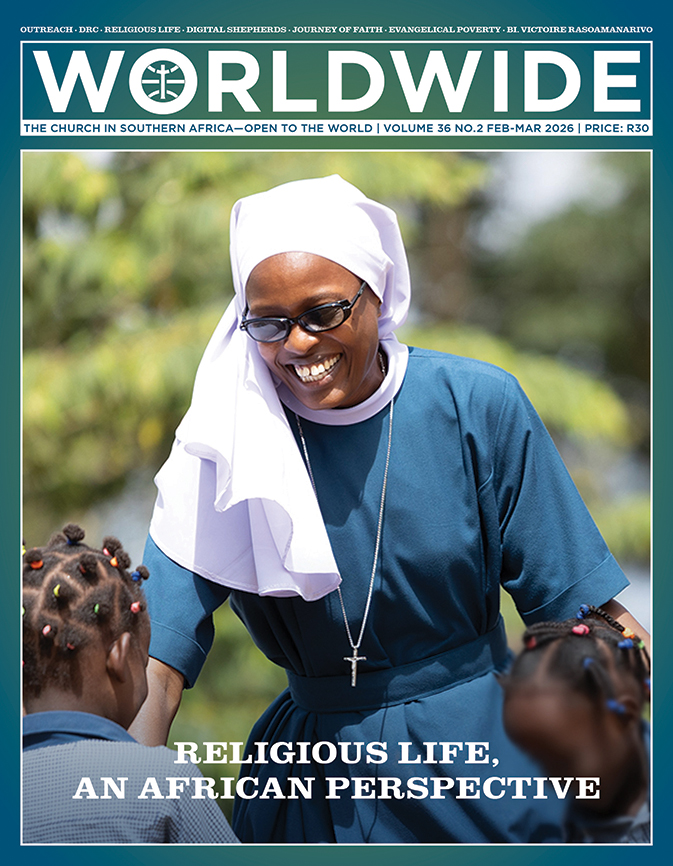
Religious Life, AN African Perspective
The Immaculate Heart Sisters of Africa (IHSA) is a Catholic religious congregation focused on education, evangelization, and empowering vulnerable women and girls, particularly against harmful practices like Female Genital Mutilation (FGM) and child marriages. The cover photo shows a member of the IHSA congregation playing joyfully with children in the Gerald Goldin Memorial Day Care and Nursery School, which they opened in 2022 in Kisarawe, Tanzania.
FRONTIERS • AFRICA’S SPIRITUAL HEART
BETWEEN THE CROSS AND THE DRUM: A STORY THAT DISTURBS THE SOUL
Valued in other world religions too, celibacy is a vocation and a sign of total dedication to God. Being celibate is more than not having sex; it is a mind shift and a lifestyle, calling one to love more openly and serve like Christ.
BY SC RAMOS ALBERTO MCCJ | PIETERMARITZBURG, KZN
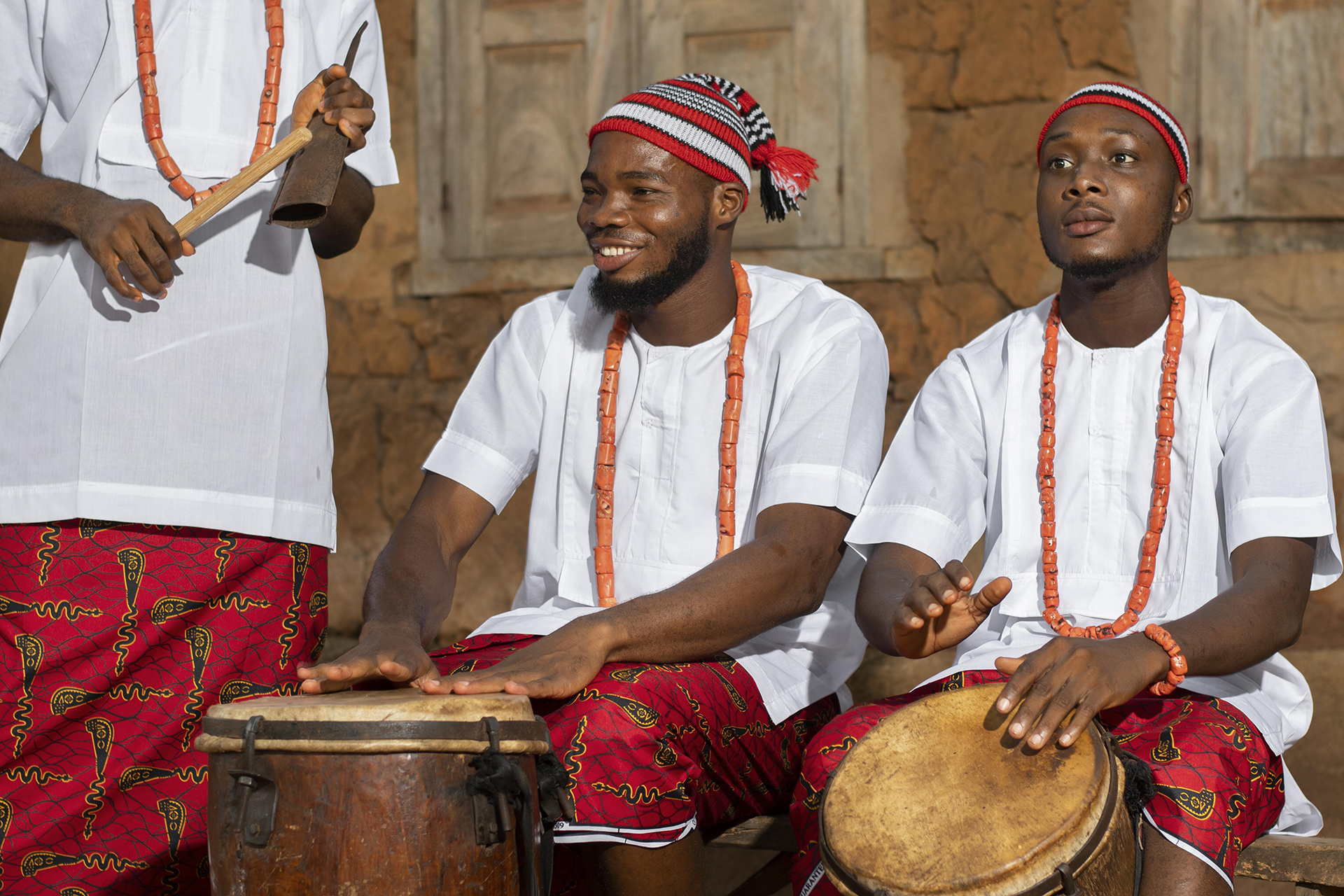
IN A remote African village, at nightfall, a young man was brought to the centre of the community. Before him stood two worlds. On one side, the ancestral drum beat loudly, calling upon the ancestral spirits, and the name of the clan. On the other, a small wooden cross hung around his neck — a silent sign of a newly embraced faith. The village elder spoke firmly: “Choose. The drum or the cross.” The silence that followed was louder than any sound. This young man’s choice was not merely personal; it symbolized an entire continent struggling between its roots and the often-painful encounter with Christianity.
This story, still repeated in different forms across Africa, reveals a deep tension at the heart of African religious life: the tension between Christianity and African Traditional Religions. This tension is not a simple conflict between the past and the present, but an existential search for meaning, dignity, and salvation.
Africa: a deeply religious continent
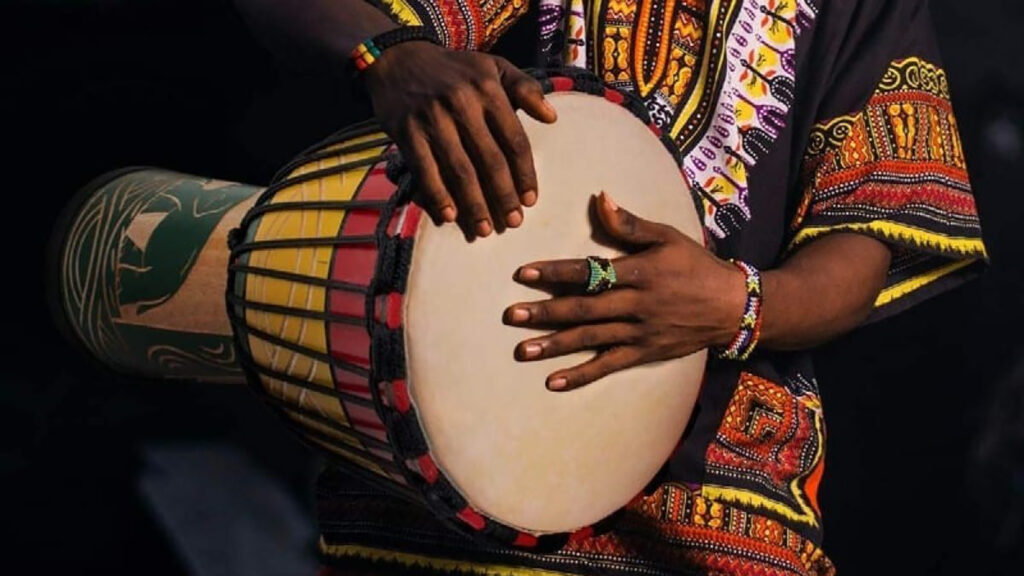
Africa is one of the most religious continents in the world. Religion is not a separate sphere of life; it permeates birth and death, work and rest, joy and suffering. In African Traditional Religions, God (the Supreme Being) is acknowledged as Creator, but often experienced through ancestors, rituals, symbols, and nature. The drum, in this context, represents not merely music; it is sacred language, rhythmic prayer, a bridge between the visible and the invisible.
When Christianity arrived in Africa, it brought with it the cross — a sign of salvation, but also, historically, a symbol of cultural domination. In the beginning, the first Missionaries preached Christ crucified, but paid little attention to Africa’s spiritual heart. Thus, the cross replaced the drum leading to the suppression of African spirituality.
The Cross: faith, liberation, and historical wound
Yet the cross holds a central place in African spirituality. It speaks of suffering, injustice, death, and hope — realities deeply familiar to African peoples marked by slavery, colonialism, wars, and poverty. For this reason, the crucified Christ resonates profoundly with the African soul: a God who suffers with the people, not apart from them.
However, the cross also carries historical wounds. In many contexts, Christianity was imposed as part of colonial projects, disregarding local languages, rites, and worldviews. This created an inner rupture in many African believers: to follow Christ seemed to require the denial of one’s cultural heritage and spirituality. This tension continues to shape African religious life today.
The Drum: identity, memory, and spiritual resistance
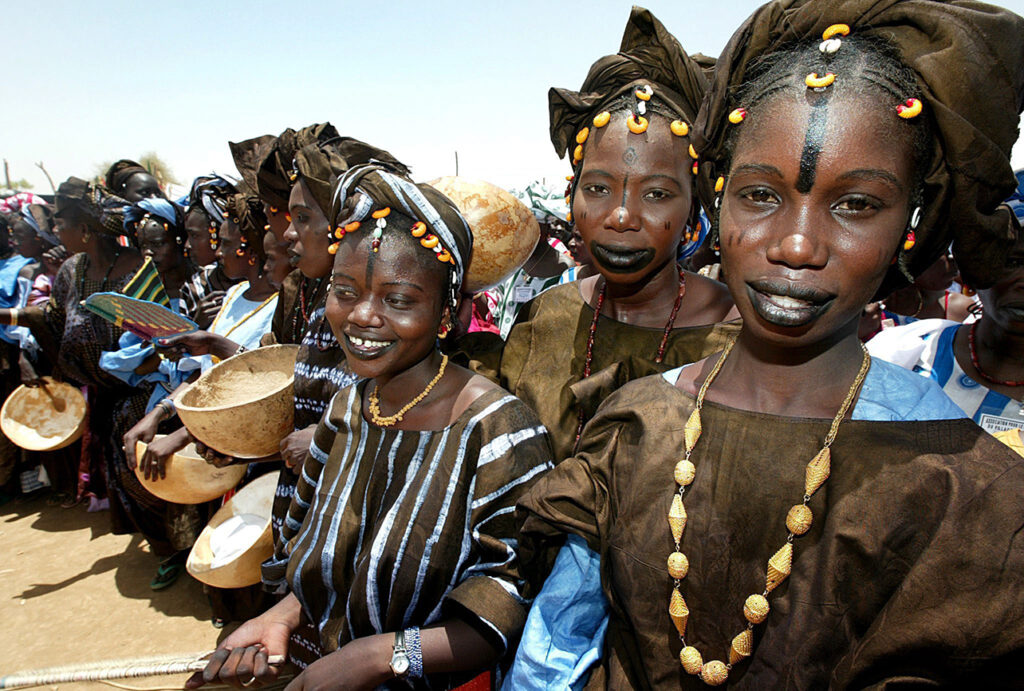
The drum symbolizes the African soul. It accompanies initiation rites, marriages, funerals, and communal celebrations. It is collective memory, spiritual pedagogy, and cultural resistance. Even after evangelization, the drum never fell silent; it continued to beat in people’s hearts, even when excluded from liturgical spaces.
Today, many African theologians acknowledge that rejecting the drum was a pastoral and theological mistake. The drum is not the enemy of the cross. On the contrary, it can become its ally. It expresses the communal dimension of faith, essential to Christianity. African faith is not individualistic; it is embodied, sung, danced, and lived as a community.
The Challenge of Inculturation
Living between the cross and the drum does not mean choosing one and rejecting the other. It means allowing the Gospel to truly become flesh within African cultures. Inculturation is not superficial adaptation, but a deep encounter between Christ and African values.
In African religious life, this challenge is concrete. Priests and religious men and women often live between European spiritual models and African spiritual richness. When consecrated life ignores local culture, it becomes alien to the people. When it embraces the rhythm of the drum without losing the centrality of the cross, it becomes prophetic.
A Prophetic Word for Today’s Society
A decisive moment: Africa can no longer continue to live with a divided faith or a fragmented identity. The artificial separation between the cross and the drum has produced wounded Christians, silenced cultures, and a form of religion that is often incapable of truly transforming society. When the drum is silenced, faith becomes foreign; when the cross is emptied of its meaning, religion loses its liberating power.
The greatest scandal is not the presence of the drum within the Church, but a Church that is unable to hear the cry of its own people. The real danger is not inculturation, but evangelization without incarnation—a discourse about God that never touches real life. A faith that does not dance with the people, that does not weep with the poor, and that does not bleed with the crucified of history becomes nothing more than religious ideology.
This article calls African society and the Church in particular to a radical transformation of mentality. The challenge is not to choose between tradition and Christianity, but to allow the Gospel to judge, heal, and transfigure culture from within. The African Christ is not born against the drum; He walks with it to Calvary and beyond, toward resurrection.
If the Church in Africa dares to live fully between the cross and the drum, it will become a prophetic sign for a world marked by cultural racism, exclusion, and loss of meaning. If it does not, it will continue to form divided believers, wounded societies, and a faith without a soul. The future of evangelization in Africa and perhaps of the global Church itself depends on this historic choice.

Singing the gospel in a digital world: The impact of evangelisation through music by digital missionaries
n an era marked by endless scrolling, fleeting trends, and ever-evolving digital platforms, the timeless message of the Gospel has found an unexpected, yet deeply powerful vessel: music.