
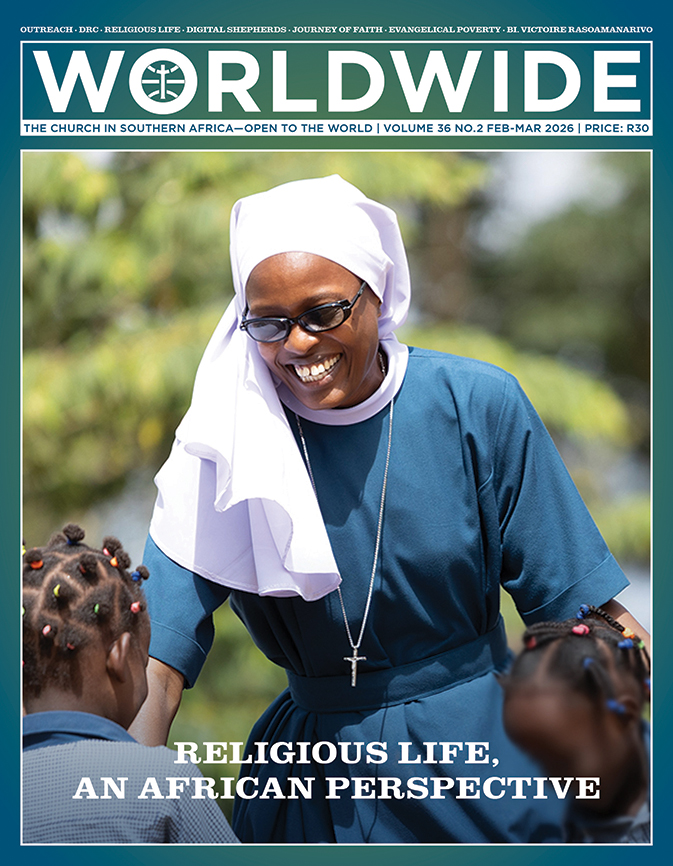
Religious Life, AN African Perspective
The Immaculate Heart Sisters of Africa (IHSA) is a Catholic religious congregation focused on education, evangelization, and empowering vulnerable women and girls, particularly against harmful practices like Female Genital Mutilation (FGM) and child marriages. The cover photo shows a member of the IHSA congregation playing joyfully with children in the Gerald Goldin Memorial Day Care and Nursery School, which they opened in 2022 in Kisarawe, Tanzania.
INSIGHTS
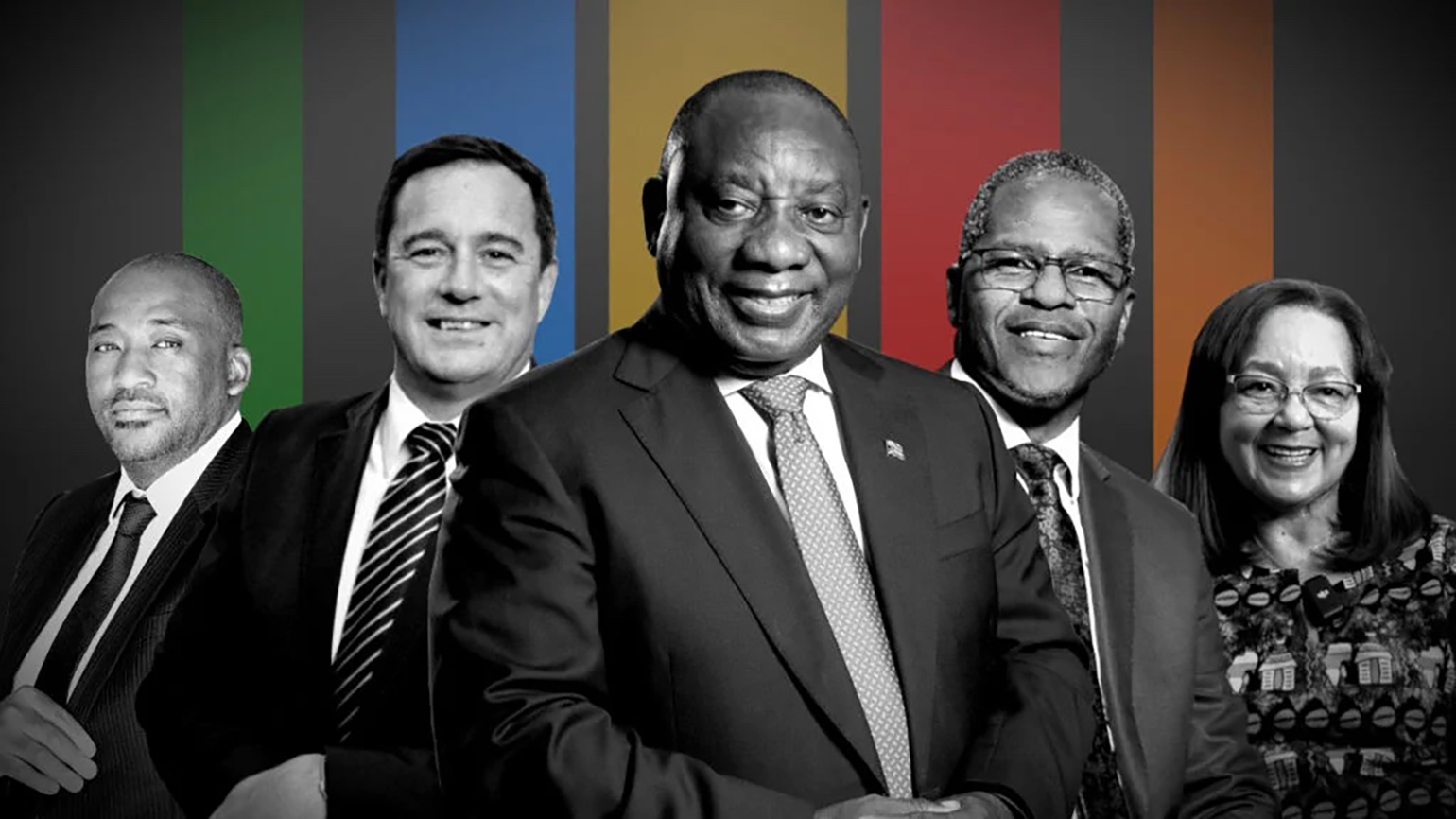
LOOKING AHEAD WITH HOPE
It is always risky to make predictions about South Africa’s future prospects, but it seems safe to say that we have more reasons for optimism this year than we have had for quite some time.
BY Mike Pothier | Programme Manager, SACBC Parliamentary Liaison Office, Cape Town
STARTING WITH the economy, we have sustained a very low inflation rate for more than a year now. This is good news for everyone who has to buy anything – food, clothing, medicine, etc. – but perhaps more importantly it allows interest rates to come down, which in turn reduces the cost of people’s debts and promotes fixed investment. It also means that we can anticipate a reduction in our huge national debt.
National Debt
One of the reasons why our national debt has grown so much over the last 15 years or so is that government had to provide annual salary increments of five, six or seven per cent to the approximately two million people who work for the state – and since it could not afford this from tax revenues, it had to borrow the money. Now, we have a chance of reversing that trend, with more modest increases and lower borrowing costs leading to an alleviation in the national debt.
Credit Rating and Investor’s Confidence
S&P Global, the international credit rating agency, recognised this progress late last year by upgrading our rating by one notch – the first such upgrade in 16 years. Concurrently, the Financial Action Task Force removed South Africa from its ‘grey list’, signaling its satisfaction with the steps we have taken to tighten up controls over money that flows in and out of the country. Both these upgrades make it easier for foreign companies to do business in our country, and for South African businesses to access capital and investments from abroad. They have also helped to strengthen our currency, which is now at its best levels against the US Dollar since 2022, leading to lower import costs, reduced fuel prices and – once again – lower government debt levels.
It will take some time for these improvements in what are called the ‘economic fundamentals’ to translate into more jobs, and less poverty and inequality – but paying attention to the fundamentals is the only way of improving the economy’s long-term ability to meet the needs of all stakeholders in a sustainable way
Healthy Politics
On the political side, the Government of National Unity (GNU) has now been in place for more than a year-and-a-half, and it seems to be quite stable, despite occasional squabbling between the partners. This fact alone has engendered confidence in the country’s future and has thereby contributed to the positive economic trends already mentioned. It has also led to improved efficiency and policy implementation in some areas, and to much improved levels of government accountability.
Public and Private Sectors
We are also beginning to see the fruits of better co-operation between the public and private sectors, especially in the fields of electricity and logistics, where state-owned enterprises like Eskom and Transnet are partnering with commercial companies to improve their performances. This may seem to be largely a monetary concern, but it reflects an important political and ideological shift away from the ‘statist’ mindset that dominated for so long – the belief that only the state can be trusted to run the most vital sectors of the economy. Even though this shift was discernible before the advent of the GNU, there is no doubt that the new mix of political voices around the cabinet table has spurred it on.
Local Government Elections
Lastly, in this very brief survey, at the end of 2026 local government elections will once again place the ultimate power in the hands of South Africa’s electorate. Optimists and pessimists alike will be able to pass judgment on those who have been running our cities and towns. We are inclined to ever so often take our regular, free and fair elections for granted – we should however never lose sight of the fact that South Africa is one of the small minority of countries around the world that boasts a truly independent and credible electoral system.
We must be Vigilant!
All this positivity does not mean that we should make light of the significant challenges and governance failures of which we are all too aware: ongoing corruption and state capture; out-of-control crime rates; racialized poverty and joblessness; xenophobia and anti-foreigner bigotry; and the growing threat of environmental breakdown and climate-change. But at the very least, our healthier economic and political positions at the beginning of this year provide us with a stronger base from which to confront these challenges than we have faced for many years.
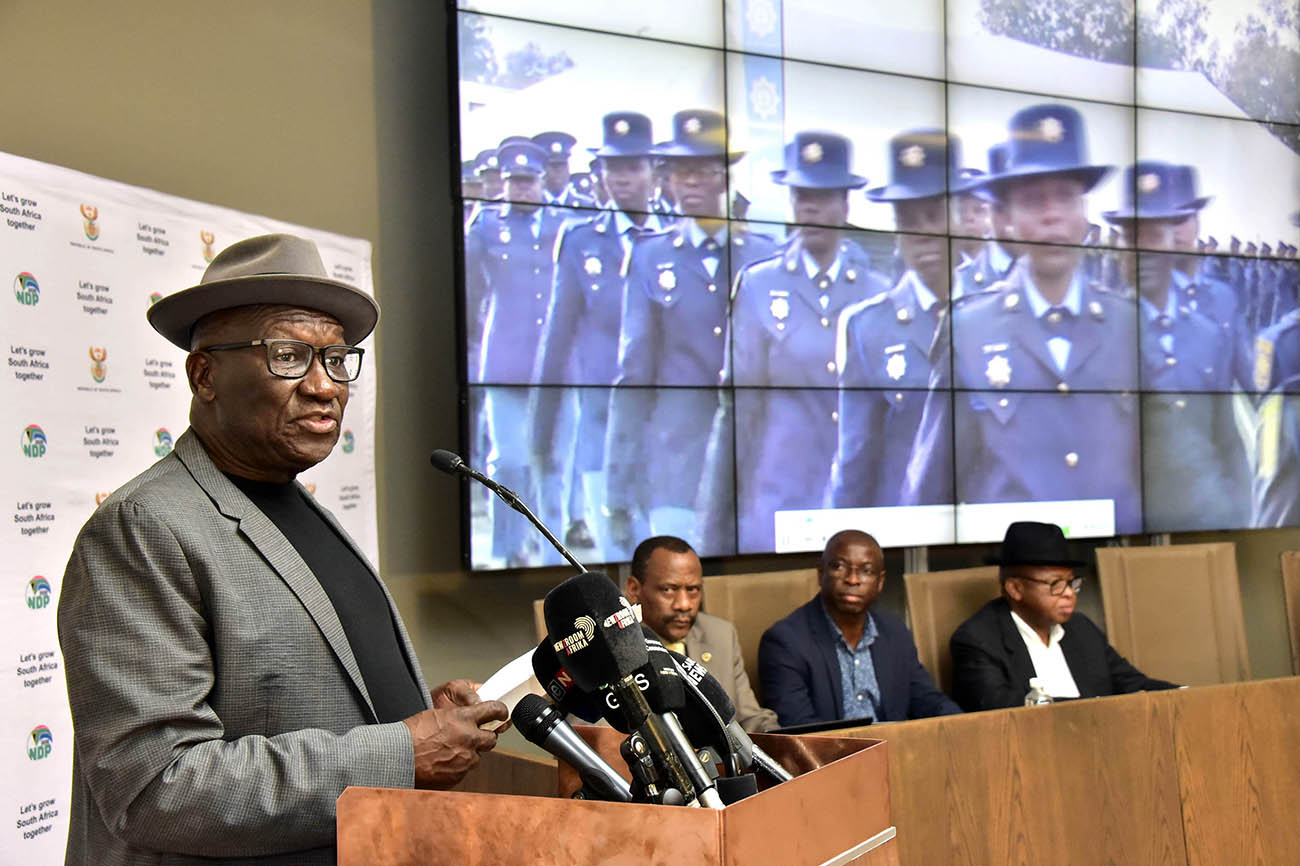
Who Guards the Guardians?
FOR CENTURIES, societies have worried about what happens when those who are supposed to uphold and enforce the law instead become criminals themselves. The problem was famously expressed by the Roman poet Juvenal, when he asked, ‘Quis custodiet ipsos custodes?’ —who will watch the watchmen?