
Religious Life, AN African Perspective
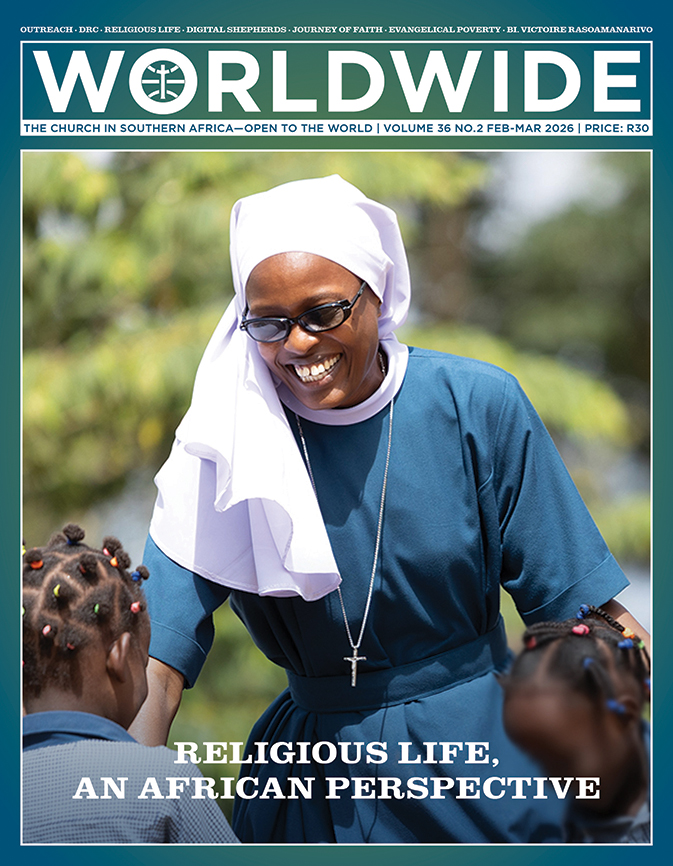
The Immaculate Heart Sisters of Africa (IHSA) is a Catholic religious congregation focused on education, evangelization, and empowering vulnerable women and girls, particularly against harmful practices like Female Genital Mutilation (FGM) and child marriages. The cover photo shows a member of the IHSA congregation playing joyfully with children in the Gerald Goldin Memorial Day Care and Nursery School, which they opened in 2022 in Kisarawe, Tanzania.
PROFILE • BLESSED VICTOIRE RASOAMANARIVO
Music, a reminder of the lost paradise
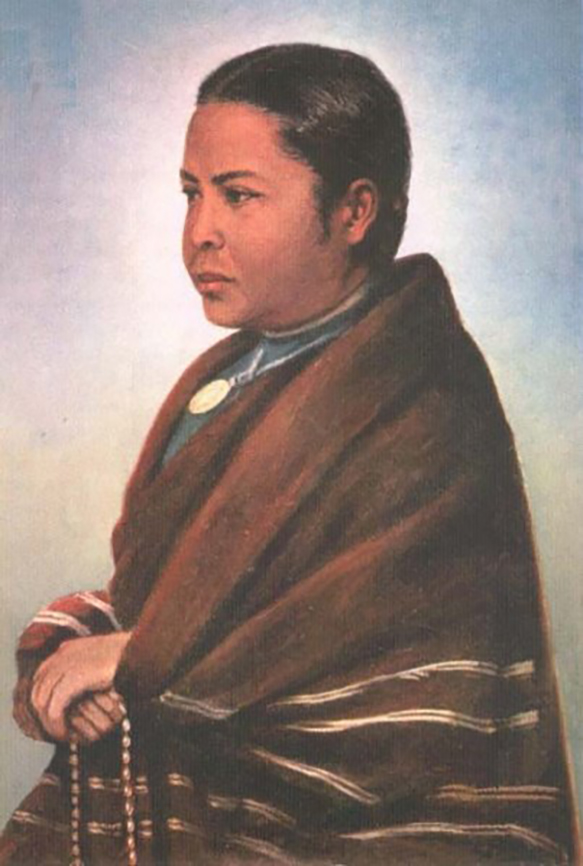
Blessed Victoire kept the faith alive when the missionaries were expelled from Madagascar, and encouraged Catholics to practice their faith in times of persecution. She continues to be an inspiration of true Christian life, devoting herself to serving others, especially the poor and the marginalised.
BY Marian Pallister | Chair of Pax Christi Scotland
MADAGASCAR HAS always had a tricky political situation. An island off the east coast of Africa, but close enough for access from the Indian subcontinent, there was always a population mix that inevitably led to friction and power struggles. Over the centuries, Arabs and pirates used and abused the island and its people, many of whom were migrants from neighbouring continents. The French and British not only had their eyes on the resources, but also saw the island as a convenient ‘staging post’ in that part of the world.
As time went by and dominant families vied for power, there seemed little possibility of prolonged peace.
To be caught up in those struggles because you were a reluctant member of a family determined to hold onto power, must have been intimidating—indeed, at times terrifying.
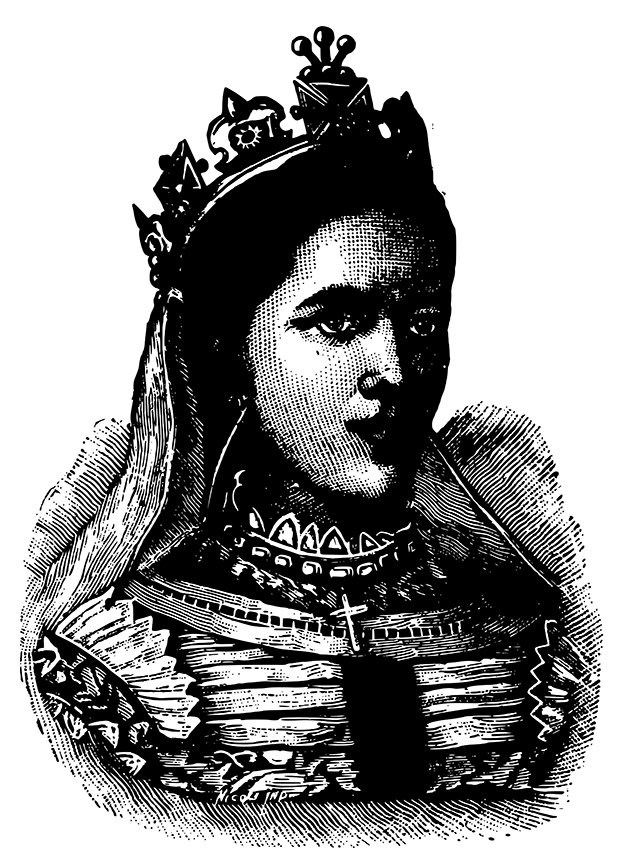
Yet, a Madagascan woman named Victoire Rasoamanarivo stood her ground on so many aspects affecting the principles which she believed in that she is now in line for sainthood.
Historical antecedents
Her family background, like the country’s, was complicated, to say the least. As families gained power, a Merina king named Andriamasinavalona ruled much of the island’s Central Highlands, but in the early 1700s, he abdicated and split the state among four of his sons, which led to civil war. By the end of the 1700s, Madagascar was ruled by several fractured families who never quite managed to unite what is the world’s fourth-largest island, a significant area that would only thrive in peace. It wasn’t until the 1790s that King Andrianampoinimerina managed to unite part of the country, and subsequently spent his time attempting to bring together the entire island.
As a backdrop to all of this, the British and French were vying for control over trade in this potentially lucrative part of the world. Andrianampoinimerina’s ambitions were eventually realized by his son, King Radama, who signed a treaty with the British which recognised him as King of Madagascar in return for putting an end to the slave trade.
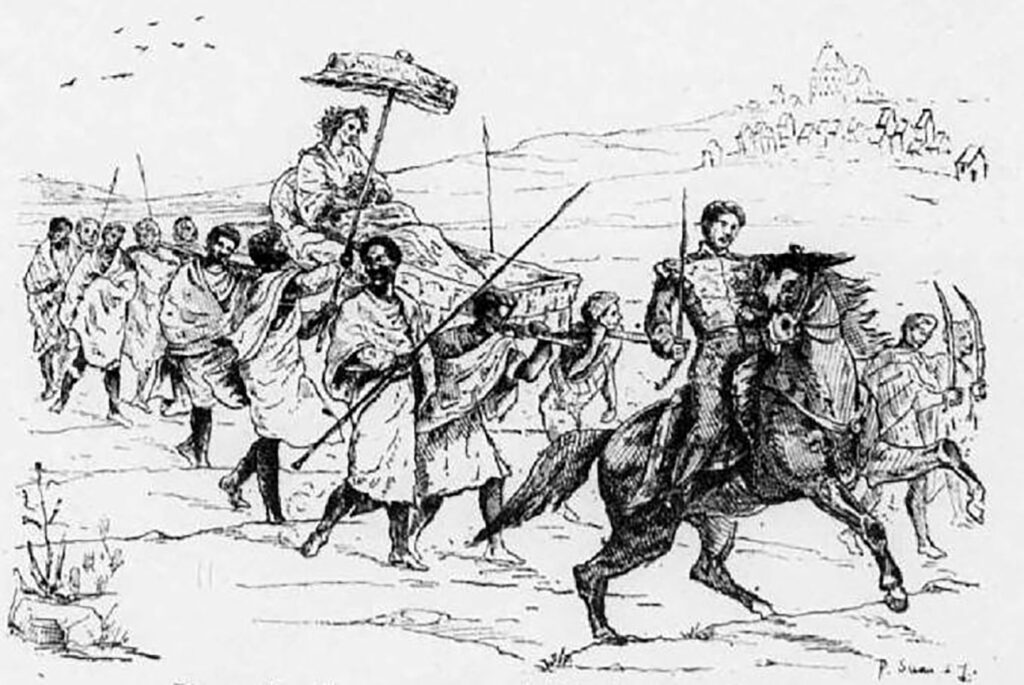
By the mid-1800s, tensions were still rife, and conflicts with the French and other nations raged. In 1848, Victoire Rasoamanarivo, the daughter of Rainiandriantsilavo and Rambahinoro was born into this tumultuous era. Her grandfather had been Prime Minister, and her father was commander-in-chief of the country’s army. Her uncle, an army officer, raised her. She was part of the upper class in a country where class – and religion – really did matter. An authoritarian queen, Ranavalona I, ruled the country from 1828 to 1861. Being a high priestess of a pagan cult, she brought the whole country under the cult’s influence; hence pagan worship was still paramount throughout Victoire’s childhood.
Against this background, it is remarkable that Victoire’s life took the course that it did.
Catholic upbringing
Catholicism on the island was still in its earliest days, and Madagascar’s ruling family continued to adhere to ancestor worship imposed with a rod of iron by Queen Ranavalona I. Yet, Victoire was sent to a Catholic missionary school when she was 13, presumably because the education offered there was superior to that of other establishments.
Unsurprisingly, the Catholic faith appealed to her. In spite of having obviously risked the girl being attracted to the faith propagated by her school, the family strongly objected when she converted to Catholicism and was baptised on November 1, 1863. In an effort to reverse their daughter’s religious journey, her parents then sent her to a Protestant school and threatened to disown her if she continued to follow the Catholic faith. She refused and was, in fact, planning to join a religious order.
She was upper class in a country where class and religion matter.
The Sanctity of Marriage
Her parents decided that stronger tactics were necessary to achieve their ends. They arranged a marriage with one of Victoire’s cousins, a man named Ratsimatahodriaka. Against all Victoire’s wishes, she was married on May 13, 1864. She discovered all too soon that her husband drank excessively, was a womaniser, and was violent towards her. She was advised by friends and even by her family to divorce him, but she had accepted all that her faith taught her. For her, marriage was a sacred sacrament, and instead of seeking a divorce, she prayed for his conversion, and the marriage continued for the next two decades until his death.
The “guardian angel” of the Church
It wasn’t just her home life that was violent, however. The politics of the country took another aggressive turn in 1883. At the outbreak of the first Franco-Malagasy War, when France invaded the country, the government of Queen Ranavalona III closed Catholic churches and banned masses. Priests, nuns, and missionaries were expelled, leaving the 20 000 Catholics without a shepherd. The missionaries, however, asked Victoire to become the “guardian angel” of the Church in their absence.
She heeded their call, and for the next two years, while Christian institutions were once again persecuted, Victoire continued not only to practice her faith but to encourage others to do so, leading a powerful movement to keep the faith alive. She and those who followed her example were brave indeed, as an edict was issued labelling all Christians traitors and enemies of the state.
In 1885, peace was restored, and Catholics were once again able to worship. Victoire Rasoamanarivo’s courage and conviction during that dangerous time led to her being called the “Mother of the Church of Madagascar”.
Credit: openclipart.org.svg
Gift of Fortitude
We shouldn’t underestimate that bravery. When Victoire was born in 1848, the violent intimidation of Queen Ranavalona I was intended to wipe out Christianity. Christians were accused of witchcraft and persecuted relentlessly. In one instance, 15 men were hanged by ropes from a 150-foot-high cliff and ordered to renounce their faith. When they refused, the ropes were cut, and they fell to their deaths on the rocks below.
During the reign of Ranavalona I, it is estimated that almost 2 000 Christians were fined, jailed, poisoned, exiled, or executed for the crime of following their faith. This continued throughout Victoire’s childhood and early adulthood.
Indeed, in her teens, she suffered persecution at the hands of her own family because she chose to heed the voice of the poor and to tend to them and to the sick —behaviour that she was inspired to follow by the teachings of the nuns at her Catholic school and certainly unheard of in the upper echelons of society to which she belonged. Her family ridiculed her and ordered the family’s slaves to stone her.
Victoire certainly knew what could have been the outcome of her agreeing to take on the role of “guardian angel”.
While she led adherents to the faith in a relatively clandestine way that ensured their safety, she certainly did not conceal her own determination to follow the faith. After the religious were expelled, she went to the cathedral in the capital to pray. It was closed and guarded by police. She used her family connections to ask the Prime Minister if there was an official order to close all the Catholic places of worship. He had to admit there was no such decree.
Victoire returned to the cathedral, told the officer what the Prime Minister had said, and told him, “If you oppose this by force, my blood will be the first you will shed. You have no right to prevent us from entering our churches to pray.”
Practising Catholicism
That was the start of her “guardian angel” mission. She travelled around Madagascar, encouraging Catholics to practice their faith, assuring them that this supposed ban was not official. She recruited members of the Catholic Union to reopen schools and churches, and despite the open hostility they were subjected to, this faithful band managed to catechise the faithful.
Caring for the destitute
Most of the Catholics of Madagascar were poor — hasn’t that been the case in so many countries around the world? — and Victoire helped them with her own resources. Even during those most difficult of years, she and her supporters followed the Gospel to the letter, caring for the sick, the poor, prisoners, and those who were still enslaved.
With her support and encouragement, Catholics continued to take care of the sick and destitute without ever wavering in their ministries. Nor did she relent in her own personal efforts to care for prisoners, lepers, and slaves — she continued this work once the period of persecution was ended.
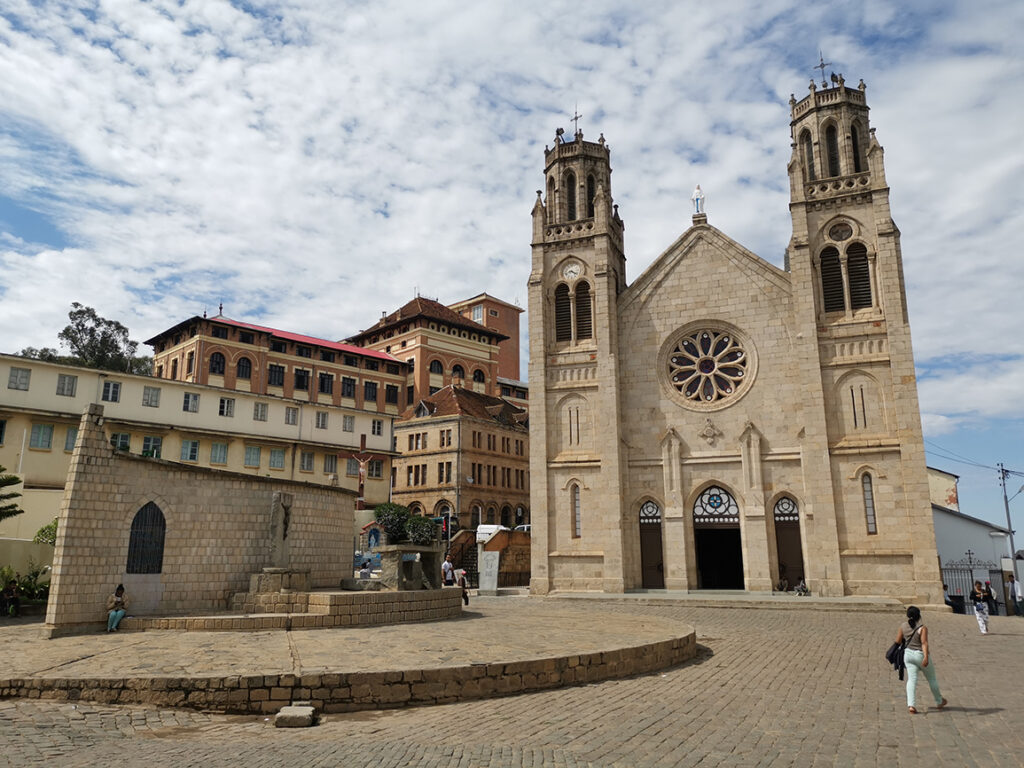
On March 14, 1888, two years after peace with France was signed, Victoire’s husband died. On his deathbed, he sought her forgiveness and asked to be baptised. Seven years later, at the age of just 46, she also passed away and was buried in the chapel of the Andohalo Cathedral.
Credit: Josean Villalabeitia | Source: Mundo Negro Archives
Fruits of holiness
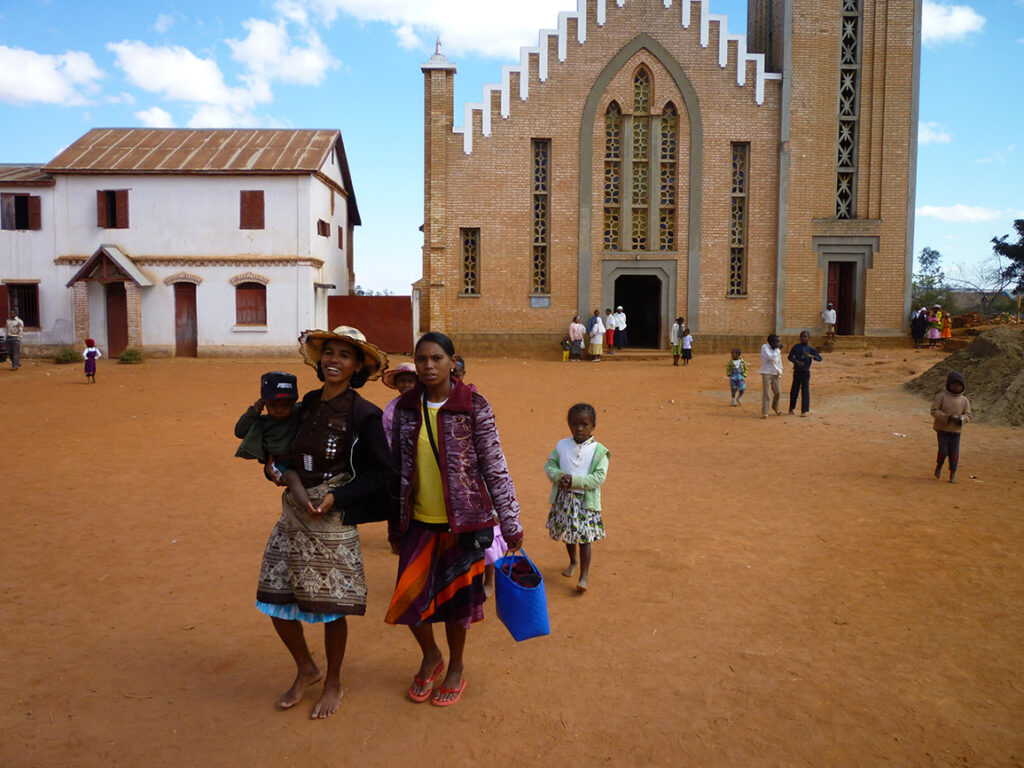
The Mother of the Church of Madagascar’s work has borne fruit. Today, a quarter of the country’s population is Catholic, and there are 21 dioceses across the island. In 1935, investigations began into the report of a miracle attributed to her intercession. In 1956, the cause for her beatification started, and Pope John Paul II declared her to have lived a life of heroic virtue, proclaiming her to be venerable. He then approved a miracle attributed to her intercession on 9 May 1985, which led to her beatification on 30 April 1989. Another miracle was investigated, and Blessed Victoire, guardian angel of the Church in Madagascar, now awaits papal approval to become a saint.
The missionaries asked Victoire to be the “guardian angel” of the church
A Model for modern Malagasy
She continues to be an example to today’s Madagascans. Last year, Archbishop Benjamin Marc Balthason Ramaroson of the Catholic Archdiocese of Antsiranana impressed on a Youth Congress the importance of following the example of Blessed Victoire, whose life centred on the Eucharist and trials.
The Archbishop stated that Blessed Victoire had remained in Christ and, through her commitment, bore fruit, not only in her personal life but for the entire Church in Madagascar. He explained, “Blessed Victoire was not a member of a religious order, yet her dedication to Christ was unwavering. She devoted her life to serving others, especially the poor and marginalised, drawing strength from her deep relationship with the Eucharist.”
He added: “Let us follow the example of Blessed Victoire, living out the Gospel in our daily lives and committing ourselves to the service of others, especially the poor.” This is advice that not only the young people of today’s Madagascar can follow, but is inspiration for us all in these difficult times.
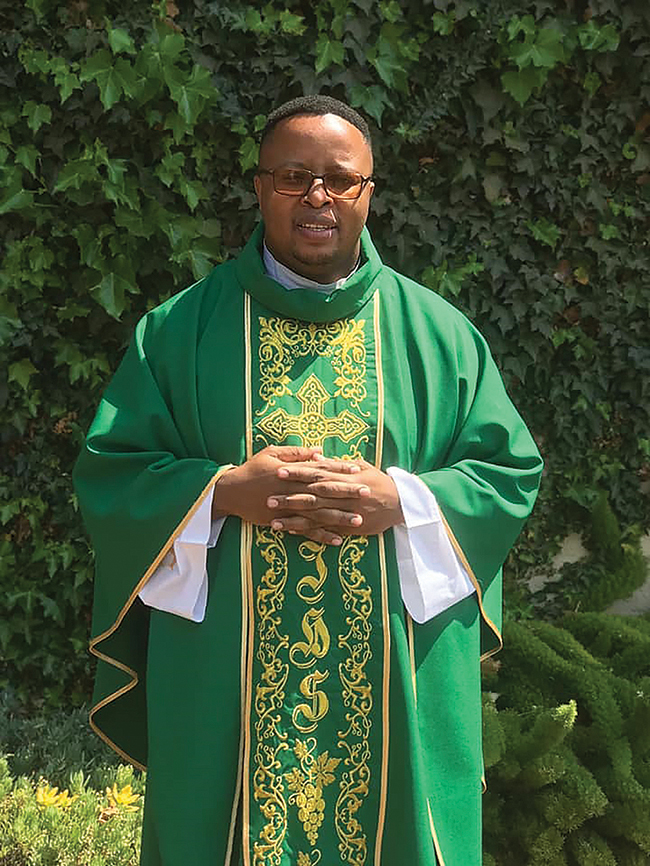
Music, a reminder of the lost paradise
WE LIVE in troubled times—but then, for some parts of the world, including the Middle East, DR Congo, areas on the Pacific Rim, and South Africa, troubled times have too often been the norm.