
WORK AND HUMAN DIGNITY
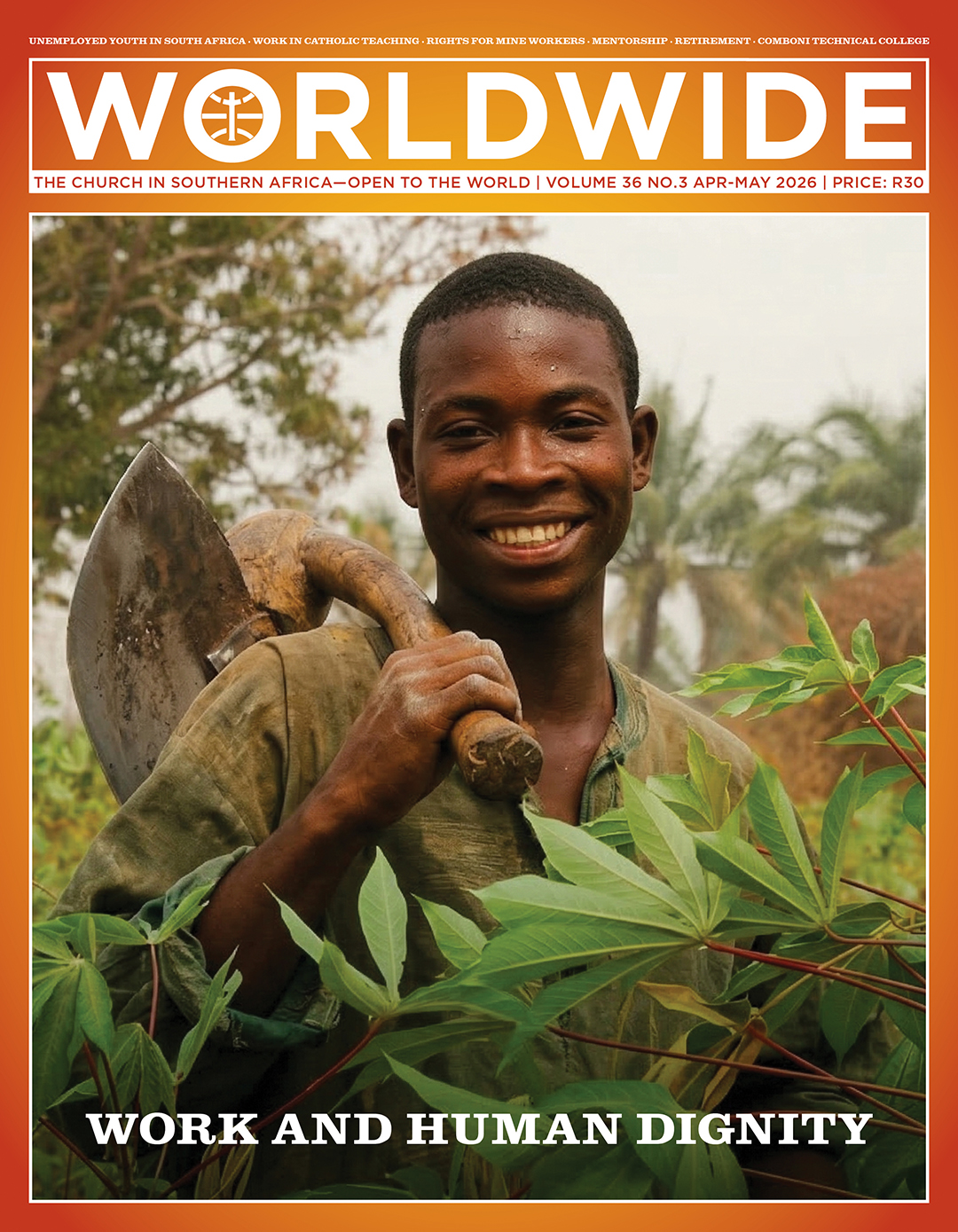
A young farmer holding a hoe in a field of cassava plants. In Africa, cassava is the second most important staple food after maize, providing the primary energy source for approximately 40% of the population. Due to high levels of unemployment, small- scale farming provides a dignified way of self-sustenance.
PROFILE • Social Activist
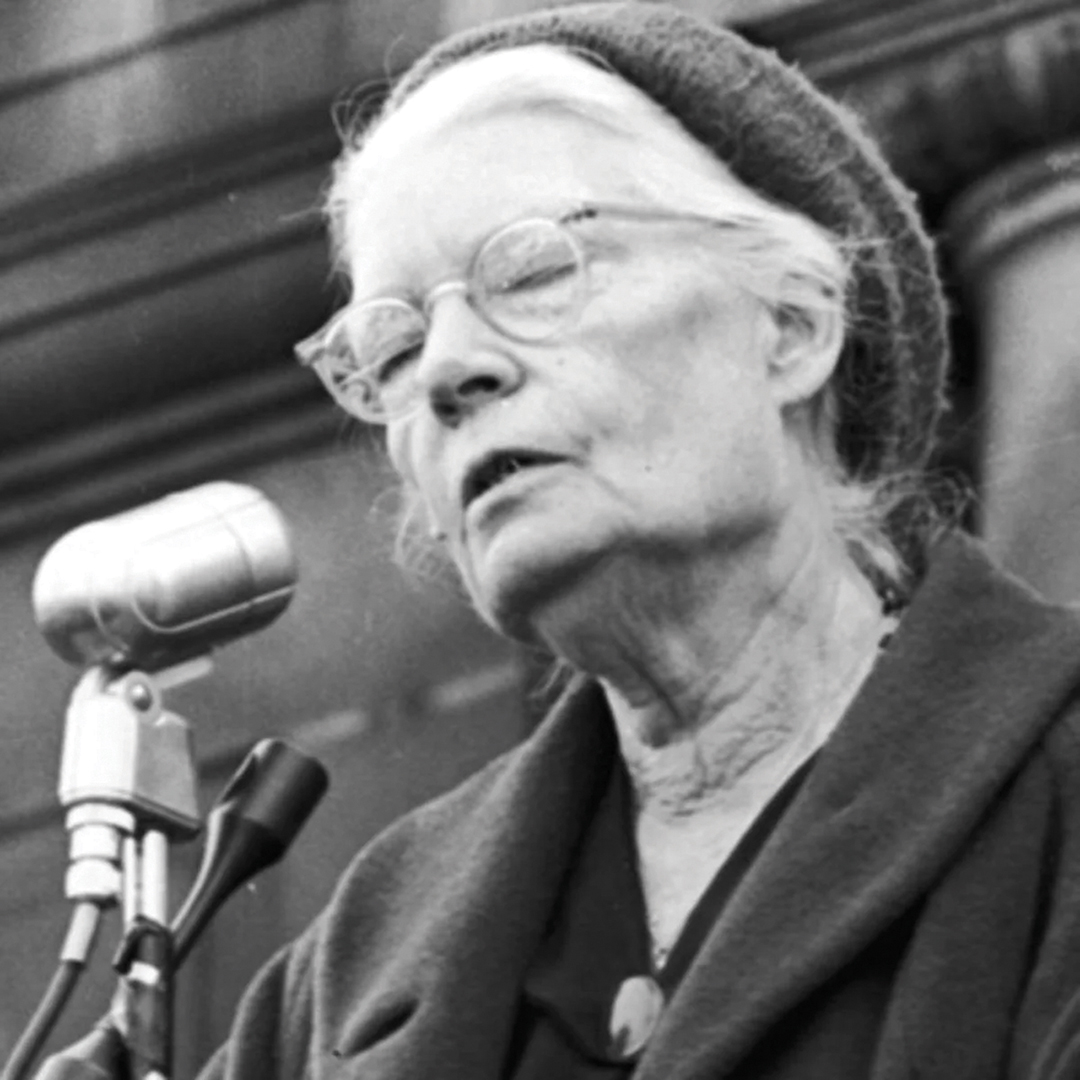
Dorothy Day
When your father harbours a strong prejudice against a particular person, political stance or religion, there’s a strong chance that he will try his best to pass that on, to instil in you an intolerance that matches his.
BY Marian Pallister | Chair of Pax Christi Scotland
JOHN DAY, an American journalist working at the end of the 19th century and early 20th century, held a strong preconceived opinion against Catholicism and ardently attempted to pass his bigotry on to his family.
It is in some ways surprising, therefore, that Dorothy Day not only embraced the faith her father despised, but founded the Catholic Worker Movement that still influences our thinking almost a century later.
Humble Beginnings
Day is destined for sainthood. Peace activist and lay theologian Jim Forest wrote, “Day’s conviction that the social order was unjust changed in no substantial way from her adolescence until her death.” It is that conviction which still impresses us today; still influences our actions as we strive for a just world in which human dignity is paramount.
Her father John, the journalist and anti-Catholic, was working in New York when his daughter Dorothy was born in the family home in Brooklyn on November 8, 1897. His work took him to San Francisco, where the earthquake of 1906 shattered family life. The Days moved to Chicago and life was tough as John was now unemployed. It was perhaps then that young Dorothy first became aware of the effects of poverty — materially and psychologically. Her father’s humiliation at not being able to provide for his family had a far greater impact than his prejudice against Catholicism.
It was in Chicago that Dorothy Day first became aware of the Catholic faith. Her friend’s mother was a devout Catholic and she was exposed to a family that prayed.
It was in Chicago that Dorothy Day first became aware of the Catholic faith.
Day as a Journalist
There was a move for the better when her father was appointed sports editor of a Chicago newspaper, but although the family relocated to a better area, Dorothy began exploring districts of the city that gave her greater insight into poverty and its consequences. A scholarship took her to the University of Illinois, but she was already on a path to socialism with a small “s” and she shunned the social life of her fellow students who clearly were from families of means.
She turned her back on her studies, went to New York, and was employed as a writer for The Call, a socialist daily that placed her in the middle of demonstrations and saw her interviewing many people with revolutionary mindsets.
She moved to a magazine called The Masses, a publication which so upset the authorities that its editors were charged with sedition. It was left to Dorothy Day to publish its final edition.
Human rights meant everything to Dorothy — including women’s rights. She joined a demonstration outside the White House seeking votes for women in 1917 and was arrested and manhandled in the detention house where she and her fellow protestors were imprisoned. The women went on a hunger strike and were released by means of a presidential order.
The US had joined the First World War and back in New York, Day decided that she should become a nurse, beginning her training in 1918.
It would undoubtedly have upset John Day immensely to know that his daughter had begun to visit St Joseph’s Catholic Church on Sixth Avenue. She liked the form of worship, but she also saw that the Catholic Church had an open door for immigrants, that it welcomed and understood the poor.
After the war ended, she went back to journalism and shared an apartment with Catholic young women in Chicago who went to Mass and openly prayed each day. These influences were shaping her, and a spell working in New Orleans where she attended Mass in the cathedral propelled her forward towards Catholicism.
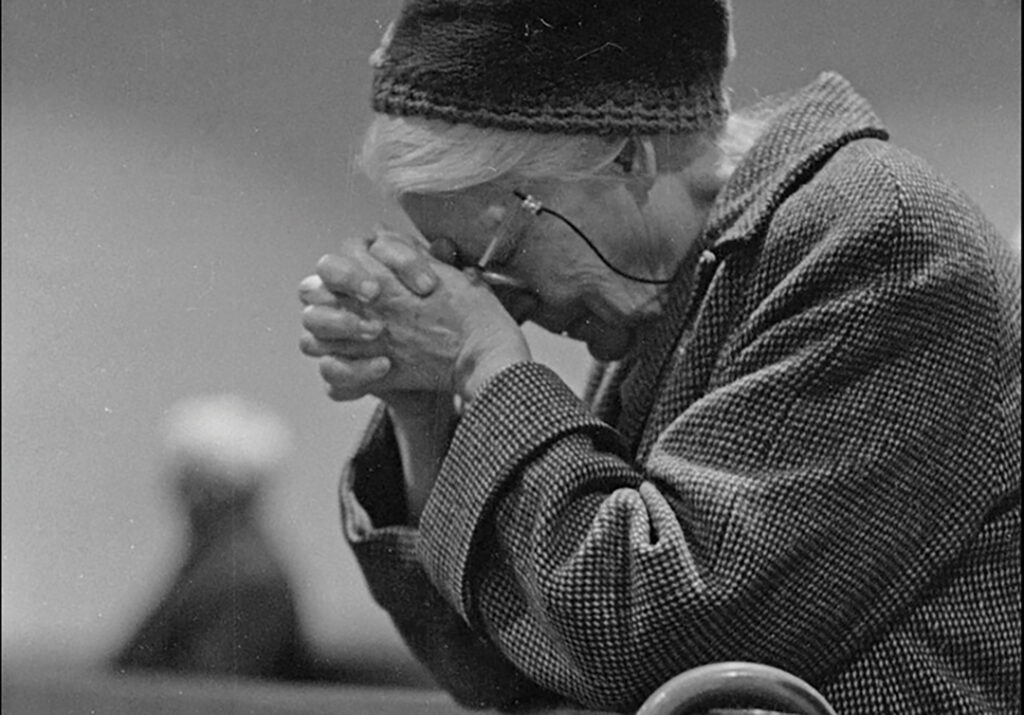
Source: catholicworker.org
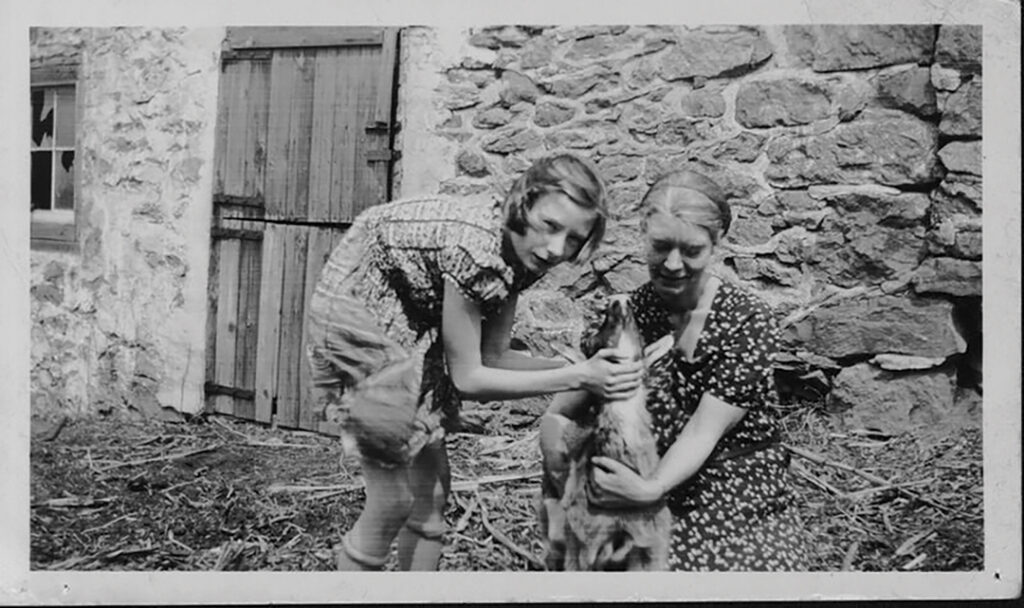
Source: merton.bellarmine.edu | Credit: Joseph Zarella Photographs
Toxic Relationship
This road was however never straight. She made some money from the sale of movie rights for her novel The Eleventh Virgin and used these proceeds to purchase a cottage on New York’s Staten Island. She lived there in a toxic relationship with Forster Batterham, a confirmed atheist who argued with her constantly about her faith.
She conceived a child during this apparently controlling liaison — perhaps the only good thing to emanate from it. She had thought she was unable to conceive, having had an abortion during an earlier relationship. Batterham was far from happy, but Dorothy Day gave birth to Tamar Theresa Day on March 3, 1926, gave thanks for her and had her baptised in the Catholic Church.
The relationship with Batterham ended, but Day’s relationship with the Church had begun in earnest. She was received into the Church in December 1927.
Human rights were everything to Dorothy — including women’s rights.
The Beginning of Activism
As the 1930s began, so did the Great Depression — the worldwide economic crash that followed the First World War. Day was now reporting for the Catholic publications Commonweal and America.
During a hunger march organised by the Communist Party, Day saw the placards that highlighted all the issues of the day — hunger, unemployment, lack of housing and health care, the plight of women and children as the Depression hit deep. This was far more devastating than the situation she had lived through when her father was unemployed during her childhood.
She said later, “I offered up a special prayer, a prayer which came with tears and anguish, that some way would open up for me to use what talents I possessed for my fellow workers, for the poor.”
God was listening. The next day she met a former Christian Brother, Peter Maurin, who had left his native France for Canada in 1908 and later moved to the United States. He was leading a Franciscan life, and impressed George Shuster, editor of Commonweal magazine so much, that he gave Maurin Dorothy Day’s address.
The Catholic Worker Newspaper
When he went to see her, he was working as a handyman at a Catholic boys’ camp in upstate New York, receiving meals, allowed the use of the chaplain’s library, given living space in the barn and also occasional pocket money. She saw him as the answer to that prayer, as Maurin advised her to start a newspaper publicising Catholic Social Teaching with the goal of peacefully transforming society.
What wasn’t to like about the idea? It fitted Dorothy Day’s vision like a glove, and she approached the Paulist Press, who agreed to print 2,500 copies of the first Catholic Worker. It was literally a kitchen publication, sold at a penny a copy, and by December 1932, 100,000 copies were being sold every month. The paper challenged the social order and prompted its readers to respond.
Respond they did — but perhaps not as Dorothy Day had anticipated. Nonetheless, she and Maurin reacted with faith when the jobless, the homeless, the most vulnerable of society started turning up on The Catholic Worker’s doorstep.
It shouldn’t have been a surprise. After all, they were publishing Maurin’s essays that echoed the Sermon on the Mount; that reiterated that “What you do for the least of us, you do for Me.” He encouraged every parish to open a house of hospitality. Dorothy Day’s apartment became the first of these.
Other homes followed rapidly — a house for ten women, one for men, a place in China Town. But the need was overwhelming. The Great Depression was indeed “great” and the numbers were immense. Even so, there were volunteers offering to help, and those who received hospitality were impressed that there was no call for conversion, no “payment” in terms of signing up for Catholicism or indeed for any doctrine.
By 1936 there were already 33 Catholic Worker houses across the United States. Asked by social workers who didn’t approve of this “hospitality”, how long these people were allowed to stay, Day told them, “We let them stay forever… they are our brothers and sisters in Christ.”
Now there’s a phrase we all became familiar with when Pope Francis wrote his encyclical Fratelli Tutti. Little wonder then that he supported Dorothy Day’s journey towards sainthood: their mindsets were certainly in harmony.
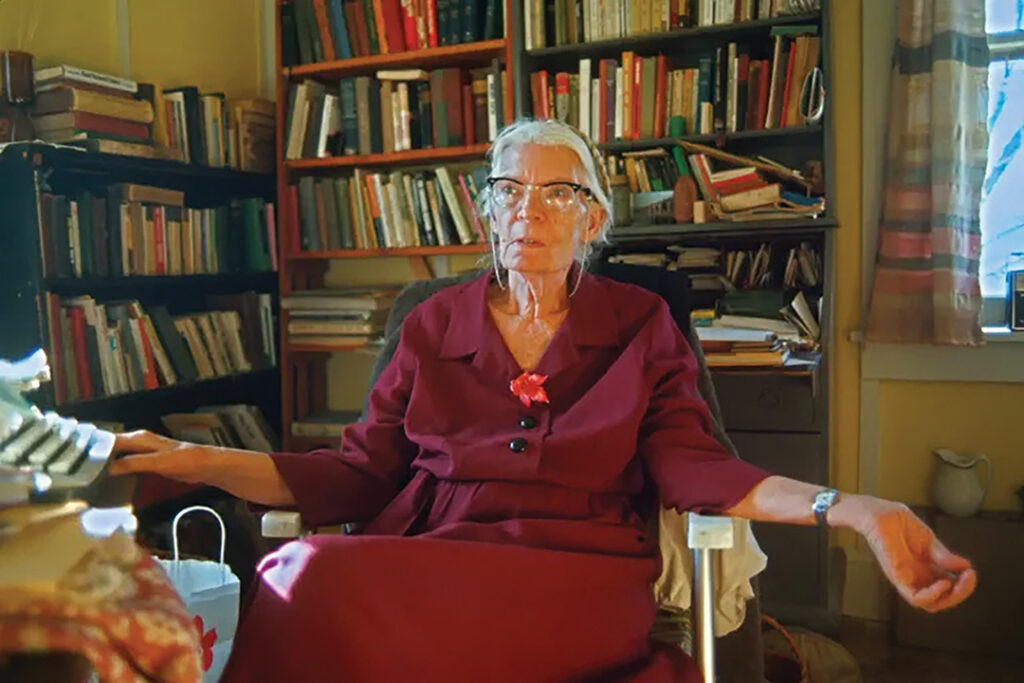
Source: catholicworker.org
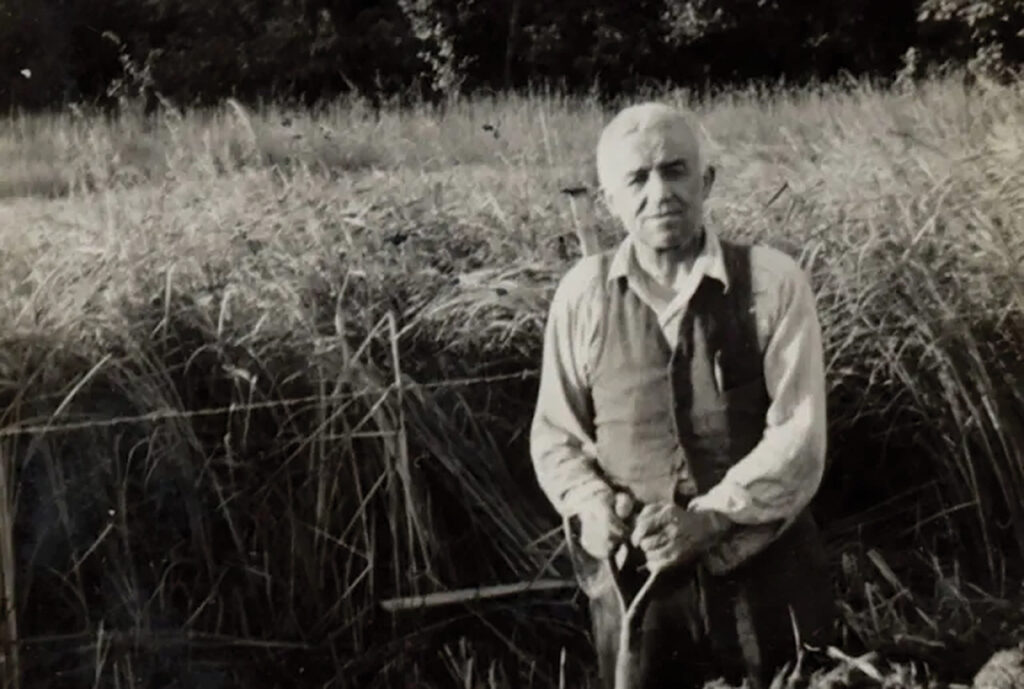
Source: catholicworker.org
If the authorities did not approve of the Catholic Worker hospitality houses and the experiments with agricultural projects aimed at giving people work, they certainly didn’t agree with its pacifism and emphasis on a nonviolent society. Even the Catholic Church was still in support of “a just war” in the 1930s, and with conflicts brewing in Europe, pacifism was not a concept that was going to win plaudits for Dorothy Day and Peter Maurin.
Day’s Stance on War
The pair continued this stance through the rise of Nazism, the Spanish Civil War, and even the attack on Pearl Harbour which drew the United States into the Second World War. Declaring that, while The Catholic Worker loved its country:
“We will print the words of Christ who is with us always… Our manifesto is the Sermon on the Mount.”
There was a backlash. Some hospitality houses closed. But still supporters remained who became conscientious objectors and faced the consequences.
During the Cold War, Day was jailed several times in the 1950s for refusing to take part in annual civil defence drills. Her defiance led to an increase in the number of supporters who followed her example, and by 1961, some 2,000 people refused to take part in these drills. This marked the start of Day’s campaign to change not only civil society’s attitude towards war, but that of the Church itself.
She travelled to Rome with a group of 50 “Mothers for Peace” in 1963. Due to his ill health, they were unable to thank Pope John in person for his encyclical Pacem in Terris (Peace in the World), but in one of his last public audiences Pope John blessed the Mothers for Peace and urged them to continue their work.
Two years later, Day returned to Rome hoping that the Second Vatican Council would issue a clear statement against war.
It was great cause for celebration when the Constitution on the Church in the Modern World was approved by the bishops. The Council stated that any act of war “directed to the indiscriminate destruction of whole cities or vast areas with their inhabitants” would be “a crime against God and humanity”, calling on states to make legal provision for conscientious objectors and describing as “criminal” those who obeyed commands which condemned the innocent and defenceless.
The world was naturally slow to accept the Council’s declaration, and Dorothy Day and several Catholic Worker editors were arrested for protesting against the Vietnam War.
She received several awards in her lifetime, and when she died on November 29, 1980, there was talk of sainthood, which she had dismissed during her life in typical fashion. The canonisation process began in 1997, and the cause continues in Rome.
Day’s response would surely still be, “If I have achieved anything in my life it is because I have not been embarrassed to talk about God.”
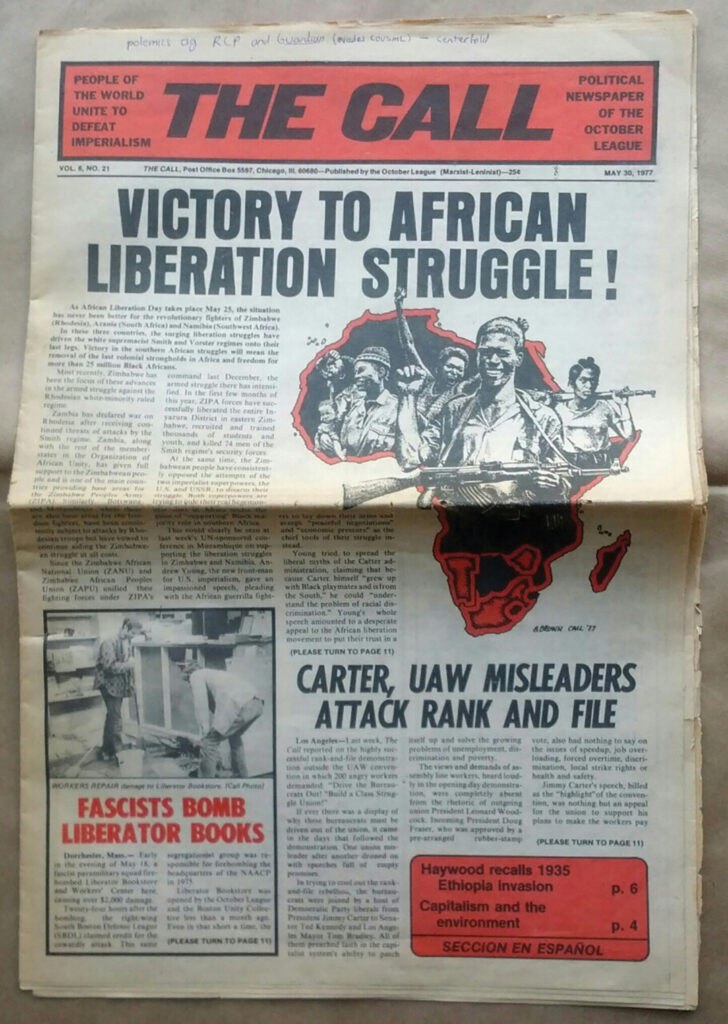
Source: radicalarchive.tumblr
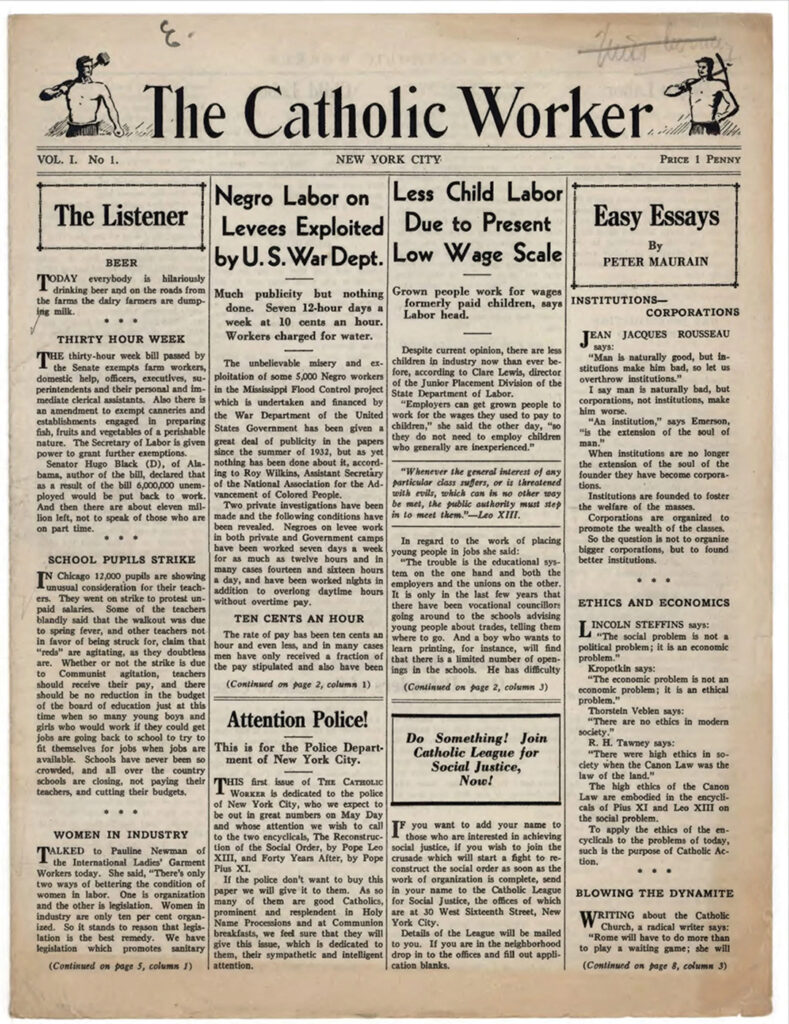
Source: catholicworker.org
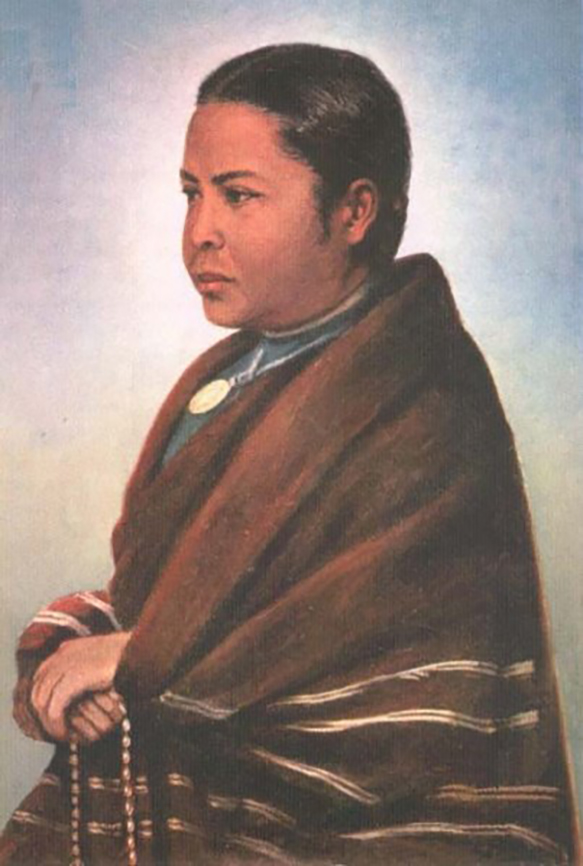
MOTHER OF THE CHURCH IN MADAGASCAR
Blessed Victoire kept the faith alive when the missionaries were expelled from Madagascar, and encouraged Catholics to practice their faith in times of persecution. She continues to be an inspiration of true Christian life, devoting herself to serving others, especially the poor and the marginalised.