
WORK AND HUMAN DIGNITY
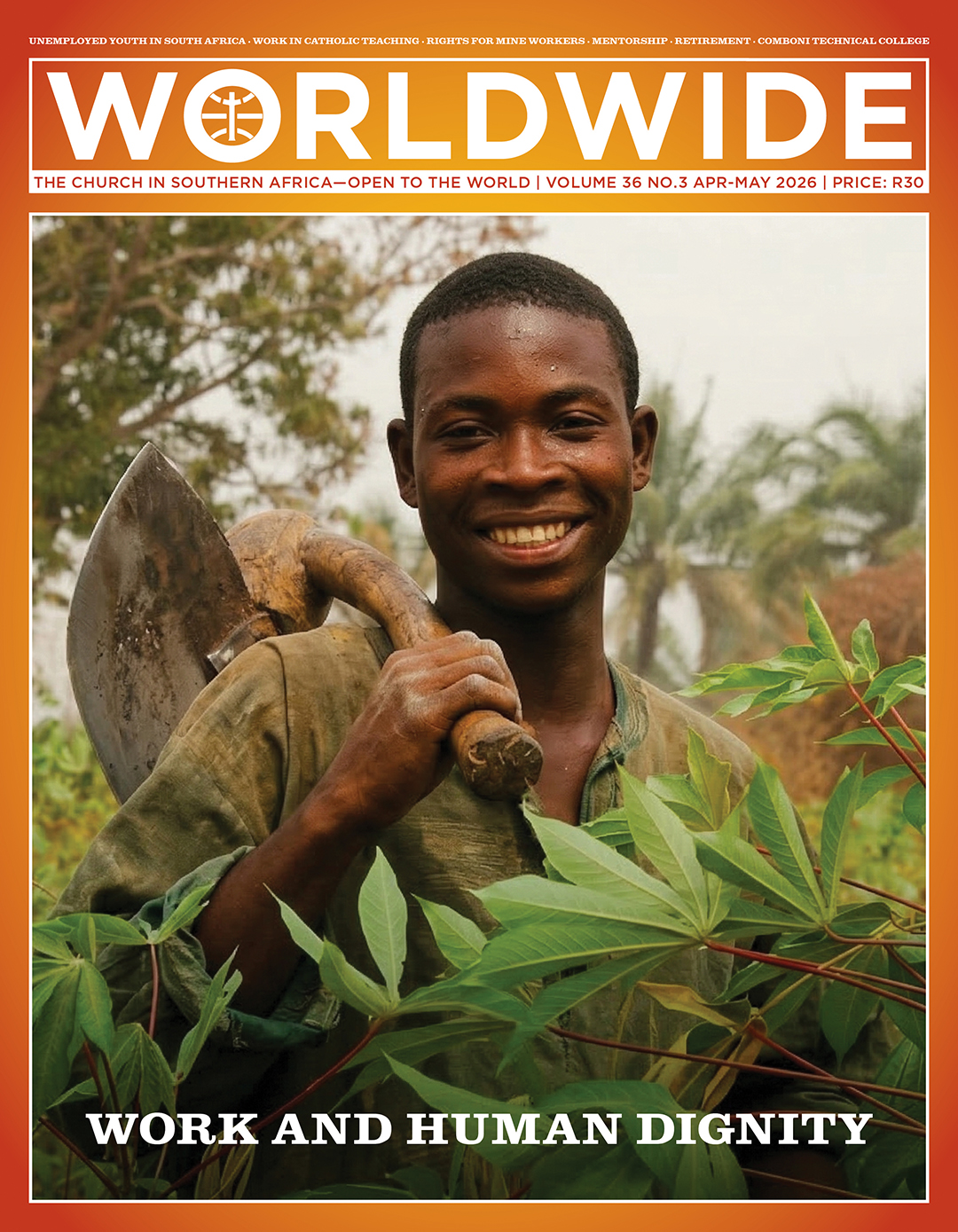
A young farmer holding a hoe in a field of cassava plants. In Africa, cassava is the second most important staple food after maize, providing the primary energy source for approximately 40% of the population. Due to high levels of unemployment, small- scale farming provides a dignified way of self-sustenance.
FOCUS • HOPE FOR YOUTHS

OUTREACH – CHRISTIAN BROTHERS’ COLLEGE MOUNT EDMUND PRETORIA
In a world often marked by isolation and indifference, outreach teaches students that faith is lived through presence and action. It helps counter a culture of selfishness by forming young people who understand that love must be active and sacrificial.n
BY Kati Dijane | Catholic Journalist, Johannesburg
YOUTH UNEMPLOYMENT remains one of the most pressing challenges facing South Africa today. Despite government interventions and economic reforms, millions of young people continue their struggle to find meaningful work or opportunities to develop their skills. In this difficult landscape, the Catholic Church in Southern Africa is on the forefront of finding ways and means to give hope to the young people who face uncertain futures.
Through pastoral care, skills initiatives, partnerships and career guidance programmes, the Church seeks not only to respond to the crisis but also to empower young people to rediscover hope and purpose.
The harsh reality of youth unemployment
According to recent statistics presented to the Portfolio Committee on Employment and Labour, South Africa continues to experience extremely high youth unemployment rates. While the national unemployment rate stood at 31.9% in the third quarter of 2025, unemployment among young people aged 15–24 reached 58.5%, while those aged 25–34 experienced a rate of 38.4%.
Over the past decade, the situation has worsened significantly. The unemployment rate among young people aged 15–34 increased from 36.9% in 2015 to 43.7% in 2025. Even more concerning is the growing number of young people classified as NEETs, those in neither employment, nor education or training. Statistics South Africa reports that approximately 3.5 million young people aged 15–24 fall into this category.
Behind these statistics are stories of frustration, lost potential and broken dreams. Many young people leave school or university hopeful for the future, only to find themselves unable to secure employment.
For the Church, this reality is not just an economic issue, it is a pastoral and moral concern.
A Church that accompanies
The Catholic Church understands youth unemployment as part of the broader call to accompany young people in their lives. Inspired by the Church’s social teaching and the call to solidarity, Catholic institutions and ministries seek to walk alongside young people, especially those who feel marginalized by society.
Although the Church does not always have the resources to actually create employment opportunities on a large scale, it plays a crucial role in supporting young people through guidance, formation and advocacy.
Ntlantla Madimane of the Justice and Peace Department in the Archdiocese of Johannesburg explains that the Church recognizes that solving unemployment requires collaboration.
“The Church itself does not have a specific programme to help youth tackle unemployment,” he says. “It requires deliberate collaborative efforts between government, industry and all institutions, especially higher education institutions.”
However, he adds, this does not imply that the Church remains passive. On the contrary, many Catholic initiatives aim to equip young people with the mindset, skills and networks needed to build their futures.
Career awareness and employability initiatives
One of the key responses from the Church has been the development of programmes focused on career awareness and job readiness.
The Justice and Peace Department in the Archdiocese of Johannesburg has launched initiatives designed to help young people to better understand career opportunities and to prepare for the world of work.
Since 2023, the department has organized career expos in parishes and local communities, bringing together professionals, industry representatives and young people.
These events create opportunities for young people to interact directly with professionals and learn about different career paths.
“We bring young people to be exposed to industry players face to face,” explains Madimane. “Even if it is just professionals speaking about their professions, it inspires young people to dream again.”
Parishes are now encouraged to host at least two career expos each year to ensure that young people receive consistent guidance.
For many participants, these events provide their first exposure to real-life career possibilities and the skills required to pursue them.
Starting early: Guiding young people in school
Another important aspect of the Church’s approach is early intervention.
The Justice and Peace programme works with learners as early as Grade 9 to help them make informed decisions about subject choices that will shape their future opportunities.
In partnership with institutions such as universities, Technical and Vocational Education and Training colleges and the Department of Higher Education and Training, the Church provides guidance on career planning and subject selection.
This early engagement helps prevent a common problem where learners complete school without the qualifications required for certain career paths that they wish to pursue.
“We promote subject selection at Grade 9 so that when learners enter Grade 10, they have chosen the right subjects that will carry them through to matric,” says Madimane.
In Grades 11 and 12, the focus shifts toward practical preparation for employment. Programmes include job shadowing opportunities, CV-writing workshops and training in workplaces, ensuring job readiness.
Changing mindsets: From jobs to work
One of the most powerful contributions the Church makes is encouraging young people to rethink how they approach work and employment.
According to Madimane, many young people have been taught to merely pursue jobs rather than focusing on meaningful work.
“We must move away from the issue of getting a job and focus on getting purposeful work,” he says.
He explains that this distinction is important. A job may depend on external opportunities, but work, understood as using one’s gifts and talents to solve problems, can lead to entrepreneurship, innovation and self-employment.
The Church encourages young people to recognize their talents as gifts from God and to use them creatively in serving their communities.
“When God gives us blessings, he gives them so that we can have work for life,” Madimane says.
Through workshops and mentoring programmes, young people are encouraged to develop entrepreneurial thinking and explore opportunities beyond traditional employment.


to economic freedom. Credit: freepik.com
Partnerships that create opportunities
Recognizing that unemployment cannot be solved in isolation, the Church has actively built partnerships with various organizations.
Madimane says that the Justice and Peace Department collaborates with institutions such as the Department of Higher Education and Training, the Department of Employment and Labour, the National Youth Development Agency, Sector Education and Training Authorities, TVET colleges and universities, and private companies offering skills training.
These partnerships allow the Church to link young people up with learnerships, internships and skills development programmes.
Many of these opportunities include stipends and practical training, both of which increase participants’ chances of future employment.
Through its network and database of young people, the Church helps match candidates with available opportunities.
Since 2023, these partnerships have helped more than 130 young people secure permanent employment, he says.
While the numbers may seem small compared to the national unemployment crisis, each success story represents a life changed.
Addressing the skills gap
Another challenge identified by employers is the gap between academic qualifications and the skills required by the labour market.
Through its programmes, the Church encourages young people to continuously develop their skills and remain adaptable.
“We must move away from the issue of getting a job and focus on getting purposeful work.” Mr Madimane.
“We encourage young people to be flexible and adaptable,” Madimane explains. “They must understand that when they graduate, opportunities might not come immediately.”
Skills development programmes often focus on practical competencies that enhance employability.
Learnerships, internships and short courses allow young people to gain experience and broaden their expertise while searching for permanent work.
Forming character and leadership
Beyond technical skills, the Church also recognizes the importance of character formation.
Employers frequently identify a lack of critical thinking, discipline, ethical behaviour and leadership among job applicants.
For this reason, the Church encourages parishes to involve young people in parish structures such as pastoral councils and finance committees.
This exposure helps young people develop leadership skills and understand ethical decision-making.
By participating in church leadership structures, young people gain experience that can prepare them for future responsibilities in society.
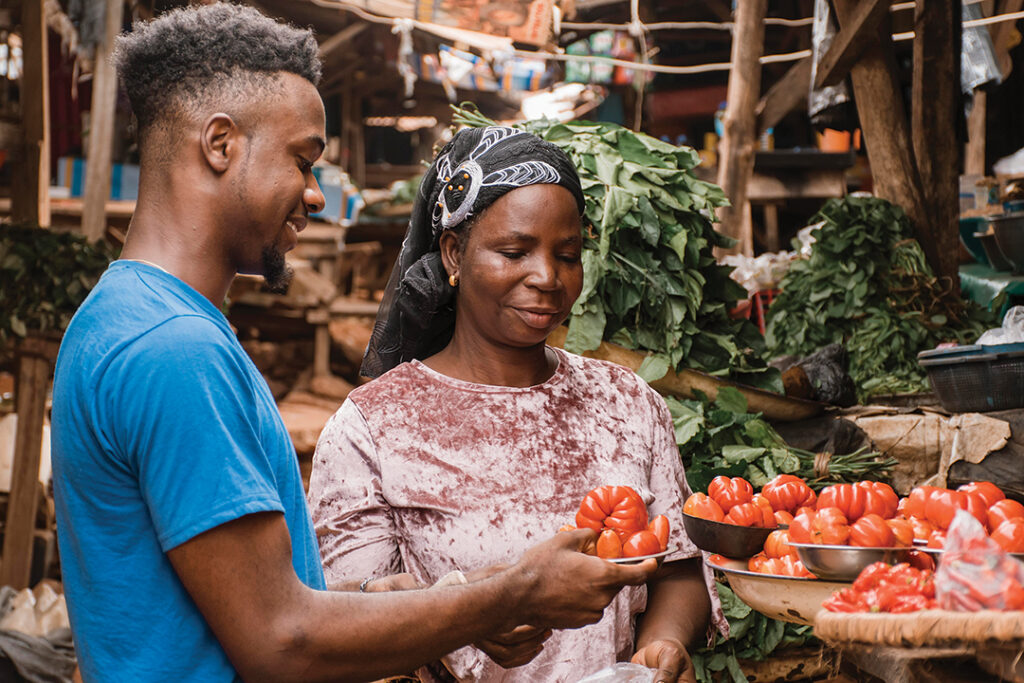
on small-scale farmers for their stock. Credit: freepik.com
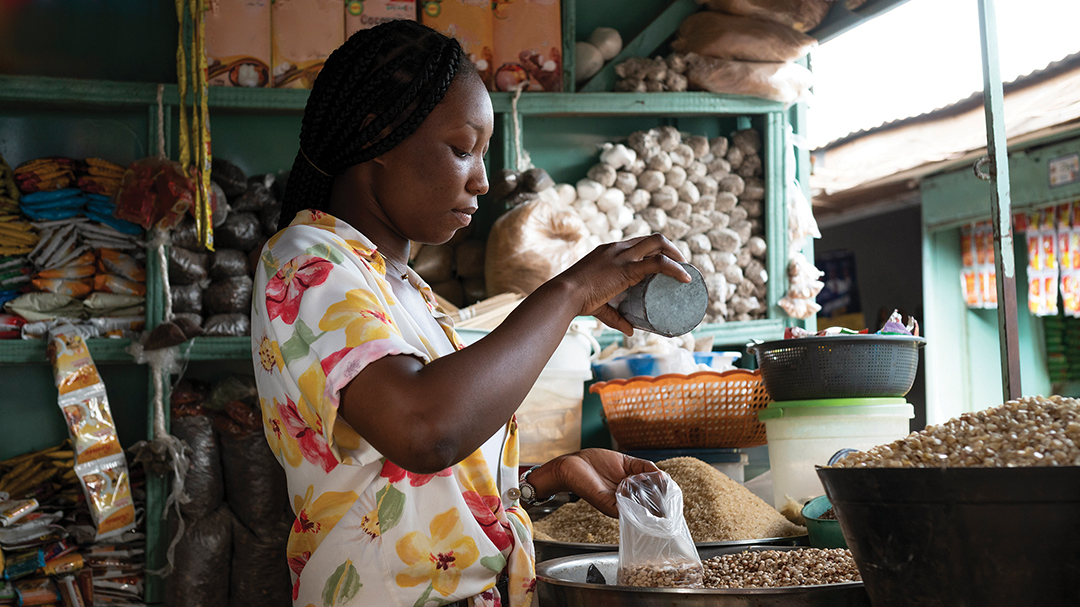
when it comes to any form of work. Credit: freepik.com
A vision for the future
Looking ahead, the Church hopes to establish resource centres dedicated to youth empowerment. These centres would provide career guidance, skills development training and mentorship programmes for young people, particularly those who are not in education, employment or training.
The vision is to create safe spaces where young people can access information, build networks and develop the confidence to pursue their dreams.
Although funding remains a challenge, Church leaders believe that these initiatives could eventually be replicated across dioceses throughout Southern Africa.
Despite the enormity of the unemployment crisis, the Church continues to offer hope.
Restoring hope
Despite the enormity of the unemployment crisis, the Church continues to offer hope.
Through accompaniment, formation and advocacy, the Catholic community seeks to remind young people that they are not alone.
The Church’s mission is not only to address material needs but also to nurture dignity, resilience and faith.
For many young people who feel overlooked and marginalized by society, the Church provides something equally important as employment opportunities: the assurance that they matter.
Reference:
https://www.parliament.gov.za/

OUTREACH – CHRISTIAN BROTHERS’ COLLEGE MOUNT EDMUND PRETORIA
In a world often marked by isolation and indifference, outreach teaches students that faith is lived through presence and action. It helps counter a culture of selfishness by forming young people who understand that love must be active and sacrificial.n