
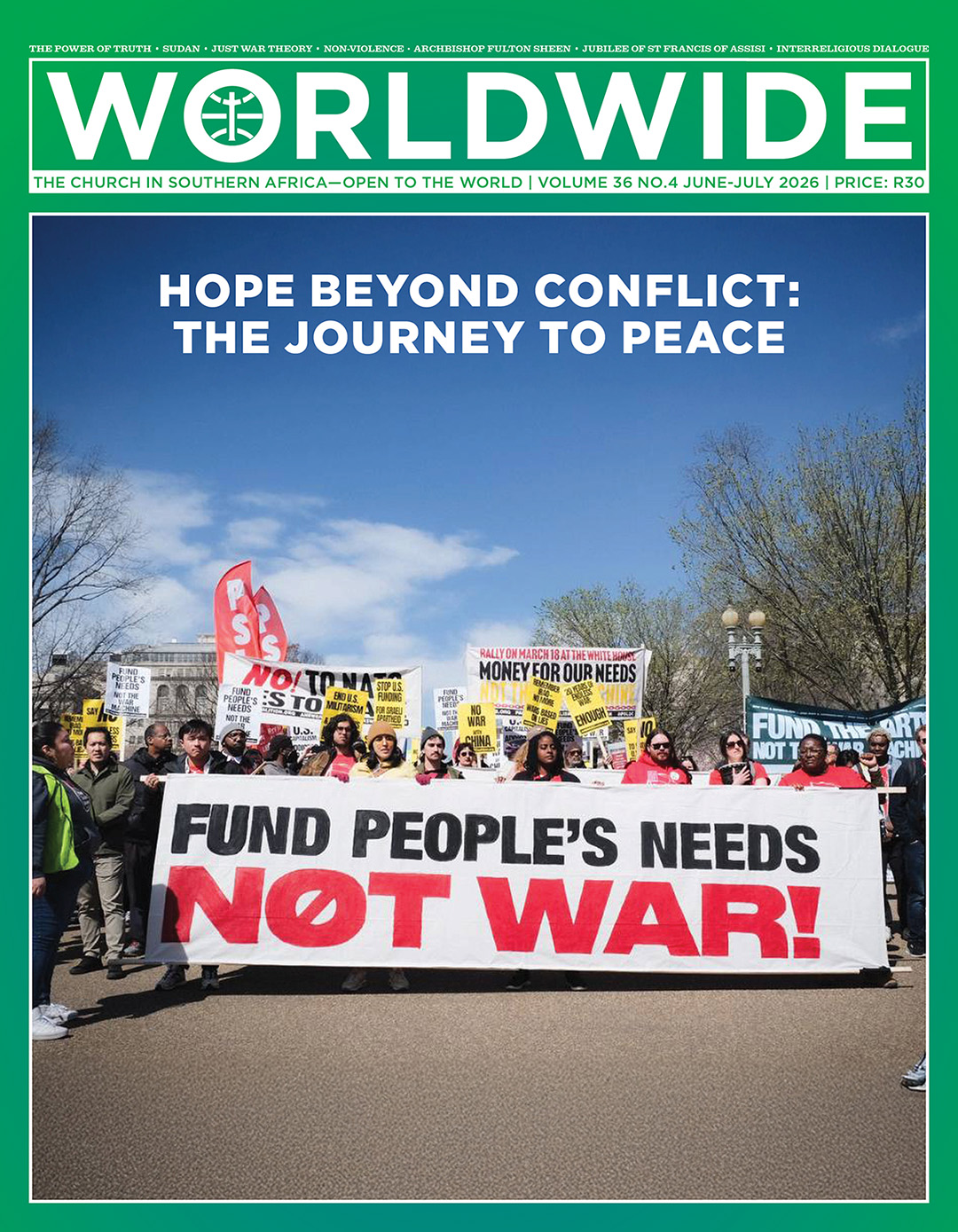
HOPE BEYOND CONFLICT: THE JOURNEY TO PEACE
“It is no coincidence that repeated calls to increase military spending, and the choices that follow, are presented by many government leaders as a justified response to external threats. The idea of the deterrent power of military might, especially nuclear deterrence, is based on the irrationality of relations between nations, built not on law, justice and trust, but on fear and domination by force.”
Message of Pope Leo XIV for the World Day of Peace 1 January 2026.
Cover Photo: Protesters in Ohio rally against US funding for the Russia‑Ukraine war, March 18, 2023. | Credit: Vincent Tsai/Peoples Watch
Reflection • Peace Building
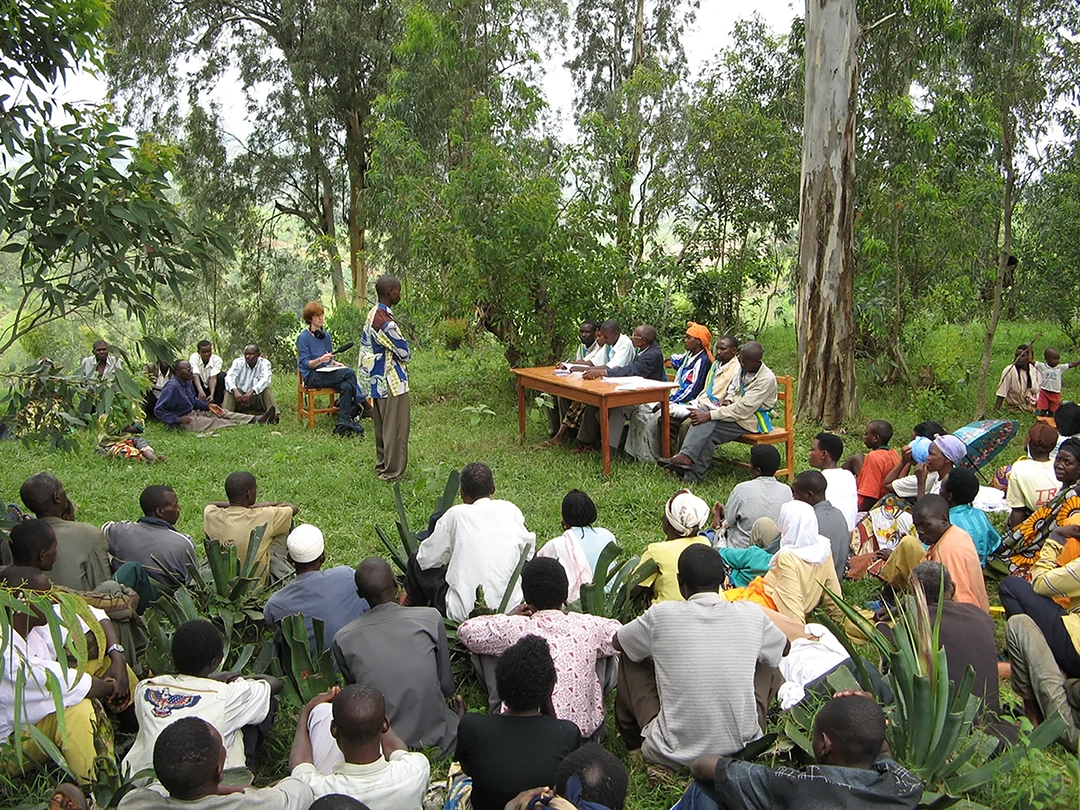
Credit: theworld.org
Reimagining Non-Violence From Below: African Communitarian Ethics As A Source And Resource For Grassroots Peacebuilding
The discourse on non-violence is pertinent, given the ongoing wars worldwide, which affect the global community. It is particularly relevant for the African continent, where many countries have experienced years of post-independence conflicts.
BY FR OSCAR MOMANYI SJ
THE SECOND African Synod took place in 2009, with the theme of reconciliation, justice, and peace. That theme underscored the Synod’s focus on how the church in Africa can help address conflicts and violence on the continent. In its Proposio 21, the Synod’s preparatory commission proposed that “an African Peace and Solidarity Initiative be established to intervene in an act of solidarity and assist the local Church in conflict resolution and peacebuilding throughout the continent with its wise counsel on justice, peace, and reconciliation. This initiative will draw on those within our Church who have experience, integrity, and respect for others.”
Elusive Peace
Almost twenty years later, peace remains elusive on the African continent, which continues to experience violent conflicts, mainly in the Sahel, the Horn of Africa, and the Great Lakes Region. This reality begs the question: Why have reconciliation, justice, and peace remained so evasive on the continent? I argue that the lack and/or inadequacy of interventions from above, that is, those originating from the hierarchical ecclesial authorities, governments, and non-governmental organizations, could be the main reason. These top-down interventions do not sufficiently account for local contexts, lack lasting impact, and offer only superficial, diagnostic remedies to conflicts. Additionally, I note that most practitioners of nonviolence on the continent who adopt a perspective from above seem to rely on Western concepts that do not adequately reflect local realities. Seldom do these practitioners draw on African cultural wisdom and resources in African ethics and spirituality. This deficiency in modern discourses on non-violence is a major cause of the proliferation of wars on the continent.
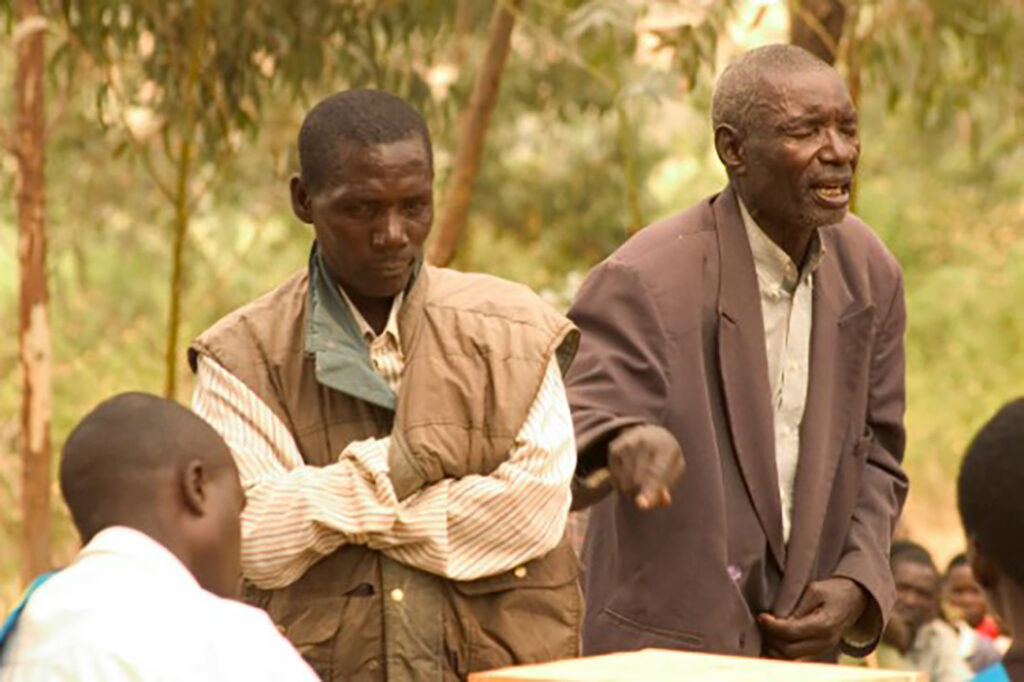
Credit: Elisa Finocchiaro Flickr | Source: peaceinsight.org
Bottom-Up Approach To Peace
I therefore propose that the future of peace and non-violence on the continent requires a solid appropriation of African cultural wisdom, spirituality, and ethics from below, that is, from the perspective of grassroots communities, thereby enabling the church, civil society organizations, and practitioners of non-violence in Africa to develop culturally contextual, organically evolving discourses on non-violence. Such an approach to non-violence should mediate between theory and concrete praxis from below.
Peace processes that originate from below are slow, demanding, time-consuming and difficult to achieve; they therefore require commitment and perseverance. Such initiatives have shown promise in contexts such as Sudan and South Sudan through the “people-to-people” peace process, and in Rwanda through the Gacaca process of peace and reconciliation. These locally rooted models of peacebuilding and reconciliation are culturally sensitive and can promote non-violent conflict resolution. These processes are anchored in African communitarian ethics and spirituality, epitomized by ubuntu, which values the dignity of members of the community. How can existing frameworks for African grassroots non-violence be promoted on the continent in a sustainable, enduring way? This is a question for ongoing discernment and the “reading of the signs of the times” by African practitioners of non-violence.
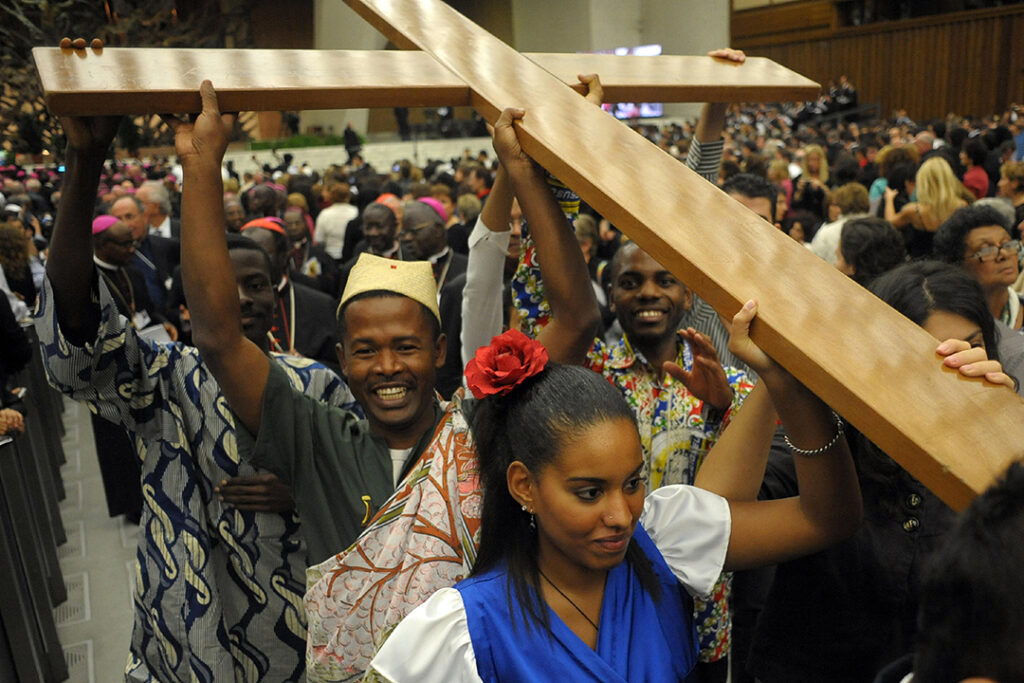
Whose Peace Is It?
An inherent weakness in the pursuit of non-violence and the promotion of peace in Africa is that it is largely a donor-dependent discourse, with non-violent campaigns often being driven by Western donor agendas, coupled with the need to satisfy donors’ priorities, which may not align with the needs of local communities. It is therefore necessary to cultivate ownership of peace processes and non-violence discourses in Africa in which local communities contribute resources to achieve and sustain peace, rather than to rely on external resources.
Peace processes from below are grounded in local popular wisdom and a “culture of encounter” that addresses the root causes of strife: socio-economic, political, and ecological challenges. Despite frequently being overlooked, there need remains for greater emphasis on the ecological aspects of peacebuilding in Africa, as ecology plays a significant role in peace-building. The need to intensify studies on the link between ecology and violent conflict in Africa is important. In this quest, Pope Francis’s call for the care for our common home in his encyclical letter Laudato Si’ (On the Care for Our Common Home) of 2015, can be an inspiration for non-violent movements at grassroots level, based on an ecological perspective.
Locally rooted models of peacebuilding and reconciliation are culturally sensitive and can promote non-violent conflict resolution.
Local Traditions, Global Responsibilities
Simultaneously, the approaches of non-violence from below need to be in dialogue with approaches from above, that is, those that come from the hierarchical teachings of the Church and from the international community, such as the one in Propositio 21 cited above. I believe that striking a balance between these two methodologies is crucial to attaining lasting peace. Focusing on African traditional models of peace-making is important, yet given the realities of globalization and how wars affect the whole human family, it is necessary to engage in dialogue with models from other parts of the world, since peace-making and non-violence call for a global perspective to have a lasting impact. Globalization has shown that local wars increasingly have global ramifications; hence, local as well as global perspectives on non-violence must be considered in dialogical tension. As violent conflicts have global consequences, peacebuilding and non-violence are both local and global human responsibilities.
THE SOCIAL IMPACT OF EVANGELICAL POVERTY: AN ANTIDOTE TO CORRUPTION?
A young Dominican priest in Kenya shares his thoughts on the malaise of his nation. He does not hide his disgust for the many cases of corruption registered and denounced every day, and for the fact that nobody seems to be able to get to grips with this scandalous situation. Reflecting on his religious consecration, he dares to propose an astonishing remedy: the rediscovery of the profound anthropological significance of ‘evangelical poverty’, a poverty which nourishes that hunger and thirst for justice that God has promised to satisfy.