
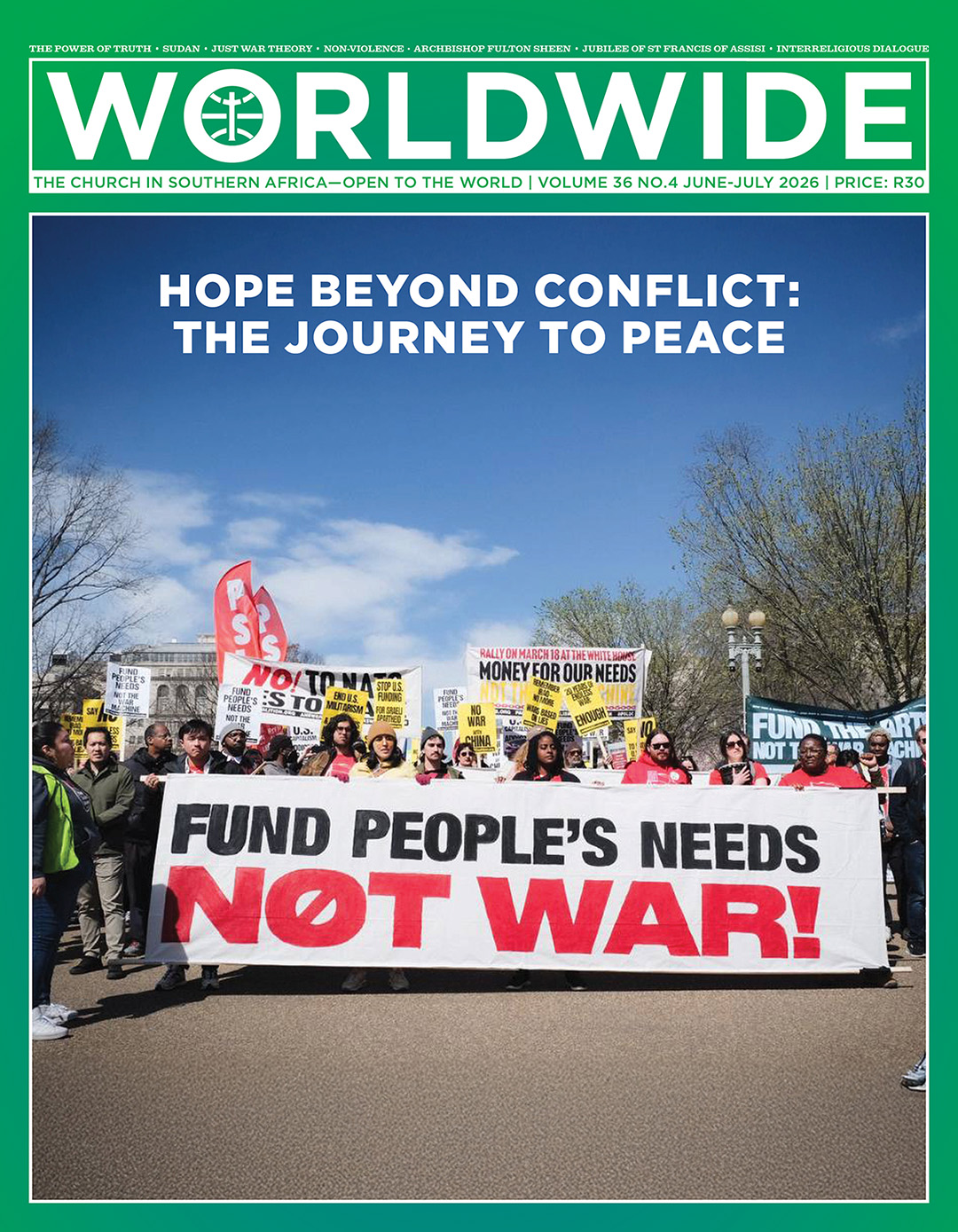
HOPE BEYOND CONFLICT: THE JOURNEY TO PEACE
“It is no coincidence that repeated calls to increase military spending, and the choices that follow, are presented by many government leaders as a justified response to external threats. The idea of the deterrent power of military might, especially nuclear deterrence, is based on the irrationality of relations between nations, built not on law, justice and trust, but on fear and domination by force.”
Message of Pope Leo XIV for the World Day of Peace 1 January 2026.
Cover Photo: Protesters in Ohio rally against US funding for the Russia‑Ukraine war, March 18, 2023. | Credit: Vincent Tsai/Peoples Watch
THE LAST WORD

The Old and the Young: A Reciprocal Response to God’s Call
“The LORD called Samuel a third time, and Samuel got up and went to Eli and said, ‘Here I am; you called me.’ Then Eli realized that the LORD was calling the boy” (1Sam 3:8).
BY REV DR ANTONY SITUMA | SCRIPTURE LECTURER, ST MATTHIAS MULUMBA SENIOUR SEMINARY TINDINYO, KENYA
IN THE biblical episode presented in 1Samuel 3:1-20, there is an interesting scenario depicting a young boy eagerly obeying an elderly man, and an elderly man patiently addressing the boy’s pressing concerns. Both, in their own ways, obey God; they respond to God’s call through the dialogue that ensues between them.
Society today is marked by a growing disconnect between the young and the old. The intergenerational crisis is causing deep rifts in families, workplaces, and institutions of learning. The young and the old seem to be on different wavelengths. Generations are now classified as X, Y, Z, Alpha, and Beta, and there appears to be no cohesion among them. Generation Z (GenZ) seems to be rapidly changing the status quo in day-to-day societal activities. The young are diverging from the wisdom of their parents and elders and are choosing instead the myopic advice of their peers, leading to unnecessary pitfalls and widespread interpersonal crises. The elders, on the other hand, are tagging the young as stubborn and uncultured. These divisions are breaching the foundations of trust, thereby posing a clear and present danger to the future of mutual coexistence in society.
This episode of the call of Samuel highlights the importance of social integration and inter-generational solidarity. It demonstrates to society how the young and the old should interact. Both need one another to respond fully to God’s call. Patience is needed when listening and responding, be it three times or even a fourth time. It needs patience to give directions and instruct accordingly, three times and even a fourth time. It took time for both Eli and Samuel to discover God’s intention. Eli’s eyes were heavy with sleep; Samuel did not know the Word of God. Eli had to keep sending Samuel back to sleep without hesitation, while Samuel had to promptly go back to him whenever he heard the call. Both had to persevere in this experience to be able to encounter God.
The young need to heed instructions given by the elderly, just as Samuel adhered to the directives given by Eli. The elderly, on the other hand, have the obligation to seek the counsel of the young in understanding the changing circumstances of the world, just as Eli requested Samuel to deliver to him God’s message. Mutual obedience and respect bore fruit here for both. They played their roles well and ended up attaining their respective goals: Eli handed over leadership to the mentored boy (and not to his sons) and Samuel eventually became a great prophet.
Such mutual and reciprocal relationships can foster peaceful coexistence in society. On the one hand, Samuel resisted allowing familiarity to make him assume God’s voice in Eli, and on the other hand, Eli did not permit his superiority to cause him to ignore God’s message to Samuel. Samuel did not allow Eli’s history and family situation to stop him from guiding him to listen to and respond appropriately to God’s call. Eli did not downplay Samuel’s tender age and family background and instead chose to receive divine communication from him.
May God lead the new generation and their elders to choose a reciprocal response to God’s voice and to help each other to remain faithful to God’s call. May the reciprocal responses help cultivate the virtues of humility and willing obedience in both the young and the elderly. May the interaction with the Gospel help improve inter-generational relations at the family, community, and societal level.
Reflection Questions
- How can I mentor young people to discover and accept God’s call?
- What lessons do I receive from the young ones who have/have not responded to God’s call?
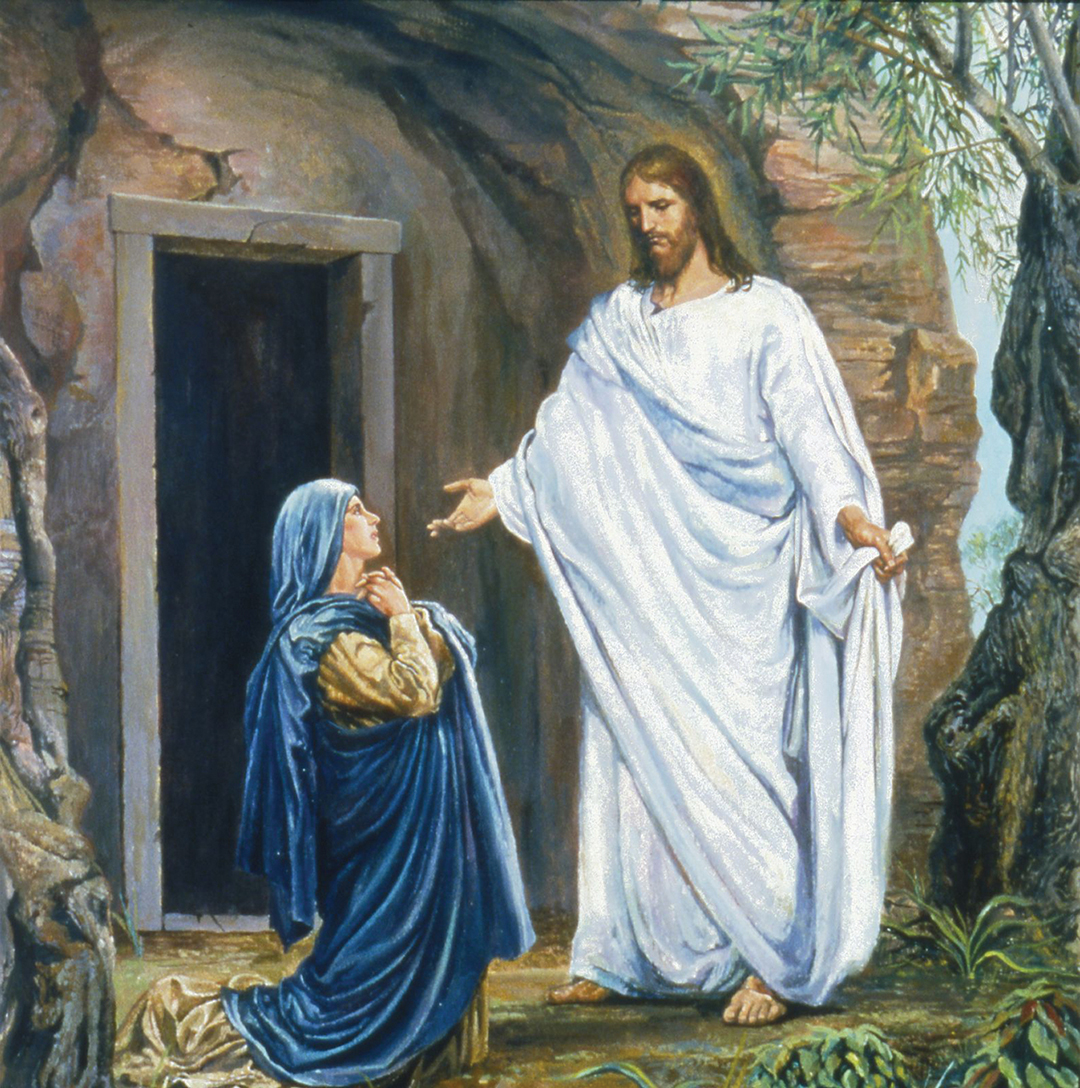
The Easter Victory: Overcoming the Structures of Sin in the Labour Domain
The message of the resurrection speaks to all our human realities. The victory of Jesus on the cross belongs to all of us and it must have an impact even on our various labour situations. This victory is purely objective and intrinsically universal.
“No one has greater love than this, to lay down one’s life for one’s friends” (Jn 15:13).