

MISSION TO LOVE
Pope Leo XIV smiles while blessing a baby in St Peter’s Square—a gesture reflecting his closeness to the “little ones.” In his message for the centenary of World Mission Day in 2026, the Pontiff emphasizes: “The mission of the disciples and the Church as a whole is to continue the mission of Christ in the Holy Spirit: a mission born of love, lived in love, and leading to love” (§ 3).
Photo Credit: Francesca Pollio Fenton/aciafrica.org
RADAR
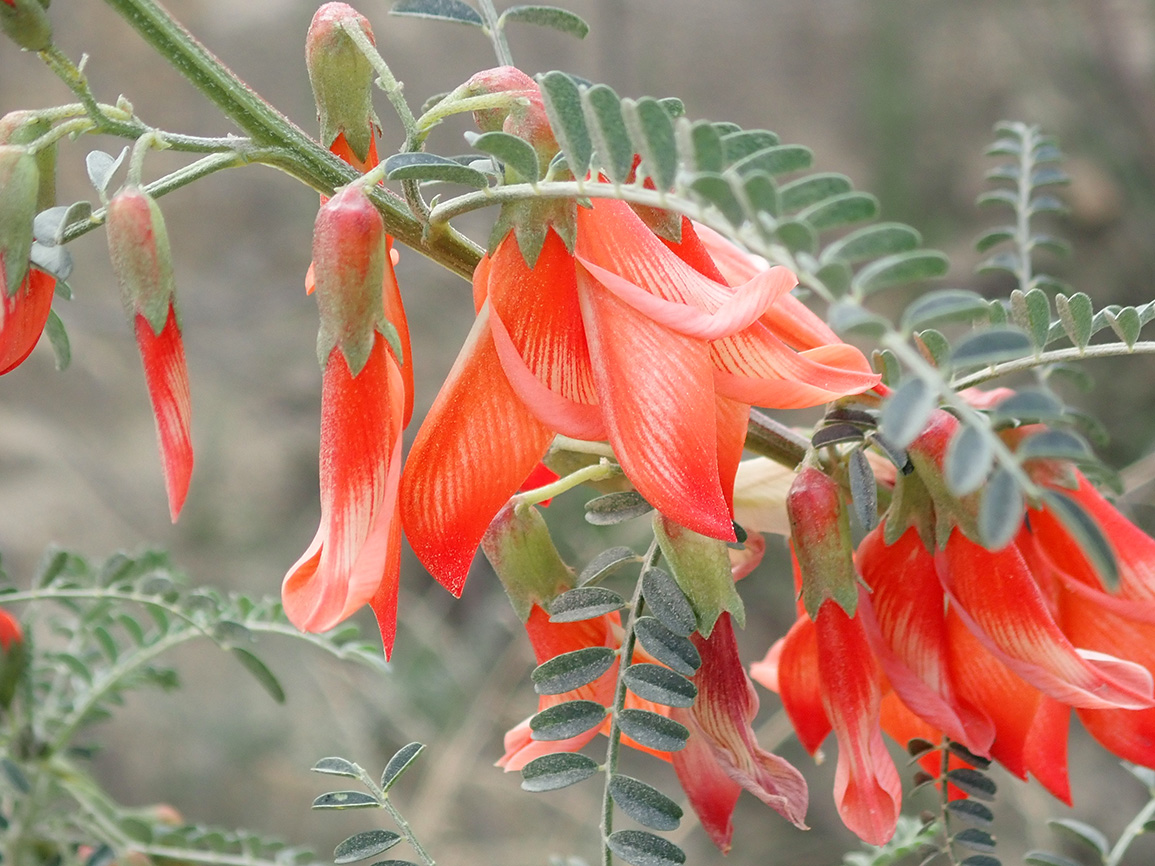
NWU SCIENTISTS VALIDATE POWER OF MZANSI’S INDIGENOUS CANCER BUSH
North-West University researchers have discovered that the so-called cancer bush shows powerful laboratory activity against aggressive and drug-resistant cancers. This breakthrough bridges traditional Mzansi remedies with modern science, paving the way for an affordable, locally manufactured pharmacy product by 2027.
BY Vateka Halile
FOR GENERATIONS, Mzansi’s indigenous plants have been passed down from generation to generation, serving as the foundational treatment for countless illnesses. While some of these botanical remedies remain deeply sacred, modern scientists are increasingly studying, validating, and documenting their medicinal properties.
In a major recent breakthrough, North-West University (NWU) revealed that Lessertia frutescens, commonly known as cancer bush (kankerbos), has shown powerful activity in laboratory studies against several aggressive forms of the disease, including colorectal cancer and drug-resistant small-cell lung cancer.
In a conversation with Food for Mzansi, Professor Chrisna Gouws from the Centre of Excellence for Pharmaceutical Sciences at North-West University’s Faculty of Health Sciences explained that the research team tested extracts from the indigenous plant on cultured human cancer cells and more advanced, laboratory-grown “mini-tumours”, known as spheroids.
“Lessertia frutescens has shown significant anticancer activity against several different cancer types in our research,” she says.
VH: What makes the results of the Lessertia frutescens’ anticancer research particularly exciting for your team?
Prof G: What is very interesting and exciting is the apparent activity in drug-resistant cancers, such as resistant small-cell lung cancer, where known chemotherapies have limited to no activity. This provides us with new avenues to investigate for treatment options for cancers currently considered incurable.
VH: With the pharmacy product launch targeted for 2027, how will the raw plant material be sourced? Is there a strategy to integrate smallholder and emerging farmers into this commercial supply chain?
Prof G: What is important to know is that the region greatly impacts the phytochemical composition of the plant and, therefore, significantly influences the biological activity of the extract. To date, we have mainly worked with plant material from the Western Cape region.
We will only source our plant material from commercial suppliers that have the necessary bioprospecting permits required by law for the product production. We are currently negotiating with them what their supply capacity will be. To ensure quality control and consistency, and to ensure the necessary permits are in order, this is the safest option for us at this initial phase of the process. This may change, depending on the commercial success of the product.
I do know that several of the main suppliers work with various smaller farms that can supply the material, but do not have the commercial reach to successfully distribute. That is probably the safest and easiest way for an emerging farmer to get into the supply chain, in my opinion. But the suppliers/distributors will have better insights, I think.
Chemotherapy can be very expensive and inaccessible in rural areas. A new plant-based treatment will be much more cost-effective and may be more accessible because it can be manufactured locally. An increase in demand for the plant material will also create economic opportunities through farming.
VH: What are the next scientific steps for the project, and when can patients expect to see a product on the market?
Prof G: Although many molecules have been identified and shown to contribute to the anticancer activity of the plant, the mechanism of action remains mostly unclear. We are therefore delving deeper now to try to understand how and why this plant works. The next phase of the study will include animal model testing later this year to confirm safety and efficacy before future clinical trials can be considered. At the same time, the researchers are developing a complementary medicine product that may be available in pharmacies by 2027.
VH: Given that standard chemotherapy often has harsh side effects, how does this plant-based alternative compare in terms of patient safety and wellness?
Prof G: An important consideration is that this plant has a long history of use and is considered non-toxic and safe for use. Its anticancer activity comes without the significant side effects known to occur with most standard chemotherapies. Lessertia has known boosting effects for the digestive and immune systems, and it can have mood-enhancing properties as well. It may therefore not only target the cancer but positively impact the patient as a whole at the same time.
Source: foodformzansi.co.za

CHURCH IN URUGUAY: POPE’S VISIT WILL STRENGTHEN FAITH AND HOPE
The Church in Uruguay has welcomed with great joy the announcement of Pope Leo XIV’s Apostolic Journey, which will take place from 6 to 8 November 2026 as the first leg of his visit to Latin America.