

LIVING WATER
Every act of care for creation becomes part of a global stream of hope.
The cover page is inspired by the 2026 Season of Creation theme. In this season, our hope is that “Christians would be immersed in the living water flowing from the throne of God, stepping in deeper and deeper, inspired by the Spirit of God, working together for the renewal of Creation”
(Cf seasonofcreation.org).
Witness • More Than Just Wood

Life Lessons from a Tree
In this article, the author shares her witness of how interaction with trees can be a beautiful opportunity to understand the seasons of our lives.
Text and Photos by Sherelle Myburgh | CBC Mount Edmund, Head of Religious Education, College
AS A young child, I was fortunate enough to grow up in a garden with two silver oak trees. It was under their shade that I played and created imaginary picture animals from the puffy clouds I saw. As an introvert sharing space with two older sisters, I found solace in these trees when I got into trouble or just wanted to escape the world for what, in modern terms, is “me time.” Only one of the trees had a branch low enough for me to reach without steps, so I would grab it and use all my strength to hoist myself up high enough to swing my leg over and sit on this bottom branch. After that, I could manoeuvre my way up higher and out of sight. As I lay on the branches, a whole new world opened up for me. I studied the rough bark that grazed my legs, watched busy ants running up and down, and played with the sticky, gummy sap. Feeling a cool breeze on my face and the gentle swaying of the branch beneath me, I connected with nature and God. I could also connect with myself, try to make sense of my thoughts and feelings, and pray.
The Bible and Trees
The Bible has many references to trees, starting in Genesis, when we hear of vegetation being created, and later, the tree and its fruit are central to the story of Adam and Eve being banished from the Garden of Eden. Jesus also used the parable of the mustard seed to explain how faith and God’s Kingdom can start very small but grow into something of great proportion. When in Jericho, I saw the sycamore-fig tree, sometimes referred to as the “sin-spreading tree”, said to have been climbed by Zaccheus. This brought back many childhood memories, and I felt myself yearning to climb it myself. It serves as a reminder that even sinners have the desire to see Jesus more clearly and to draw closer to him.
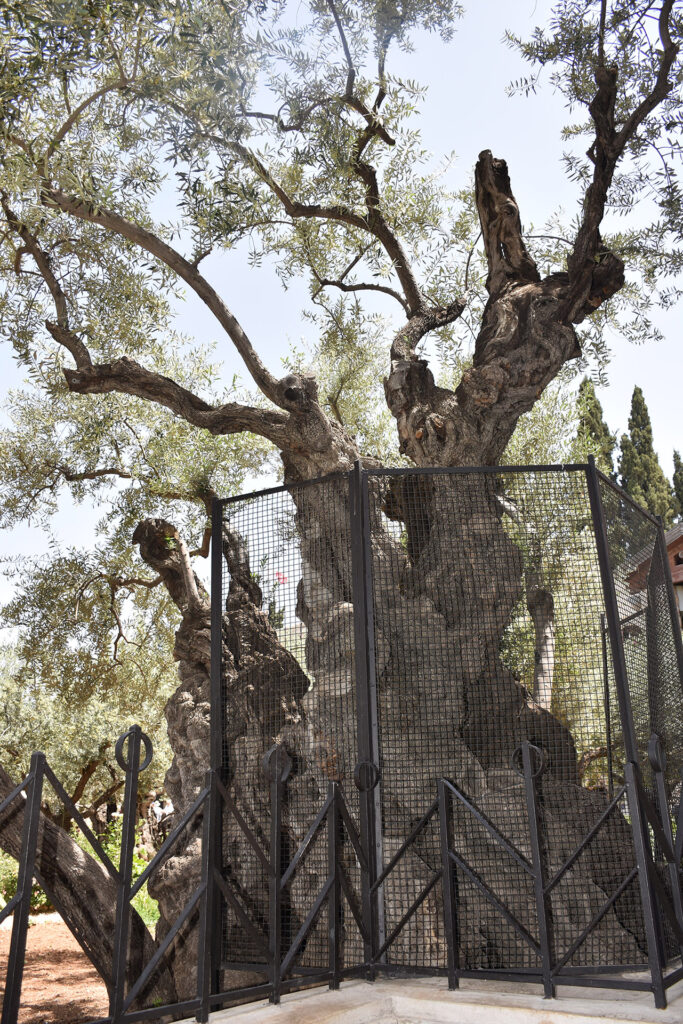
I was also in awe when I visited the Garden of Gethsemane and saw the oldest Olive tree, said to be over 2000 years old. It truly felt as if I was walking where Jesus had walked at the time.
In Matthew 7:15-20 Jesus says “Even so every good tree bringeth forth good fruit; but a corrupt tree bringeth forth evil fruit. A good tree cannot bring forth evil fruit, neither can a corrupt tree bring forth good fruit. Every tree that bringeth not forth good fruit is hewn down, and cast into the fire.”
This concept of good and evil, right and wrong, has influenced me as a teacher to encourage the youth to stay on the right path and do good in the world, for the “common good”.
Colossians 2:7 states: “rooted and built up in him, strengthened in the faith as you were taught, and overflowing with thankfulness.” This verse emphasizes the importance of being deeply rooted in Christ, growing in faith, and expressing gratitude. In our faith roots need to be strong.
Ubuntu and Trees
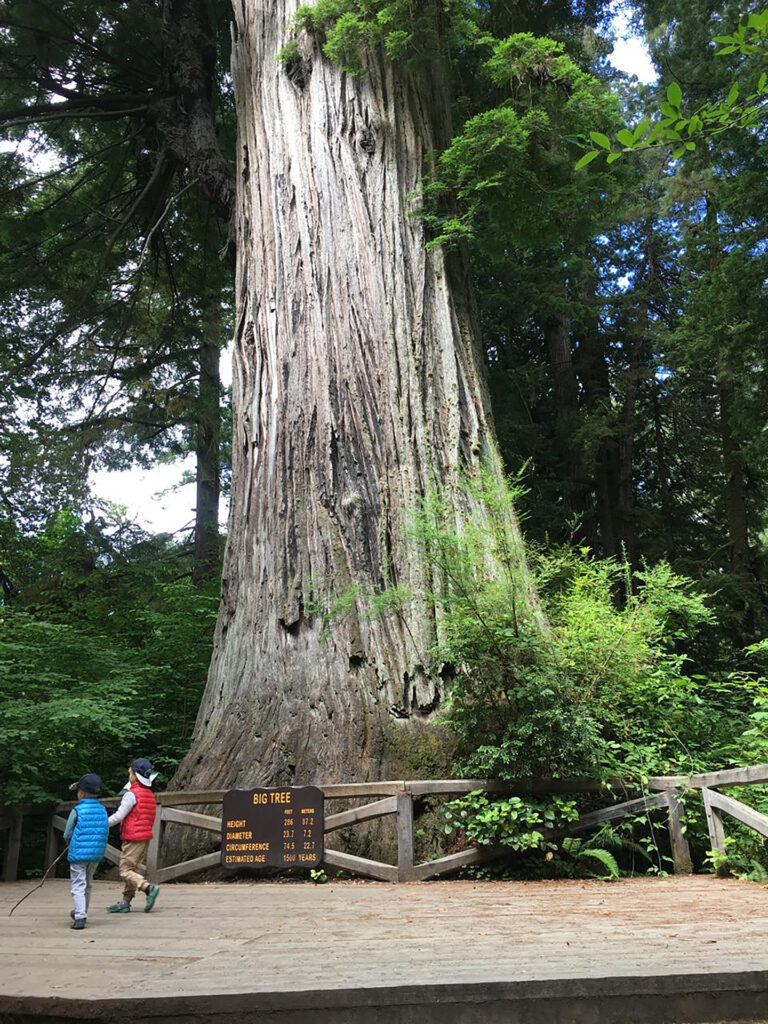
Redwood trees don’t have deep roots, but shallow roots that extend a mere 1.8 m into the soil. The roots spread out about 30 meters from the trunk. These roots bind and fuse together and entwine in the thick groves, to give Redwood trees adequate strength against the forces of nature. They become strong through to support others.
Spiritually, this means that faith in God can bear much fruit if lived in a community grounded in hope and love.
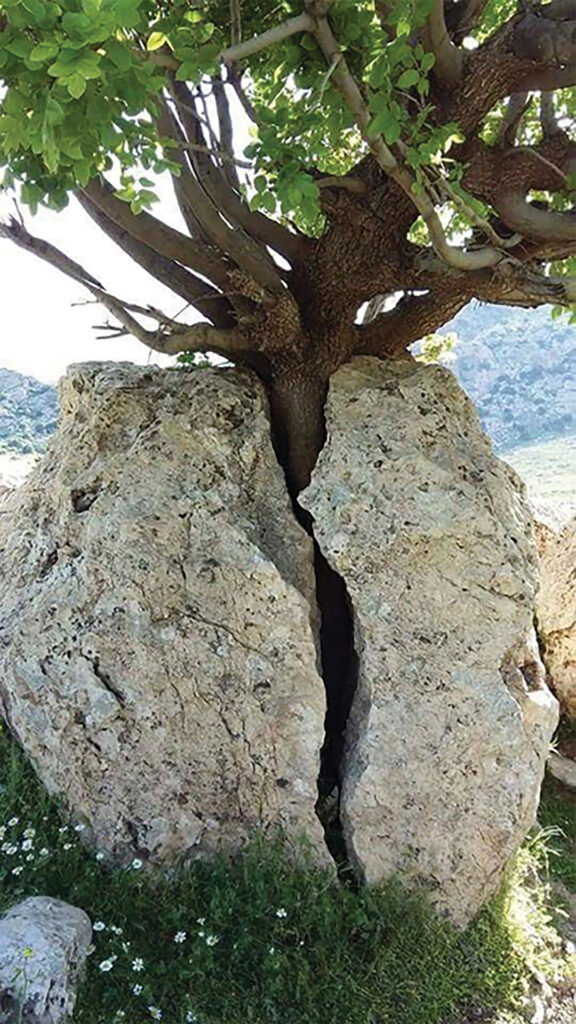
I have been fortunate enough to visit Angkor Wat in Cambodia and the Ta Prohm Temple. I thought initially while watching the “Tomb Raider” movie, that those trees were part of a movie set. My mind was blown away when looking at them in person and seeing how the roots from the two primary species, the towering silk-cotton tree and the creeping strangler fig reclaimed this ancient city. This got my mind thinking specifically about the importance of trees having strong roots. Just as roots crack through solid stone, where there is life, there is hope. Small, consistent efforts always bear fruit in the long run.
Roots are an expression of resilience and power. We sometimes see trees clinging to the side of a mountain against all odds, or roots forming a pattern in the grooves of a pavement walkway. We are well-aware that roots from creepers are strong enough to destroy walls or even break a rock in half. Have you ever noticed the shoots sprouting from a sawn-off tree trunk? Where there is life, there is hope. In Meghalaya, India, one finds the “Living Root Bridges”, where the roots are so long and are strong enough to form bridges for people to cross over.
Roots are an expression of resilience and power.
The 14th Dalai Lama, Tenzin Gyatso, said: “A tree with strong roots can withstand the most violent storm, but the tree can’t grow roots just as the storm appears on the horizon.” Gyatso knows that resilience is strengthened before a crisis arrives and, in the same way that a tree develops its roots over years, people develop inner strength through their values, relationships, habits, self-knowledge, and spiritual or emotional responses. When life’s storms come—be it loss, uncertainty, illness, failure, or major change—you draw on the roots you’ve already cultivated.
“The Tree of Life”
A few years ago, I was inspired by an article “The Tree of Life: A Simple Exercise for Reclaiming Your Identity and Direction in Life Through Story”, written by Nathan B. Weller, where he discusses the Tree of Life narrative therapy exercise, which he credits to Ncazelo Ncube and David Denborough. I conducted a retreat for parents on this concept. Looking at a tree and all its components, such as the soil its grounded in, its roots, trunk, branches, leaves, thorns, buds, flowers, fruits, and seeds, this can become a type of examen of life. One looks at and reflects on one’s history, values, strengths, and support, helping one to understand what anchors us when challenges arise.
As I approach the end of my teaching career, one question comes to mind: “What legacy do I leave in the hearts and minds of children?” I hope some will remember the times I spoke to them about caring for the environment, not littering, saving bees, and the importance of trees. Most importantly, I pray that their faith grows strong and remains deeply rooted in Christ, because Jesus took the tree of death in order for us to have the tree of life.
Jubilee Year Of Saint Francis – 800 Years After His Death: A Saint Of Our Times
Care for creation, love for the least among us, and commitment to peace and reconciliation are the legacy of the poor man of Assisi, who strove to conform to Jesus Christ.