
MISSION TO LOVE
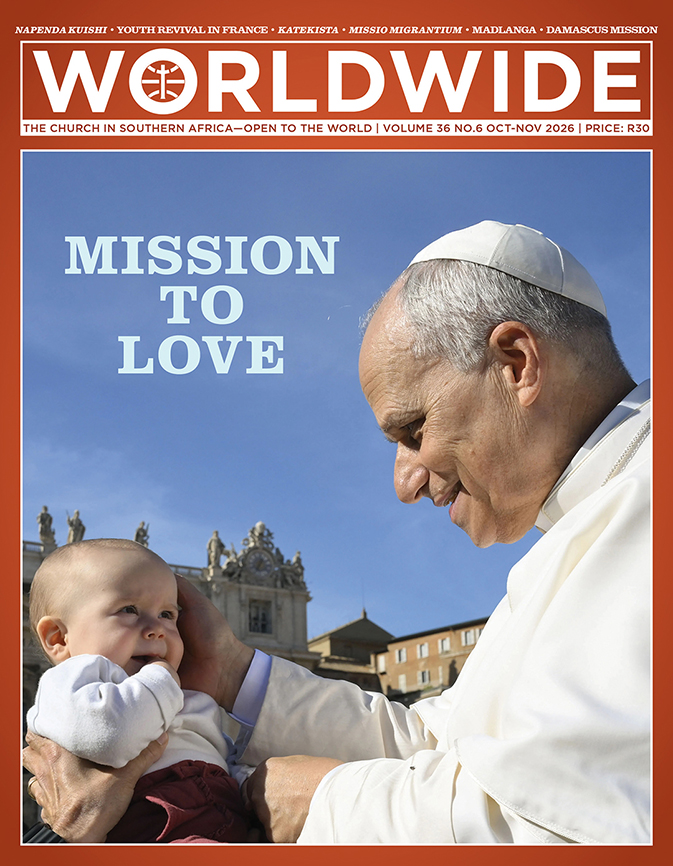
Pope Leo XIV smiles while blessing a baby in St Peter’s Square—a gesture reflecting his closeness to the “little ones.” In his message for the centenary of World Mission Day in 2026, the Pontiff emphasizes: “The mission of the disciples and the Church as a whole is to continue the mission of Christ in the Holy Spirit: a mission born of love, lived in love, and leading to love” (§ 3).
Photo Credit: Francesca Pollio Fenton/aciafrica.org
Special Report • MISSIO MIGRANTIUM
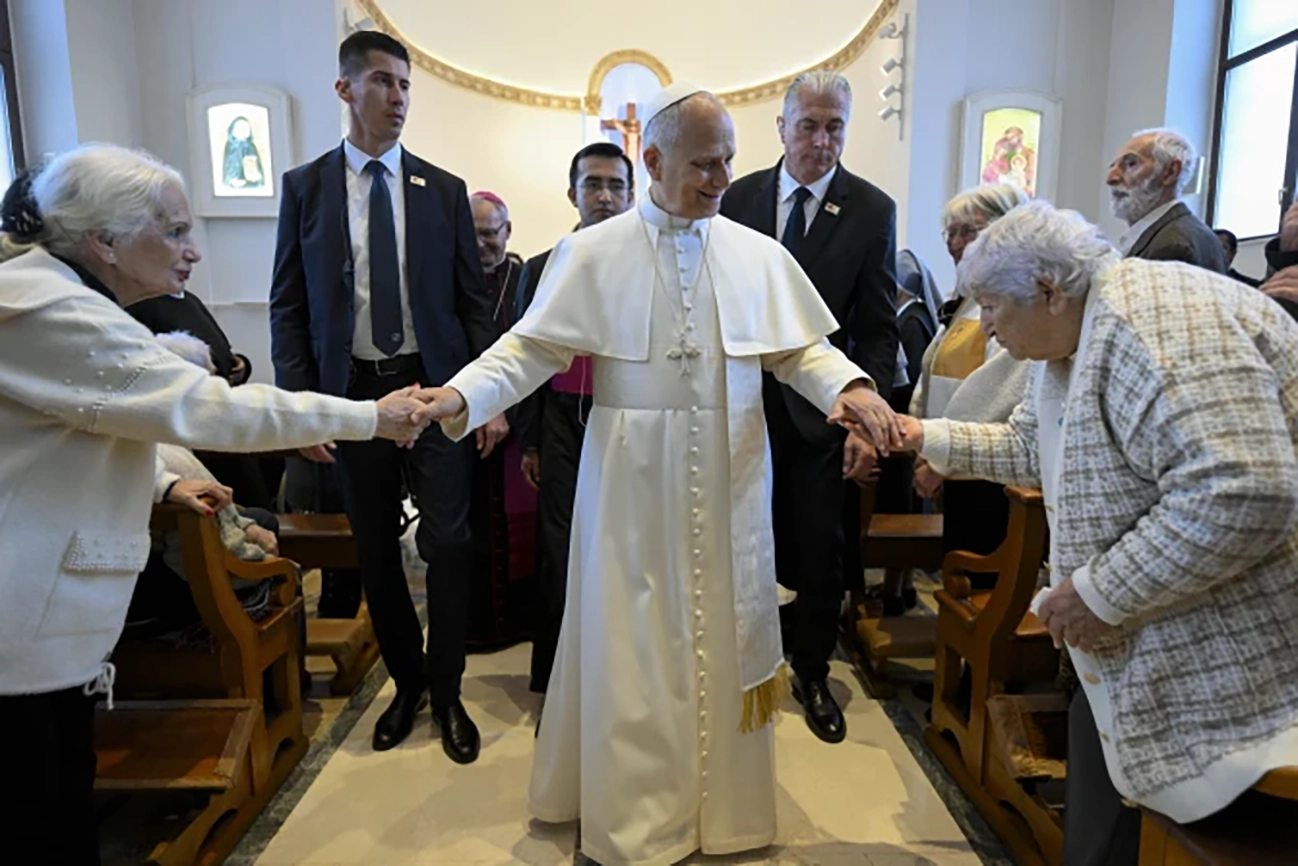
MISSION FROM THE MARGINS IN THE VISION OF POPE FRANCIS AND POPE LEO XIV
As the Church reflects on its missionary activities and endeavours during 2026 World Mission Month, the Second Vatican Council’s decree Ad Gentes remains neither a relic of an earlier missionary era nor a completed programme.
BY Rev Dr Isaac Mutelo OP | Pedro Arrupe University, Harare, Zimbabwe
THE AD GENTES is a living call for the Church to become one that is united in Christ, rooted among peoples and cultures, and courageous enough to proclaim the Gospel through witness, service, dialogue and love. Pope Francis endowed the Church with a memorable expression for this vocation: “Baptised and Sent: The Church of Christ on Mission in the World” (Pope Francis, 2019). Mission is not the task of a small group of specialists, nor simply the work of people who travel overseas. Every baptised person is sent. As Pope Francis wrote, “I am a mission, always; you are a mission, always; every baptised man and woman is a mission” (Pope Francis, 2019).
Today, Pope Leo XIV continues with the same missionary vision. This is apparent through his personal concern for young Churches, communities living amid conflict, migrants and refugees, and Christian minorities. The main question for missionary month this year is beyond the reliance on Ad Gentes. The reflection should centre on whether we are allowing its vision to shape the Church we are becoming.
From mission territory to mutual mission
The foundational sentence of Ad Gentes is as clear now as it was at Vatican II: “The pilgrim Church is missionary by her very nature” (Ad Gentes, 1965, para. 2). Mission is not primarily about religious expansion or cultural conquest, but rather a humble sharing of the love, freedom, reconciliation and hope made known in Jesus Christ. One of Ad Gentes’ most prophetic insights is that the missionary’s ultimate success is not measured by how indispensable the missionary becomes, but by whether the local Church becomes mature, responsible and missionary in its own right. One question can be raised here. Looking back over the last sixty years, has Ad Gentes worked? Fruits from different parts of the world show that its missionary vision has been partly realised. For example, it has worked wherever local Churches have grown in faith, developed indigenous leadership, formed catechists and pastoral workers, built communities around the Eucharist and the Word of God, served the poor, and become missionary beyond their own borders.
However, Ad Gentes also warned that missionary activity can never be treated as finished. Even where the Church is established, new circumstances arise constantly. Today, the Church encounters challenges such as migration, secularisation, conflict, displacement, economic injustice, religious intolerance, urbanisation and new generations with little living contact with the Gospel. Far from being merely geographical, the missionary frontier is also cultural, social, spiritual and human.
Pope Leo XIV has made this point clear. At the Jubilee of the Missionary World and Migrants, he stated: “a new missionary age opens up in the history of the Church” (Leo XIV, 2025b). He explained that mission can no longer be understood only as “departing” to faraway places; it is also about “remaining” among people, proclaiming Christ through hospitality, welcome, compassion and solidarity. His sentiments are crucial. The Church must still dispatch missionaries, including to places where the Gospel is little known. But she must also recognise that people are arriving at her doorstep. Migrants, refugees, international students, workers and displaced families are not simply recipients of pastoral care. They are fellow disciples, witnesses, and often missionaries themselves. Pope Leo XIV calls this missio migrantium: a mission carried out by migrants. According to him, Catholic migrants and refugees can bring spiritual vitality to communities that have become tired or closed in on themselves (Leo XIV, 2025a). They can also open paths of faith and create everyday opportunities for dialogue with people of other religions.
Small Churches and their Great Witnessing
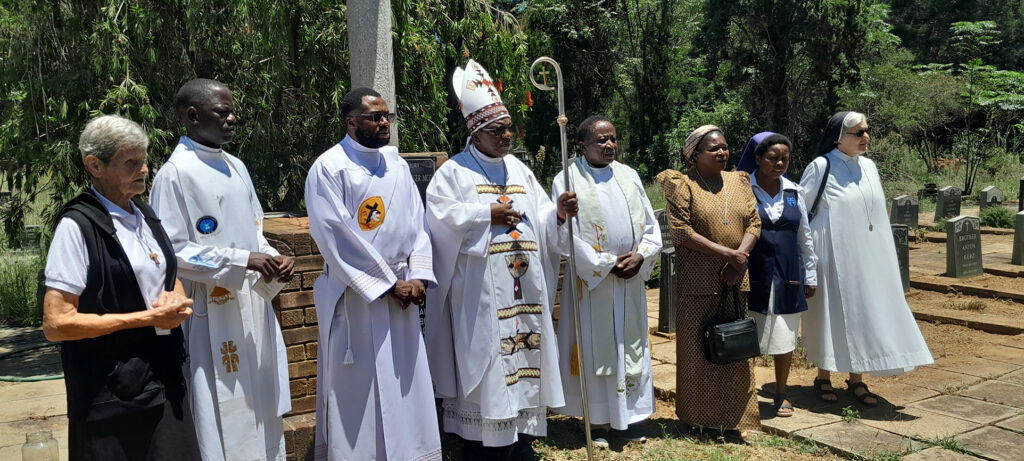
The relevance of Ad Gentes is especially visible in the small Churches of Asia, Turkey, the Middle East and other regions where Christians, especially Catholics, are a minority. In such places, the Church may have limited resources, few clergy, fragile institutions, and often little public influence. But smallness is not failure. Some small Churches have remained powerful signs of the Kingdom by living without fear, superiority or isolation. Moreover, in contexts where Christians live alongside Muslims, Buddhists, Hindus, people of traditional religions, or those with no religious affiliation, mission must be marked by respect, friendship, patient dialogue and practical love. This is not a weakening of proclamation. It is proclamation in the manner of Christ.
Ad Gentes teaches that Christians must be united to the people among whom they live “by esteem and love” (Ad Gentes, 1965, para. 11). They should share in the social and cultural life of their neighbours, learn their traditions, recognise the “seeds of the Word” already present among peoples, and give witness by lives of charity and service (Ad Gentes, 1965, para. 11). This vision is deeply suited to small Churches. For example, for a Catholic family in an Asian city, mission may mean being a faithful and welcoming neighbour. For a parish in Turkey, it may mean preserving a humble but visible Christian presence, offering hospitality, serving those in need, and building respectful relationships with people of other faiths. For a small community in a conflict-ravaged region, it may mean refusing revenge, praying for peace, sheltering the displaced, and remaining with the poor when others leave.
Far from being merely geographical, the missionary frontier is also cultural, social, spiritual and human.
While such acts may appear modest, the Gospel itself tells us that the Kingdom grows like a mustard seed (Mark 4:30-32). Pope Leo XIV has emphasised that faith often works quietly, through daily words and actions that may seem small or unsuccessful but eventually become instruments of God’s salvation in the world (Leo XIV, 2025a). The small Churches are therefore a credible sign of communion, reconciliation, and hope.
Pope Leo XIV’s Missionary Vision
Pope Leo XIV’s missionary teaching offers several priorities that deserve attention during Missionary Month. Firstly, he places communion at the heart of mission. His theme for World Mission Day 2026 is “One in Christ, United in Mission.” This is crucial because a divided, suspicious, or polarised Christian community weakens its own witness. Unity is not an optional internal concern, but is itself missionary. Only a reconciled community t can make the Gospel credible; otherwise, it remains theoretical.
Secondly, Pope Leo insists that unity does not mean uniformity. The Church becomes more missionary when different cultures, liturgical traditions, charisms, and forms of service can flourish in the one faith. This resonates strongly with Ad Gentes, which called for Churches to take root in the cultures of their peoples rather than remain foreign bodies within them.
Thirdly, the Pope has renewed concern for young Churches. In his address to the Pontifical Mission Societies, he described them as a primary means of awakening missionary responsibility among all the baptised and supporting ecclesial communities where the Church is young (Leo XIV, 2025c). Their practical work includes support for catechesis, pastoral programmes, church-building, health care, education, children’s formation and the cultivation of local priestly and religious vocations. This concern matters greatly for small Churches because missionary solidarity is not paternalism. Rather, it is an exchange of gifts. Older Churches can offer prayer, material resources, trained personnel and companionship while younger Churches offer revitalised faith, resilience, cultural vitality, missionary vocations and the witness of Christians who often live in proximity to poverty, persecution or social marginalisation.
Finally, Pope Leo links mission to peace and human dignity. For him, a world wounded by war, violence and injustice needs both the message of God’s love and the reconciling power of Christ’s grace (Leo XIV, 2025c). In this light, missionary work cannot be reduced to words alone. It includes forming communities where people can experience dignity, education, health care, fraternity, mercy, and hope.
Pope Leo XIV has sought to make this missionary vision concrete through direct encounters with small Christian communities and people of other faiths. During his 2025 visit to Türkiye, he met local Christian communities, prayed with Christian leaders, and visited the Sultan Ahmed Mosque. In Lebanon, he met Catholic and other Christian communities as well as Muslim and other religious leaders, and highlighted the small village of Debbabiyé, where Christians and Muslims live and support one another. These encounters demonstrate a missionary approach centred on presence, listening, dialogue and accompaniment at the margins.
Is Ad Gentes working today?
Based on the preceding discussion, it is clear that while the fruit of Ad Gentes is visible, its work is unfinished. While local Churches have grown in many regions, with local bishops, priests, religious, catechists and lay leaders, some communities still depend heavily on outside funding and personnel. Secondly, mission is increasingly being understood as the responsibility of all the baptised. However, in some parts of Africa and Asia, some Catholics still see mission as the task of missionaries alone. Also, although migrants and refugees are increasingly recognised as missionary witnesses, in some contexts they still encounter indifference, discrimination and exclusion. Because of these ongoing challenges, it is not enough to ask whether Ad Gentes has ‘worked’ as though it were a completed project with a final report. The decree gave the Church a way of being: missionary, incarnated in local cultures, respectful of freedom, committed to local leadership, attentive to the poor and open to every people. That vision remains both a grace and an examination of conscience.
Pope Francis reminded the Church that evangelisation is not proselytism (Pope Francis, 2019). Faith is a gift received freely and shared freely; mission means communicating and proclaiming the mercy of God without excluding anyone and always respecting human freedom. Pope Leo XIV continues this approach by presenting mission as love made visible: a Church that welcomes, heals divisions, supports young communities, accompanies migrants, and confidently proclaims Christ as the hope of the world.
This beckons us back to our own missionary heart. The poor, the abandoned, communities on the peripheries, Christians living as minorities, migrants seeking safety, and young Churches struggling to take root are not secondary concerns. They are areas where the Church discovers anew what it means to be sent. Missionary month invites us to pray not only for more missionaries ‘out there,’ but for missionary conversion within ourselves. Do our communities make room for those who are different? Do we listen to small Churches? Do we recognise migrants as bearers of faith and hope? Do we witness to Christ through a love that is patient, courageous and concrete? We become authentic missionaries by being less self-centred and more available to God’s people. This challenges us to become signs of hope among all peoples.
References
- Ad Gentes (1965) Decree on the missionary activity of the Church. Second Vatican Council, 7 December. The Holy See. Available at: https://www.vatican.va/archive/hist_councils/ii_vatican_council/documents/vat-ii_decree_19651207_ad-gentes_en.html
- Francis (2019) Message of His Holiness Pope Francis for World Mission Day 2019: Baptised and sent: The Church of Christ on mission in the world. The Holy See, 9 June. Available at: https://www.vatican.va/content/francesco/en/messages/missions/documents/papa-francesco_20190609_giornata-missionaria2019.html
- Leo XIV (2025a) Message of Pope Leo XIV for the 111th World Day of Migrants and Refugees 2025: Migrants, missionaries of hope. The Holy See, 25 July. Available at: https://www.vatican.va/content/leo-xiv/en/messages/migration/documents/20250725-world-migrants-day-2025.html
- Leo XIV (2025b) Homily of His Holiness Pope Leo XIV: Holy Mass – Jubilee of the Missionary World and Jubilee of Migrants. The Holy See, 5 October. Available at: https://www.vatican.va/content/leo-xiv/en/homilies/2025/documents/20251005-giubileo-mondo-missionario.html
- Leo XIV (2025c) Address of His Holiness Pope Leo XIV to the Pontifical Mission Societies. The Holy See, 22 May. Available at: https://www.vatican.va/content/leo-xiv/en/speeches/2025/may/documents/20250522-pom.html
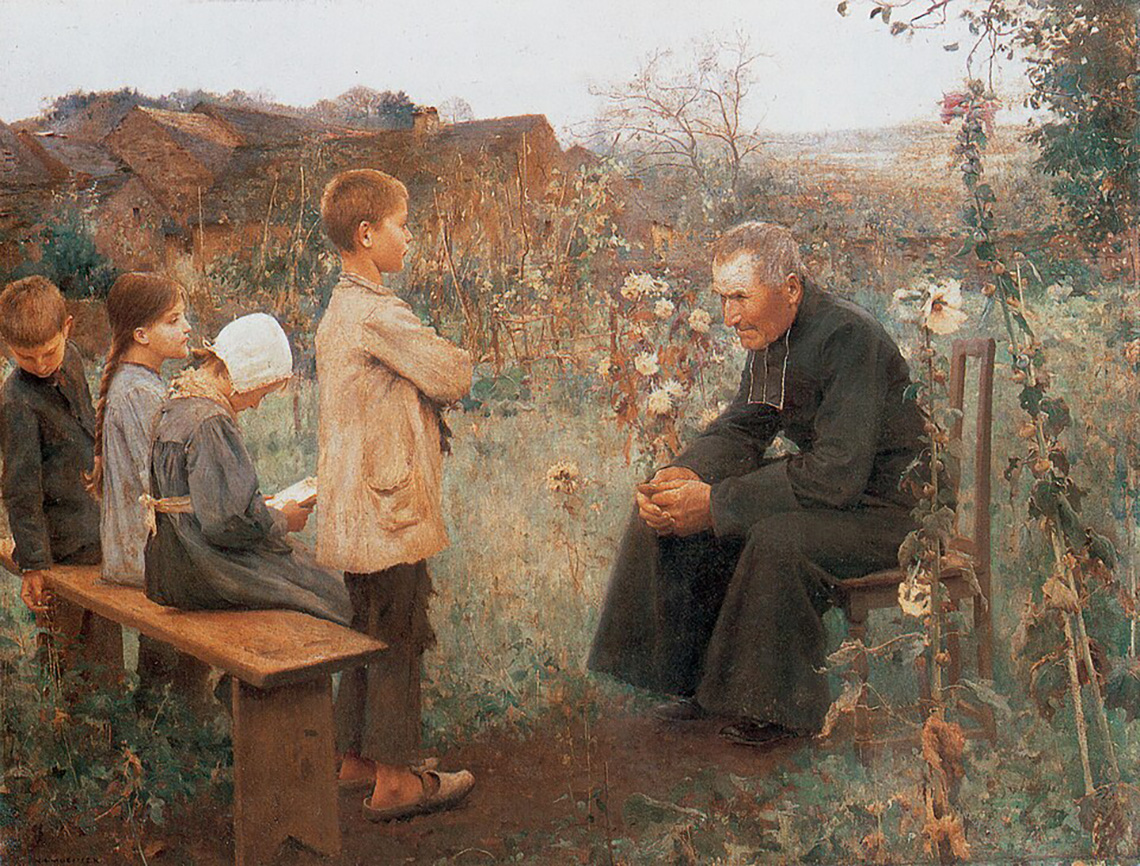
REIMAGINING THE EVANGELIZING MISSION OF CATECHISTS IN AN AFRICAN SYNODAL CHURCH
In this article, the author argues for the promotion of Catechists morally, materially, and spiritually, as important agents of mission ad gentes. He sees the vocation of lay catechists as the cornerstone and future of the Church’s evangelizing mission.
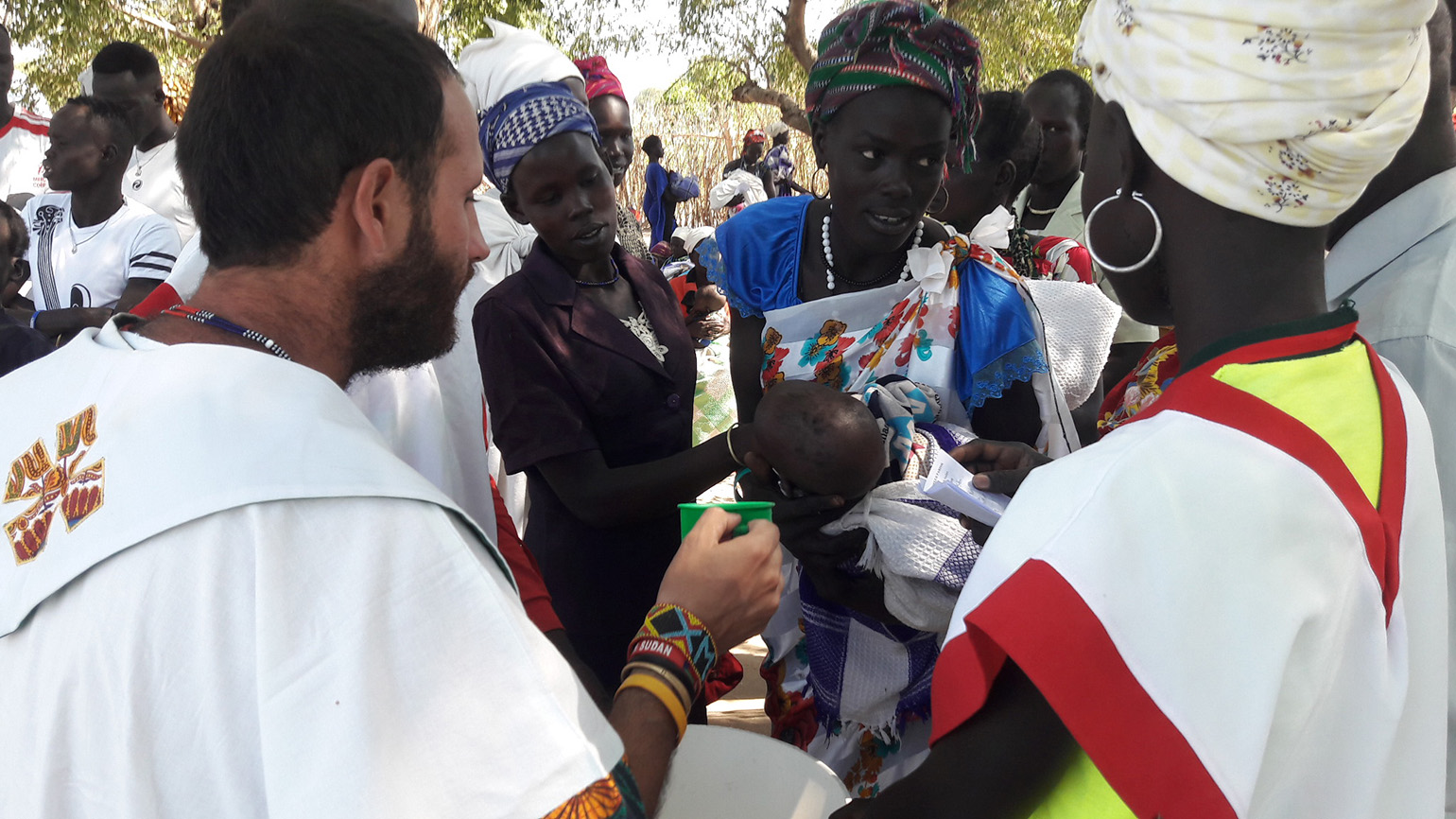
THE CHURCH SENT TO BRING CHRIST TO THE WORLD
Based on his experience with the Nuer People in South Sudan, the author re-emphasizes mission ad gentes as an essential element of the Church. He argues that the Church exists because she has received a missionary mandate from Christ: “Go into all the world and proclaim the gospel to the whole creation” (Mk 16:15).