
WORK AND HUMAN DIGNITY
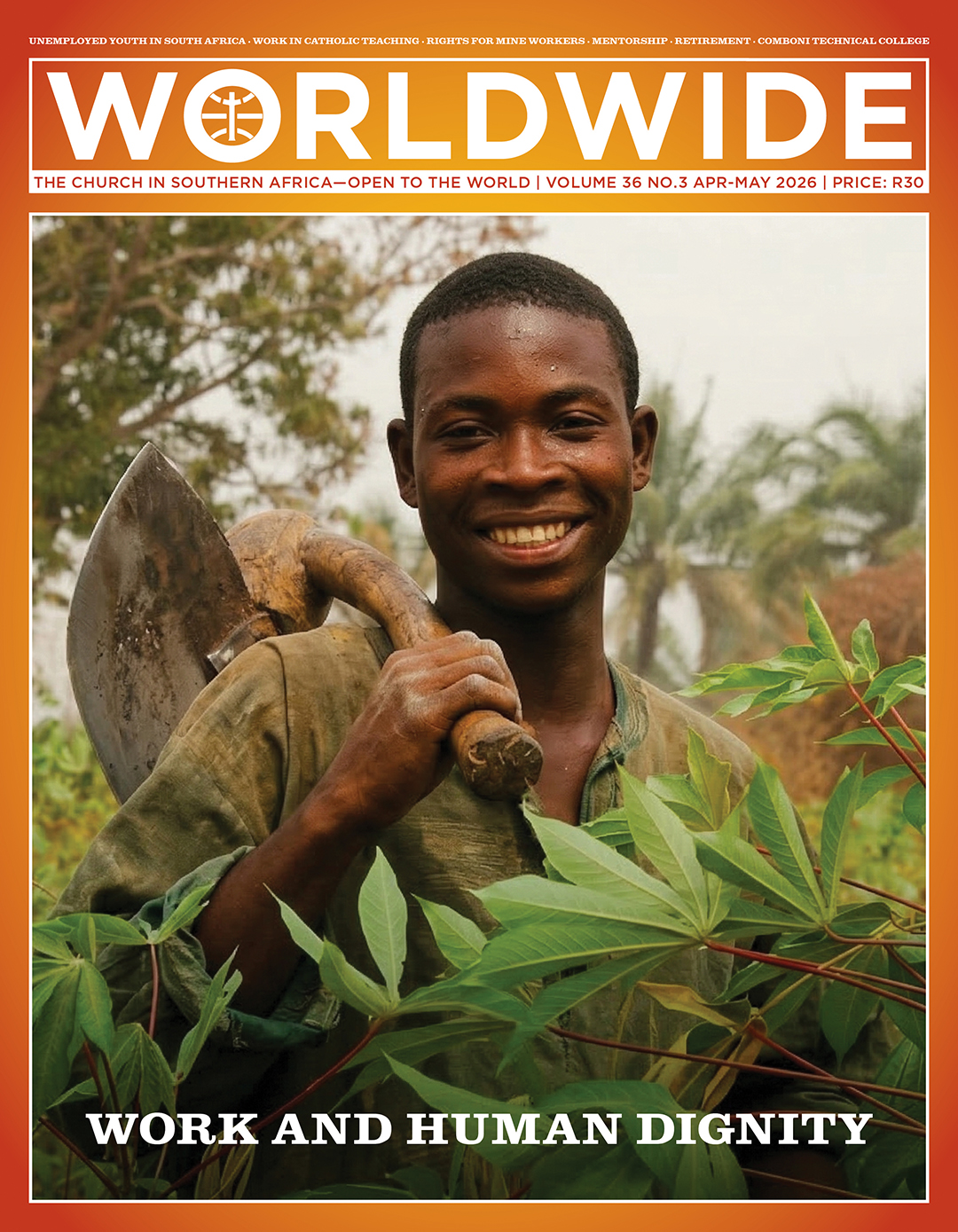
A young farmer holding a hoe in a field of cassava plants. In Africa, cassava is the second most important staple food after maize, providing the primary energy source for approximately 40% of the population. Due to high levels of unemployment, small- scale farming provides a dignified way of self-sustenance.
INSIGHTS
The Fantasy of Formal Employment
We should certainly strive for policies that favour economic growth and job creation, and question those which keep our economy in the doldrums, but the concept that somehow, sometime, someone is going to “give” jobs to our millions of unemployed is a fantasy.
BY Mike Pothier | Programme Manager, SACBC Parliamentary Liaison Office, Cape Town
EARLY IN his long pontificate, Pope St John Paul II wrote the encyclical letter Laborem Exercens, which remains to this day the Church’s most thorough document on the question of human work.
The letter starts in ringing terms:
“Through work people must earn their daily bread and contribute to the continual advance of science and technology and, above all, to elevating unceasingly the cultural and moral level of the society within which they live in community with those who belong to the same family.”
Five Characteristics of Human Work
This paragraph identifies at least five characteristics of human work: it is necessary for our survival — our “daily bread”; it enables progress in fields that ought to improve earthly life — science and technology; it helps to enhance both the cultural and the moral aspects of our existence — in other words, values that go beyond the merely material or economic; and it is a social activity — society, the human family, benefits from it.
Hard Facts
Sadly, in modern-day South Africa of 2026, far too many people have no opportunity to work. Even with recent statistics showing a small decline in the unemployment figures, three out of ten adults are without a formal job.
Many more are forced to accept forms of work, or conditions of work, that can hardly be thought of as “elevating the cultural and moral level of society”; for them, work is only about physical survival.
And, in so many fields and occupations, the permanence of jobs is uncertain. New technologies, international trade barriers, the decline in some primary and manufacturing industries, all combine to render the threat of unemployment as much of a worry for some as its reality is for others.
It seems like endless bad news, especially when economists predict that a country like South Africa — and the same goes for developing countries generally — will never achieve full employment, or anything near it, by creating traditional jobs in factories, offices, mines and farms.
We should certainly strive for policies that favour economic growth and job creation, and question those which keep our economy in the doldrums, but the suggestion that somehow, sometime, someone is going to “give” jobs to our millions of unemployed is a fantasy.
Invest in the Informal Sector
So, where does hope lie in all of this? Can we find a way in which, to quote John Paul again, through work a person “achieves fulfilment as a human being and indeed in a sense becomes ‘more of a human being’”?
Our greatest hope probably lies in the informal sector of the economy, a sector that is often overlooked, or looked down upon as if it is not “real” work.
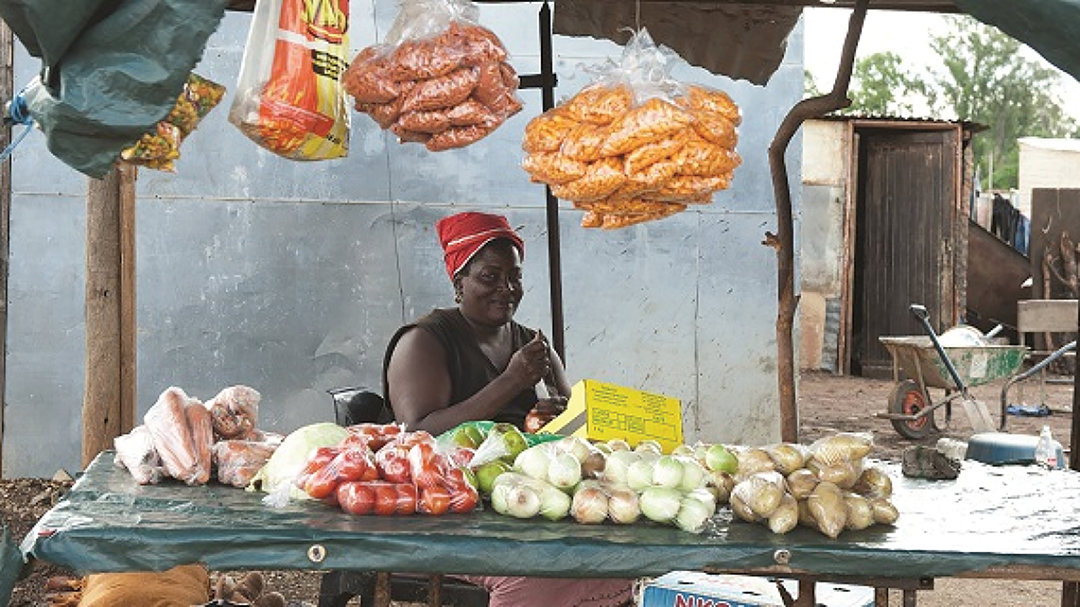
But the 30 per cent of our population that do not have formal jobs are not simply sitting around doing nothing. Huge numbers of them are working to earn at least “their daily bread” — as car guards; waste-pickers; people cooking food at the side of the road, or selling small packets of fruit and vegetables; buying and selling second-hand clothing; making useful items from wood or metal. The list is almost endless.
One woman makes a modest living by selling small wads of toilet paper outside the bathrooms of one of Johannesburg’s main train stations.
No one would argue that this is ideal, or that the informal sector could offer the prospects and security that are possible in the formal economy. But if we could find ways of promoting the informal sector, and of supporting the ingenuity and determination of those who work there, it could hold great potential.
There is one other aspect to note: a great deal of informal economic activity takes place within our communities, not at a distance in industrial areas or huge, impersonal factories. In this respect it is uniquely placed to contribute, in John Paul’s words, to the “society within which they live in community with those who belong to the same family.”

LOOKING AHEAD WITH HOPE
It is always risky to make predictions about South Africa’s future prospects, but it seems safe to say that we have more reasons for optimism this year than we have had for quite some time.