
WORK AND HUMAN DIGNITY
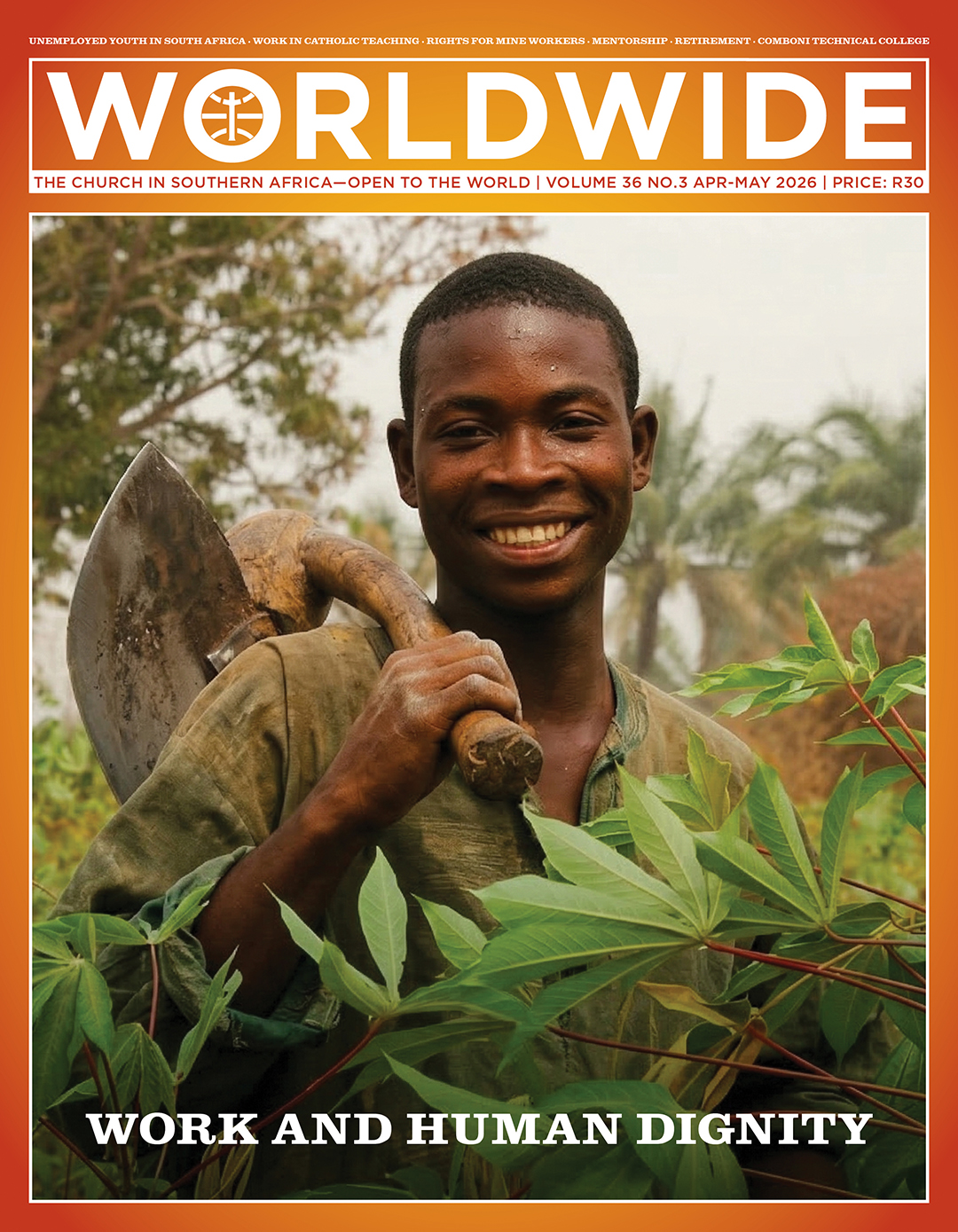
A young farmer holding a hoe in a field of cassava plants. In Africa, cassava is the second most important staple food after maize, providing the primary energy source for approximately 40% of the population. Due to high levels of unemployment, small- scale farming provides a dignified way of self-sustenance.
Witness • YOUNG ENTREPRENEUR

The Hands That Built the Bridge
In a world where people are obsessed with qualifications and papers to add to their portfolio to guarantee high prospects of finding employment, the author argues for something different.
BY Alfi Oloo
THERE IS a quiet despair settling over the young people of this country. Not the dramatic kind that makes headlines, but the slow, corrosive kind, the feeling that the game was rigged even before you sat down to play. Youth unemployment exceeds 60% in some parts of South Africa. Graduates clutch degrees that promised opportunity but delivered debt. And the question hanging in the air, unspoken but deafening, is this: what was all of it for?
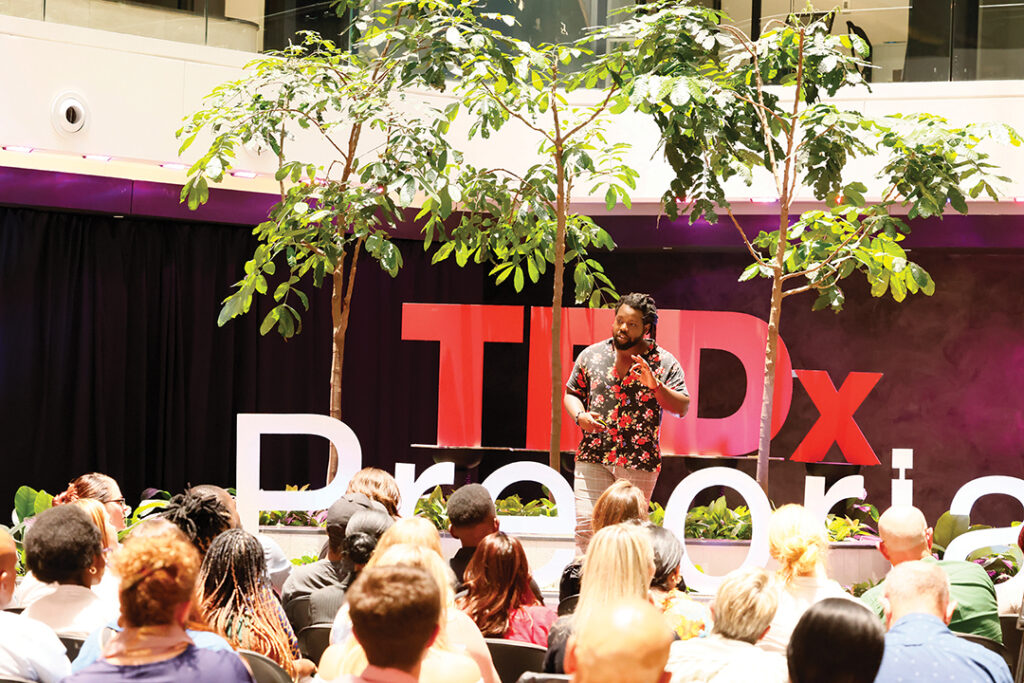
I understand this despair. I’ve tasted it. During my second attempt at my second year at the University of Pretoria, I could see the wall coming. I was not going to pass. Partly because of my dyslexia, which turned every exam into a war between what I knew and what I could put on paper. But mostly because the system measured one kind of intelligence and I carried another, a mind built for patterns rather than paragraphs, for doing rather than theorising.
The Gap in our Education System
Here is the uncomfortable truth that few will say aloud: the education system, for all its noble intentions, leaves a gap between the classroom and the working world. Not because education lacks value, it carries immense value, but because the skills that make a person employable are rarely found in a lecture hall.
How to navigate uncertainty. How to read the unwritten rules of an industry. How to understand what your capabilities are worth. These things are learned in the wild, not from the textbook.
So, what do we do when the bridge between learning and earning is broken? We remember that the bridge existed long before universities did.
The Old Bridge
The education system, for all its noble intentions, leaves a gap between the classroom and the working world. Not because education lacks value, it carries immense value, but because the skills that make a person employable are rarely found in a lecture hall.
The blacksmith taught his apprentice at the anvil. The traditional healer passed her knowledge to her student through years of walking together, and healing the sick. Knowledge flowed through proximity, conversation, and shared labour.
This ancient way of learning, mentorship, apprenticeship, and wisdom passed from one life into another, never becoming obsolete. We simply forgot to value it.

My Testimony
My own career was not built by an institution. It was built by two conversations.
The first happened during a job-shadowing stint I had almost missed. I was sitting across from a designer named Ronnie in the middle of an open-plan office at one of the big banks, fluorescent lights, ordinary table, nothing about the setting that suggested my life was about to change.
Almost casually, he mentioned his hourly rate. The number was enough to, as I like to say, clear one’s sinuses. But it wasn’t the figure alone that broke something open. It was the revelation that creative work, the very work I loved but assumed meant poverty, was not just viable but genuinely valuable.
In that moment, the starving artist story I had been fed throughout my entire life, fell apart.
The second conversation came from Daniella, a junior designer only a few steps ahead of me. Over lunch, she shared what no career guide ever would: the hidden logic of the job market.
“Skip the big-name companies,” she said. “They want portfolios you don’t have yet. Find an agency expanding into digital, they’ll care about your thinking, not your papers.”
This was not textbook advice. This was the kind of knowledge that can only come from someone currently in the game.
Neither of these people was assigned to mentor me. There were no contracts, no scheduled sessions. Just two working professionals who, over coffee and conversation, handed me the map that education never drew.
And here is the part that haunts me: I almost didn’t have those conversations. They were accidents. How many others are waiting for accidents that never come?
Walking Through the Door
Armed with those two conversations, I did something that terrified me. I stopped going to class, though I would not recommend this approach.
I began watching YouTube videos of professionals doing the work I wanted to do. I listened to audiobooks, a format that doesn’t punish dyslexia. I taught myself, piece by piece, the craft of design.
I taught myself, piece by piece, the craft of design.
Then I built a portfolio. Not from paid work, nobody was paying me. I designed things for free. I solved problems that nobody asked me to solve. I created work in my own time, on my own terms, to prove to myself and to the world that I could do the job.
When I walked into my first real interview, I had no degree, no previous official employment, and no connections. What I had was a folder full of work and the hunger to do more. That was enough. It was enough to start a career that has now lasted more than a decade.
If I can walk through that door carrying nothing but a portfolio and determination, the door is not locked. It is heavy, but it opens.
A Path Forward
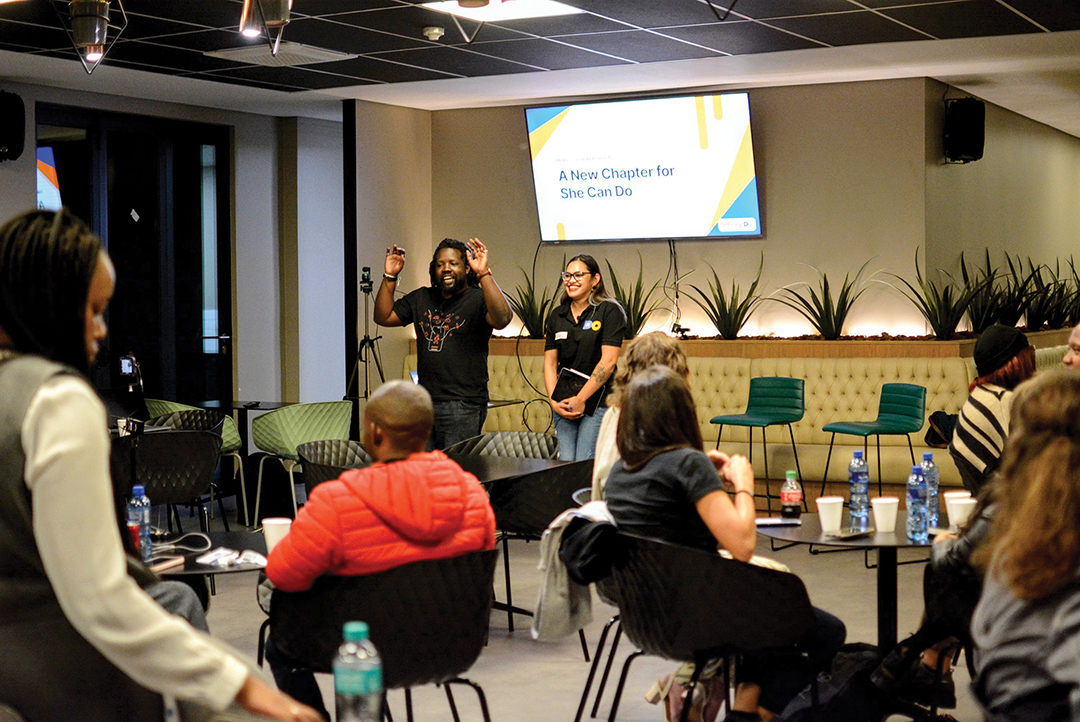
It is easy to hear a story like mine and think I was just lucky. And yes, there was luck involved. But Umuntu ngumuntu ngabantu, a person is a person through other people. The help I received, I now pass on. And the path I walked can be walked again.
Here is how.
Step 1: Learn by Doing
Find a place where you can work and learn at the same time. Call it an apprenticeship, an internship, a first job, the title matters less than the function.
What matters is proximity to someone who knows more than you and work that demands you grow. Whether you are learning to code, to weld, to cook, or to cut hair, place yourself where knowledge is practised, not just spoken about.
Step 2: Achieve Subsistence
Find work that keeps you fed and sheltered today. Not necessarily glamorous work. Honest work. The kind where effort converts directly into survival. This is your foundation, not your ceiling.
Step 3: Let Mastery Free Your Time
As you repeat this work, you will improve. The task that took a full day starts to take half a day. The job that consumed a week now resolves in three days.
This is true for the accountant and the plumber, the waitress and the software developer. Mastery compresses time. And that freed-up time is the raw material of a different life.
Step 4: Invest the Hours You’ve Earned
Use those freed hours deliberately. Read. Listen to podcasts. Study, not necessarily in a classroom, but with intention.
Day by day, you begin to develop skills that exceed the work you are currently paid for. You do not need to enrol somewhere. You need to be hungry to learn.
Step 5: Find Your North Star
Once self-improvement becomes a rhythm, the question shifts from survival to purpose.
What are you uniquely equipped to offer, through your skills, your circumstances, your story, that people around you would value enough to pay for?
That answer becomes your direction. The star you steer by. With it, you begin the process of becoming not just employed, but called.
The Bridge Is Yours
The path I have described is not easy. It was never meant to be. But it is ancient, tested, and real.
Long before degrees and diplomas existed, people found their way into purpose through labour, learning, and the steady hand of those who walked the road before them.
If you are young and the future feels hostile, know this: the system may be cracked, but you are not.
If you are young and the future feels hostile, know this: the system may be cracked, but you are not. The bridge between where you are and where you are meant to be has been built before, by hands just like yours. Now build it again.
Questions to Start With
If you are unsure where to begin, sit with these questions. Write your answers down. Come back to them in a week. They are seeds, give them time.
On where you are now
What work can I do today that someone would pay me for, even a small amount?
Who in my community is doing work that I admire or find interesting?
On learning
What skill, if I practised it for one hour every day, would change my life in a year?
What can I already do that most people around me cannot?
On direction
What problem do I see in my community that I wish someone would solve?
If I could be known for one thing in ten years, what would it be?
On mentorship
Who is two or three steps ahead of me that I could ask for advice, even once?
What could I offer them in return for their time?
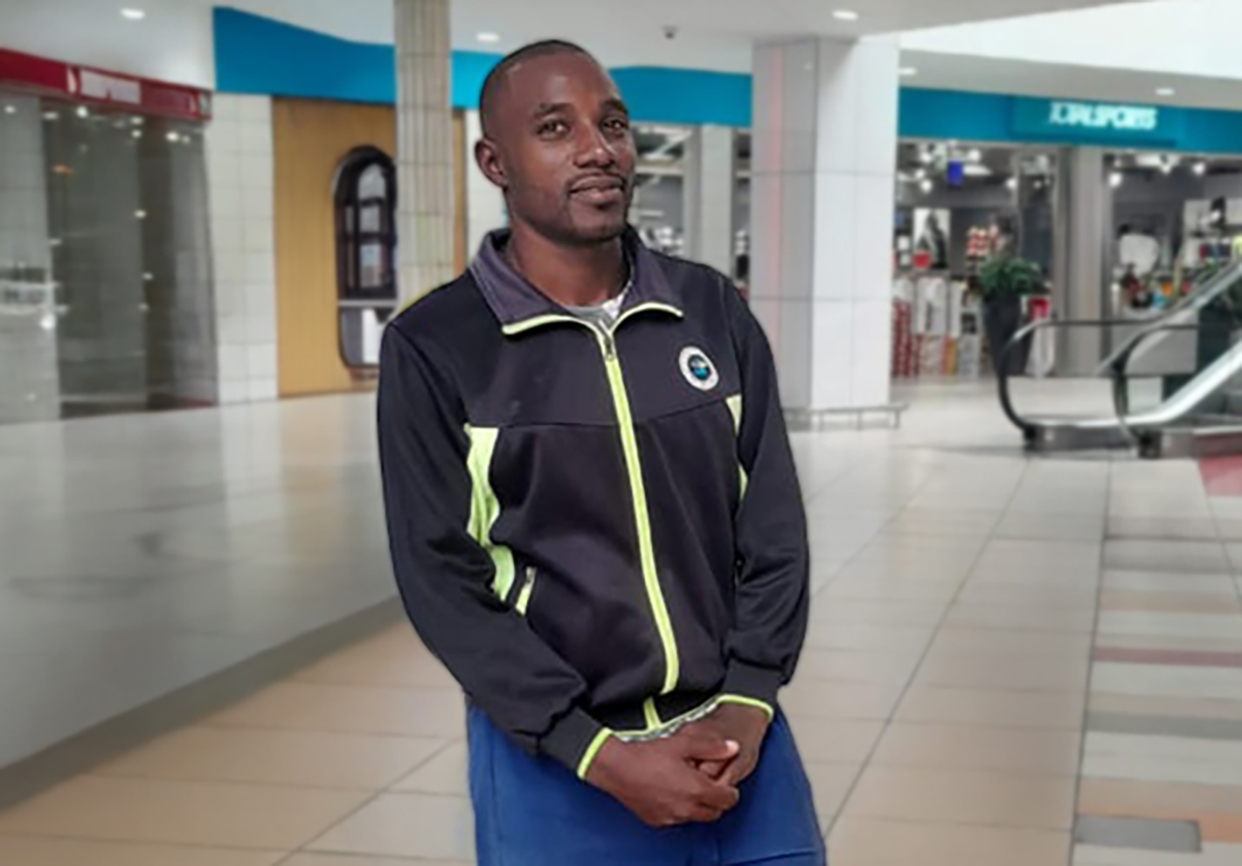
“SHADOWS OF EXILE, LIGHT OF FAITH: A JOURNEY OF FAITH, HOPE, AND RESILIENCE”
When Mwaniki Peter Nga’ng’a set out for South Africa, he carried dreams of stability and success. Instead, he faced exploitation, detention, and trauma.