
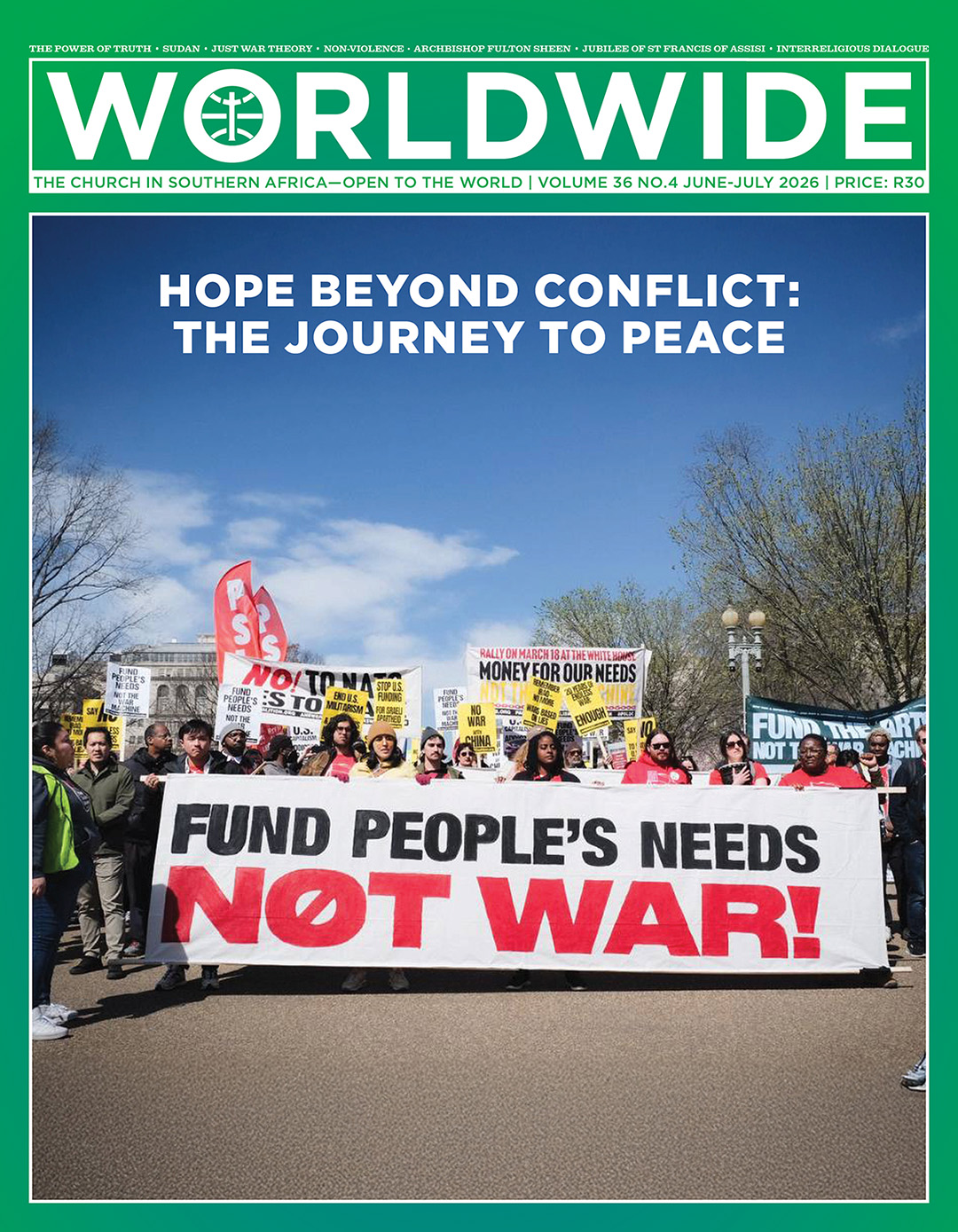
HOPE BEYOND CONFLICT: THE JOURNEY TO PEACE
“It is no coincidence that repeated calls to increase military spending, and the choices that follow, are presented by many government leaders as a justified response to external threats. The idea of the deterrent power of military might, especially nuclear deterrence, is based on the irrationality of relations between nations, built not on law, justice and trust, but on fear and domination by force.”
Message of Pope Leo XIV for the World Day of Peace 1 January 2026.
Cover Photo: Protesters in Ohio rally against US funding for the Russia‑Ukraine war, March 18, 2023. | Credit: Vincent Tsai/Peoples Watch
INSIGHTS • A Necessary Evil?
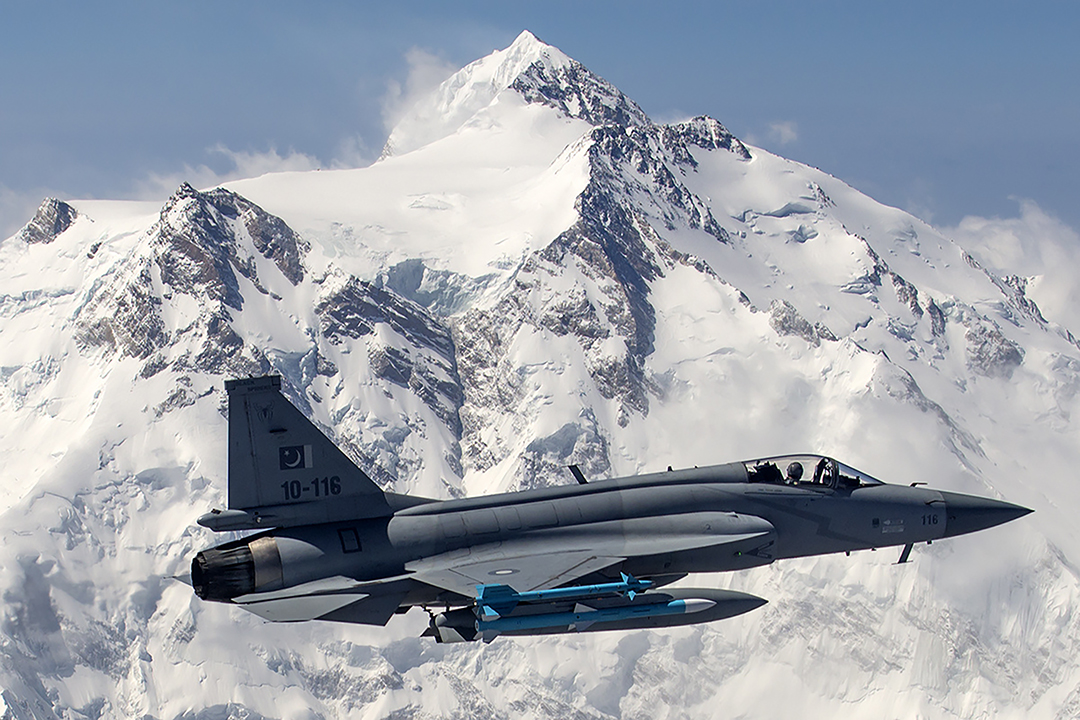
Credit: euroasianet.org
The Cost of War
The Church has steadfastly condemned war-making not just because of the immediate suffering and destruction that it causes, but also because of the huge diversion of resources it entails.
BY Mike Pothier | Programme Manager, SACBC Parliamentary Liaison Office, Cape Town
THERE IS an old story that, sometime back in the 1950s or 60s, a Catholic medical missionary priest, working in one of the poorest African countries, calculated that for the cost of one modern fighter jet, he could obtain enough vaccine and employ enough nurses to eradicate polio throughout the under-developed regions of Africa. Polio is a disease that killed thousands and left tens of thousands with severe permanent physical disability. Consequently, the priest wrote to the governments of the five permanent members of the UN Security Council – the US, the Soviet Union, China, the UK, and France – asking each of them to donate the equivalent of one fighter jet’s cost. According to the story, only one country replied, turning down the request; the other four didn’t bother to respond at all.
This sad, though unsurprising, account came to mind recently when I read that the US attack on Iran cost 1 billion US dollars a day. To put that into perspective, the annual budget of Nigeria, Africa’s most populous country, is 38 billion US dollars the amount the US would spend in just two months in just one war!
No To War
This is one of the reasons why the Church has steadfastly condemned all war-making: not just because of the immediate suffering and destruction that it leads to, but also because of the huge diversion of resources it entails. If any proof of this was needed, we have only to consider the fact that President Trump has, on the one hand, severely cut back on America’s overseas aid budget, leaving millions of people vulnerable to disease and famine, while on the other hand, has requested the US Congress to approve an additional 1.5 trillion dollars in defence spending.
How Prepared Is South Africa?
Against this background, it is interesting to consider South Africa’s attitude towards its defense force and the money spent on it. Simply put, we are spending less and less on our military forces every year expenditure is now down to about 0.75% of GDP, which is half of what the government would like it to be, and only a third of the ‘target’ of 2% set by NATO countries. Many commentators decry this state of affairs. Looking at the SANDF they see a force that is unfit for purpose, badly equipped, and unable to sustain even relatively minor peace-keeping duties abroad. If any major power were to attack South Africa, they argue, we would be pretty much helpless.
This is undoubtedly true, and the future remains unknown to all of us. However, the question remains: is it justifiable to spend billions – trillions even – based on what might happen at some unspecified point in the future? As it happens, we in South Africa have direct experience of exactly that. In the late 1990s, the government spent in the region of R26 billion (roughly R105 billion in today’s money) on the notorious ‘arms deal’. At the time, it was predicted that much of what was purchased would never be used, and so it has proven to be. Some of the most expensive items-26 Grippen fighter jets, for example-have been mothballed in hangars for years. Of the three submarines, only one is seaworthy.
We Are Blessed
We are fortunate to be living in a part of the world that is not threatened by war. None of our neighbouring countries poses a threat to us, and we maintain fairly amicable relations with the world’s major powers. All this means that we can well afford to cut back on military spending and instead focus on more constructive uses of our resources. And if South Africa and the other countries in our region were to all commit to that, we would build more prosperous nations and advance national prosperity, with higher levels of human development, and less chance of civil breakdown and cross-border tensions that often lead to war. Despite what we see happening in so many parts of the world today, war is not an inevitability.
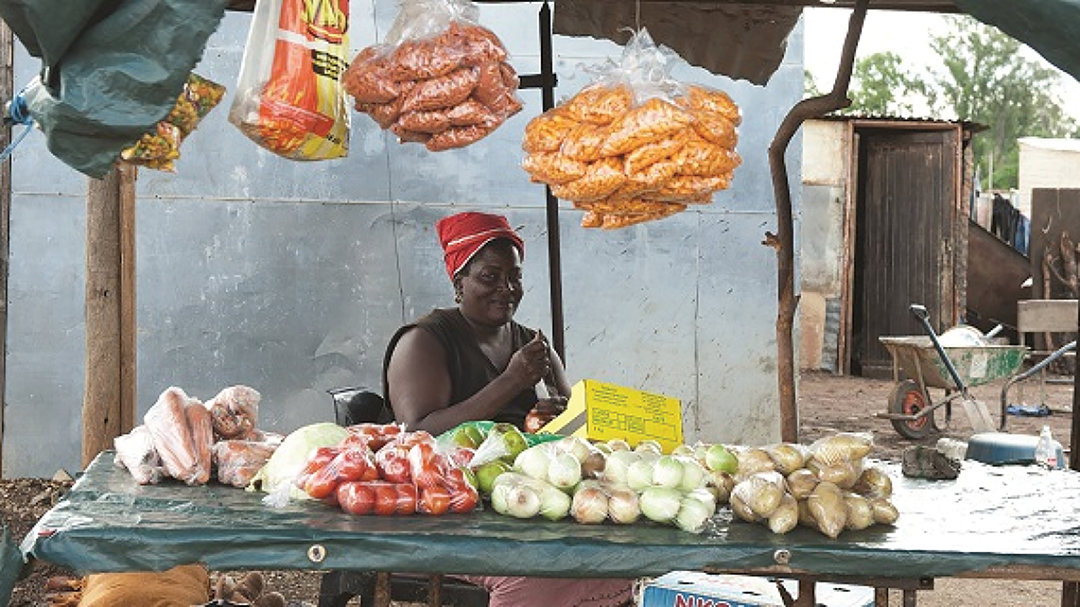
THE FANTASY OF FORMAL EMPLOYMENT
Mike Poithier argues that while formal job creation remains important, South Africa must also recognise and support the informal sector as a real source of work and dignity.