
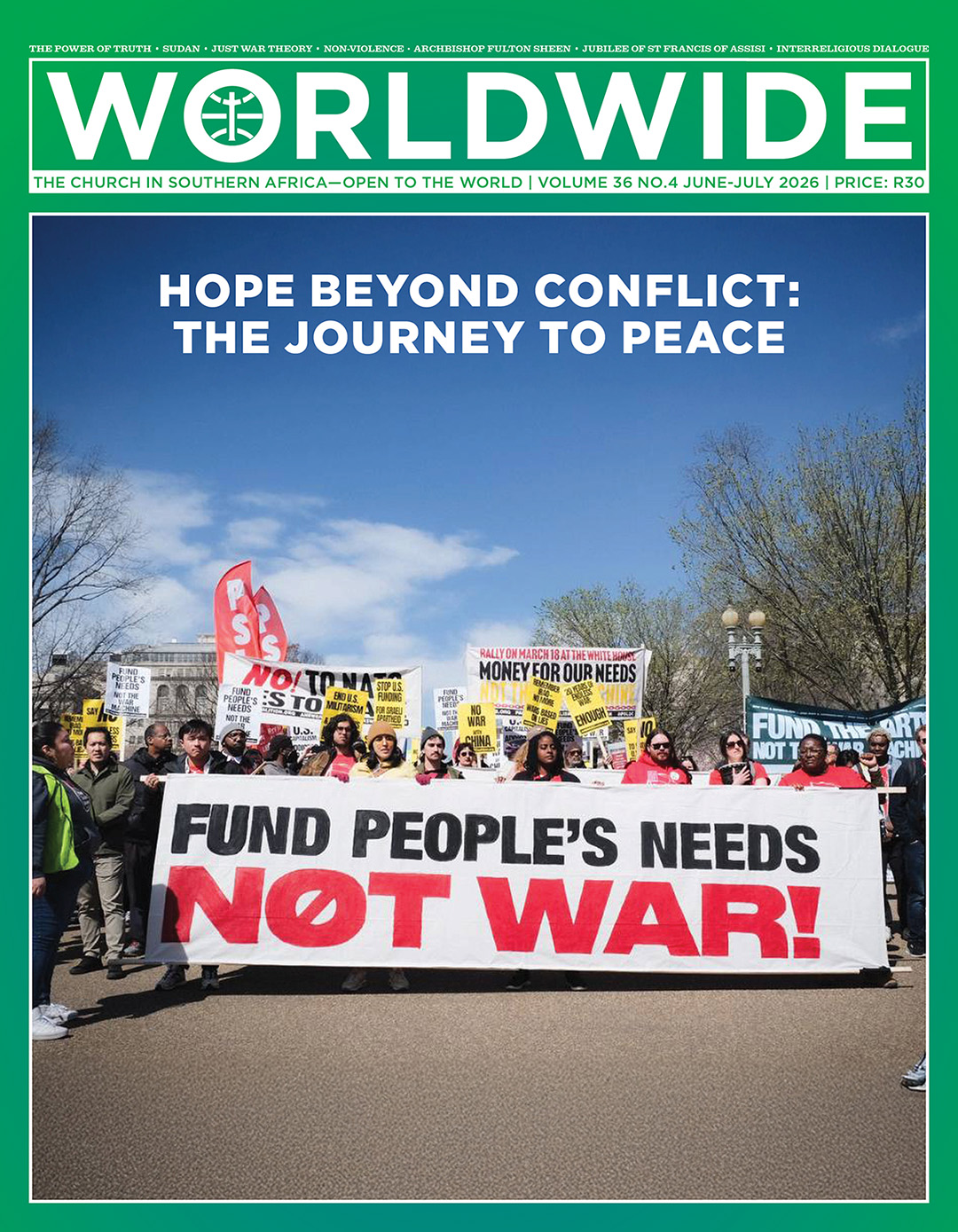
HOPE BEYOND CONFLICT: THE JOURNEY TO PEACE
“It is no coincidence that repeated calls to increase military spending, and the choices that follow, are presented by many government leaders as a justified response to external threats. The idea of the deterrent power of military might, especially nuclear deterrence, is based on the irrationality of relations between nations, built not on law, justice and trust, but on fear and domination by force.”
Message of Pope Leo XIV for the World Day of Peace 1 January 2026.
Cover Photo: Protesters in Ohio rally against US funding for the Russia‑Ukraine war, March 18, 2023. | Credit: Vincent Tsai/Peoples Watch
Focus • Time For Truth
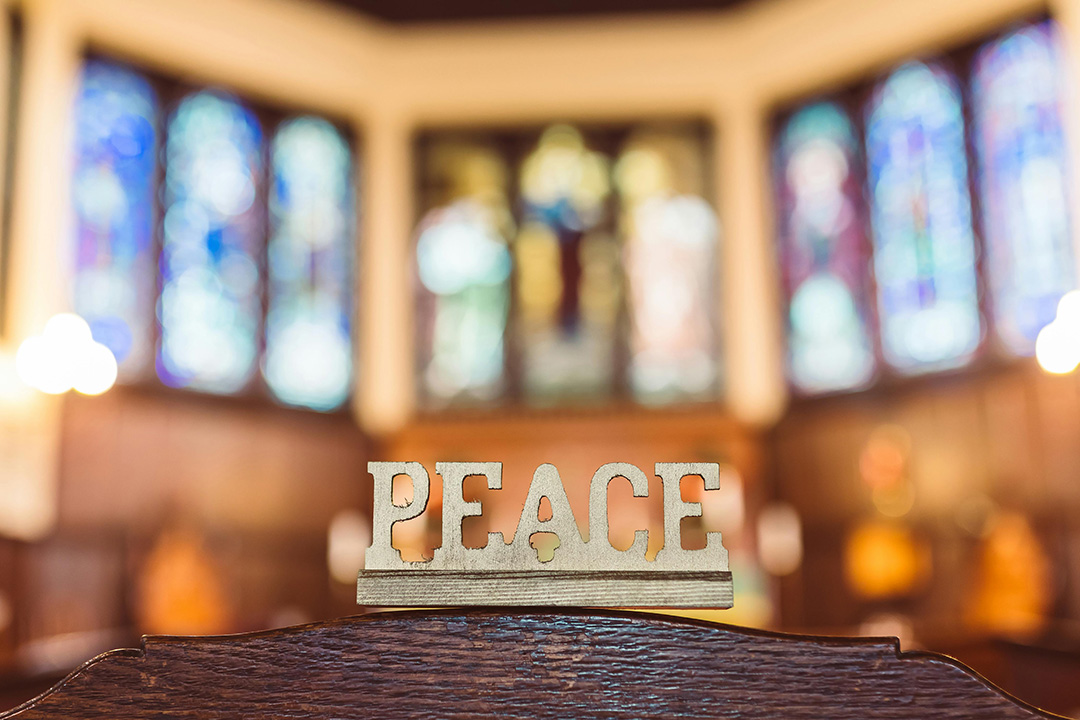
The Truth of Power and the Power of Truth: War, Peace, and Prophetic Witness In South Africa
In this article, the author invites us to see war not only in battles, but in every act that strips away human dignity. He challenges the church to rise, rooted in Black Theology and Catholic Social Teaching, to embody Christ’s liberating peace in South Africa today.
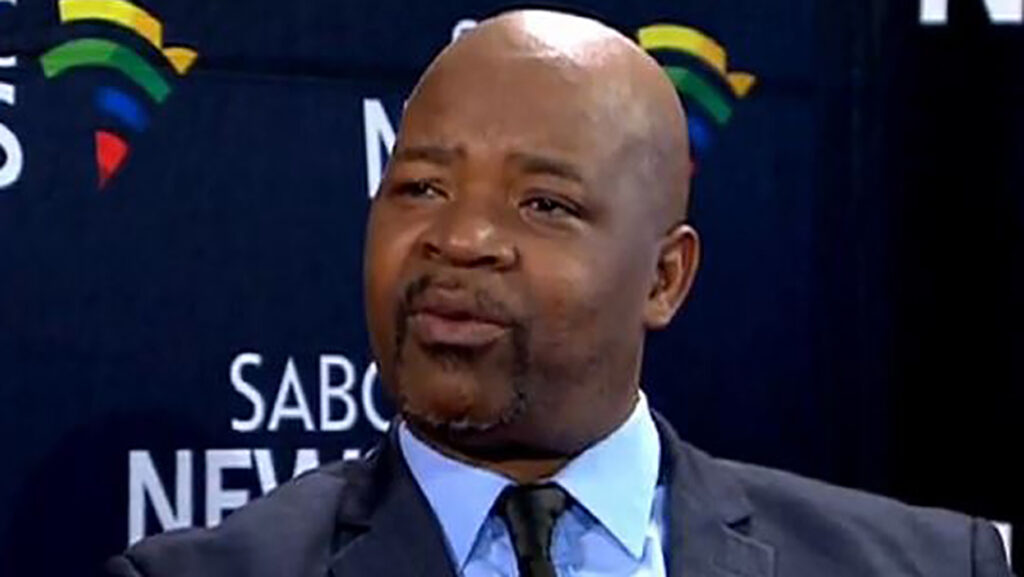
BY FABIAN ASHWIN OLIVER | YOUTH MINISTER, JOHANNESBURG
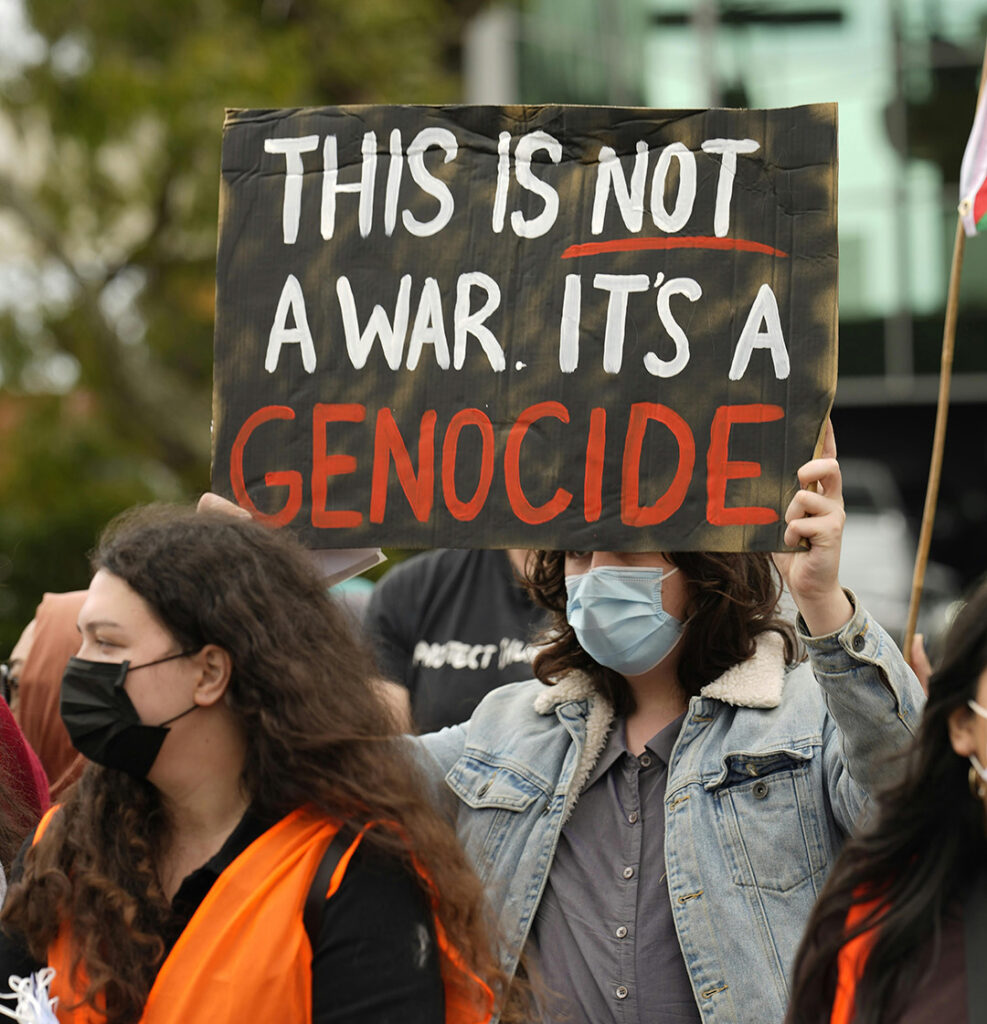
I FEEL discomfort with the term “war.” Partly, because I identify as a pragmatic pacifist, but more importantly, because the language of war often deflects responsibility. What is described as war between two or more parties is frequently neither mutual nor reciprocal. Rather, “war” becomes a scapegoat for those in power to seize land, enact violence, and carry out human atrocities while remaining within the acceptable language of political legitimacy and international policy. Within the current logics of power, one is left wondering whether something can be called genocide in real time, or only retrospectively, once the damage has been done.
War And Human Dignity
Human freedom itself is often entangled with the subjugation of others. War and power emerge in the attempt to secure, preserve, or expand the freedom and privilege of some at the expense of the dignity and humanity of others. In the Catholic tradition, as articulated in the Catechism of the Catholic Church, a “just war” is understood as a tragic last resort, morally permissible only under strict conditions such as just cause, right intention, proportionality, and the protection of civilians, always aimed ultimately at restoring peace (CCC 1994:2307-2317). The church cannot retreat into false neutrality or shallow “kumbaya” peace that avoids confronting the realities of suffering, dispossession, and death. Instead, it is called on to embody a costly peace rooted in justice – one that speaks truth to power, stands with the vulnerable, and refuses to normalise endless violence even when it is carried out in the language of security.
For many oppressed communities, war is not merely episodic. Black people, particularly within the afterlives of colonialism and apartheid, live in a constant state of war against their very existence, health, education, safety, and economic survival. Indeed, black death, violence against women, and systemic dispossession are not deviations from modernity but constitutive of it (Sharpe 2016:7,12).
The question then becomes whether the church can offer a genuine counter-narrative: a visible demonstration of the Kingdom of God shaped by radical peace. South African Black theologian Tinyiko Maluleke offers a profound reading of John 18:38 through his distinction between the “truth of power” and the “power of truth.” Pilate represents the truth of power, where those with political, racial, or economic dominance determine what counts as truth, often justifying violence and exclusion. Jesus, however, embodies the power of truth: a truth rooted not in domination but in solidarity with the poor and the marginalised. In the contexts of war and violence, Maluleke challenges society to discern whether peace is being shaped by coercive power or by liberating truth (Maluleke 2000:88).
The Quiet War On Education
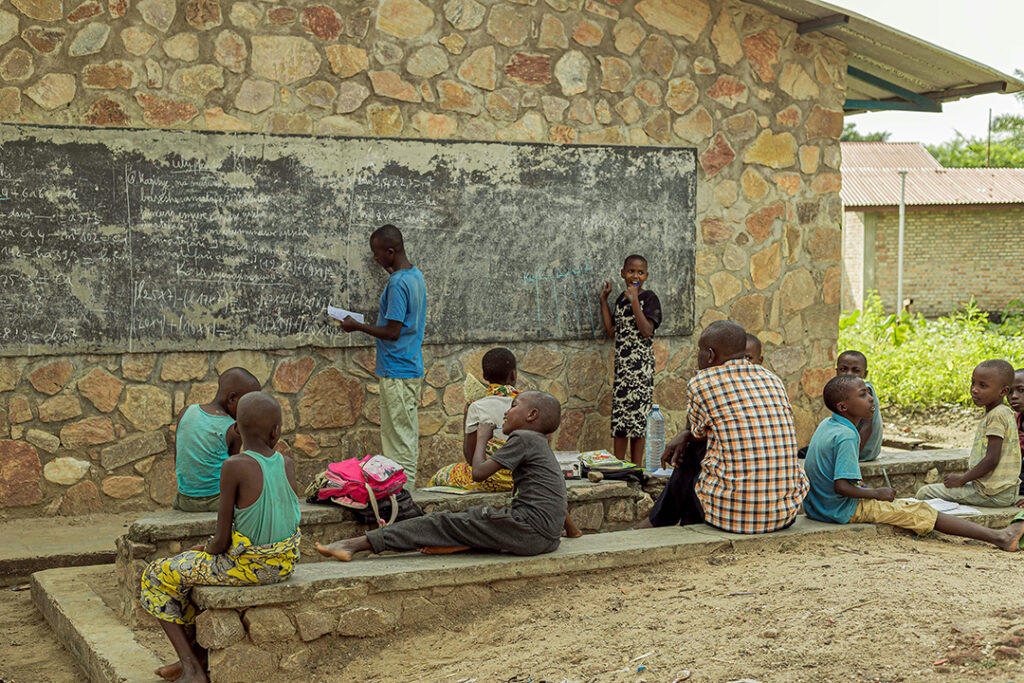
As schools and universities reopened across South Africa this year, the country witnessed both hope and heartbreak. Families celebrated educational milestones, first days at school, and stories of perseverance against immense odds. Yet behind these celebrations of achievement and success remain devastating inequalities. Some learners must still cross rivers to reach school, study under trees, or complete homework by candlelight in overcrowded informal settlements.
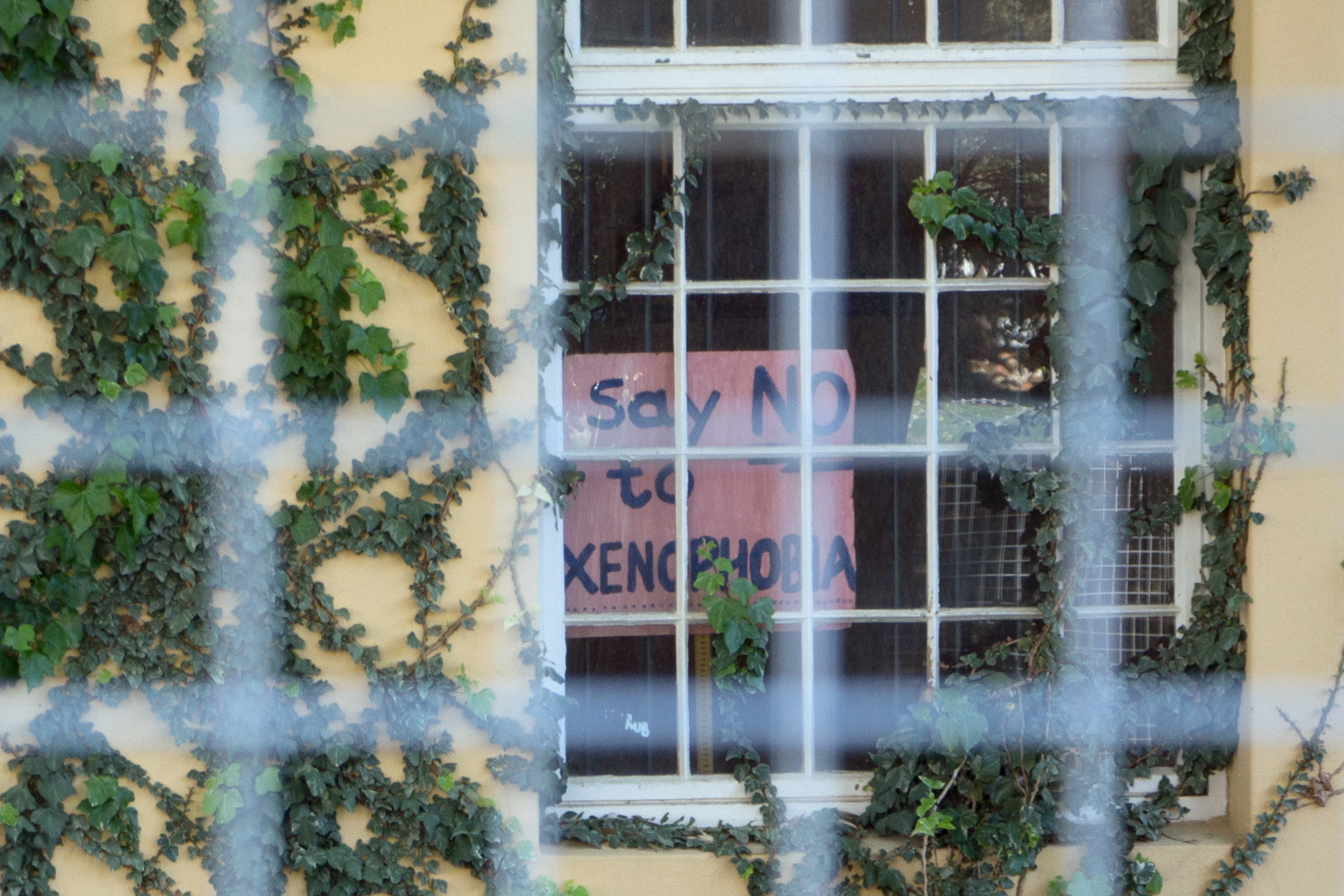
Public frustration over overcrowded schools and limited resources has increasingly been redirected toward African foreign nationals. News footage showed parents protesting outside schools, accusing “foreigners” of taking places meant for their South African children. Such reactions reveal a deeper crisis, one shaped not only by scarcity but by the politics of scapegoating. The so-called “foreigner problem” obscures more uncomfortable truths about inequality, state failure, and a continent still wounded by colonial exploitation.
The so-called “foreigner problem” obscures more uncomfortable truths about inequality, state failure, and a continent still wounded by colonial exploitation.
The pain deepens further when schools continue to produce a zero percent matric pass rate. The legacy of Bantu Education – a cornerstone of apartheid – has not been fully dismantled or transformed into a liberatory educational vision, and the ghost of the June 16 Youth Day massacre continues to haunt the present as a reminder of the unfinished struggle for educational justice. During earlier missionary periods, churches helped establish schools and hospitals that served communities. Today, many church-linked institutions function primarily within wealthy private sectors, often exclusive to the affluent and inaccessible to the poor.
Need For A Liberating Education
What is needed is a renewed ecclesial imagination. A church committed to becoming the Beloved Community must advocate for liberating education and create spaces for dialogue and transformation. It must challenge systems that preserve inequality and needs to resist becoming merely another institution that normalises suffering.
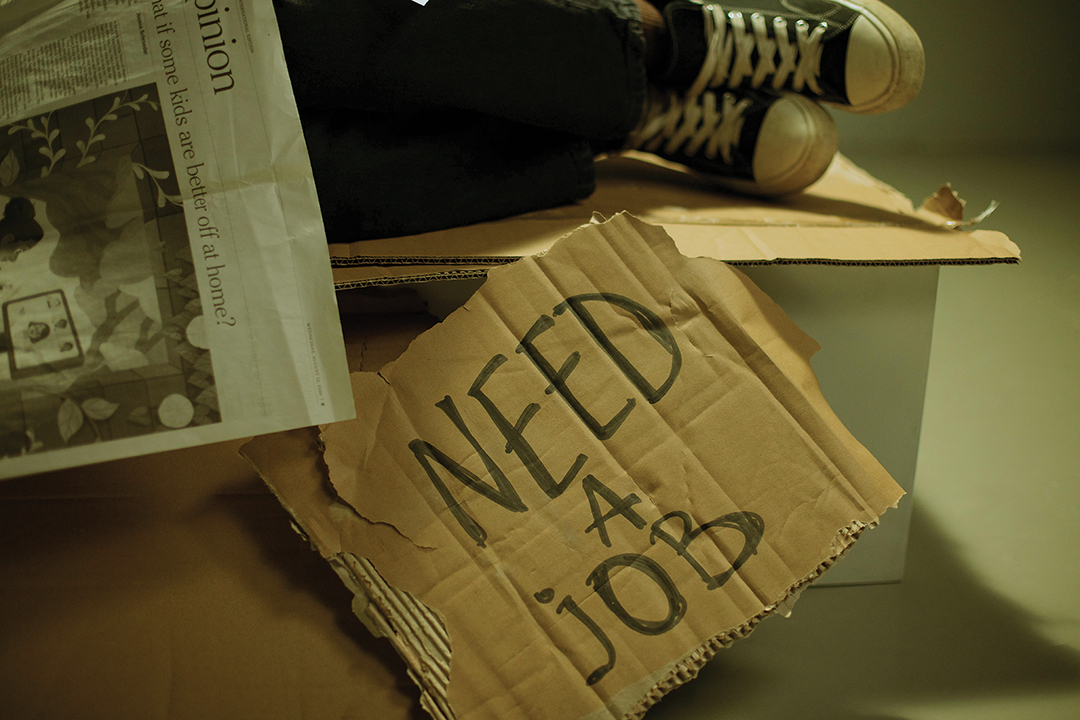
Paulo Freire famously wrote that education either integrates people into the logic of the existing system or becomes “the practice of freedom” (Freire 1970:34). Freire warns that when education is not liberating, the dream of the oppressed is to become the oppressor (Freire 1970:10). When education ceases to liberate, and unemployment continues to suffocate possibility, this too becomes a war against the youth; a quiet violence waged against their dignity, imagination, and future.
War On ‘Foreigners’?
In his book Who Are My People? Love, Violence, and Christianity in Sub-Saharan Africa (2022), Catholic theologian and priest Emmanuel Katongole reflects on the haunting question: “Why do Africans kill their own people?” He recalls Cardinal Roger Etchegaray asking whether “the blood of tribalism is deeper than the waters of baptism.”
South Africa once again finds itself amid a hospitality crisis shaped by fear, scarcity, and selective memory. Public debates surrounding undocumented African nationals are increasingly framed through the language of legality, patriotism, public safety, and the protection of limited resources. For some, these concerns reflect genuine frustrations regarding unemployment, pressure on public services, and the responsibility of the state to regulate its borders. For others, the hostility directed toward African migrants raises difficult questions about xenophobia, selective outrage, and the ease with which vulnerable communities become scapegoats.
It remains striking that the “foreigner” is almost always imagined as black and African. Those whose ancestors arrived with gunpowder, conquest, and Bibles move through society unnamed and unaccused. Such selective outrage reveals not only political amnesia but theological blindness: a failure to recognise the image of God in the African stranger.
Africa Is Rich
Africa remains rich in cultural dignity and natural resources, yet deeply fragmented by colonial legacies, land dispossession, and economic inequality. Colonialism not only exploits African societies materially, but it also damages the moral fibre. As Katongole (2011:11-12) argues, colonialism cultivated forgetfulness among the colonised themselves, allowing postcolonial leaders at times to reproduce the very systems of domination they once opposed. Christianity, too, has at times focused on abstract visions of unity while failing to confront the enduring structural realities of colonial violence.
Such selective outrage reveals not only political amnesia but theological blindness: a failure to recognise the image of God in the African stranger.
The church carries the radical and subversive possibility of seeing beyond borders, nationality, and fear, resisting the divisions that so often sustain war and violence, and recognising in every person the image of God and the call to a shared life shaped by liberation, dignity, and love.
Truth Over Power
Warfare extends beyond weapons and military force. It is also waged through exclusion, poverty, educational inequality, xenophobia, and the denial of dignity. In South Africa, these realities continue to expose the unfinished work of liberation and reconciliation. Yet amidst this violence, signs of hope remain: churches offering sanctuary, communities resisting hatred, and prophetic voices insisting on the power of truth over the truth of power. If the church is to bear faithful witness in our time, it must embody a peace rooted not in silence or neutrality, but in solidarity, justice, hospitality, and radical love.
References:
- Catholic Church. 1994. Catechism of the Catholic Church. 2nd ed. Vatican City: Libreria Editrice Vaticana.
- Freire, P. 1970. Pedagogy of the Oppressed. New York: Bloomsbury Press.
- Katongole, E. 2011. The Sacrifice of Africa: A Political Theology for Africa. Michigan: Eerdmans Publishing Co.
- Katongole, E. 2022. Who Are My People? Love, Violence, and Christianity in Sub-Saharan Africa. Notre Dame: University of Notre Dame Press.
- Maluleke, T.S. 2000. “The crucified reflected in Africa’s cross-bearers”. Mission Studies, 1(2): 82-96.
- Urbaniak, J. 2017. “Theologians and Anger in the Age of Fallism: Towards a Revolution of African Love”. Black Theology: An International Journal, 15(2): 87-111.
WALKING WITH THE UNEMPLOYED
The Catholic Church in Southern Africa accompanies unemployed youth through career guidance, mentorship, partnerships, and formation rooted in hope and human dignity.