
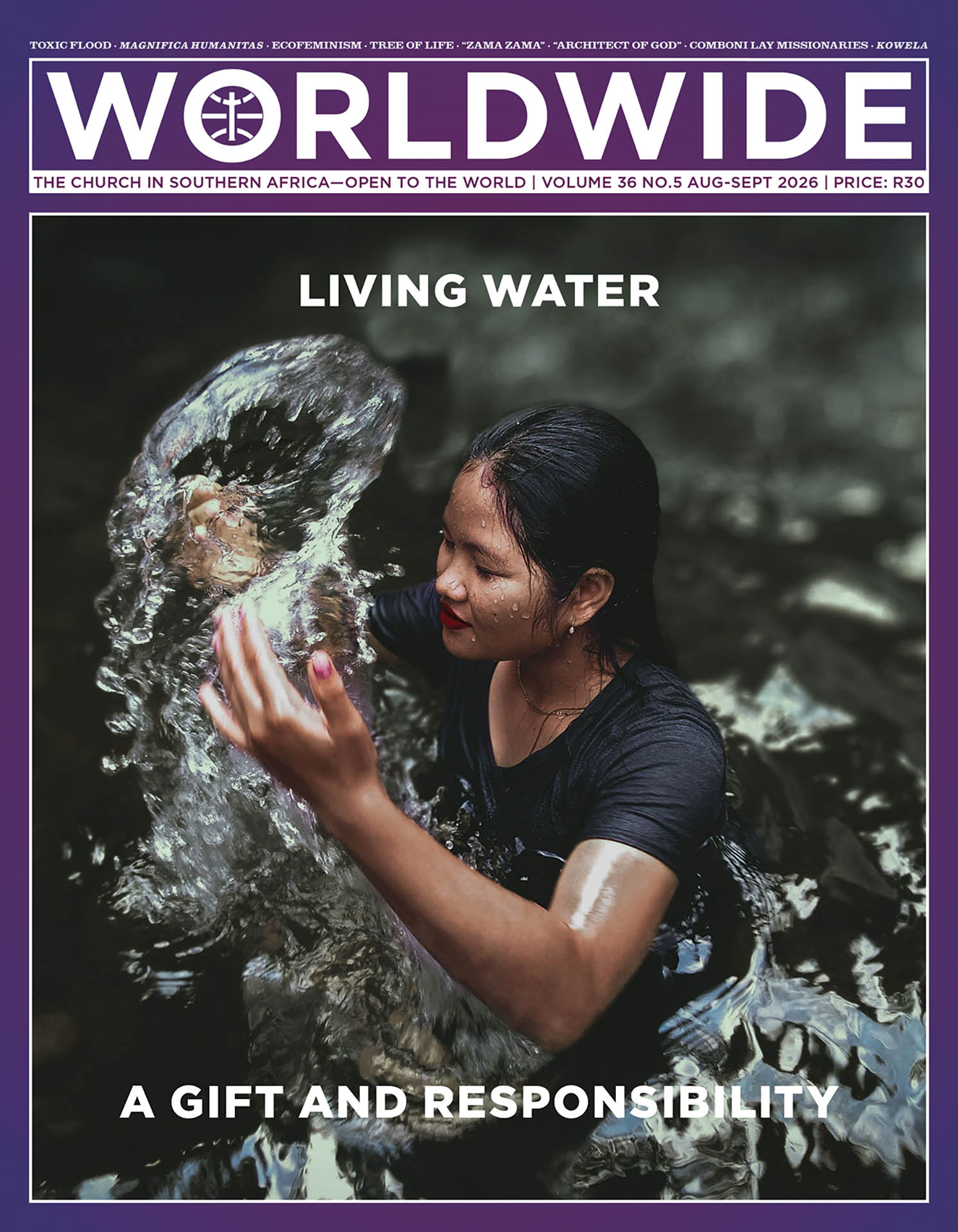
LIVING WATER
Every act of care for creation becomes part of a global stream of hope.
The cover page is inspired by the 2026 Season of Creation theme. In this season, our hope is that “Christians would be immersed in the living water flowing from the throne of God, stepping in deeper and deeper, inspired by the Spirit of God, working together for the renewal of Creation”
(Cf seasonofcreation.org).
World Report • South Sudan
Toxic Flood
Six hundred thousand people live in a territory affected by permanent floods that disperses contaminants such as lead and barium accumulated around oil infrastructures. Babies are born with severe congenital malformations, and diseases keep increasing. In the meantime, the government and oil companies remain silent.
Reportage By Marco Simoncelli And Buster Emil Kirchner |
Supported By The Pulitzer Center On Crisis Reporting
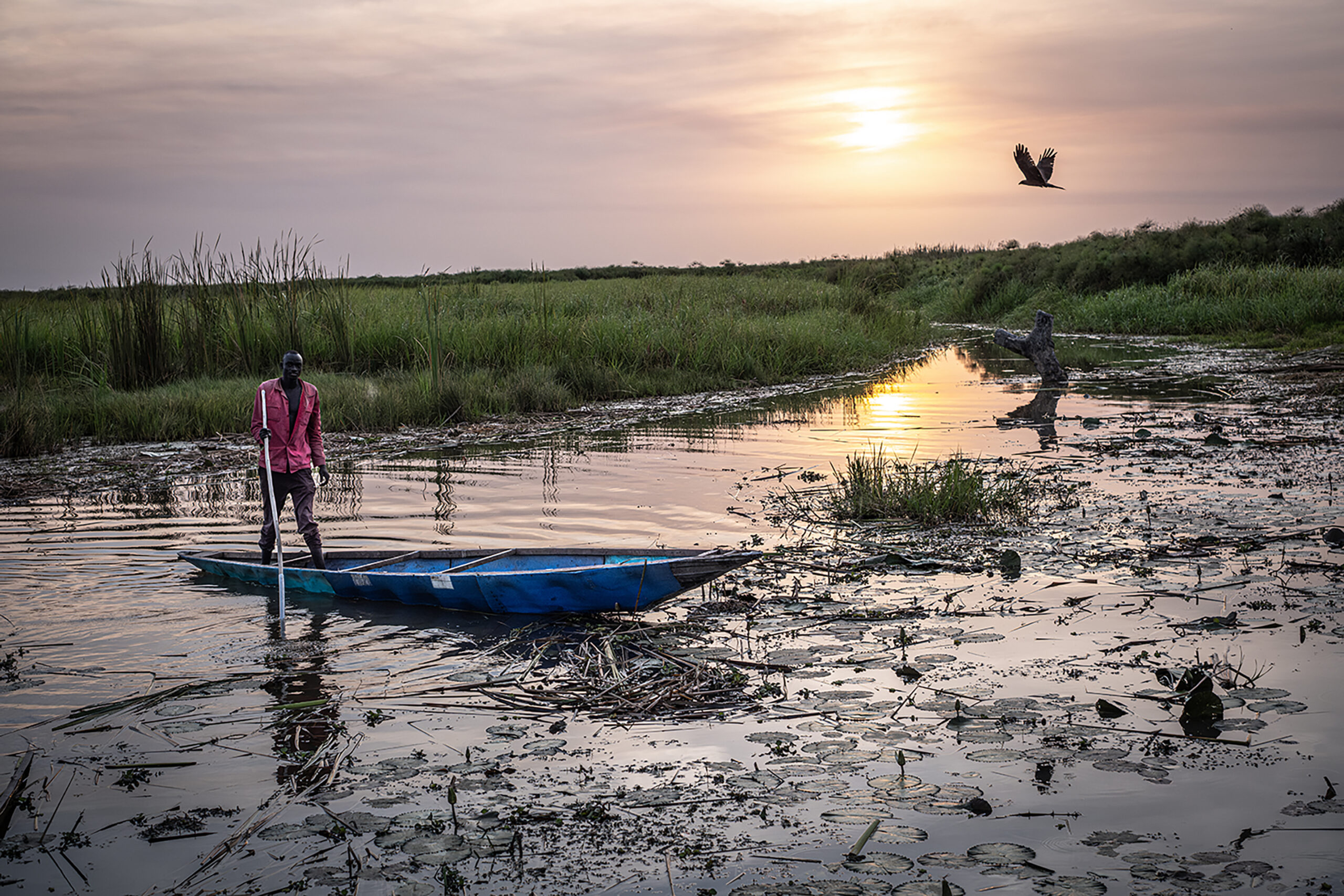
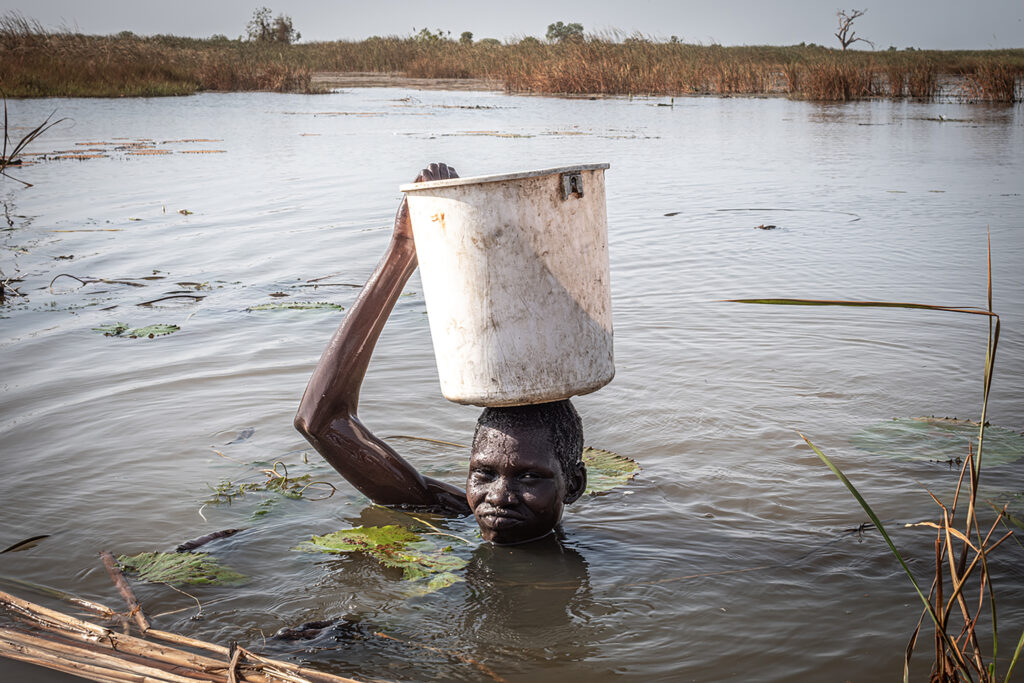
IN UNITY State, one of the northernmost regions of South Sudan, the floodwaters are no longer receding. Since 2021, vast swathes of land have remained submerged season after season, transforming a natural flood cycle into a permanent condition. In some areas, up to 70% of the surface has been submerged. Hundreds of thousands of people have lost villages, fields, and livestock. For many displaced people, the war had already made it impossible to go back to their land. The floods have destroyed what was left.
This region belongs to the Sudd, one of the largest wetlands on the planet. This is a rich and complex ecosystem in which for generations the predominantly Nuer communities built their lives on a delicate balance between livestock farming and seasonal agriculture, adapting to the annual floods of the White Nile. The water would arrive and then recede, leaving fertile pastures. In recent years, however, rainfall has become more intense, prolonged, and irregular. This balance has thus been disrupted, and according to some researchers, Unity State could be one of the first places in the world where the climate crisis is causing permanent displacement.
Over Half a Million Displaced People
According to the United Nations, Unity State is currently home to over half a million displaced people. It is a territory marked by recurrent conflicts, limited access, and the presence of the oil industry, which represents the country’s main economic asset.
It is in this context that Toxic Floods: When Climate and Oil Pollution Collide in South Sudan was born, an investigative reporting project carried out with the support of the Pulitzer Center with the aim of providing evidence of the intertwining of climate crisis, oil extraction, armed conflict and institutional fragility in one of the most neglected environmental crises on the African continent.
The area affected by the floods coincides with one of South Sudan’s main oil districts. Oil accounts for over 90% of the country’s state revenues and almost all of its exports. The starting premise was simple: to verify whether the permanent floods that have transformed Unity State could have amplified an environmental problem that has been denounced for years by local communities, civil society organizations and some researchers, but has never been systematically investigated. One question kept coming up during weeks of fieldwork in the counties of Bentiu, Rubkona, Budiang, and Pariang: what happens when a territory already exposed to oil pollution caused by neglect for decades is submerged for years?
Fish That “Smells Like Penicillin”
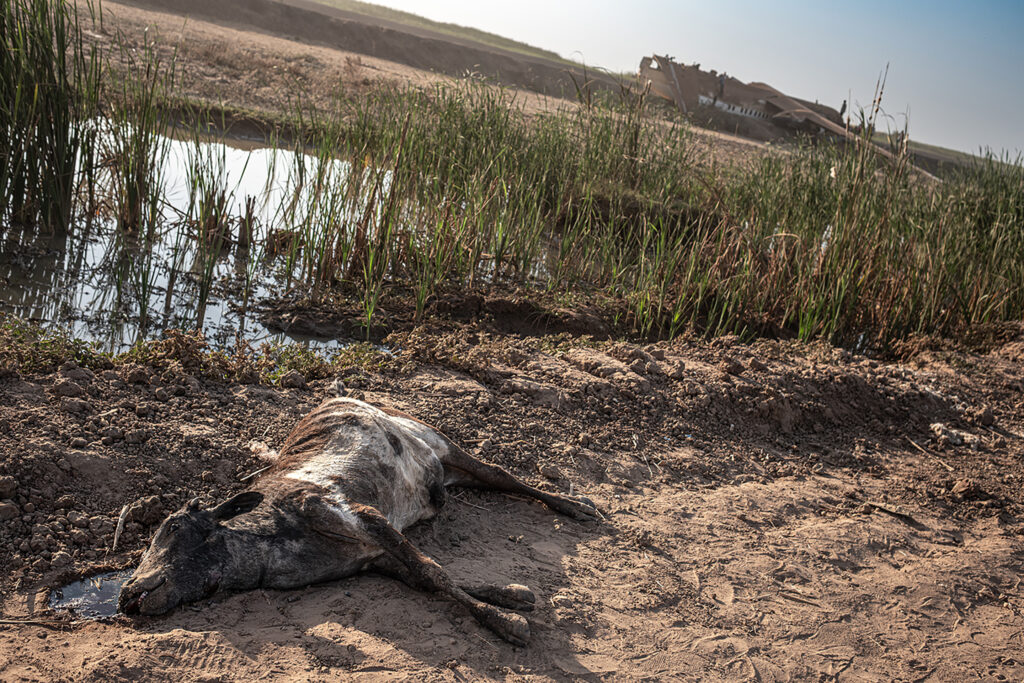
The first signals are coming from local communities. In the Bentiu camp for displaced people, over 140,000 people live on an artificial island protected by dikes that must be constantly reinforced to prevent them from collapsing. Here, the word that comes up most often and spontaneously, is lueng. In the Nuer language, it traditionally meant something rotten or spoiled. Today, it is used to describe the “contamination” of water and soil. Fishermen and farmers report fish sold at lower prices because people believe that they are contaminated; of livestock dying after drinking stagnant water.
Many complain that the water has an unusual smell and taste. Some claim that fish from certain areas, once cooked, “smells like penicillin.” Others link pollution to increasingly widespread illnesses and diseases. This is not scientific evidence, but rather testimonies that show how the issue of contamination has now become part of the daily lives of communities. South Sudanese researcher Marko Gatkuoth, originally from Unity State and among the few to have attempted to study the phenomenon, believes the major floods have exacerbated a pre-existing problem. “The flood has become a vector of pollution,” he explains. “It has made it mobile.” According to Gatkuoth, the water has helped disperse contaminants that had accumulated for years around oil infrastructures. “It’s all visible, but we still don’t have enough evidence or epidemiological studies to affirm it with certainty.”
Newborns with Malformations
The second sign is found in the Bentiu Civil Hospital. During a visit to the maternity ward, we chance upon two young mothers from the same village, Rotriak. Both have just given birth to babies with severe congenital malformations. Health personnel report dozens of similar cases in recent months and hundreds in recent years, from various locations in Unity State. No comprehensive medical records or epidemiological studies are capable of establishing a direct link between exposure to pollutants and individual clinical cases. The phenomenon, however, is considered anomalous enough to raise concerns among doctors and health workers.
The two women’s testimonies lead to Rotriak, a settlement of at least 30,000 inhabitants that arose north of the Unity Oilfield, the largest oil field in the country. During the civil war, thousands of people took refuge there because the area was considered relatively safe. In the following years, as the submerged areas expanded, many more families moved there because it was one of the few remaining pieces of land that was almost dry.
Through satellite analysis conducted by PlaceMarks and subsequent field investigations, it was possible to identify abandoned oil infrastructure within and in the immediate vicinity of the settlement: children playing among rusty pipes, women washing clothes in a depression that once housed a wastewater collection basin, abandoned wells without protection. This description raises serious questions about the environmental safety of today’s densely populated areas.
Lead in the Water and Studies Remain Ignored
The communities’ concerns are reflected in a series of studies and analyses conducted in recent years. As early as 2008, the German organization Sign of Hope analysed water and hair samples of the people in Unity State, detecting worrying levels of heavy metal contamination—including lead and barium—and estimating approximately 600,000 potentially exposed individuals.
Shortly thereafter, the organization was expelled from the country. Since then, no large-scale independent environmental assessment has ever been undertaken. More recently, two studies compiled by journalists of Nigrizia (The magazine of the Comboni Missionaries in Italy) and researcher Bul Duot Kuer found that lead concentrations were up to 18 micrograms per litre in the Nahm and Abuk rivers, around Bentiu and Rotriak, almost double the safety threshold indicated by the World Health Organization—and that fossil fuel levels were more than five times higher than the recommended limits.
“Water is the most polluted element. The contamination is permanent. There is no control,” says Kuer. “The government and oil companies do not care about people’s health.” Satellite imagery also paints a worrying picture. A geospatial analysis by the organization Pax for Peace, found as early as 2023 that after the major floods of 2021, in Block 2 alone—the area encompassing Bentiu, Rubkona, and Pariang—159 oil wells were submerged, equivalent to approximately 41% of the existing extraction infrastructure.
Institutions Continue to Be Silent
More than four years after the floods began, however, no independent and systematic environmental assessment has yet been conducted. In the Bentiu camp for displaced persons, community representative John Madieng says complaints have been made for years: “We have repeatedly reported the problem of pollution and related diseases to the United Nations. The UN forwarded it to the South Sudan government. But there has been no follow-up. Just silence.” Officials from the United Nations and health organizations informally confirm that the people’s concerns have been known for years and that data collection on the congenital anomalies observed in Unity State has been initiated.
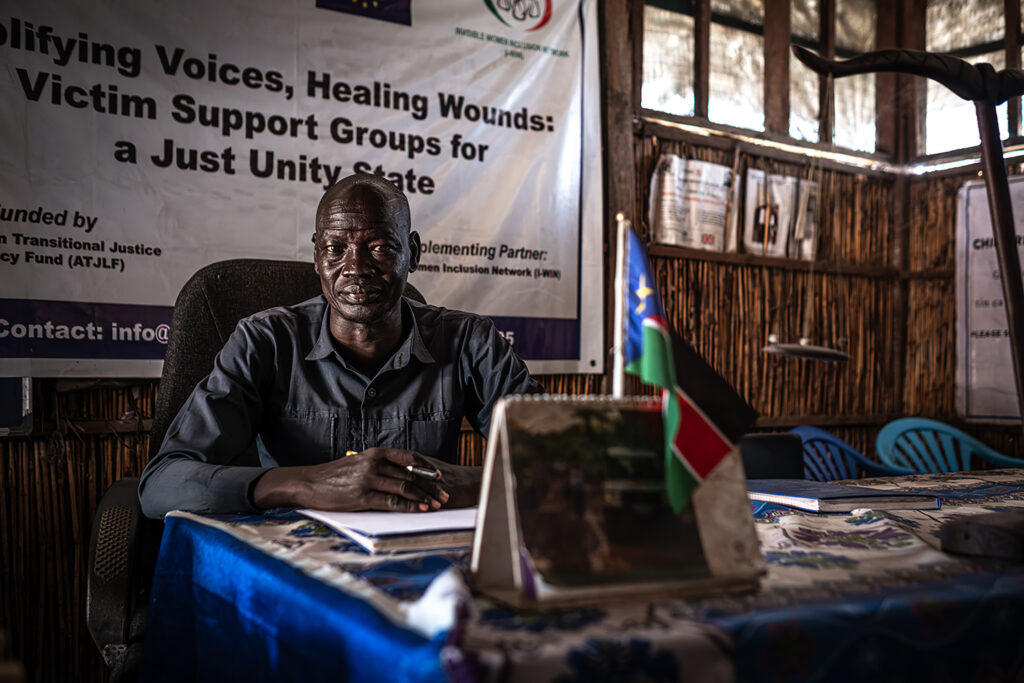
But without strong political and institutional support, the possibilities for intervention remain limited. Several sources also point out that the presence of international organizations in the region remains politically sensitive and subject to constant pressure. Even within the South Sudanese political leadership, some claim to have tried for years to draw the authorities’ attention to the problem. Parliamentarian Ayen Mijok Kiir says she has been submitting motions on the issue of pollution since 2012. “I showed photographs of new-borns with deformities to President Salva Kiir. He told me that something would be done. To date, nothing has happened.”
In 2019, under pressure from parliament, an environmental audit of the oil fields was launched. The report has never been published.
The Missing Billions
Questions also concern the management of oil revenues. South Sudanese law requires 2% of extraction revenues to be allocated to producing states to finance essential services, infrastructure and environmental mitigation measures. “People keep asking where that money went,” says Ayen Mijok Kiir.
A 2018 report by the Sudd Institute estimated that communities in oil-producing areas had been deprived of at least $305 million intended for their development. Those findings appear even more significant today in light of “Plundering a Nation: How Rampant Corruption Unleashed a Human Rights Crisis in South Sudan,” the report published by the UN Commission on Human Rights in the country. The document describes a system of corruption and misappropriation of public resources that has drained billions of dollars from the state coffers since independence, jeopardising investments in healthcare, education, and essential services.
It is no surprise, then, that Transparency International has ranked South Sudan as the second most corrupt country in the world in 2025. This comes at a time when the 2018 Peace Agreement is undergoing one of its most fragile phases. Riek Machar, the main opposition leader and vice president in the government formed under the agreement, has been under arrest since last year and has been on trial since September 2025, fuelling renewed fears for the country’s stability.
Meanwhile, oil production has returned to its highest levels in twenty years. Yet no one seems to be taking full responsibility for the environmental and health problems rampant in the extraction areas.
The Greater Pioneer Operating Company (GPOC), the consortium controlled by Chinese and Indian investors that manages much of the oil production in Unity State alongside the state-owned company Nilepet, has to date not responded to requests for clarification sent by the authors of this project.
Source: Nigrizia
Sudan: The Most Neglected War
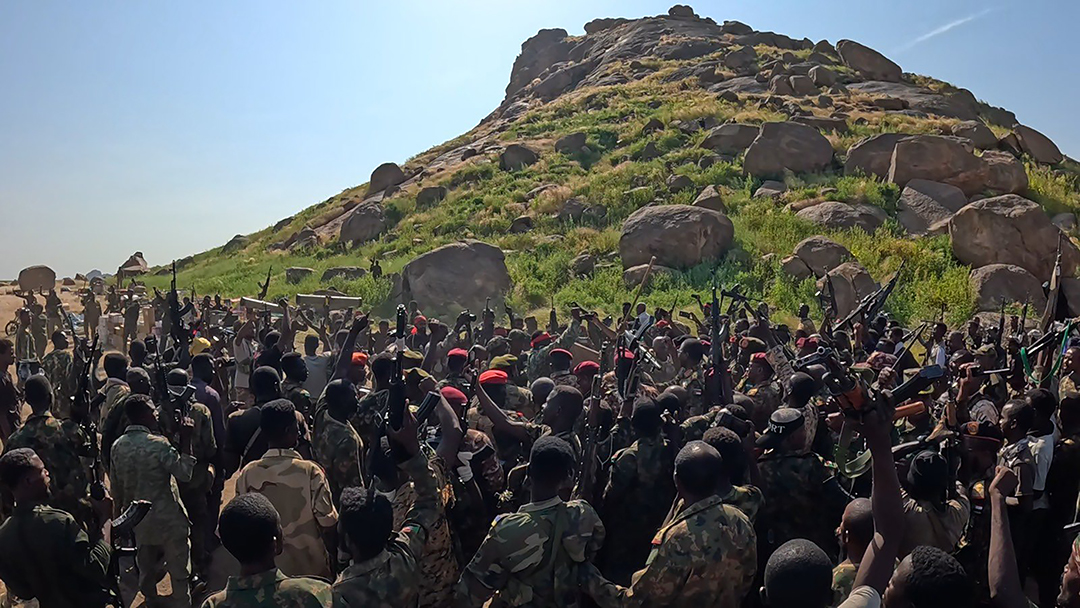
After three years of war, Sudan remains a country divided in two. The conflicting parties, the SAF and the RSF, continue to attempt to extend their territorial control, each supported by different nations in the region. Meanwhile, the Sudanese people are experiencing the most devastating humanitarian crisis.