
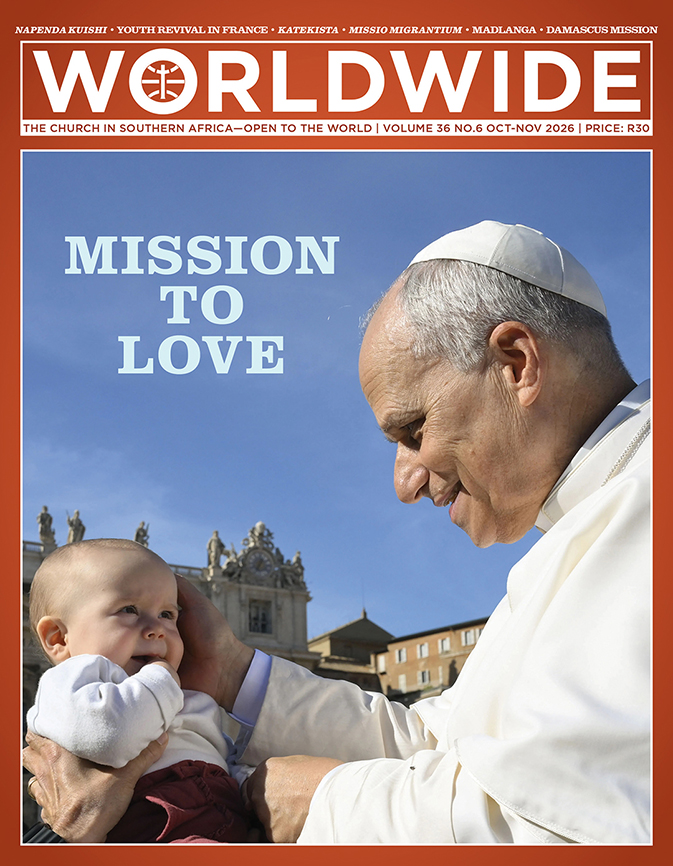
MISSION TO LOVE
Pope Leo XIV smiles while blessing a baby in St Peter’s Square—a gesture reflecting his closeness to the “little ones.” In his message for the centenary of World Mission Day in 2026, the Pontiff emphasizes: “The mission of the disciples and the Church as a whole is to continue the mission of Christ in the Holy Spirit: a mission born of love, lived in love, and leading to love” (§ 3).
Photo Credit: Francesca Pollio Fenton/aciafrica.org
Special Report • KATEKISTA
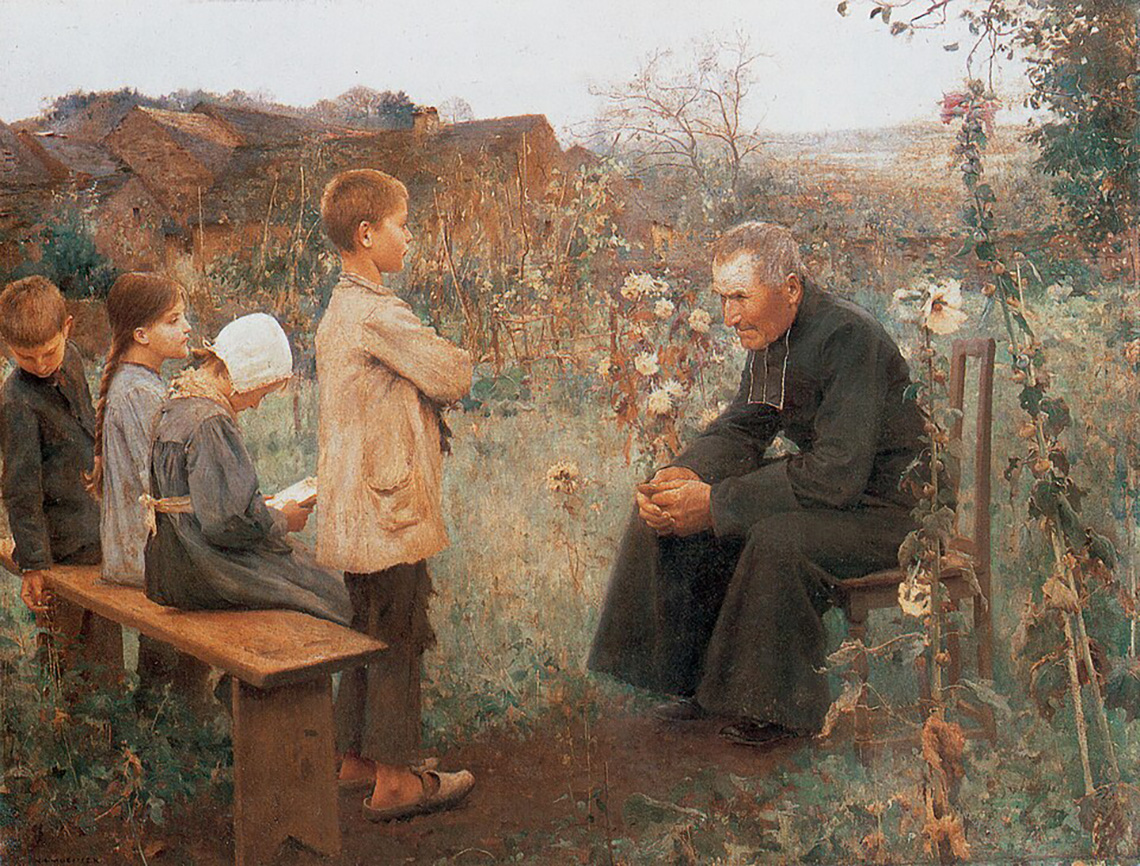
REIMAGINING THE EVANGELIZING MISSION OF CATECHISTS IN AN AFRICAN SYNODAL CHURCH
In this article, the author argues for the promotion of Catechists morally, materially, and spiritually, as important agents of mission ad gentes. He sees the vocation of lay catechists as the cornerstone and future of the Church’s evangelizing mission.
BY Fr Oscar Momanyi SJ
AS AN ecclesiologist immersed in academia, I seldom have a chance to spend quality time in an actual ecclesial setting of a parish. This year, as part of my ecclesial immersion, I was privileged to spend five weeks at the Blessed Mary Theresa Ledóchowska parish, popularly known as the Airport Parish in Dodoma, the capital city of Tanzania. That experience gave me a first-hand, practical knowledge of what integral evangelization looks like from below, that is, from the perspective of grassroots Christian communities that form the backbone of African parishes. From that immersion, I quickly concluded that the cornerstone and future of the Church’s evangelizing mission depend on the vocation of lay catechists, popularly known in the Swahili East African context as mwalimu (teacher) or simply as katekista. Reflecting on the ecclesial realities of many parts of Africa through my lens as an ecclesiologist, and confirmed by my recent practical experience on the ground, I believe that the role and vocation of these teachers of the Gospel need a renewed theological articulation and ecclesial support (moral, material and spiritual) that will determine the trajectory that this important ministry in the Church should take in the twenty-first century.

The Catechist and Joy
In his 2013 Apostolic Exhortation, Evangelii Gaudium (On the Proclamation of the Gospel in Today’s World), Pope Francis invites the Church to enter into “a new chapter of evangelization marked by joy…” (EG § 1). The joy in evangelization that Francis speaks about is evident in the ordinary and simple mwalimu at his or her “outstation” in the peripheries of rural and urban parishes in Africa, humbly leading their flock alongside or in the shadows of priests, religious brothers and sisters. In some situations, priests are only able to visit these “outstations” once a month. The catechist, thus, in many parts of the Church in Africa, is the ever-present shepherd, the first Church representative, the person in the “frontiers” where the needs of the Church are greatest, and the first to come to experience firsthand what Vatican II’s Gaudium et Spes (Pastoral Constitution of the Church in the Modern World) characterizes as “the joys and the hopes, the griefs and the anxieties” (GS § 1) of the People of God at the grassroots level. In this way, the catechists are the first shepherds to embrace the “smell of the sheep” (EG § 24).
It is indisputable that the growth of Christianity within the African Catholic Church has depended heavily on lay catechists. The eminent African Church historian John Baur has identified them as “the first apostles among us” (Baur 1990:194). The spread of Catholicism in Africa during the earlier part of the twentieth century, which was spearheaded by Western missionaries, would not have been successful if the local African catechists were not part of that evangelization.
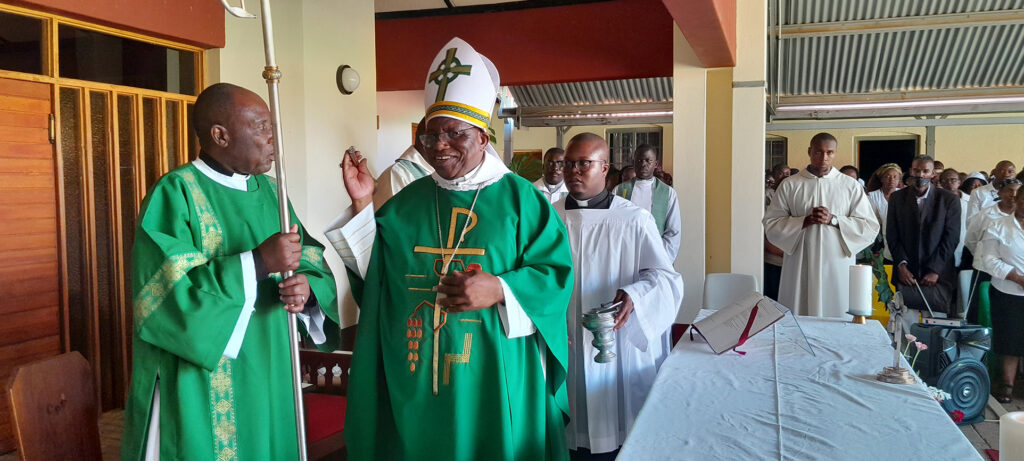
Credit: RK Ndungu
Lay Catechists: A Tour de Force for Evangelisation
Pope John Paul II said this about lay catechists in his 1979 Apostolic Exhortation
Catechesi Tradendae (On Catechesis in Our Time): “Your work is often lowly and hidden, but it is carried out with ardent and generous zeal, and it is an eminent form of the lay apostolate … (CT § 66).” Focusing on the catechists on the African continent in his 1995 Post Synodal Apostolic Exhortation Ecclesia in Africa (On the Church in Africa and its Evangelizing Mission towards the Year 2000), John Paul II noted that “‘the role of the catechist has been and remains a determinative force in the implantation and expansion of the Church in Africa. The Synod recommends that catechists not only receive a sound initial formation … but that they continue to receive doctrinal formation as well as moral, material (emphasis mine), and spiritual support’” (EA § 91). The Pope continued to observe that “both Bishops and priests are to have their catechists at heart, seeing to it that they are guaranteed suitable living and working conditions so that they carry out their mission properly. In the midst of the Christian community, the catechists’ responsibility is to be acknowledged and held in respect” (EA § 91).
There is a need to intentionally work to develop a “catechists training fund” in dioceses in Africa that can help sustain quality theological training of catechists.
Notwithstanding the above recommendations by John Paul II, it is an ongoing reality and concern that several problems regarding the welfare of catechists in the African Catholic Church continue to persist in the twenty-first century, yet many parts of the continent continue to depend on these “first apostles among us” to facilitate the process of evangelization.
Formation of Lay Catechists
I identify three major persistent problems: First, the quality of catechist training has consistently been poor in many parts of the continent. In Ecclesia in Africa, John Paul II noted that in the 1994 African Synod “… the training of lay catechists received the emphasis which it rightly deserves” (EA § 53). Although catechist training has improved since 1994, evidence shows more work is needed to improve its quality and, in turn, the quality of evangelization on the continent. Part of the problem is that not enough resources are at the disposal of the Church in Africa for the training of catechists. There is a need to intentionally work to develop a “catechists training fund” in dioceses in Africa that can help sustain quality theological training of catechists.
Proper theological training of catechists can help form them as a theological bridge mediating culture, theology, and the spiritual needs of the people at the grassroots. Because of their intimate knowledge of the people and cultures at the grassroots, catechists in the African context can help mediate between the Gospel and African cultures, including African communitarian values, indigenous wisdom, and contemporary social realities. They can facilitate a place-based ecclesiology, a vision of the Church from below, that is sensitive to the people’s cultural needs and perspectives. In doing this, the catechist can thus become a theological bridge facilitating authentic ecclesial inculturation from the ground up.
Poor Remuneration or Lack of it
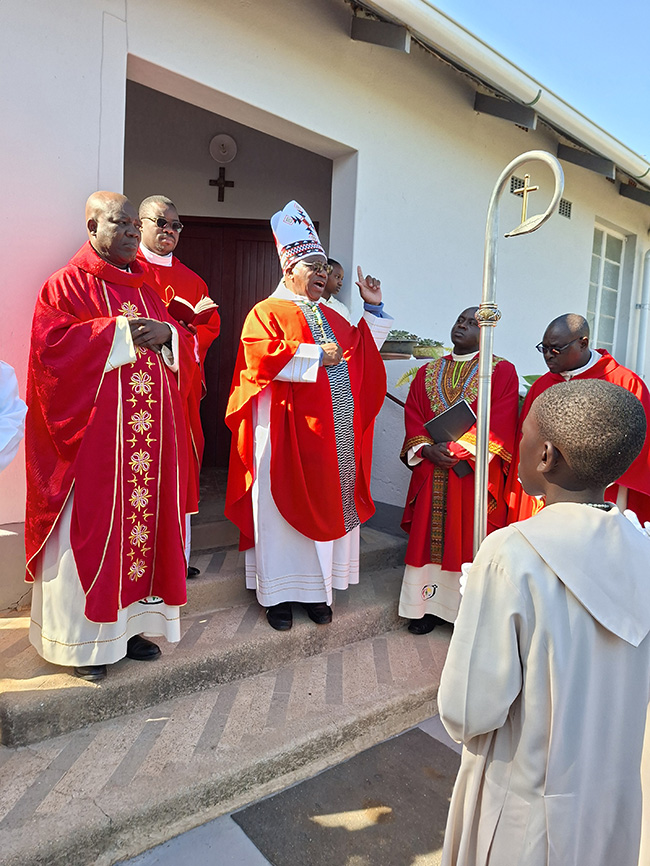
The second major problem is that these “first apostles among us” are not remunerated properly and hence they end up being part-time evangelists incapable of devoting all their energies and time to the task at hand.
Gender Imbalance
The third problem lies in the fact that, in many African contexts, catechists are mainly men, yet women are the majority of Christians to whom they evangelize. How can the Church in Africa broaden this space of evangelization to include more women who can improve the quality of catechetical work on the continent? This is a question that each local Church on the continent needs to continue to recognize.
Possible Solutions
To address these three issues effectively, I propose that there is a need to seriously revisit the evangelizing vocation of lay catechists on the African continent. I argue that the synod on synodality process, which began in 2021 and will continue through 2028 and beyond, offers an opportunity for discernment and rediscovery of the vocation and role of catechists for the contemporary African Church, which can facilitate the renewal of evangelization. Synodality offers an opportunity to listen to and walk with catechists as they reflect on how well their mission can be supported and their vocations reawakened. This can help rethink the role of catechists in that context, because they continue to be a key driving force for evangelization on the continent.
Synodality offers an opportunity to listen to and walk with catechists as they reflect on how well their mission can be supported and their vocations reawakened.
Further, I propose that the Church on the African continent revisit Francis’s recommendations in his 2021 Apostolic Letter, Antiquum Ministerium (Instituting the Ministry of Catechist), in which he established the lay ministry of the catechist (previously it was not considered a formal ministry in the Church). Among other recommendations, Francis invited “… the Episcopal Conferences to render effective the ministry of Catechist, determining the necessary process of formation and the normative criteria for admission to this ministry and devising the most appropriate forms for the service which these men and women will be called to exercise in conformity with the content of this Apostolic Letter” (AM §9).
Lay Catechists: Baptized and Sent
The future of the Catholic Church in Africa will depend partly on whether the Church recognizes catechists not simply as extensions of the clergy but as baptized co-responsible agents of evangelization whose lived knowledge of African communities can help the Church discern how the Gospel is to be embodied in African contexts. Some of what I propose in this paper can make this a reality for the African catechist in line with Vatican II’s proposal in the Dogmatic Constitution on the Church, Lumen Gentium, which states that “These faithful are by baptism made one body with Christ and are constituted among the People of God; they are in their own way made sharers in the priestly, prophetical, and kingly functions of Christ; and they carry out for their own part the mission of the whole Christian people in the Church and in the world” (LG § 31).
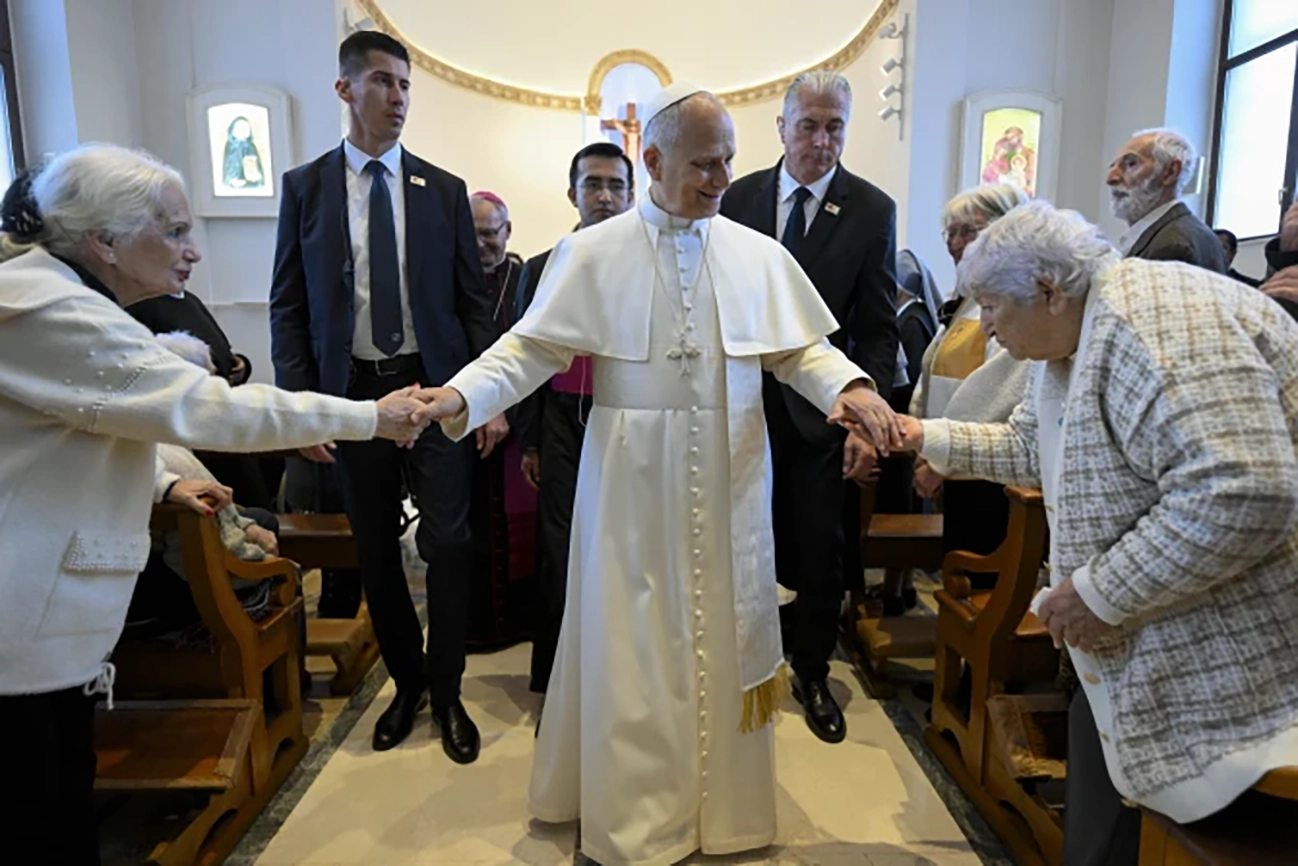
MISSION FROM THE MARGINS IN THE VISION OF POPE FRANCIS AND POPE LEO XIV
As the Church reflects on its missionary activities and endeavours during 2026 World Mission Month, the Second Vatican Council’s decree Ad Gentes remains neither a relic of an earlier missionary era nor a completed programme.
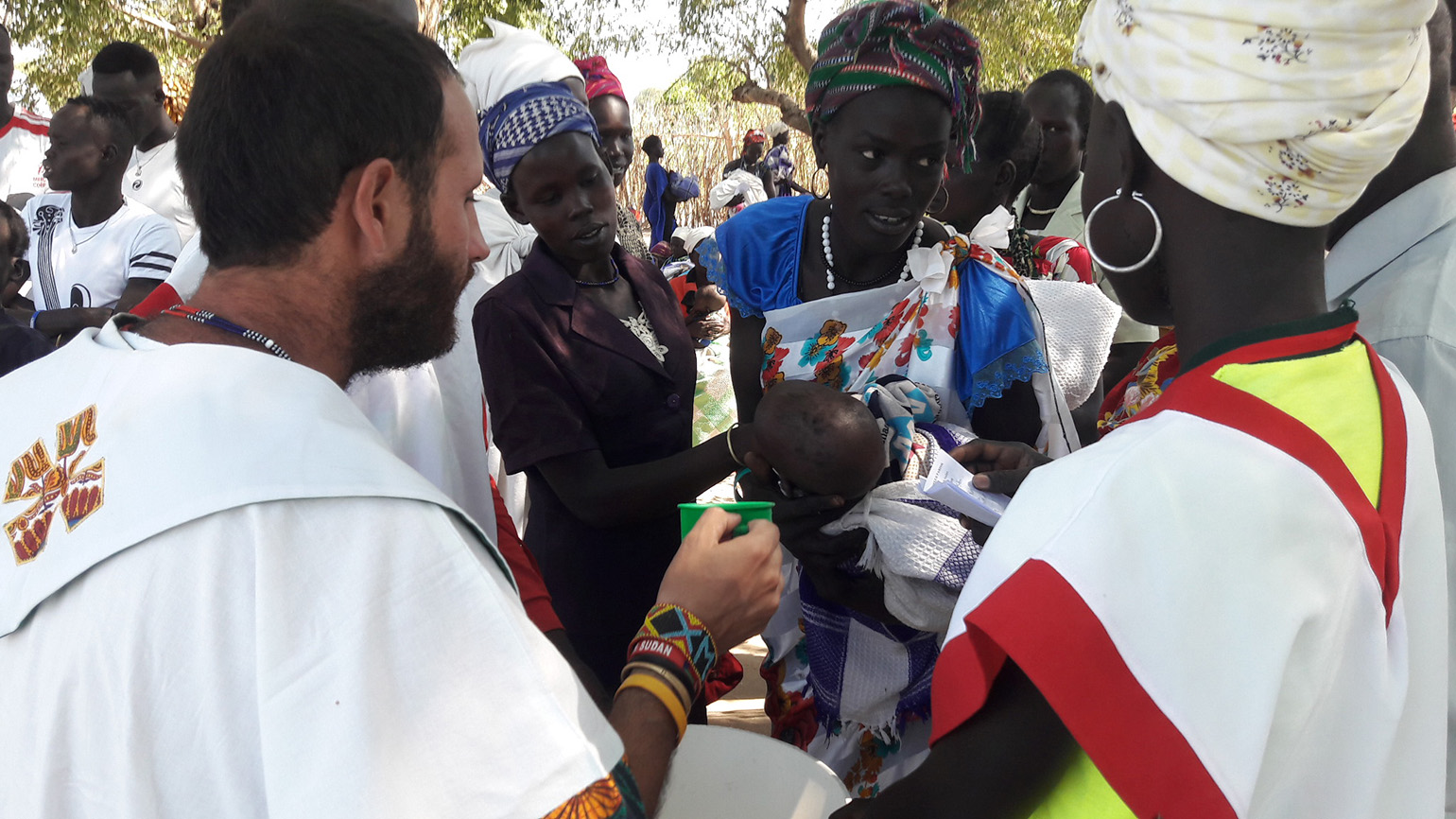
THE CHURCH SENT TO BRING CHRIST TO THE WORLD
Based on his experience with the Nuer People in South Sudan, the author re-emphasizes mission ad gentes as an essential element of the Church. He argues that the Church exists because she has received a missionary mandate from Christ: “Go into all the world and proclaim the gospel to the whole creation” (Mk 16:15).