
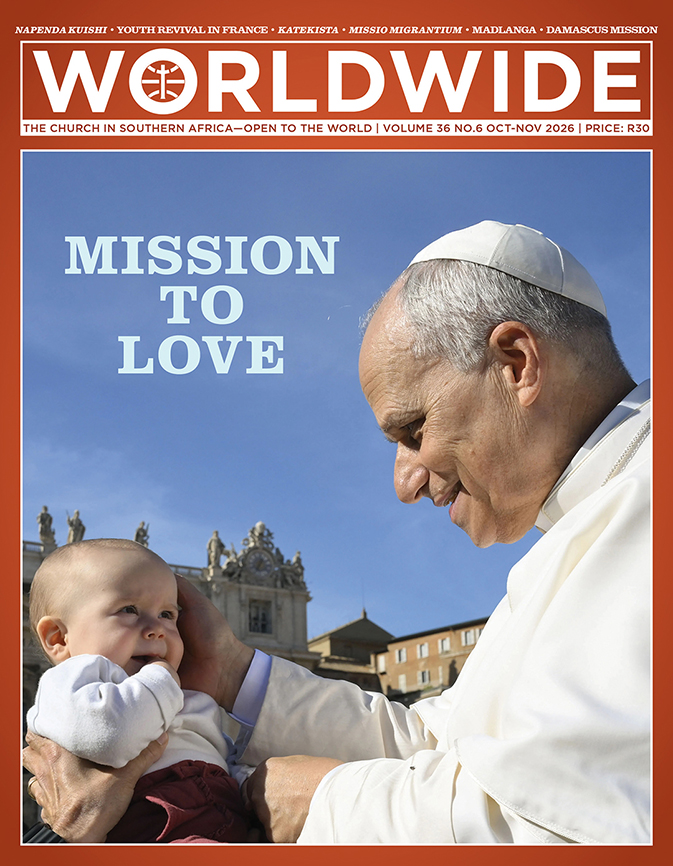
MISSION TO LOVE
Pope Leo XIV smiles while blessing a baby in St Peter’s Square—a gesture reflecting his closeness to the “little ones.” In his message for the centenary of World Mission Day in 2026, the Pontiff emphasizes: “The mission of the disciples and the Church as a whole is to continue the mission of Christ in the Holy Spirit: a mission born of love, lived in love, and leading to love” (§ 3).
Photo Credit: Francesca Pollio Fenton/aciafrica.org
World Report • YOUTH REVIVAL IN FRANCE
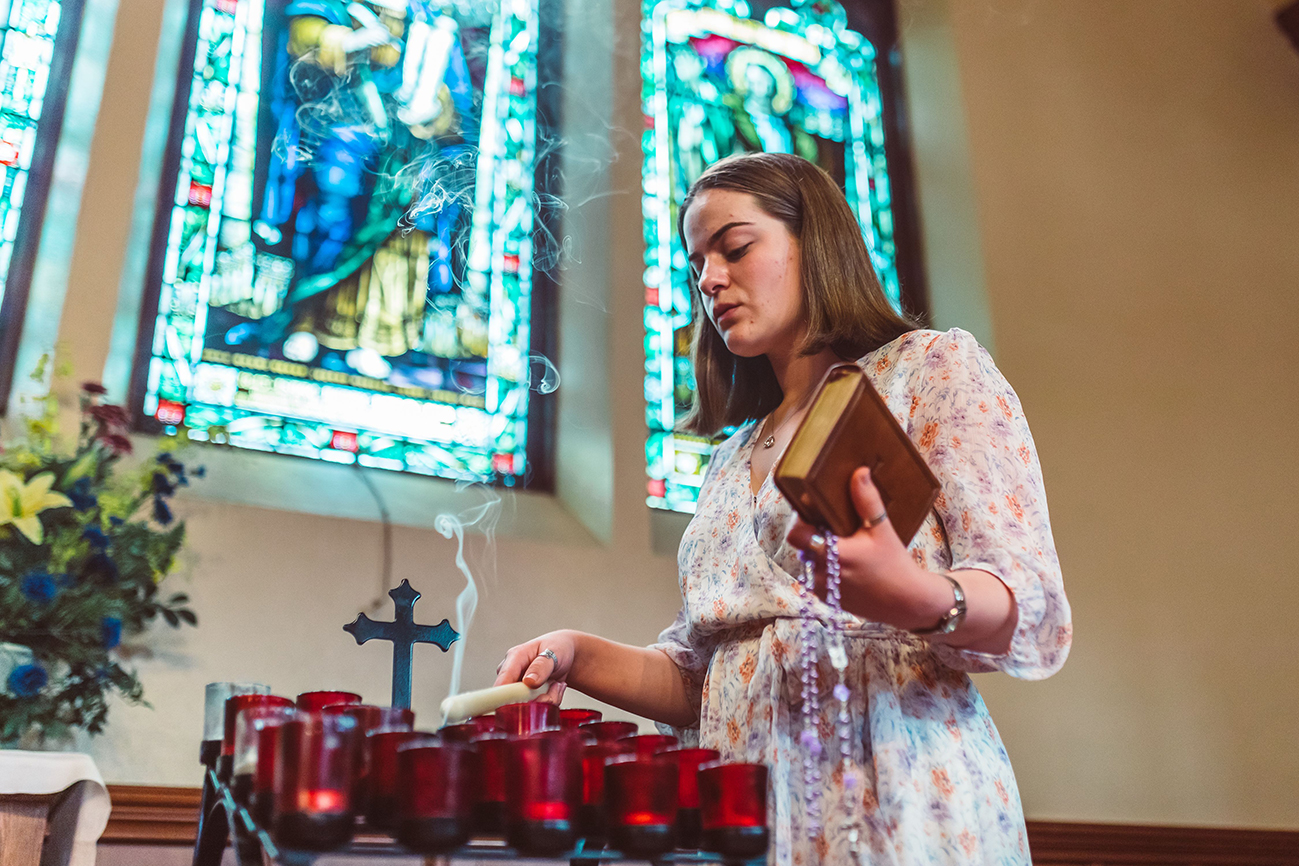
FAITH’S PERMEATING ACTION: A BISHOP’S VIEW
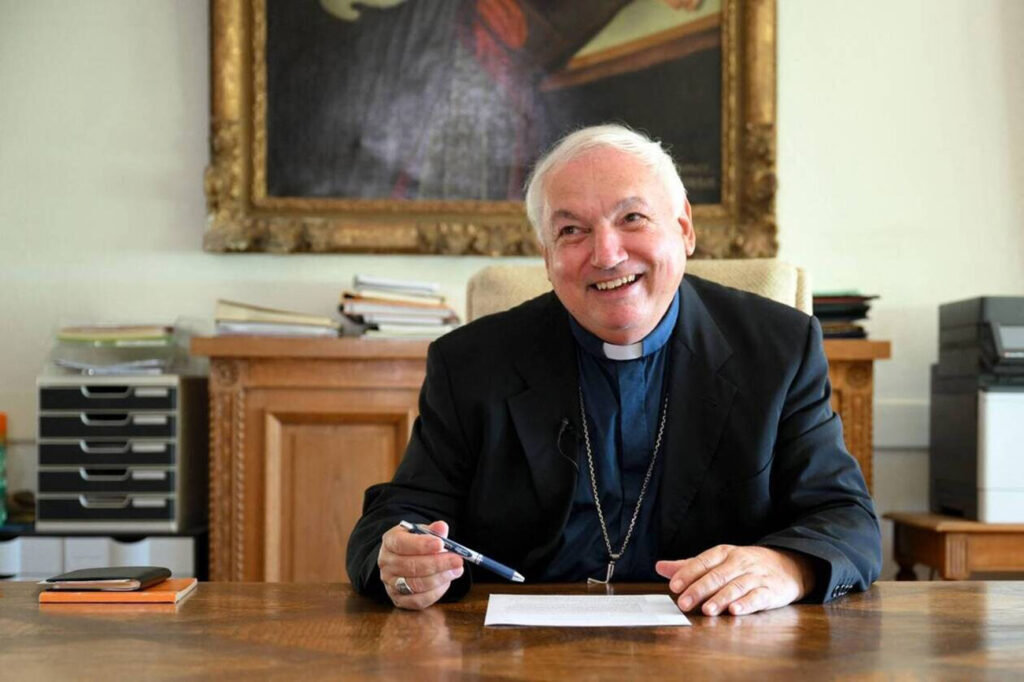
In this interview, the Archbishop of Marseille (France) engages openly with topics ranging from immigration to the revival of faith among the youth, to interreligious dialogue and to the rediscovery of true freedom.
BY FRANCESCO OGNIBENE
CARDINAL JEAN-MARC AVELINE, Archbishop of Marseille and President of the French Bishops, was born in 1958 in what is now known as Algeria, to a French family who emigrated to Africa for economic reasons. At the age of four, he was already a refugee. The independence uprisings drove out the “colonizers” and forced him to experience in France the harsh life of the “pieds-noirs” (the black feet), the derogatory nickname affixed to French Algerians who had fled Africa.
Your Eminence, what has this experience as a migrant meant to you?
This is my story, but not only mine: it is the story of many people who have left their countries. I think we must not forget this, because today there are many people who leave their countries because of drought, famine, for economic reasons, or because those who govern them are corrupt. Having lived this experience, I am particularly sensitive to this aspect.
Migrants are often seen as a problem to be controlled while ignoring the fact that they are people seeking a future. You are the bishop of a multi-ethnic city like Marseille. How should the migration phenomenon be managed?
Pope Francis used to say that people who emigrate should be welcomed with dignity, adding too that the ideal would be for no one to be forced to emigrate. Everyone must have reasons to hope for improving their life in their own country. Recently, I received a call from Caritas Marseille warning me that the Marseille police were about to evict several families with children who would end up on the streets. I was asked to try to prevent it. I sent a message to the chief of police saying that, notwithstanding the need to comply with the law, they should be mindful of people, specifically children and the disabled. Only when we know someone personally can we take concrete care of them and make things change. We can all do this. Personal closeness is crucial; otherwise, we merely ideate instead of taking action.
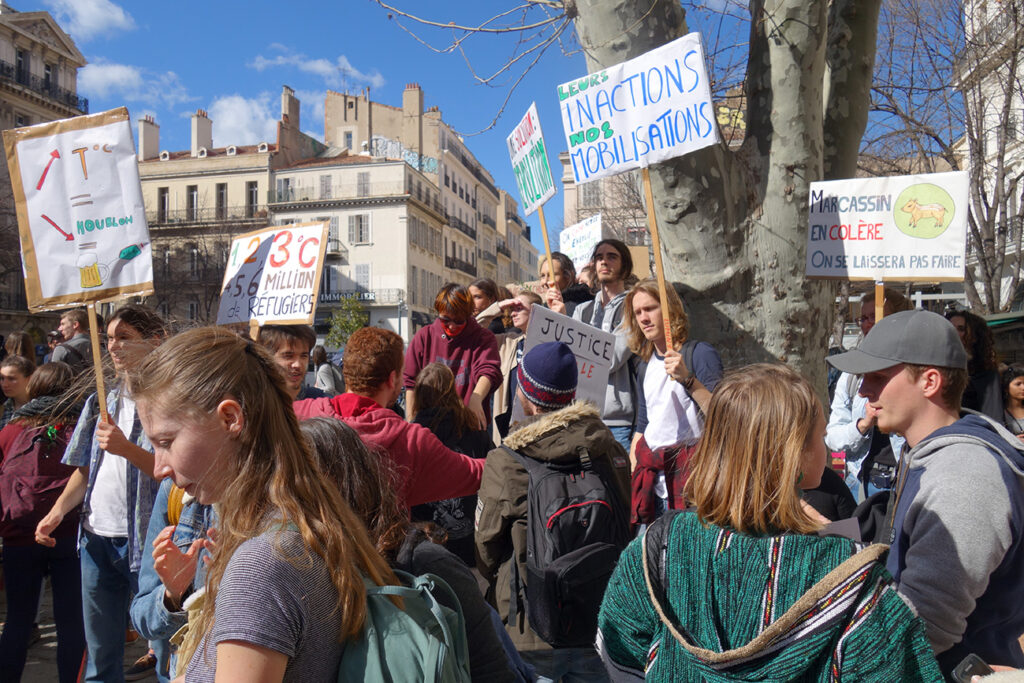
Credit: Touam Herve Agnoux/Wikimedia Commons
The Church in France is experiencing a fast-growing number of catechumens: people who rediscover the Christian faith as adults. How do you explain this?
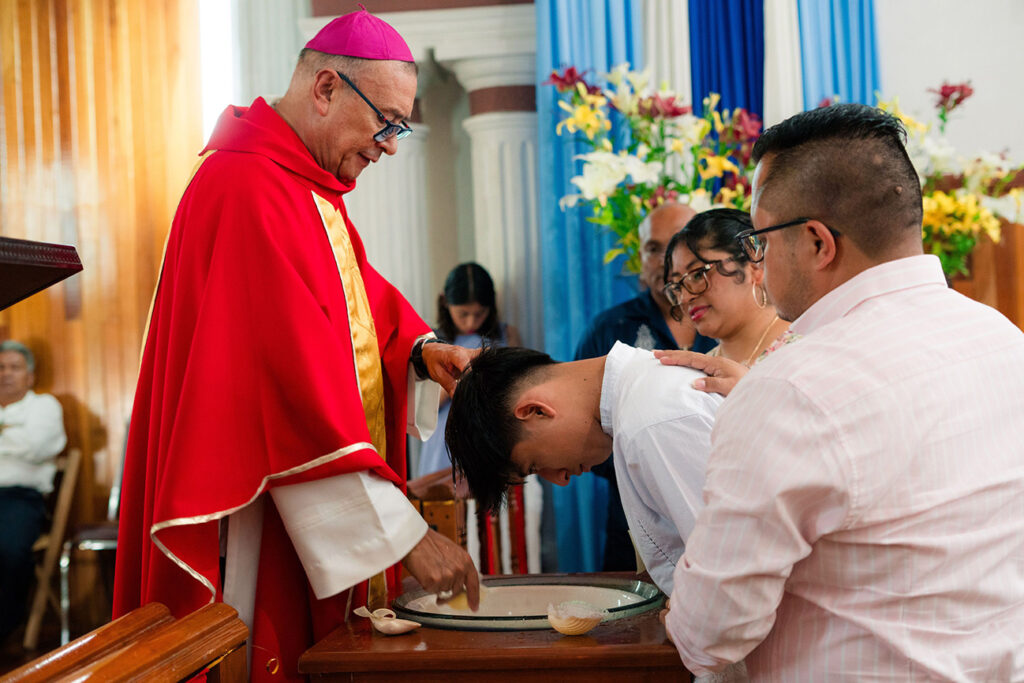
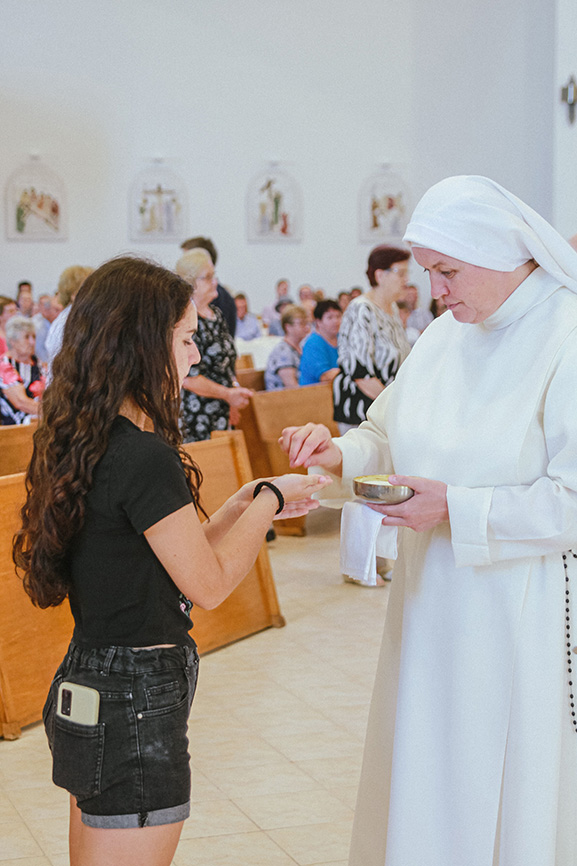
In the past five or six years, we’ve been observing the surprising phenomenon of people requesting the sacraments of Baptism and Confirmation. They are mostly young adults, between 25 and 35, but have now been joined by high school students, between 16 and 18. At first, we thought it was a somewhat special year, but now their numbers are growing year after year. In 2025, there were 21,000 catechumens across France; the previous year, 17,000, and 15,000 in the year before that. Estimates for 2026 point to a further increase. So, it is not a flash in the pan. We could be tempted to feel proud of these numbers and to attribute to ourselves the merit. The antidote against this temptation is to realize that the journey of faith that these young people have undertaken is none of our doing. It is the Holy Spirit who is leading them; we simply need to cooperate with him.
And how do we do this?
We must listen to and reflect on the journey these youth have embarked on and understand what triggered their conversion. Sometimes, it is an event in their life —a bereavement, an illness, a family tragedy, a personal disappointment—that raises a question in them. Other times it is the encounter with people their age who are believers. One evening I was on a pastoral visit to the poorest area of Marseille, the northern neighborhoods. During a meeting with a group of young adults, one of them said that she had invited a non-believer colleague who in turn had brought another one along. So, from one person the number grew to three. This episode reminded me of the Book of the Acts of the Apostles that talks about the beginnings of the Church that grew through the invitation from one person to another to “come and see.” Often, among the reasons for rapprochement is the need for peace and for a point of reference in a society marked by so many uncertainties.
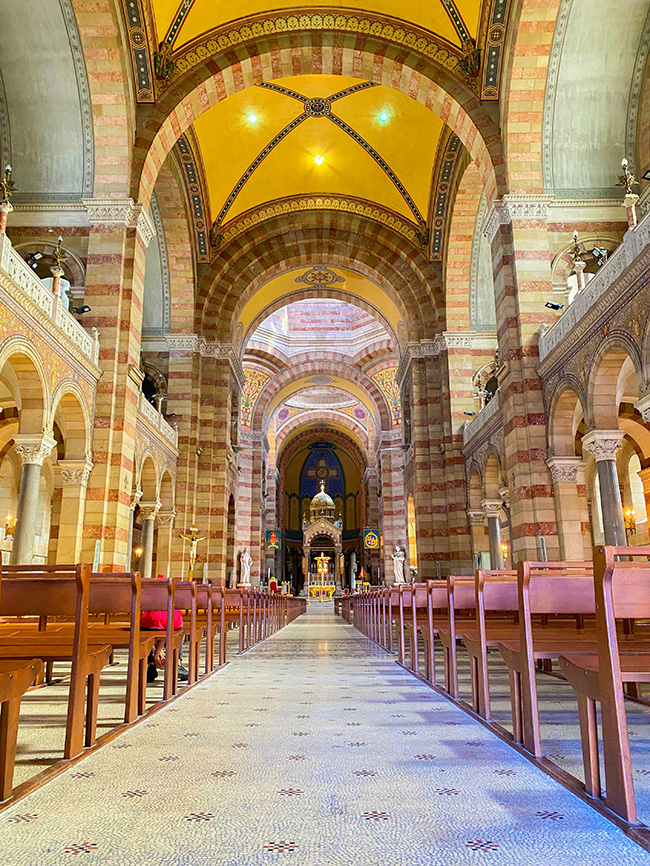
In a letter, a person confided to me that she used to pass in front of a church every day on her way to work. One day she felt the need to stop, and she subsequently entered the church. In the silence that she encountered there she found the sense of peace she was seeking, so she began to stop every day, discovering how that peace was becoming part of her life, making her feel better. Then, she decided to take part in a prayer group and from there her journey of faith began.
Then there are youth who feel challenged by Muslim friends who pray and practice the month of fasting, Ramadan. Dialoguing with youth of Islamic faith, they are provoked to answer the question about what being Christian means. Often, not knowing how to respond, they search on the internet for the most basic information regarding Christian religious practices. Thus, it happened that at the Mass on Ash Wednesday I found the church filled with young people who had been challenged by the example of their Muslim friends who are honouring the time of fasting and penance during Ramadan.
What is this phenomenon telling the Church?
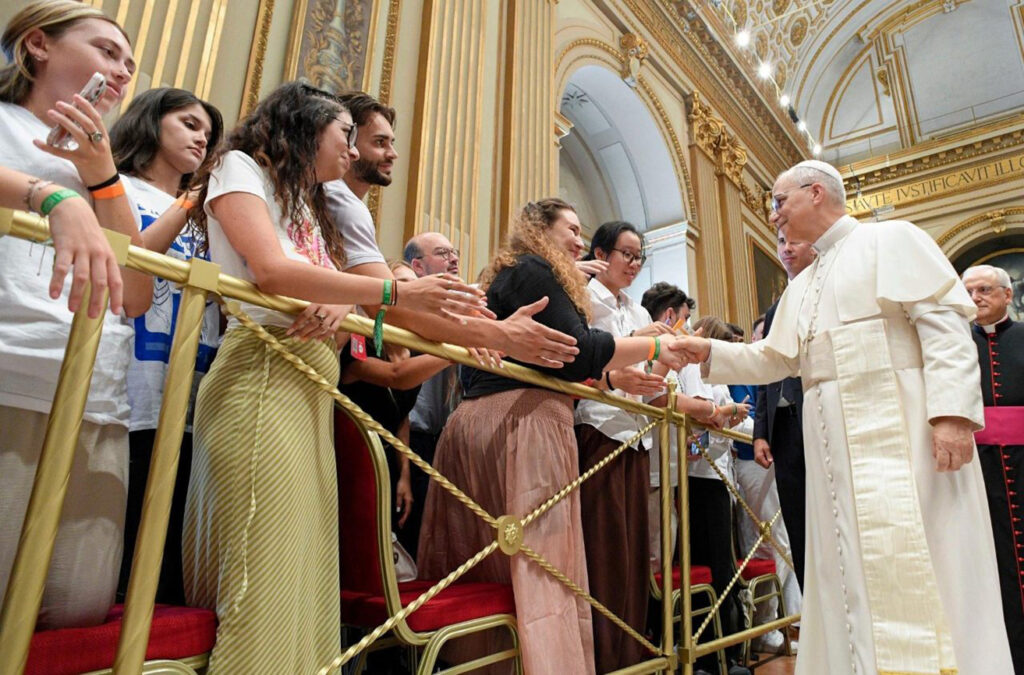
Let us never forget that the Church’s mission is to cooperate with the Holy Spirit, who always surprises us just as we are making our plans. The youth who come to rediscover their faith need formation and guidance to root their experience in the Gospel. Sometimes their journeys begin with great enthusiasm, but then it becomes necessary that they enter the mystery of faith and grow into the understanding of what it means to belong to the Catholic Church. For this reason, in Marseille, we have established a Diocesan Council of neophytes, who are baptized catechumens who require solid formation.
How did your sensitivity to interreligious dialogue arise?
I became a priest in 1984, then a professor at the seminary in Marseille. I taught dogmatic theology and Christology; I wasn’t interested in religions or Mediterranean issues. The diocese of Marseille has about a million inhabitants. Of these, 200,000 are Muslims, most from the Comoros Islands, near Madagascar. Then there are Algerians, Moroccans, Tunisians, and even people from sub-Saharan Africa. But there are also 80,000 Jews, the third-largest Jewish community in Europe, and numerous Buddhists who arrived from Vietnam and Cambodia after the various crises in Southeast Asia. Let us also not forget the 90,000 Armenians who arrived at the time of the genocide in the early twentieth century, and the 15,000 Maronites from Lebanon and Syria.
Marseille is a true religious laboratory, which raises a major theological question: how can we welcome so many diverse presences? We did not invent the plurality of religions, nor the fact that each religion legitimately claims to possess the truth. How can we embrace all this and bear witness to the Christian faith? What questions does it pose to the Christian faith? I had to work on issues I had never really cared about, and the Mediterranean, which for me already had an existential dimension, began to take on a theological dimension as well. At one point, it was thought that, little by little, everyone would become Christian. Then came the time of the discovery of religions. And today, thanks to human mobility, we become aware of the religious plurality of people living alongside us and the connections we are able to form with them, despite them believing differently than we do and questioning our way of believing.
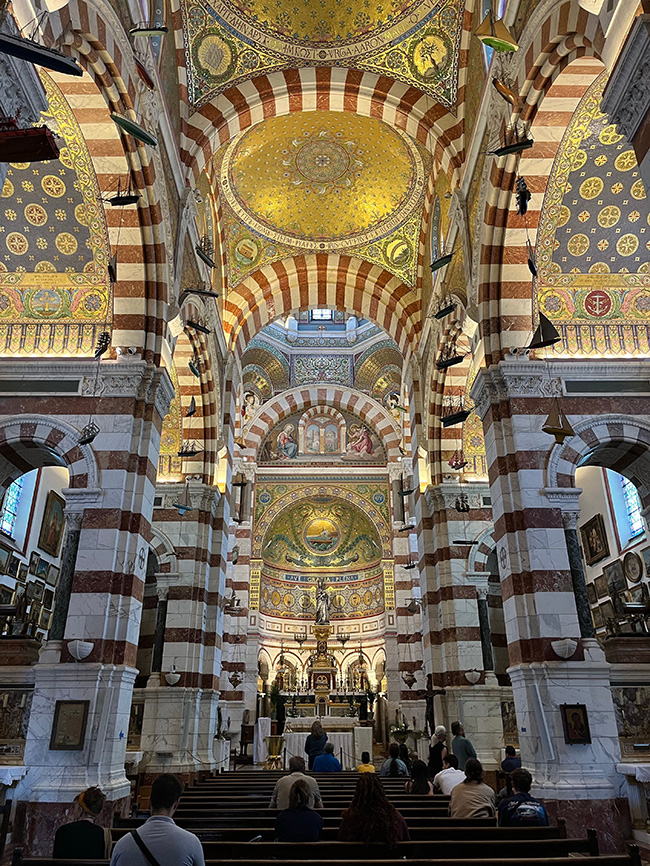
What is the heart of dialogue?
In the Creed we recite every Sunday, there is the Church’s vocation to Catholicity. I often say: if I had been born in China, I would have been Confucian; in Japan, Shintoist… The catholicity of the Church means recognizing the desire for God in the hearts of women and men of every religion. And precisely because of the catholicity of the Church, I know that this desire, the image and likeness of God present in every person, is related to the Paschal Mystery. The Vatican II Council states that we believe that the Holy Spirit offers everyone, in a way known only to God, the possibility of being associated with the Paschal Mystery. We believe in Christ, and for us, Christ is the only saviour of the world, of all believers of every religion, even those who do not believe, even those who do not know him. I can observe something of the Spirit’s action in the way men and women seek to nourish within themselves a taste for God.
It is precisely hope that seems to be fading amidst the grim climate of war and violence in which we are immersed. What can we do to avoid becoming discouraged and become instead “artisans of peace”?
The society we live in is deeply numb. I believe that today, it is essential above all to awaken consciences and remember that we are free. The constant influx of information and social media—despite their positive aspects—ends up leading us to believe that there is no point in hoping. Yet we are free: free to say yes to one thing and no to another; we can resist how we risk being exploited, molded, and programmed today. We must rediscover the path of interiority, and in doing so, we rediscover the path to freedom. And freedom is the beginning of resistance. Today, the Christian faith is closely linked to resistance: not the martyrdom of the early centuries, but resistance against the numbing of consciences that causes us to lose the strength to believe, to be free—and to choose. As Saint Paul says, you have received a spirit that makes you free people.
Source: Avvenire
Toxic Flood
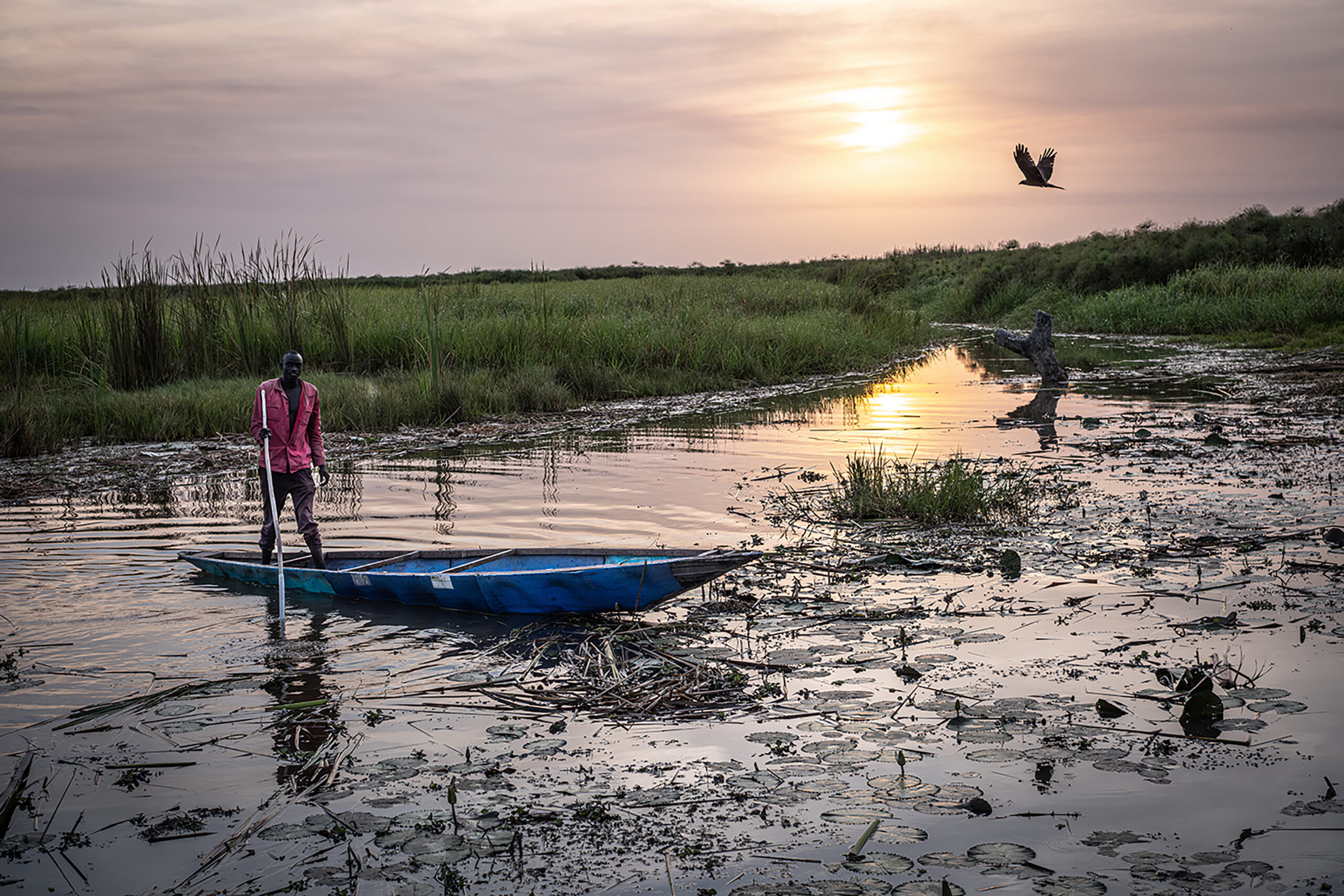
Six hundred thousand people live in a territory affected by permanent floods that disperses contaminants such as lead and barium accumulated around oil infrastructures. Babies are born with severe congenital malformations, and diseases keep increasing. In the meantime, the government and oil companies remain silent.