
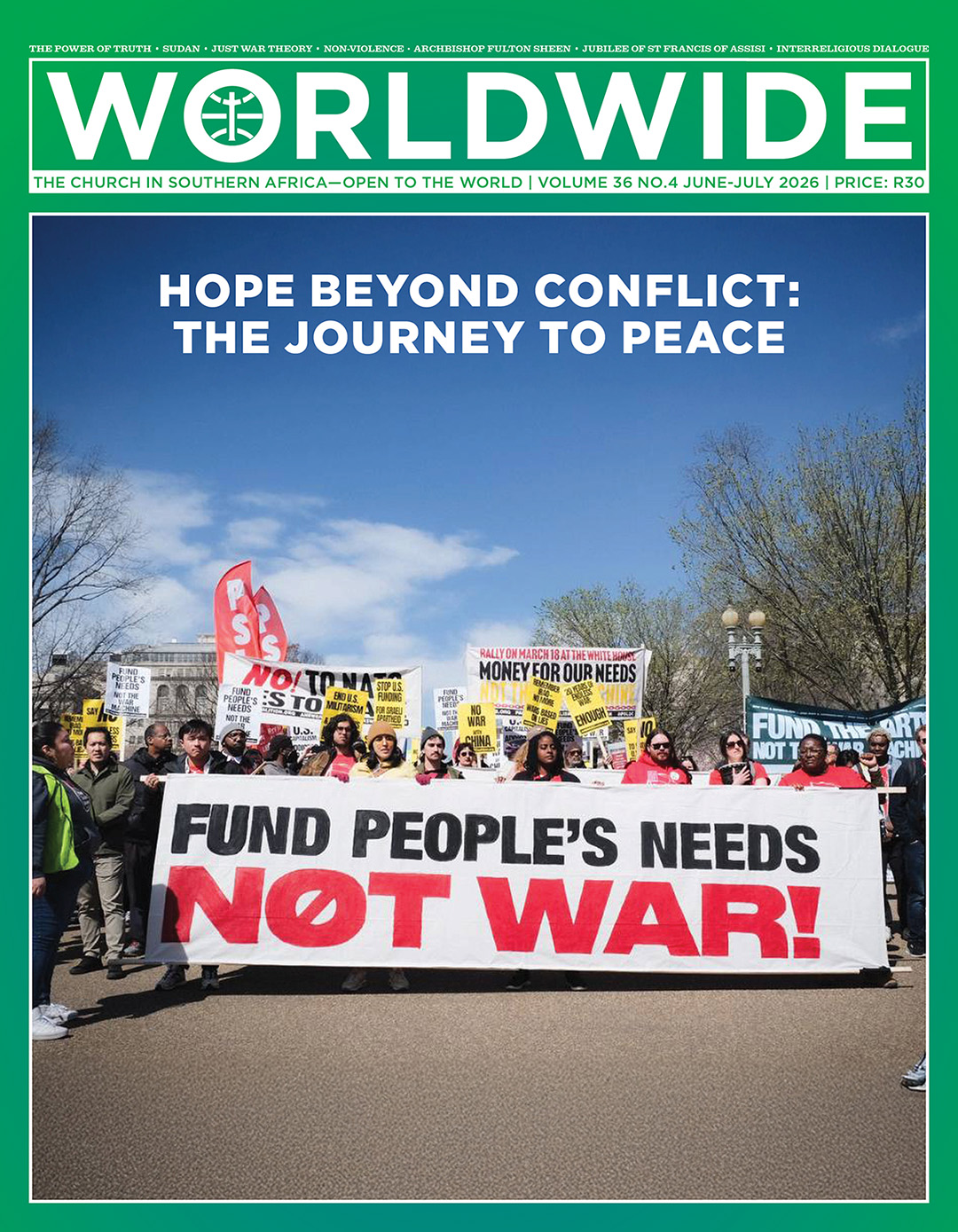
HOPE BEYOND CONFLICT: THE JOURNEY TO PEACE
“It is no coincidence that repeated calls to increase military spending, and the choices that follow, are presented by many government leaders as a justified response to external threats. The idea of the deterrent power of military might, especially nuclear deterrence, is based on the irrationality of relations between nations, built not on law, justice and trust, but on fear and domination by force.”
Message of Pope Leo XIV for the World Day of Peace 1 January 2026.
Cover Photo: Protesters in Ohio rally against US funding for the Russia‑Ukraine war, March 18, 2023. | Credit: Vincent Tsai/Peoples Watch
Special Report • Armageddon
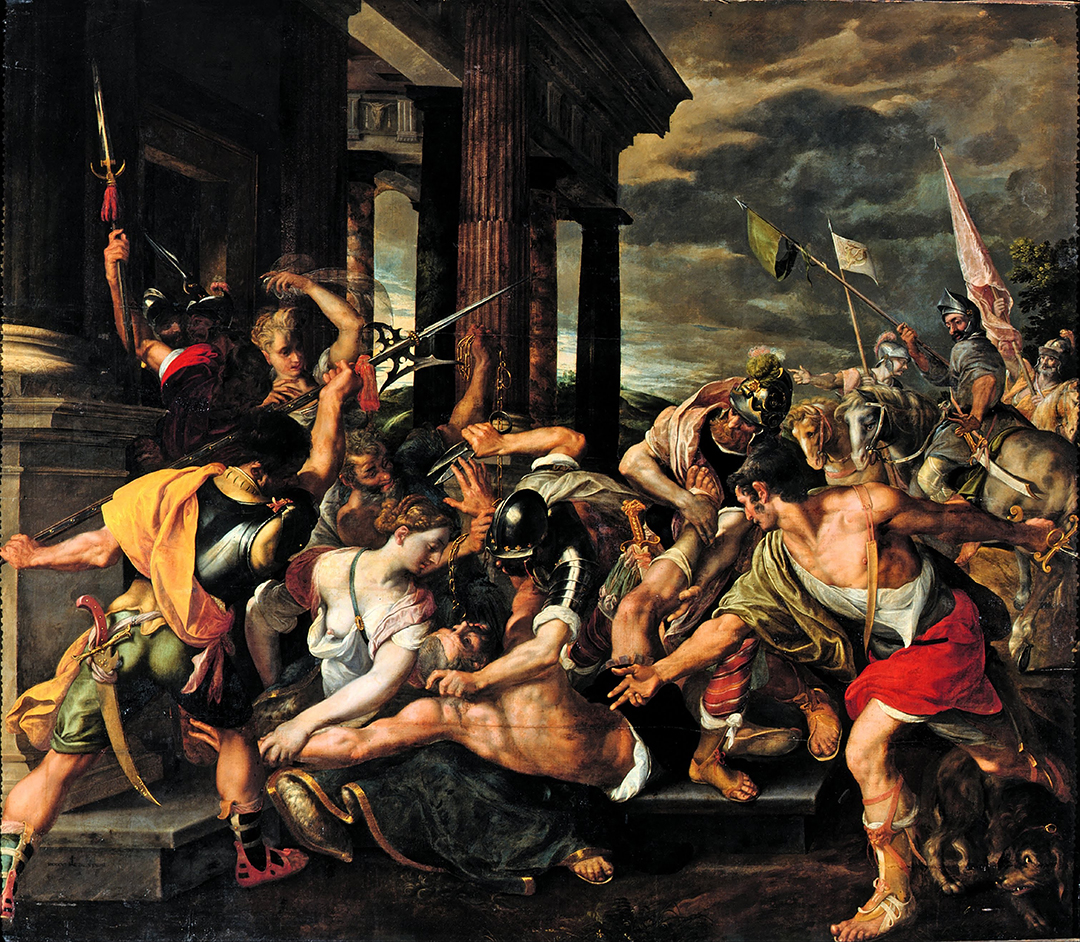
Credit: Jodocus van Winghe | Source: commons.wikimedia.org
Swords, Shields, And Shalom: A Biblical Reflection
Canaan has always been a buffer zone between regional powers. It is here that Egyptians, Hittites, Assyrians, and Persians fought for the control of the Levant, the region known today as the Middle East.
BY FR JOSEPH CARAMAZZA MCCJ
FOR A long time, the people of Israel suffered because of wars and became accustomed to the presence of violence and oppression. It goes with out saying that war was accepted as a recurring reality. Archaeological excavations revealed that Israel used a variety of weapons, similar to those developed by other powers surrounding Canaan. There is also evidence that the Northern Kingdom of Israel – roughly the areas of Samaria and Galilee commanded respect for many years because of its large cavalry and chariot units. War was nonetheless seen negatively; a source of destruction and disruption of life.
God As Warrior
War and violence might have been considered negatively, yet they reflected the understanding of God. God was depicted as a warrior. He had a bow and threw arrows that became lightning. God could also fight for Israel and be at the head of the battle. But not all agreed on a warmonger God. The prophets portrayed Yahweh as a military leader of foreign nations. They claimed that God was not solely the God of Israel and hence not their exclusive military leader (Isa 42:13-16). Cyrus is depicted as the instrument of righteousness, anointed by God. The Greek translation of the Old Testament the LXX – tries hard to distance itself from the image of a war-loving God. The translator moves words around or adds verses to suggest that God is the one who destroys wars (Ex 15:3; Is 42:13; Jdt 9:7; 16:3). The texts describe the destruction of instruments of war to the destruction of war itself (Hos 2:20).
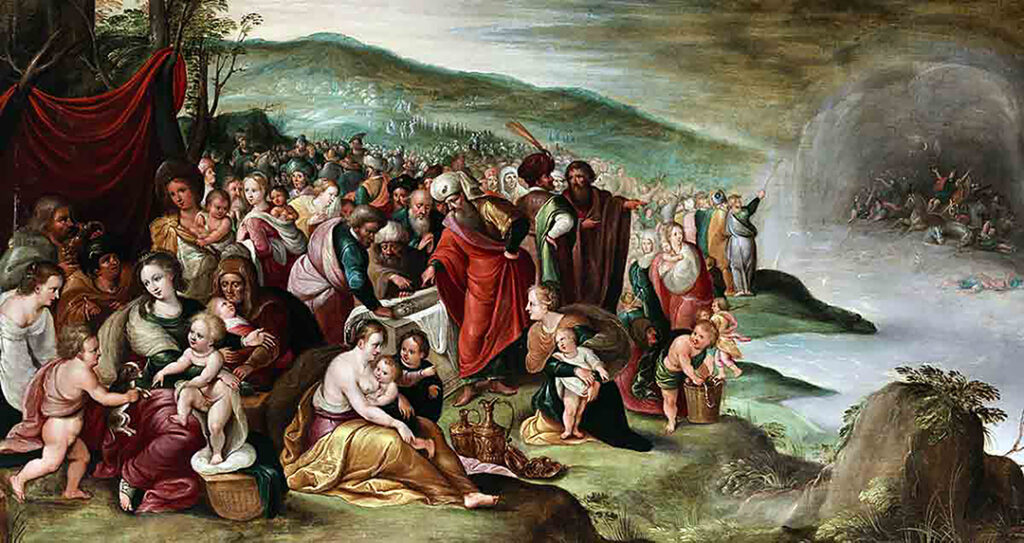
Source: commons.wikimedia.org
It is important to take note that while the translator of the LXX strove to distance God from violence, Jewish society continued to see God as a warrior. Various texts from the V century BCE describe God’s armour, his warlike appearance, and his violent actions against Israel’s enemies. These descriptions are found in many writings of Qumran and in the four books of the Maccabees. (The Jewish scriptures did not accept the Maccabees as inspired, and the Church embraced only the first two volumes).
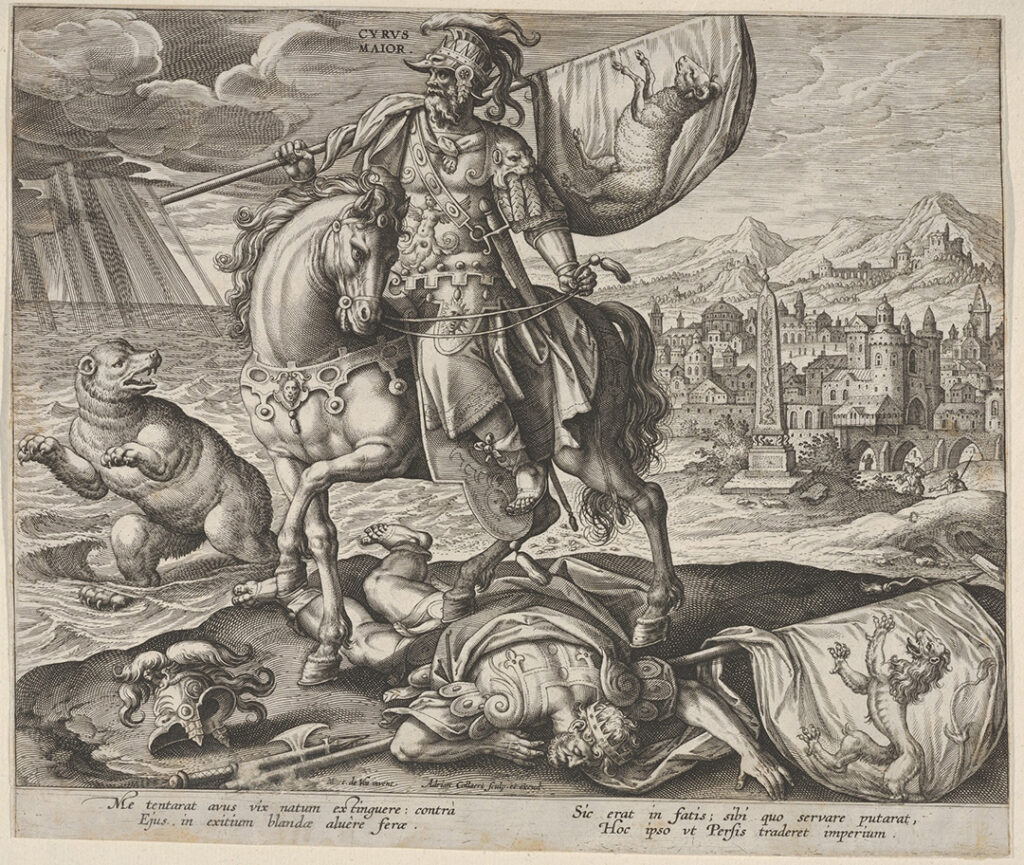
Credit: Adriaen Collaert 1560 to 1618 | Source: commons.wikimedia.org
Peace
The opposite of war is peace. Yet, biblical peace differs from our modern understanding. In Hebrew, the word for peace is shalom. This word comes from a root, meaning “to have enough”. As it stands, shalom means both peace and amiability, a reality in clear contrast to war and animosity. It also means well-being, success, and good luck. Once we consider the way this word is used in different biblical contexts, we realize that the general idea conveyed by “shalom” is all that constitutes a healthy, harmonious life, the full development of the powers of the healthy psyche.
Shalom refers to a social situation where a person has the opportunity to fully realize his or her hopes and dreams.
Biblical peace is not simply the absence of conflict. Shalom refers to a social situation where a person has the opportunity to fully realize his or her hopes and dreams. Thus, peace may require a struggle, an effort on the side of the person, as much as of the entire society to reach and provide justice and serenity. Biblical shalom is thus linked to the value of justice, to the ideal of the Jubilee, to the concept of a society ruled by God’s Law and Will.
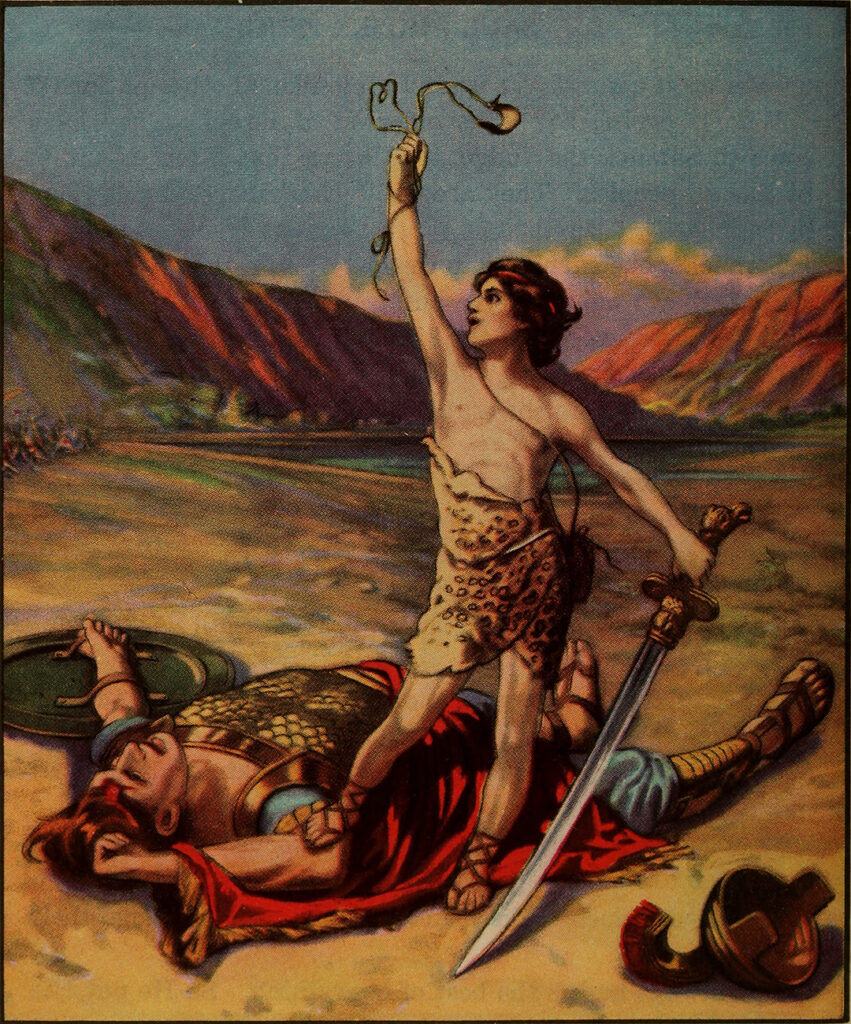
Credit: Hult, Adolf, 1869-194 | Source: commons.wikimedia.org
The New Testament
Historians find records of dozens of wars that ravaged Palestine from the beginning of recorded history to the time of Jesus. In the year 70 of our era, the Jews experienced the worst conflict in their history, leaving Jerusalem in ruins and the temple destroyed. The Romans may have claimed the Pax Romana (the peace brought by the Romans), but that was certainly not the perception of the New Testament writers.
The New Testament was written in Greek, the Greek word for war being polemos, which appears 16 times, while the verb (polemeo) appears 7 times, 6 of which in the book of Revelation. More words are used to describe conflicts: fighting machom, referred to quarrels and seen as negative; soldier stratiotes, and derivate words, appear 45 times. On two occasions, Revelation portrays God or God’s agent as making war (2:16; 19:11), but always by word of mouth. War is instead waged by the beast (11:7; and others) or by the angelic beings against the dragon (12:7, 17).
In Jewish biblical literature, one finds an indication that the Messiah would have been a violent liberator. It is undeniable that Jesus’ disciples had an implied understanding of Jesus as a military liberator who would fight against the Roman occupiers to enable the rebirth of David’s kingdom. The disciples of Emmaus say it clearly “we were hoping that it was He who was going to redeem Israel…”, (Lk 24:21). Their expectations were not met. While Jesus was indeed a liberator, he was not an armed one. When he spoke to Pilate, he claimed clearly “My kingdom is not of this world. If My kingdom were of this world, my servants would fight, so that I should not be delivered to the Jews; but now my kingdom is not from here.” (John 18:36)
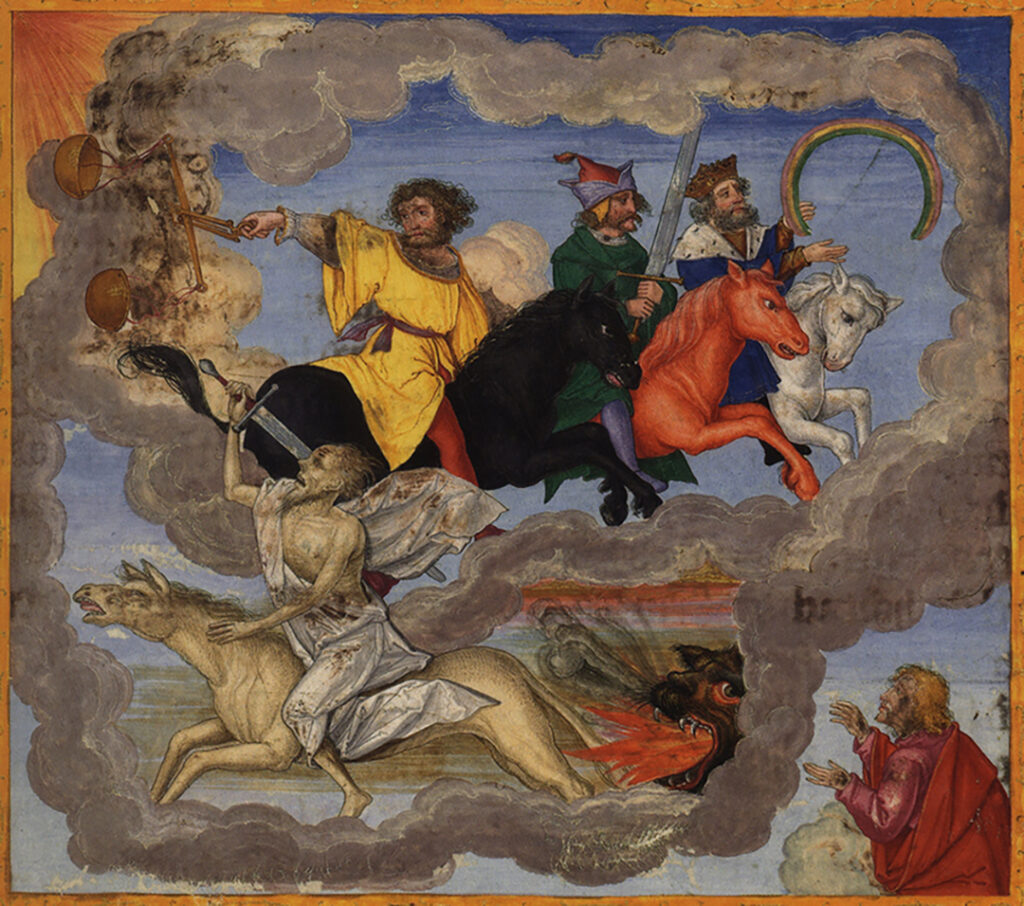
Credit: Matthias Gerung (1500–1570) | Source: commons.wikimedia.org
In his writing, Paul uses images that recount war. Yet Paul never compares himself to a soldier. Yet, he describes his work as an apostle (1 Cor 9:7) along military lines. Nonetheless, he claims “we do not fight according to the flesh”, 2 Cor 10:3. Paul uses the example of a soldier’s behaviour, but as an allegory, never as an invitation to violence.
In 1Thes Paul invites the community to be armed with faith and love as a breastplate, and to wear hope of salvation as a helmet. Paul’s inclination to use war terminology and apply it to aspects of Christian life has parallels in contemporary Greek writers. In Eph 6:10-20, we find an extended listing of battle imagery. “Finally, my brethren, be strong in the Lord and in the power of His might. Put on the whole armour of God, that you may be able to stand against the wiles of the devil. For we do not wrestle against flesh and blood, but against principalities, against powers, against the rulers of the darkness of this age, against spiritual hosts of wickedness in the heavenly places. Therefore, take up the whole armour of God, that you may be able to withstand in the evil day, and having done all, to stand” (Eph 6:10-13). Paul is not inciting violence. He describes a community battling not against people, but against the structures of evil that are present in their society.
Paul uses the example of a soldier’s behaviour, but as an allegory, never as an invitation to violence.
The most difficult texts are found in Revelation. The book is filled with war imagery. The author describes the Lamb as directed by wrath (6:16), leading armies and conquering (17:14). Yet, the Lamb is never depicted as actually fighting. Instead, the Lamb per se an image of meekness – engages in a conflict in solidarity with those who are seeking God, they are the called, chosen and faithful, (Rev 17:14). This is very much in line with apocalyptic authors, who were in fact non-violent. If correctly understood, even the strongest images of Revelation find their completion in the idea that God ransomed the chosen from every tribe, people, and nation, to serve Him as well as their fellow believers. The message is one of hope and peace.
Armageddon
In evaluating the message of the Bible on the themes of War and Peace, one cannot forget that the Bible – though inspired by God is a human endeavour. The human authors remain true authors, and they were informed by the culture and social issues of their times. The tragedy of war and violence was an everyday occurrence, which holds true in many places even today. Yet, hope for peace within a society built on justice was never far away.
Thus, the book of Revelation talks about Armageddon (Rev 16:16). This place, in Hebrew “Har Megiddo“, meaning the mountain of crowds, was a fortified centre in the Valley of Jezreel, in northern Israel. It had been the site of many battles between the great powers seeking to control Canaan. According to Revelation, it will be the site of the decisive war between Good and Evil. Please note that Revelation foresees not so much the fight, but the victory of Good, and thus the prevailing of God’s peaceful rule, much in line with Isayah’s vision in chapter 2. There the great prophet speaks of the messianic times. The vision is that of many peoples converging on the mountain of the Lord. God will establish peace for all. And “They will beat their swords into ploughshares, and their spears into pruning hooks. Nation will not take up sword against nation, nor will they train for war anymore”. This is the true vision of peace: a world where people listen to God’s Word and no longer have a need to fight. Issues will be discussed and resolved by the Word of the Lord. May this time come soon.
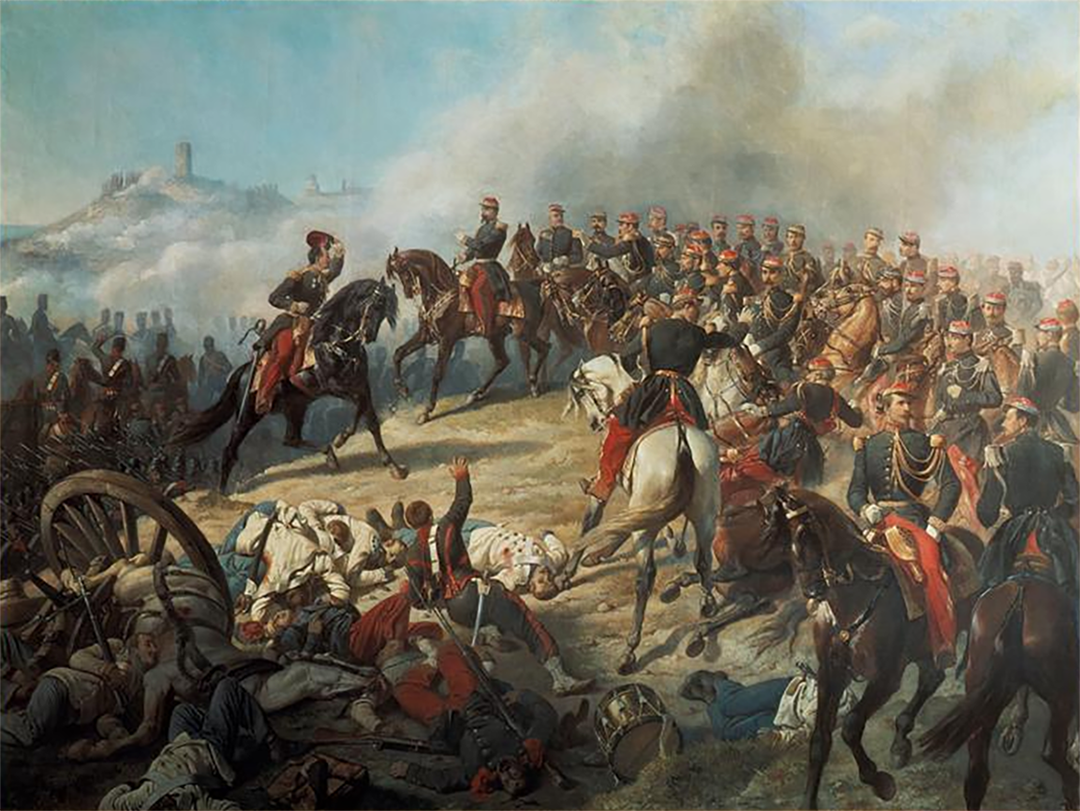
Is the Just War Theory Still Relevant Today?
Though the theory remains an ethical bar against which to evaluate the morality of war, it cannot justify armed interventions that do not stem from the elimination of evil and restoration of peace, but result from a demonstration of power and force.

Pope Leo XIV’s First Visit To Africa: An Augustinian Outlook On Bridges Of Peace
In this article, the authors reflect on Pope Leo XIV’s first apostolic visit to Africa, in particular his visit to the birthplace of St Augustine of Hippo, and contend that Augustinian spirituality can play an important role in advancing peace.