
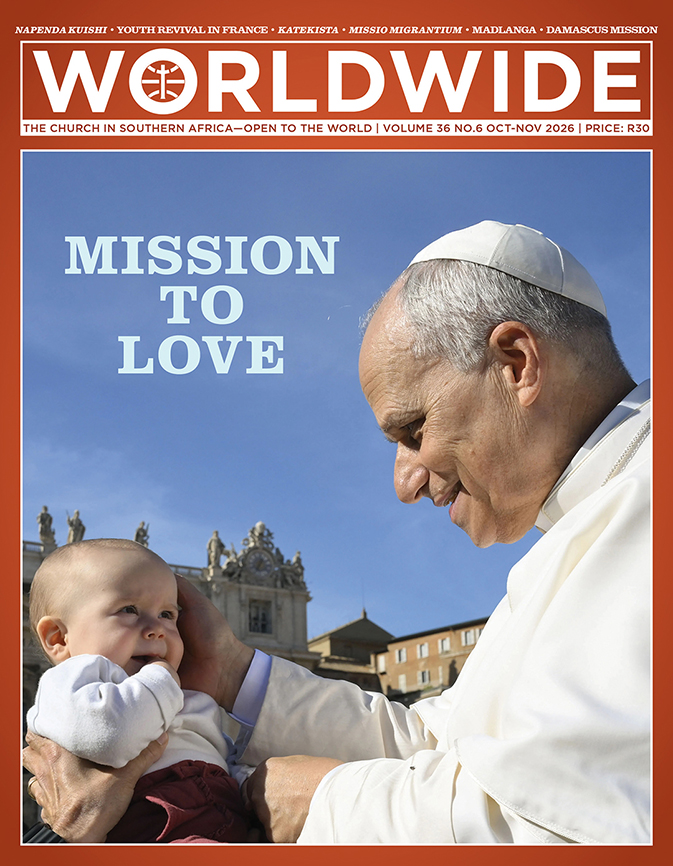
MISSION TO LOVE
Pope Leo XIV smiles while blessing a baby in St Peter’s Square—a gesture reflecting his closeness to the “little ones.” In his message for the centenary of World Mission Day in 2026, the Pontiff emphasizes: “The mission of the disciples and the Church as a whole is to continue the mission of Christ in the Holy Spirit: a mission born of love, lived in love, and leading to love” (§ 3).
Photo Credit: Francesca Pollio Fenton/aciafrica.org
INSIGHTS
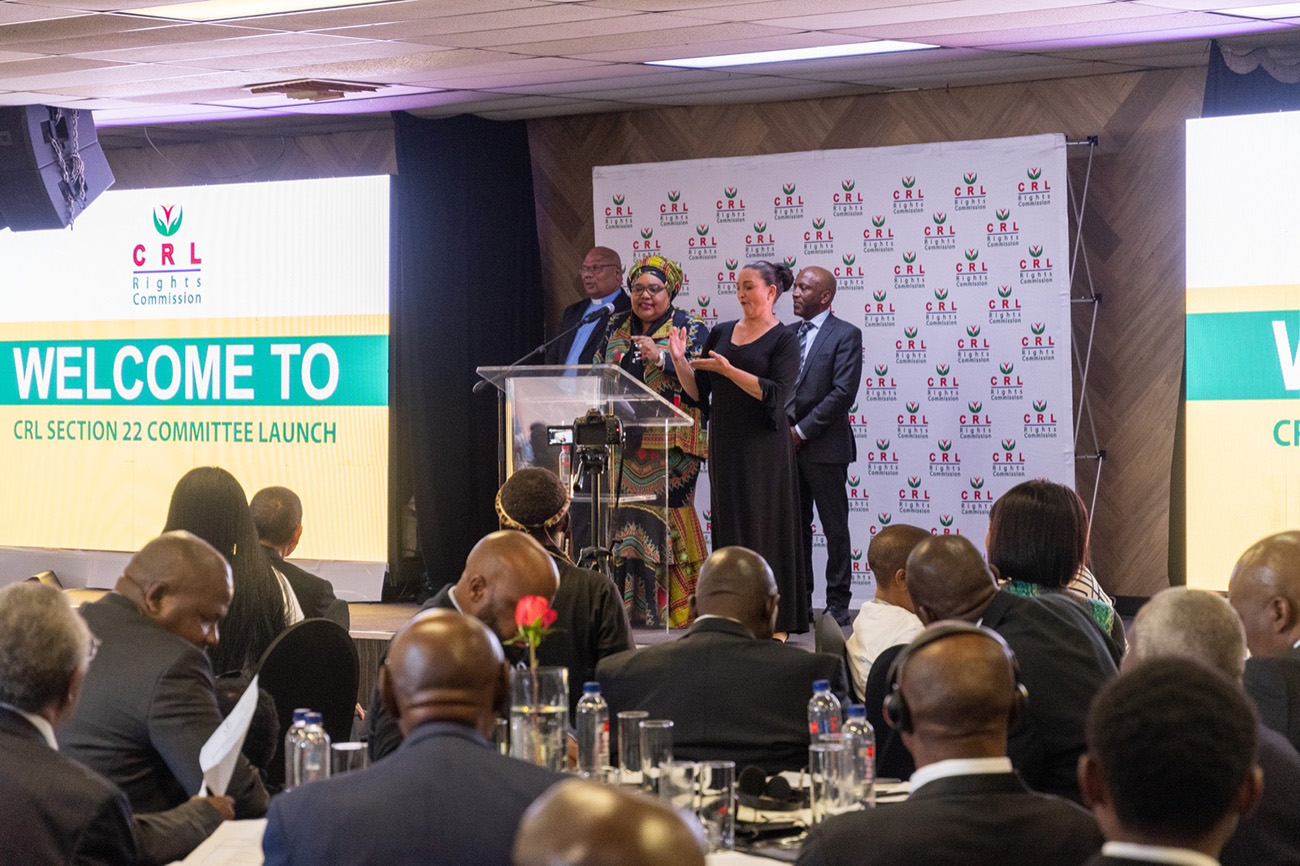
FREEDOM OF RELIGION AT STAKE
BY Mike Pothier | Programme Manager, SACBC Parliamentary Liaison Office, Cape Town
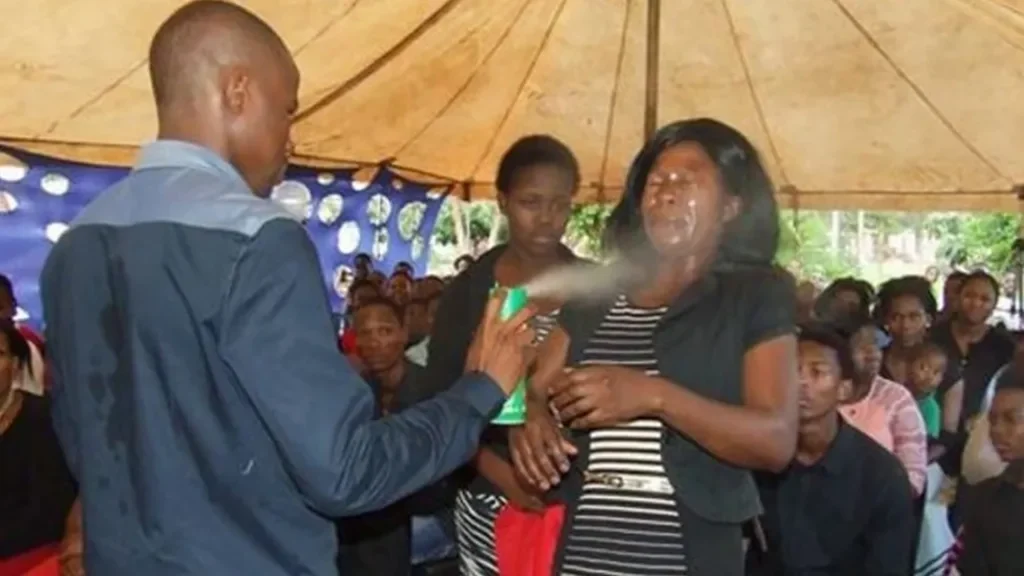
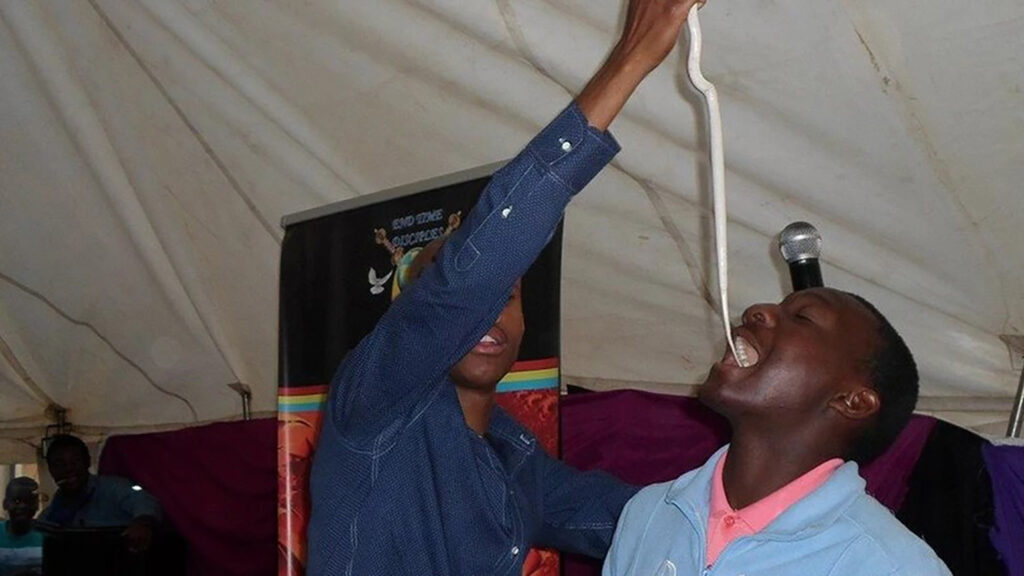
ABOUT TEN years ago, alarming reports emerged of some so-called pastors who were coercing their congregants to do dangerous things – drinking petrol, for example, while being told the pastor had miraculously changed it into pineapple juice; or handling live snakes; or being sprayed in the face with insecticide as part of a ‘healing’ ritual.
In some cases, the rituals went hand in hand with collecting money for the ‘pastor’, as he demonstrated his spiritual standing as a supposed channel of God’s power. To this were added financial scandals. Churches had bank accounts which were in the name of the pastor, who was thereby enabled to control all the money; other pastors lived the high life complete with fancy cars and expensive clothes while ‘ministering’ to those living in poverty.
The CRL Commission
These reports drew the attention of the Commission for the Promotion and Protection of the Rights of Cultural, Religious and Linguistic Communities, known as the CRL Commission. The CRL Commission is one of what are called ‘Chapter 9’ institutions, adhering to Chapter 9 of the Constitution, which deals with State Institutions Supporting Constitutional Democracy. Some better-known Chapter 9 institutions are, for example, the Public Protector, the Independent Electoral Commission, and the Human Rights Commission.
The Commission, with good reason, launched an investigation into this conduct and warned that the rights of the congregants were being violated. Criminal charges were laid against some of the pastors and at least one of them – the ‘Doom pastor’ who sprayed his people with insecticide – was fined a substantial amount. It was quite clear that most of these abuses, physical as well as financial, could and should have been investigated and punished under existing laws governing assault, intimidation, fraud and financial irregularities. The mere fact that the perpetrators called themselves pastors in no way excused their conduct.
Career or Calling!
But the CRL Commission proceeded further. After a lengthy investigation, it issued a Report on the Commercialisation of Religion and Abuse of People’s Belief Systems, in which it argued that the best way to prevent such abuses was to regulate all churches and ‘religious practitioners’. Although the report stressed the need for ‘self-regulation’ by churches, it also addressed ‘umbrella bodies’ to which all religious bodies would have to belong: all places of worship, even an open field under a tree, and all pastors, ministers and lay preachers would have to register.
In other words, the Commission was treating the religious sector as if it were just another profession, like medicine, law, or architecture. These fields are closely regulated – those who wish to become doctors, lawyers, or architects must complete academic courses, pass exams, and comply with all statutory requirements of their chosen field. Failing to do so, or if their work is not up to standard, they can be deregistered and prevented from practicing. But the field of religion is not like that. There is a wide variety of faiths and denominations within faiths, each with its own beliefs, doctrines, structures, and practices. These range from vast international institutions like the Catholic Church to national churches like the Dutch Reformed Church to small local entities like most of the African Independent Churches. There are even individual, non-professional spiritual leaders who merely conduct Bible study on a Sunday or do some preaching or counselling in their free time.
The essence of the right to freedom of religion is that people should be free to follow their beliefs, to live out their understanding of the Divine without outside interference. And the same goes for religious institutions. It is not for the state, or for a registration council, to pass judgement on the beliefs and practices of a particular religion (except, of course, when the law is broken, as in the cases described above).
Christianity as main Target
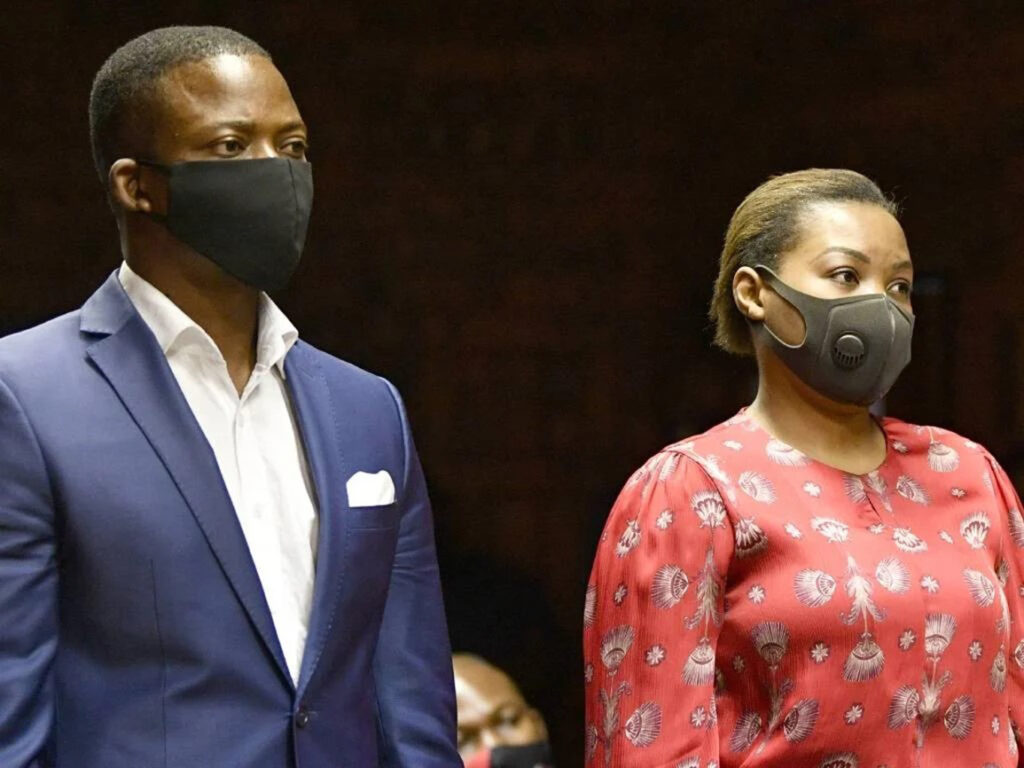
Fortunately, when the CRL Commission’s proposals reached Parliament in 2018, the Portfolio Committee on Co-operative Governance and Traditional Affairs realised that they were unconstitutional and declined to process the draft law that the Commission had drawn up. And, until about 18 months ago, that was the state of affairs. Then, in light of some further scandals involving dubious pastors like Shepherd Bushiri and Timothy Omotoso, the CRL Commission renewed its efforts to find ways of controlling the religious sector – this time, specifically, the Christian community.
It has set up what is called a section 22 committee – this refers to section 22 of the Act under which the CRL Commission operates. Such a committee can conduct investigations on behalf of the Commission, hold public hearings, and make recommendations. This process is now underway, with the committee conducting a series of hearings across various provinces.
On its website, the committee claims that its work “is not about state control or regulation of religion. The framework is voluntary. It proposes no state-imposed licensing or government oversight. Instead, it invites churches to hold themselves to a common standard of integrity, governance, and pastoral care, a standard developed by the Church, for the Church.” However, it appears to be proposing a council of some kind, comprising church representatives, but deriving its authority ultimately from the State – and that, many in the religious sector argue, amounts to unwarranted interference in freedom of religion.
A Predetermined Agenda
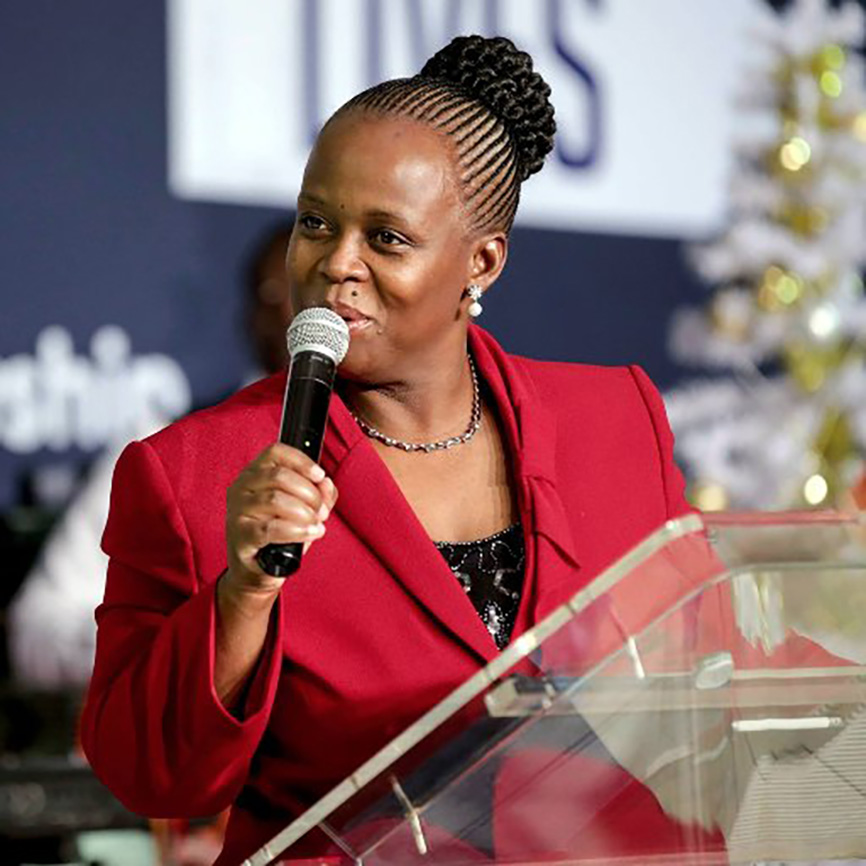
This view was upheld and bolstered considerably in December 2025, when the chairperson of the Section 22 committee, Prof Musa Xulu, resigned from his position, explaining that in his view the committee was “being used as a front to disguise a predetermined agenda of State control of religion, driven in part by personal hostility toward particular Christian faith and traditions”. He also claimed that a draft framework for the ‘self-regulation’ of the Christian sector had been rushed through by the CRL Commission, despite his warning that the framework “was not fit for purpose” and that it “infringed the Constitution”.
It must also be noted that it is only the Christian faith community r that is being targeted by the investigation, and for which a ‘common standard of governance’ is being proposed. This is quite probably unconstitutional on two grounds – as an unjustified interference in religious freedom, and as an instance of unfair discrimination, in that other faiths are not being subjected to the same invasive requirements.
Credit: @PastorMukhuba/X.com
A Mission Bound to Fail
For now, the section 22 committee is continuing its work, under a new chairperson, and the CRL Commission is confident that its envisaged ‘framework’ will be adopted. But any attempt to do so statutorily will require an Act of Parliament, and we can expect just as much opposition to it this time as there was in 2018. And there will certainly be legal and constitutional challenges in the unlikely event that Parliament actually passes such a law.
All in all, it is a great pity that, instead of finding ways of empowering and supporting sincere Christian pastors, of investigating and exposing corrupt ones, and of educating the generally gullible and trusting devotees so that they learn to know the difference, the CRL Commission has embarked on a mission to control the whole Christian faith sector. It is a mission which will ultimately fail, but at the cost of the Commission’s credibility, not to mention the huge amounts of money that could have been better spent on the Commission’s real responsibilities.
References
- https://www.crlcommission.org.za/wp-content/uploads/2023/02/Report-On-Commecialization-of-Religion-and-Abuse-of-Peoples-Believe-Systems-final.pdf
- https://www.crlcommission.org.za/section-22-christian-sector
- https://mg.co.za/news/south-africa/2026-01-16-rev-musa-xulu-resigns-as-chair-of-section-22-committee-alleging-state-control-of-religion
No Way to Treat a Mother
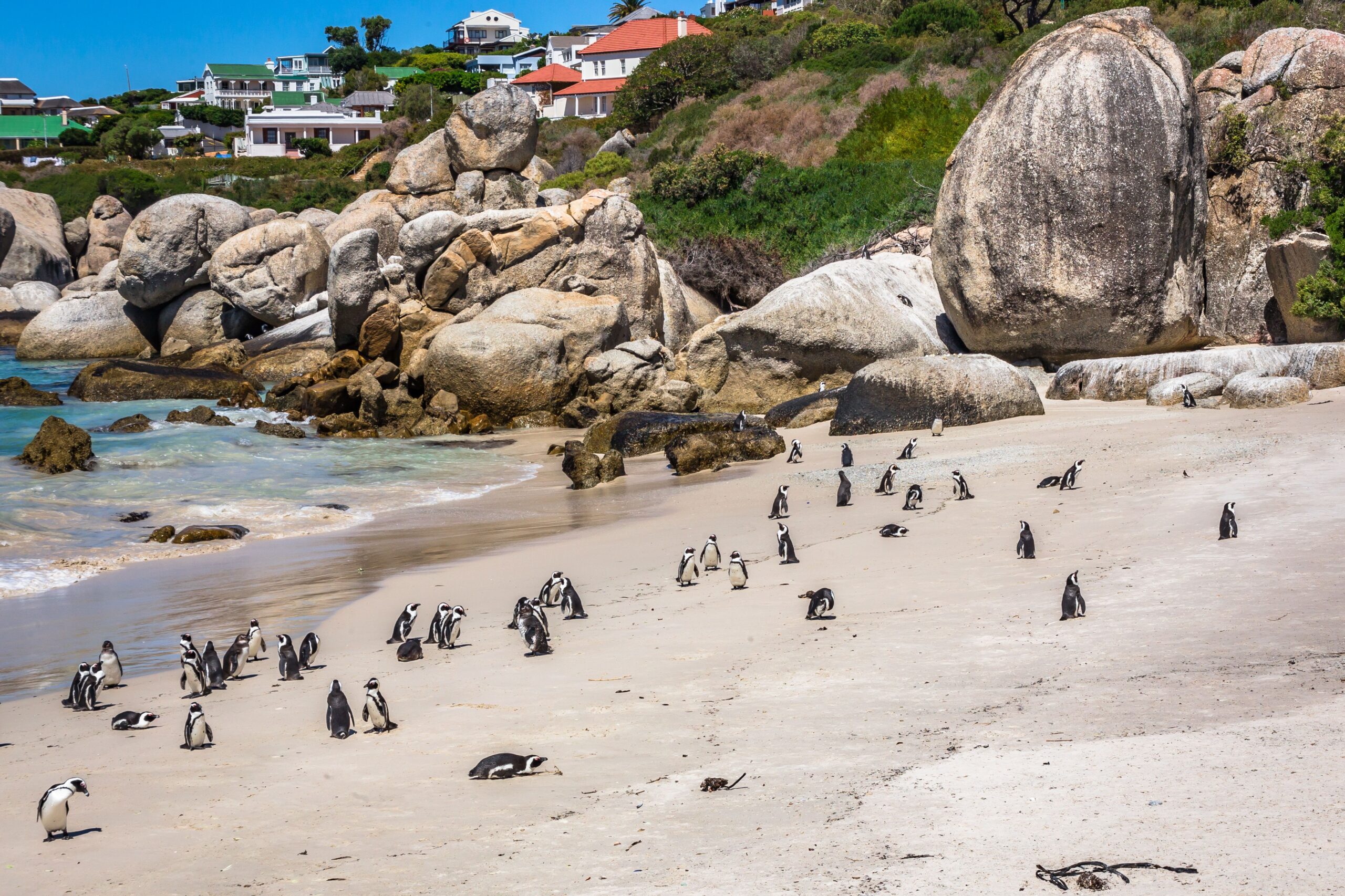
When we think of the environment, the natural world around us, it is climate change and global warming that comes to mind increasingly. Every day we hear of a new climate-related disaster – huge wildfires in Australia and America, extreme flooding in India and China, unbearable heatwaves in previously temperate parts of Europe.